

Y Strainer Vendor Guide to Choosing Reliable Filtration Solutions
2026-11-16
Selecting the right Y strainer vendor isn’t just about picking a supplier—it’s about ensuring your filtration system performs under pressure, season after season. With so many options claiming reliability, how do you separate dependable partners from costly risks? This guide walks through the key factors to evaluate, from material quality to after-sales support, so you can make a confident choice. And when you’re ready to see what a focused vendor looks like, UPTAI brings precision engineering and honest guidance to the table.
Shortlisting Y Strainer Vendors Without Guesswork
Finding the right Y strainer supplier usually starts with a pile of brochures and a few rushed phone calls. The problem is that most spec sheets look identical at first glance—same mesh sizes, same pressure ratings, same vague promises about durability. What separates a vendor worth shortlisting isn't the glossy PDF, but how they handle the questions that aren't on the datasheet. Ask about their batch testing records for castings, not just the theoretical burst pressure. Request a sample with the exact end connections you'll use in the field, and see if they ask about your fluid viscosity before quoting. Those small interactions tell you more than any certification logo.
Another overlooked filter is lead time honesty. Some suppliers quote a standard four-week delivery, then quietly push it to ten when the order isn't large enough to prioritize. A vendor who asks about your installation schedule, who mentions that a particular size has a longer foundry queue right now, is one you can actually plan around. Compare that against a vendor who says yes to everything—usually a sign that the sales team isn't talking to production. Shortlist the ones who give you a real date, even if it's not the date you want to hear.
Finally, watch how they react to a modification request. Whether it's a tapped drain port on the bottom or a coarser screen for a slurry, a competent vendor will either confirm the change is straightforward or explain why it compromises the strainer's performance. If they just resend the same generic drawing with a higher price, move on. The whole point of shortlisting without guesswork is to rely on direct evidence—samples, test data, real conversations—rather than a marketing pitch that could apply to any foundry on the same industrial park.
Material Choices Beyond the Stainless Steel Label
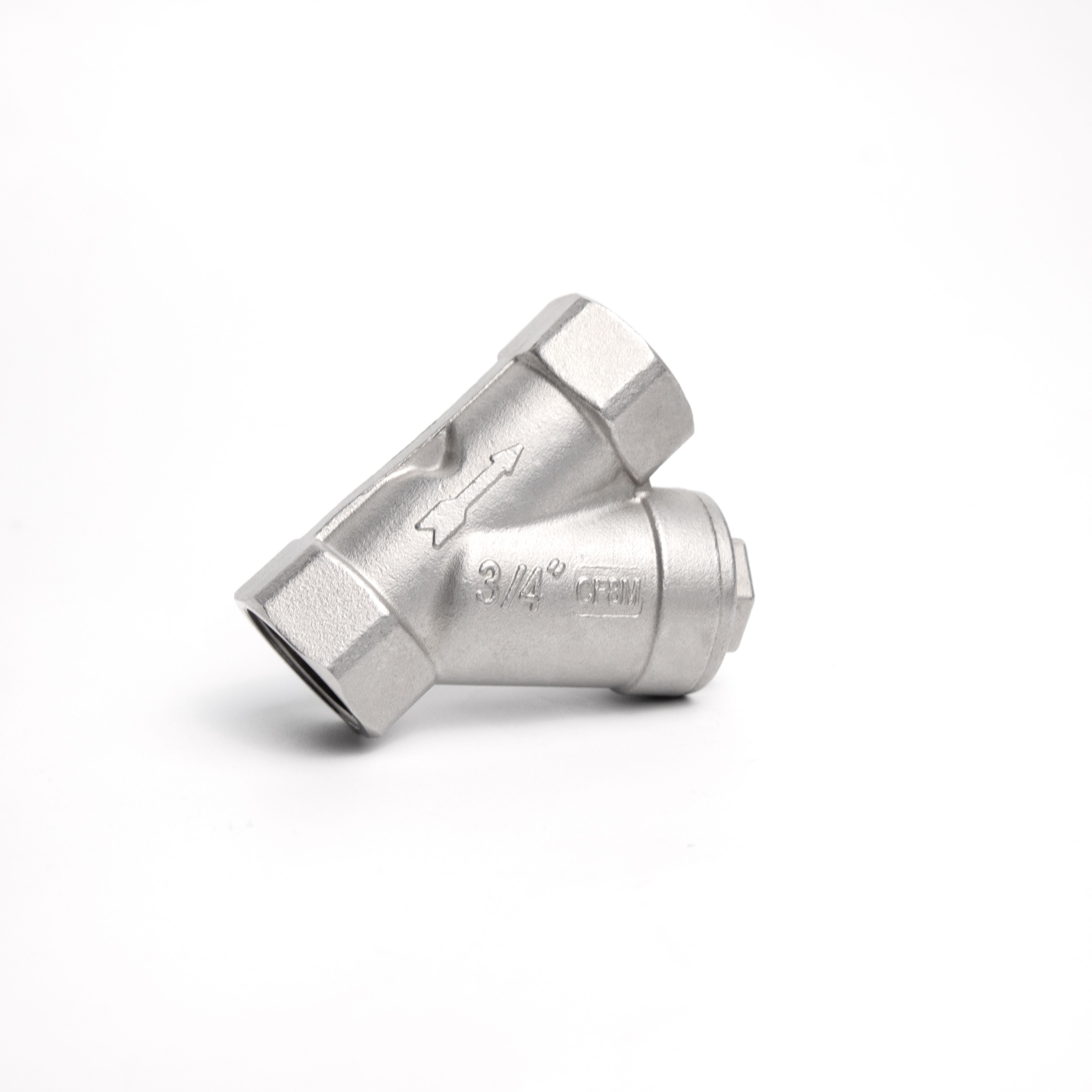
A magnet test won't tell you much about a piece labeled stainless steel, because the category spans several distinct alloys with different jobs. 304 and 316 grades bring extra nickel for corrosion resistance, which matters near salt water or acidic foods. Cheaper 430 steel, on the other hand, has almost no nickel, making it magnetic but more prone to rust if not dried off.
You will also find stainless hiding behind other materials. Cookware often welds an aluminum or copper disc onto the base to spread heat evenly, because stainless alone is a poor conductor. Handles get swapped for silicone, wood, or phenolic resin to stay cool. Even the brushed finish on a refrigerator can be a thin laminate over a different metal underneath.
So when a label says stainless steel, treat it as a starting point, not the whole story. Check the grade, look for bonded layers, and feel the non-metal parts. The performance difference between a 304 pot and a 430 bowl is real, and it rarely shows up in the product name.
Pressure Drop Claims Worth a Second Look
Most pressure drop figures get cited once, then forgotten—until a system underperforms and someone digs out the original spec sheet. The gap between a clean, new filter's rated drop and its behavior after a few weeks of real-world loading tells a story that static catalogs rarely mention.
Take compressed air lines, for instance. A filter element that starts at 0.3 bar differential might creep past 0.8 bar as it captures oil aerosols and pipe scale. If the maintenance schedule assumes the initial number, energy costs climb silently. Rechecking those claims against actual gauge readings often reveals that the real bottleneck isn't the compressor—it's the overlooked filter housing.
Small differences add up fast when multiple components sit in series. A heat exchanger, a dryer, and two filter stages can each contribute a "minor" pressure loss that, combined, forces the system to run hotter and longer. Before accepting any single claim, map the whole path from inlet to point of use. The weakest data point usually hides where nobody bothered to install a second pressure tap.
Maintenance Features That Save Real Time
Most maintenance platforms pile on extra clicks and forms. The features that actually save time are the ones that remove steps. Automated fault detection flags a worn component before it fails, so a ten-minute swap during routine downtime replaces a two-hour emergency repair. No manual rounds, no guesswork.
Parts tracking is another quiet time-saver. When a work order shows exactly where a replacement part sits and lets you reorder from the same screen, you stop losing time to phone calls and stockroom searches. It sounds small, but across a dozen jobs a week it adds up fast.
Usage-based scheduling beats fixed calendar reminders. Equipment that runs 400 hours a month gets serviced when it needs it, not when a generic date says so. Pair that with mobile checklists that sync to the office, and your techs aren’t retyping notes at the end of the day.
Certifications and Testing Evidence That Matter
Many companies claim quality, but few back it up with hard proof. Look beyond glossy marketing and ask for actual test reports from independent labs. These documents reveal how products perform under stress, not just in ideal conditions. Whether it's durability against daily wear, resistance to temperature shifts, or safety under heavy load, the numbers tell a story that brochures never will.
Certifications matter only when they come from recognized bodies with rigorous standards. A sticker on the box means little if the issuing organization has no teeth. Check whether the certification requires ongoing audits or just a one-time fee. For example, some certifications demand annual re-testing while others expire quietly. The strongest evidence is a traceable report number you can verify online.
Don't settle for vague phrases like "lab tested" or "certified quality." Push for specifics: which lab, what standard, what exact result? A genuine test report will list failure points, environmental limits, and pass/fail thresholds. If a vendor hesitates to share this data, treat that hesitation as a red flag. Real transparency means you can see the raw numbers, compare them against benchmarks, and make decisions based on evidence rather than promises.
Hidden Ownership Costs to Recalculate
Sticker price rarely tells the full story. A machine, vehicle, or building carries a web of recurring expenses that only surface after the deal closes—energy draw, consumables, compliance fees, unplanned downtime, and the labor hours spent troubleshooting. Pulling actual utility bills and service logs instead of relying on manufacturer averages often shifts the cost picture dramatically.
Ownership recalculations also need to factor in how usage changes over time. A piece of equipment that runs two shifts instead of one will wear through parts faster, while a software subscription can balloon as user counts grow. Resale value and disposal costs at the end of the holding period are frequently left out of initial spreadsheets, yet they can erase a large chunk of the apparent savings.
The useful exercise is to rebuild the total cost from scratch with line items for every hidden expense, then compare that against the purchase premium you might pay for a more efficient or durable alternative. Often the higher upfront price turns out to be the cheaper path once hidden ownership costs are recalculated honestly.
FAQ
Request heat numbers and cross-check them against the mill test reports for each batch. Ask for third-party material testing on a sample if the order volume justifies it, and inspect the casting surface for porosity or repair welds that might indicate lower-grade scrap was melted in.
For viscous streams, perforated screens with larger openings and reinforced bodies prevent tearing and frequent cleanouts. Thin chemicals can handle fine wire mesh down to 100 microns, but you need to confirm the screen material resists corrosion from the specific chemical rather than just the generic stainless steel label.
If the system cannot be taken offline for manual cleaning and the trapped debris is light, a blow-down valve lets you purge the screen while the line stays pressurized. For heavy or sticky solids, a blow-down alone won't clear the screen properly and you should opt for a quick-opening cover instead.
Ask if they perform hydrostatic shell tests at 1.5 times the rated working pressure on every unit or only on samples. Also ask about seat leakage testing for the screen chamber and whether they burst-test a random unit from each production lot to catch casting defects.
Compare the vendor's published Cv or Kv values at your target flow rate. If those data aren't available, request the open-area ratio of the screen to the pipe cross-section. A ratio below 3:1 usually means you'll pay for the lower purchase price with higher energy costs over time.
They should tell you not to mount a Y strainer with the screen pocket pointing upward, because debris will fall back into the flow. They should also advise installing isolation valves and a differential pressure gauge across the strainer to know when cleaning is needed without guesswork.
Ask for a written commitment on screen pattern retention and check how long they have kept spares for past clients. A vendor that treats the screen as a consumable and offers drawings with exact mesh counts and wire diameters is more reliable than one that sells only complete strainer assemblies.
Look at the sealing method for the screen seat. O-ring seals are cheaper upfront but degrade with temperature cycling and chemical exposure, causing bypass. Tapered metal-to-metal seats cost more initially but stay reliable longer. Also check if the cover has a captive fastener so it won't drop into a sump during cleaning.
Conclusion
Shortlisting Y strainer vendors should not rely on glossy brochures or paid directory rankings. Ask for actual manufacturing locations, recent client references in your industry, and documented capability for custom screen perforations or mesh sizes. Material claims need careful scrutiny because "stainless steel" covers a wide range. A 304 body may fail quickly in chloride exposure, while 316L with low carbon content handles pitting better; duplex grades cost more but last far longer in seawater or chemical service. Always request full wetted material traceability, not just a generic alloy name. Pressure drop figures from catalogs are often measured with clean water at low viscosity under ideal straight-pipe conditions. Your process fluid, solids loading, and piping geometry will change that curve. Insist on vendor-supplied computational fluid dynamics results or test data matching your actual flow rate and viscosity, and ask how performance degrades as the screen begins to load.
Maintenance features separate a vendor that understands plant reality from one that only sells hardware. Look for quick-opening covers with hinged or yoke designs, blow-down taps, and drain ports positioned for real access—not just a drawing symbol. Screen removal should not require disconnecting the line. Certifications matter only when they are specific: PED, CRN, ASME B16.34, material test reports to EN 10204 3.1 or 3.2, and hydrostatic test certificates for each unit, not a sample. Hidden ownership costs often dwarf the purchase price. Compare spare screen prices, recommended replacement intervals for seals and gaskets, and the labor hours needed for cleaning. A slightly cheaper strainer that takes an extra 30 minutes to service during each shutdown can wipe out the initial savings before the first year ends. Recalculate total cost over a five- to ten-year lifecycle, including energy loss from permanently elevated pressure drop, and you will likely find the best vendor is not the lowest bidder.
Contact Us
Contact Person: Adonis
Email: [email protected]
Tel/WhatsApp: 8615858822657
Website: https://www.uptaivalve.com