

Water Chiller Supplier Tips for Choosing the Most Reliable Cooling System
2026-10-09
Every water chiller looks impressive on paper, but the gap between a dependable cooling system and a costly one often hides in the details—sealed components, ambient tolerance, and a supplier's willingness to stand behind their unit. That's why we've put together these practical tips for evaluating water chiller suppliers, drawn from real-world installations and the engineering standards at Worldbase. Before you commit to a purchase, give yourself a five-minute head start: the following insights will help you spot reliability signals that spec sheets simply can't show.
Why the Cheapest Chiller Usually Ends Up Costing More
The price tag on a budget chiller looks tempting at first glance—sometimes thousands less than a mid-range unit. But that initial saving often evaporates within the first year or two. Cheap chillers tend to use thinner condenser coils, lower-quality compressors, and fewer redundant controls. These components fail faster under continuous load, which is exactly how most industrial or commercial chillers operate. A failed compressor on a bargain unit can cost more to replace than the entire machine did originally, not to mention the downtime while you wait for parts that may be on backorder because the manufacturer cut corners on supply chain support.
Operational costs are where the real penalty shows up. Inexpensive chillers typically have lower energy efficiency ratios—meaning they draw more electricity to produce the same cooling output. Over a five-year lifespan, that extra energy consumption can add up to several times the purchase price. Many budget models also lack variable-speed drives or smart unloading, so they cycle on and off more frequently, which shortens component life and spikes peak demand charges. Then there's maintenance: cheap chillers often require more frequent cleaning, more refrigerant top-offs, and more unscheduled service calls because the control boards are less forgiving and the sensors drift out of calibration faster.
Perhaps the most overlooked cost is replacement frequency. A well-built chiller can run 15 to 20 years with proper care. A cheap one often needs major work at year seven or eight, and total replacement by year ten. When you factor in the labor to remove and install, the disposal fees, and the lost production during swap-outs, the "cheap" chiller has cost you double or triple what a quality unit would have. Not to mention the risk of a sudden failure during peak season, when you can't wait weeks for a new unit. In cooling, as in most things, you either pay now or pay later—but later usually comes with interest.
The Overlooked Spec That Determines Chiller Lifespan
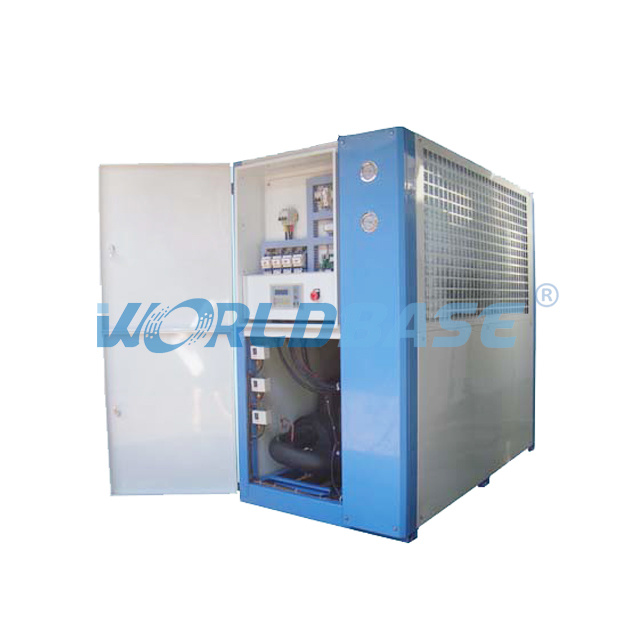
Most buyers obsess over cooling capacity and energy efficiency, but the real determinant of how long a chiller will last is something far less glamorous: approach temperature. This number, often buried in a spec sheet's fine print, measures the difference between the refrigerant's condensing temperature and the leaving water temperature. When that gap widens over time, it signals fouling, non-condensable gases, or refrigerant loss—conditions that silently erode compressor life. A chiller with a tight approach runs cooler and cleaner, extending its prime years well beyond the factory warranty.
Maintenance teams rarely monitor approach temperature until a failure forces their hand. Instead, they rely on runtime hours or vibration analysis, which miss the slow creep of inefficiency. But comparing current approach to the design spec tells you exactly how hard the chiller is working against itself. A 1°F increase might not sound like much, yet it can elevate head pressure enough to shorten bearing life by thousands of hours. The smartest operators log approach weekly and treat any drift as an early warning system—long before a catastrophic shutdown.
What makes this spec so easy to overlook is that it demands historical context. A standalone reading means nothing; only the trend reveals the truth. One facility manager I know kept a chiller running for 23 years not by replacing parts on schedule, but by recording approach temperature every Friday morning and cleaning condenser tubes when the value crept up by half a degree. That simple habit doubled the machine's expected lifespan and saved hundreds of thousands in avoided capital costs. The chiller didn't die—it was retired because the building was demolished.
What Your Supplier’s Past Clients Won’t Tell You
When you ask a supplier for references, you rarely hear the full story. Past clients may stay quiet for a number of reasons—confidentiality agreements, fear of burning bridges, or simply not wanting to relive a frustrating experience. But that silence often hides patterns that could directly affect your own project.
A supplier might look great on paper, with solid samples and a polished pitch, yet struggle with consistent quality once orders scale up. Delivery dates slip, materials change without notice, or hidden fees appear after the contract is signed. Former customers who’ve been through this may not volunteer the details, either because they’ve already moved on or because they don’t want to be seen as difficult.
To uncover what’s left unsaid, go beyond the reference list. Visit the factory unannounced if possible, request a trial order with strict penalties for defects, and talk to third-party inspectors who have worked in that facility. The gaps in a supplier’s track record are often more telling than the polished case studies they share.
How to Test a Cooling System Before You Commit
Before you sink money into a new radiator or water pump, take twenty minutes to put the existing system through a simple heat cycle. Start with a cold engine, pop the cap, and check that the coolant reaches the proper level and hasn't turned muddy or oily. A quick sniff can also tell you if exhaust gases are pushing into the jacket—it'll smell faintly of fuel or combustion. Next, start the engine, set the heater to full hot, and let it idle until the temperature gauge climbs to normal. While it warms up, squeeze the upper radiator hose every few minutes; if it gets rock hard before the thermostat opens, the cap or a blockage may be holding too much pressure.
Once the thermostat opens and the fan cycles at least once, look at the coolant in the overflow tank. Small, steady bubbles often mean a cracked head or blown gasket, especially if they keep appearing after the engine is warm. Invest in a basic cooling system pressure tester, pump it to the cap's rated pressure, and watch for a drop over ten minutes. Don't ignore the radiator cap itself—test its relief pressure or borrow a known-good cap for comparison. If the system holds pressure, the hoses stay soft enough to squeeze, and the heater blows hot without the temperature gauge climbing past the midpoint, you can commit to repairs with a much clearer picture of what actually needs replacing.
The Role of Water Quality in Avoiding Unexpected Failures
Water quality often gets pushed down the maintenance checklist until a pipe bursts or a heat exchanger clogs. In cooling towers, hard water rich in calcium and magnesium gradually builds scale on metal surfaces. That scale acts like an insulating blanket, forcing pumps and compressors to work harder, which eventually leads to overheating and sudden breakdowns. Monitoring conductivity and alkalinity isn't just a lab exercise—it's the difference between a scheduled cleaning and an emergency shutdown at 3 a.m.
Corrosion is another quiet killer tied directly to water chemistry. Dissolved oxygen, low pH, or high chloride levels can eat through pipe walls from the inside out, leaving no visible warning until a leak appears. One plant we worked with lost a whole production line because a small sensor line corroded through, and the replacement part took six weeks to arrive. Simple steps like adjusting pH, adding corrosion inhibitors, or switching to deionized water for sensitive loops can extend equipment life by years.
Microbial growth adds a layer of risk that often goes unnoticed. Warm, stagnant water is a perfect breeding ground for bacteria, algae, and fungi, which form biofilms that reduce heat transfer and accelerate under-deposit corrosion. In closed-loop systems, a single contaminated batch of makeup water can spread biofilm throughout the entire network. Regular biocide treatment combined with filtration and occasional shock dosing keeps biological fouling in check—cheap insurance compared to replacing a fouled plate heat exchanger or dealing with a contamination-related product recall.
Smart Features That Cut Energy Bills Without Sacrificing Reliability
Modern appliances now pack adaptive sensors that learn your usage patterns instead of running on fixed cycles. A refrigerator can delay its defrost to off-peak hours when electricity is cheaper, while a heat pump water heater shifts its recovery time to match your morning shower routine. These adjustments happen in the background, so you still get cold food and hot water on demand, but the energy draw is flattened and less costly.
Variable-speed compressors are another quiet revolution. Rather than slamming on and off at full power, they ramp up or down in small increments to hold a precise temperature. That removes the wasteful surge of a hard start, which not only lowers your monthly bill but also reduces mechanical wear. The result is a unit that lasts longer and rarely needs a service call.
Finally, smart diagnostics keep small problems from becoming expensive ones. Instead of waiting for a breakdown, the system monitors voltage, refrigerant pressure, and motor performance, then nudges you with a simple alert if something drifts out of range. You can fix a clogged filter or a loose connection early, preserving efficiency and avoiding the kind of failure that leaves you without heat on a cold night.
FAQ
Look beyond glossy brochures. Ask about their track record with your specific application, whether they offer thermal load calculations before quoting, and how quickly they can supply replacement parts. A supplier that asks detailed questions about your ambient conditions and heat load is usually one that won't sell you an undersized unit.
Pay attention to the nominal capacity at your actual operating temperatures, not just the maximum rated output. Many chillers are rated at ideal lab conditions that have little to do with a hot factory floor. Request a performance curve at your required chilled water setpoint and ambient temperature.
Check for protection features like condenser coil coatings, sealed electrical enclosures, and compressor crankcase heaters. For dusty or humid sites, ask about optional filters and corrosion-resistant piping. A supplier familiar with harsh duty cycles will mention these without prompting.
Even the best chiller will need maintenance eventually. If critical components like compressors or control boards are not in local stock, a simple fault can cause weeks of downtime. Ask for a list of recommended spare parts and typical lead times for your region.
Inefficient units often run hotter and cycle more frequently, which wears out compressors and fans faster. Look for chillers with variable-speed compressors or electronic expansion valves. The upfront cost may be higher, but stable operating temperatures typically extend the equipment's service life.
If you have a reliable cooling tower or process water loop, a water-cooled chiller often provides steadier performance and less noise. For standalone installations without cooling water infrastructure, an air-cooled unit is simpler to maintain. Match the condenser type to your available utilities, not just the initial cost.
It is often the deciding factor. A supplier with local service technicians, clear commissioning procedures, and remote monitoring support can prevent small issues from becoming catastrophic failures. Always ask how they handle warranty claims and emergency callouts during peak production periods.
Poor water quality. Untreated or hard water can cause scaling, corrosion, and biological growth inside the heat exchanger, reducing efficiency and eventually causing leaks. A reliable supplier will recommend a water treatment plan and strainer schedule, not just sell you a box.
Conclusion
Choosing a reliable water chiller isn't just about comparing price tags. The cheapest unit often costs more later once you factor in leaks, compressor failures, and skipped maintenance support. Many buyers overlook something like heat exchanger material or condenser coil design—a spec that quietly dictates whether the unit survives for years or degrades quickly. A supplier's past clients may not publicly complain, but ask for references and visit existing installations; you'll hear about response times and spare part availability. Testing before commitment is essential: run the system at full load, measure temperature stability, noise, and pressure drop, and ask for performance data under your local ambient conditions. That hands-on check often reveals what spec sheets can't.
Water quality is a silent killer—untreated or hard water causes scaling, corrosion, and microbial growth, all leading to unexpected shutdowns. Simple filtration and regular water treatment can double a chiller's lifespan. Smart features like variable speed compressors, electronic expansion valves, and remote monitoring cut energy bills without sacrificing reliability because they adapt to actual load instead of running flat out. A trustworthy supplier will discuss these operational details openly, not just warranty terms. In the end, reliable cooling comes from matching the chiller's design to your real conditions, verifying claims hands-on, and planning for water and energy management from day one.
Contact Us
Contact Person: Mr Yang
Email: [email protected]
Tel/WhatsApp: +8613809083091
Website: https://en.worldbase.cn