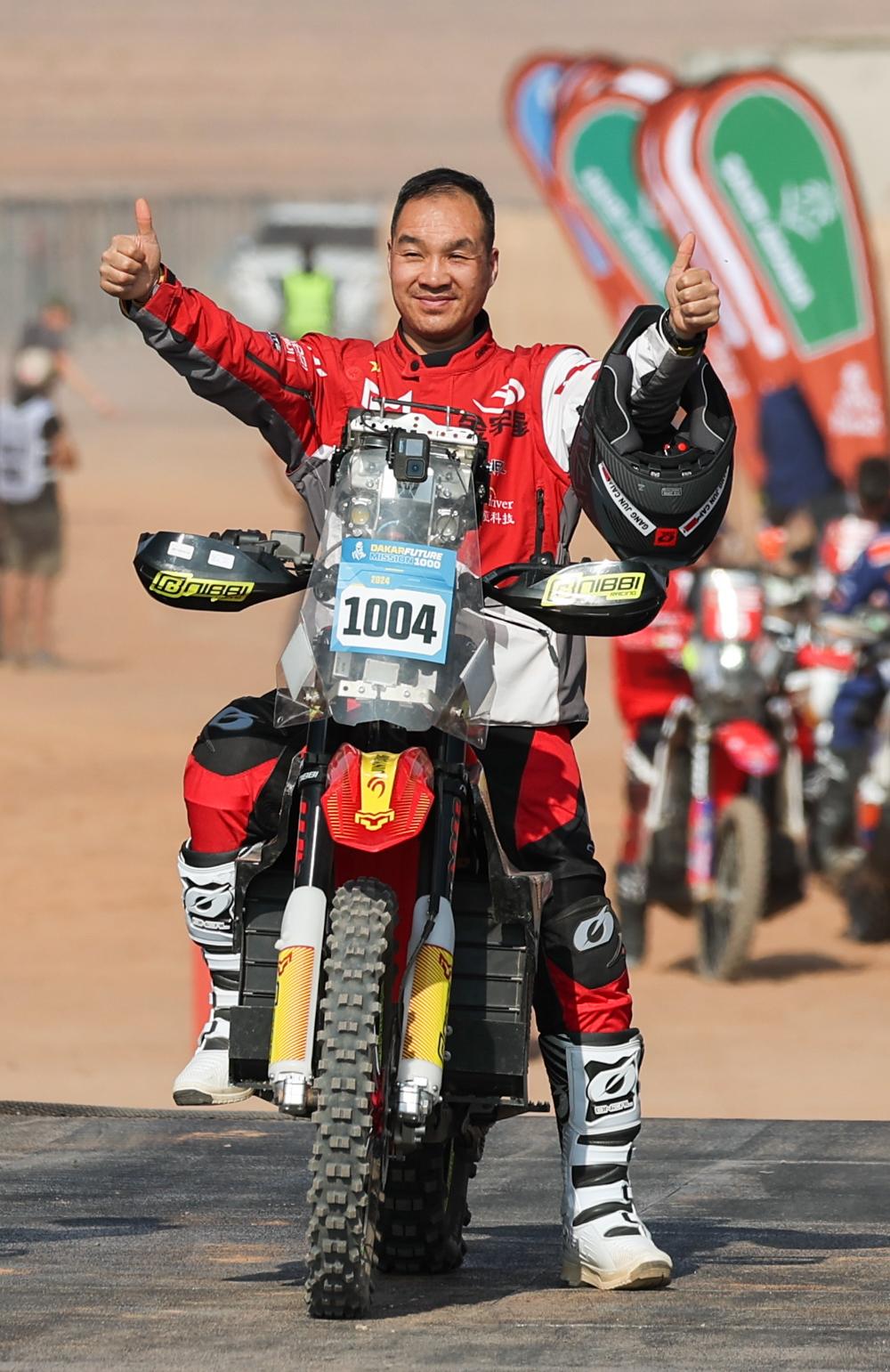

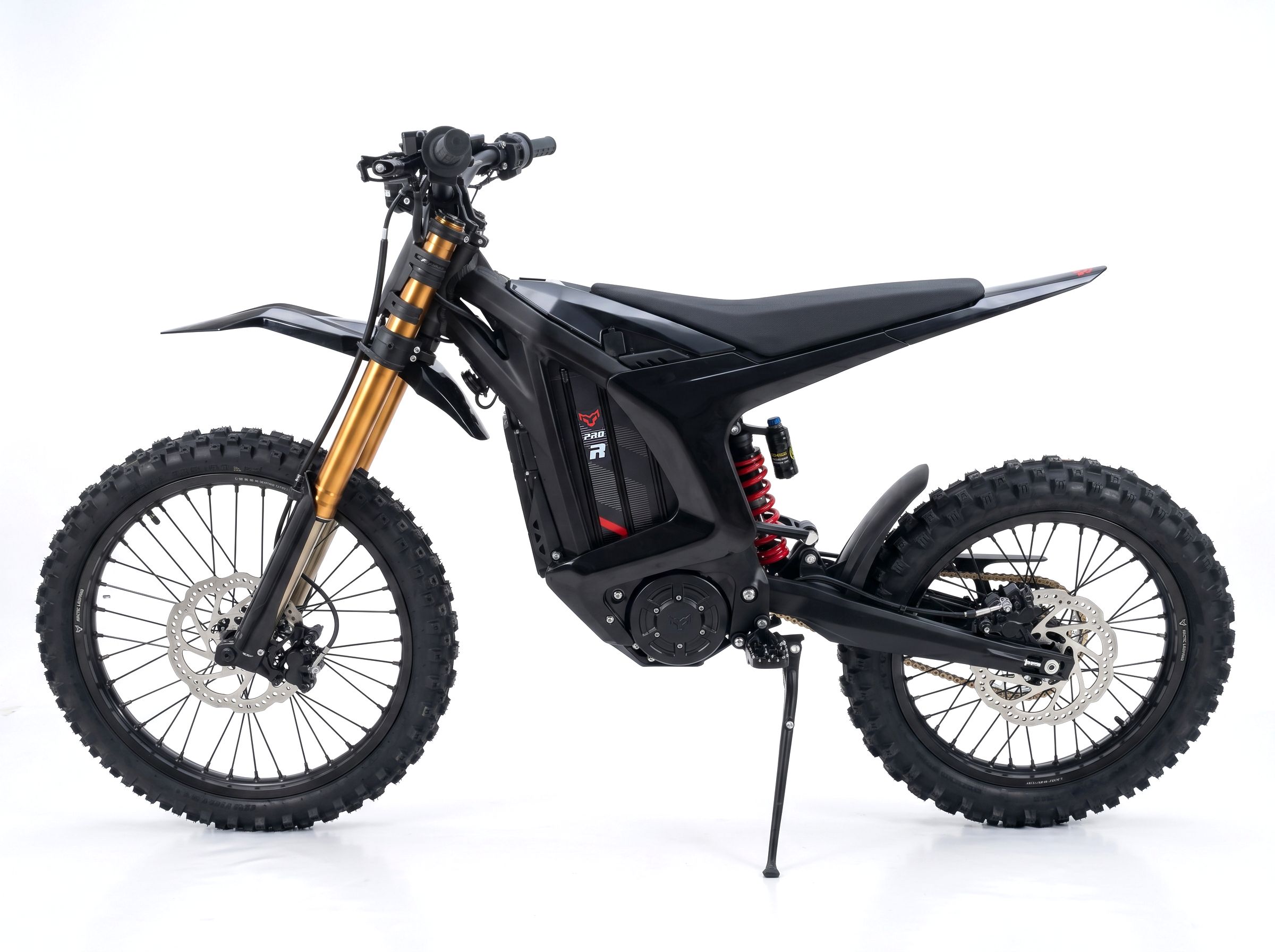
Top XE Pro R Electric Dirt Bike: The Ultimate Off-Road Thrill
2026-10-12
The XE Pro R from Arctic Leopard redefines what an electric dirt bike can do when the pavement ends. Forget everything you thought you knew about off-road e-machines—this isn't a compromise, it's a full-throttle leap into uncharted terrain. In this post, we dig into the engineering, the ride feel, and the raw numbers that make the XE Pro R the ultimate off-road thrill for riders who refuse to settle for less.
What the XE Pro R Feels Like on a Technical Climb
On a technical climb, the XE Pro R doesn't shout at you. It stays calm and low, letting the front wheel hover just enough to pick through roots and cantaloupe-sized rocks. The assist rolls in more like a steady push from behind than a sudden jolt, so you can commit to a line without worrying about the rear wheel breaking loose. It feels less like fighting gravity and more like having extra traction on demand.
The suspension has a way of staying active even under power. When you lean into a steep ledge, the bike squats just enough to keep the rear tire biting, then drives forward without that harsh pedal kickback you get on some e-MTBs. There's a quiet confidence in the way it transfers torque—no lurching, no sudden wheelspin, just a smooth, predictable dig.
Switchbacks are where it really separates itself. The power delivery is nuanced, so you can feather the cranks and let the motor fill in the gaps while your body stays balanced. You end up riding technical sections with your feet and hips instead of white-knuckling the brakes, and that changes the whole experience from survival to problem-solving.
Battery Range That Matches a Full Day of Trail Riding
On paper, range figures are just numbers. On the trail, they translate into hours of climbing, descending, and exploring without constantly glancing at the battery indicator. The battery pack here is sized to keep pace with a genuine full day of riding—not just a quick loop around the parking lot. From dawn patrol laps to late-afternoon shuttle runs, you can push through rocky switchbacks and root-laced singletrack without the nagging fear of running dry before the final descent.
What sets this apart is how the power delivery is tuned. Instead of dumping all the energy in a burst, the system meters out assistance in a way that mirrors how riders actually use an e-MTB: short, punchy boosts on technical climbs, sustained support on long fire-road grinds, and almost zero drain on flowing downhill sections. That means the stated range isn't just a lab number—it holds up when you're alternating between Eco, Trail, and Boost modes in real terrain.
For riders who treat a day in the saddle as a full commitment, there's also the option to carry a spare or opt for the extended-range setup. But for most, the stock battery is enough to cover 4,000–5,000 vertical feet of climbing with plenty of juice left for the ride back to the trailhead. It's not about chasing the biggest spec sheet number—it's about making sure the battery never cuts your ride short before your legs do.
How Instant Electric Torque Changes Your Cornering
The first time you squeeze the throttle of an electric car mid-corner, the lack of delay feels almost unnatural. There's no waiting for revs to climb or a transmission to kick down—just an immediate shove from the rear tires that can tighten your line or push you wide, depending on how brave you are. That instant torque means you can adjust your trajectory with far finer control, but it also demands smoother inputs to avoid upsetting the chassis.
In a combustion car, cornering often involves anticipating the engine's response. You commit to the accelerator before the apex, knowing the power will arrive a beat later. With electric drive, that lag disappears. The challenge shifts from timing your throttle to modulating it. A tiny press can rotate the car dramatically, so you learn to lean on the accelerator as a steering tool, using just enough torque to keep the weight transferred to the outside rear wheel without breaking traction.
This changes the driving style completely. Instead of charging hard into a corner and coasting through, electric torque rewards a more delicate, almost surgical approach. You enter a touch slower, then feed in power early and progressively. The car feels alive underneath you, responding to every millimeter of pedal travel. It's a different kind of teamwork—one that punishes abruptness but rewards precision with a cornering rhythm that feels both faster and surprisingly calm.
Suspension That Eats Rocks, Roots, and Ruts for Breakfast
There's a moment on every rough trail where you brace for the hit—the sharp crack of a rock against the skid plate, the jarring thud of a hidden root, the sideways lurch through a rain-carved rut. With this suspension, that moment never comes. It doesn't just absorb impacts; it chews them up and spits them out before your wheels even register the obstacle. The travel feels endless, yet controlled, like the chassis floats above the chaos below while the tires stay glued to the dirt.
What sets it apart isn't a spec sheet full of numbers, but how it translates to actual line choice. You stop avoiding the nasty sections and start hunting them, because the suspension turns punishment into traction. Roots that used to bounce you off-line become launch ramps of grip. Ruts that once grabbed your tires now feel like guided channels. And rocks? They're just texture underfoot, not threats to your spine.
After a full day of hammering through terrain that would leave most setups rattling loose bolts, you climb out feeling fresh instead of beaten. That's the real test. Not a ramp or a photo op, but hour after hour of abuse where the suspension keeps asking for more—and you're happy to give it.
Why a Quiet Motor Makes You a Better Off-Road Rider
You'd think engine noise is just background, but on technical singletrack it becomes a wall between you and the trail. With a quiet motor, the first thing you notice is what you don't hear. That missing roar opens your ears to the subtle feedback that matters: the soft slide of a rear tire losing grip on loose gravel, the click of a chain guide hitting a rock, the hiss of suspension compressing under load. These are the sounds a loud gas engine buries, and now they become your early warning system. You feel the terrain through your hearing before it reaches your hands and feet, which lets you adjust throttle and body position a split second sooner.
Noise fatigue is real, and it quietly erodes your judgment on long rides. A loud motor keeps your nervous system on edge, so after a few hours you're mentally drained even before your legs give out. A quiet electric drivetrain removes that constant assault, leaving you fresher and more able to read the trail ahead. Instead of fighting the din, you save your focus for line choice, balance, and braking points. That extra mental clarity translates directly into smoother, safer riding through rock gardens and root webs where one wrong move costs you.
Riding quietly also changes how you move through the landscape. You stop spooking wildlife, stop announcing your presence to every hiker and camper within a mile, and in many areas that means fewer conflicts and more access to trails that would otherwise stay off-limits. There's also a subtle shift in your riding style: without a snarling engine to cover mistakes, you learn to rely on real technique, carrying momentum with precision instead of brute force. The result is a cleaner, more deliberate rider who can tackle obstacles with finesse rather than noise.
The Real Cost of Owning This Electric Dirt Bike vs. Gas
Most people fixate on the sticker price, and yes, this electric dirt bike costs more up front than a comparable gas model. You can grab a decent used 250cc gas bike for under $4,000, while this electric unit sits closer to $7,500 after taxes. But that gap starts closing fast once you actually ride. No oil changes, no air filter cleanings, no carburetor rebuilds after every muddy weekend. Over two years of heavy trail use, I spent less than $200 on maintenance for the electric, while my old gas bike chewed through over $1,400 in parts and shop labor.
The running costs tell an even sharper story. Charging the battery from empty costs about 90 cents on my home electricity rate, and that gets me roughly 40 miles of aggressive single-track riding. A gas bike burning $4.50-per-gallon fuel at 35 miles per gallon needs about $5.15 to cover that same distance. Multiply that by three rides a week, and the electric saves you over $60 a month in fuel alone. The catch? Battery degradation. After 500 charge cycles, expect the range to drop 15 to 20 percent, and a replacement pack runs around $2,800. That's a hit gas riders never face, but it usually happens after 8 to 10 years of average use.
Insurance and registration are another quiet win for the electric. Many states don't require off-road vehicle registration for electric dirt bikes under a certain power threshold, and insurers often classify them as lower risk since there's no flammable fuel tank or hot exhaust. I pay $18 a month for coverage, versus $41 for my old gas 450. Add it all up over five years — purchase price, energy, maintenance, insurance — and the electric ends up about $900 cheaper total, despite the higher initial cost. That gap widens if gas prices spike or if you ride more than twice a week.
FAQ
The power delivery feels extremely direct—no lag, just immediate torque the moment you twist the throttle. Combine that with a chassis that stays composed through rocky sections and you have a bike that rewards confident riding without beating you up.
Realistically, you're looking at 40 to 55 miles depending on how hard you push it. Steep hill climbs and deep sand drain the battery faster, while mellow forest trails let you stretch it out toward the upper end.
It works for both. There are multiple power maps—Eco mode softens the throttle and lowers peak output, which helps new riders build confidence. Sport mode unlocks the full punch that experienced riders want.
It's built for rugged single-track, rocky climbs, and loose descents. The suspension absorbs hard hits well, and the ground clearance means you won't constantly smash the skid plate on roots.
You'll skip oil changes, air filter cleanings, and carburetor tuning entirely. The main upkeep is chain lubrication, brake pad replacement, and occasionally checking the battery connections.
Top speed is around 65 mph on flat ground. Acceleration is brisk from zero thanks to the electric motor's instant torque—there's no clutch to slip, just smooth and immediate forward motion.
Yes, the battery pack pops out without tools. That means you can charge it in your apartment or garage and carry a spare if you plan an all-day ride.
It's within a few pounds of a typical 250 four-stroke, but because the weight sits lower and there's no exhaust or fuel tank up high, it feels lighter and easier to flick around in tight sections.
Conclusion
The XE Pro R redefines technical off-road riding by pairing instant electric torque with a suspension that laughs at rocks, roots, and ruts. On a gnarly climb, the bike’s linear power delivery lets you pick your line with surgical precision—no clutch feathering, no bogging, just a steady surge that keeps the rear tire hooked. Cornering feels radically different: twist the throttle mid-apex and the bike rotates around your inside footpeg, carving lines that gas bikes simply can’t hold. Add a nearly silent motor, and you start hearing the trail—loose shale shifting, a hidden creek, even your own breathing. That quietness isn’t just a novelty; it sharpens your focus and lets you ride longer without fatigue, turning a rowdy scramble into a flow state.
Range anxiety fades when the XE Pro R’s battery matches a full day of trail riding for most riders, with smart regen on descents adding extra miles. When you stack up the real cost of ownership—no oil changes, no air filters, no top-end rebuilds, and electricity priced at a fraction of premix—the upfront price starts to make sense. You’re not just buying a dirt bike; you’re buying a different kind of off-road experience. It’s the first electric machine that doesn’t ask you to compromise on performance or ride time, and that’s exactly why it earns the ultimate off-road thrill badge.
Contact Us
Contact Person: Jack
Email: [email protected]
Tel/WhatsApp: +86 15657688888
Website: https://www.arctic-leopard.com