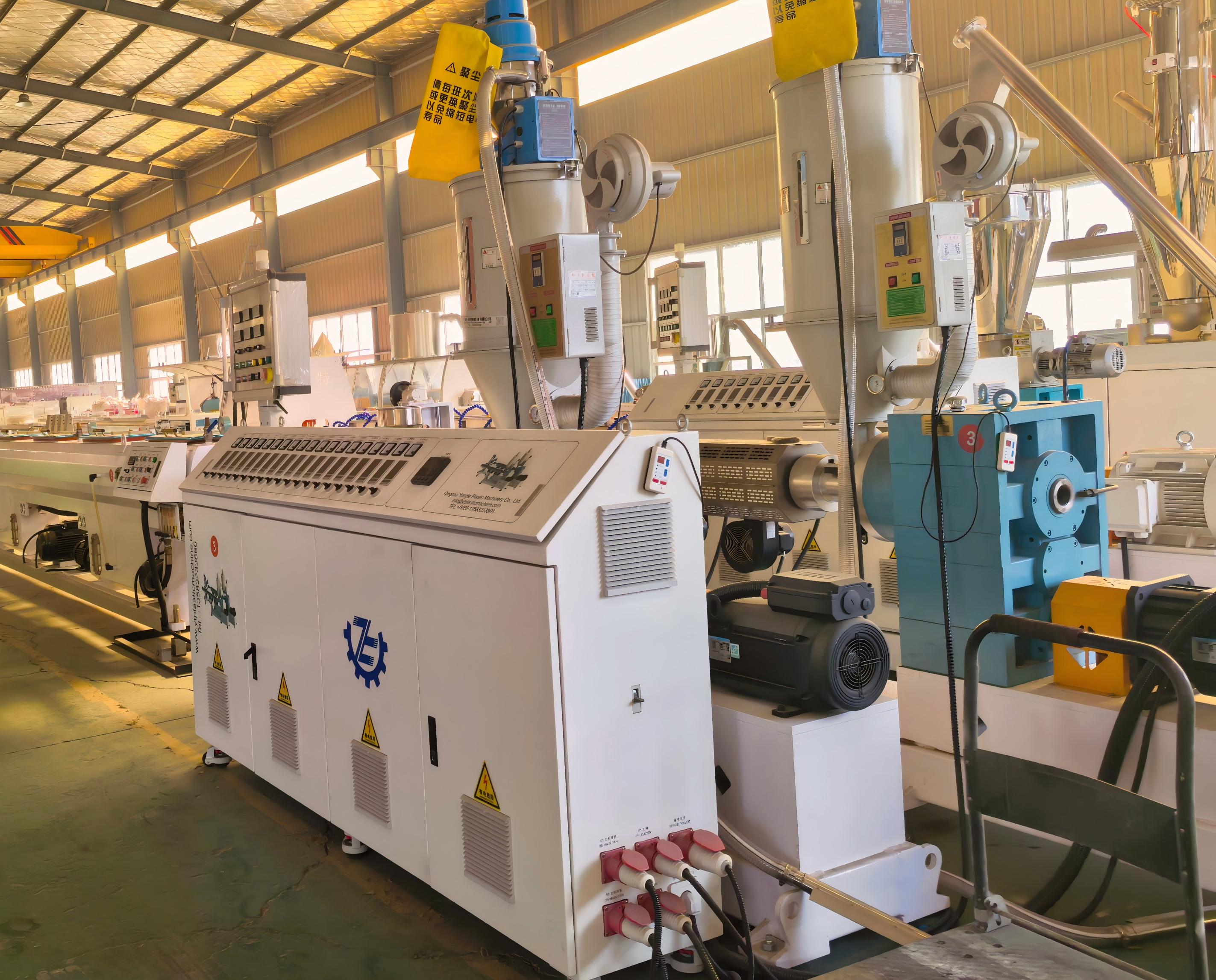

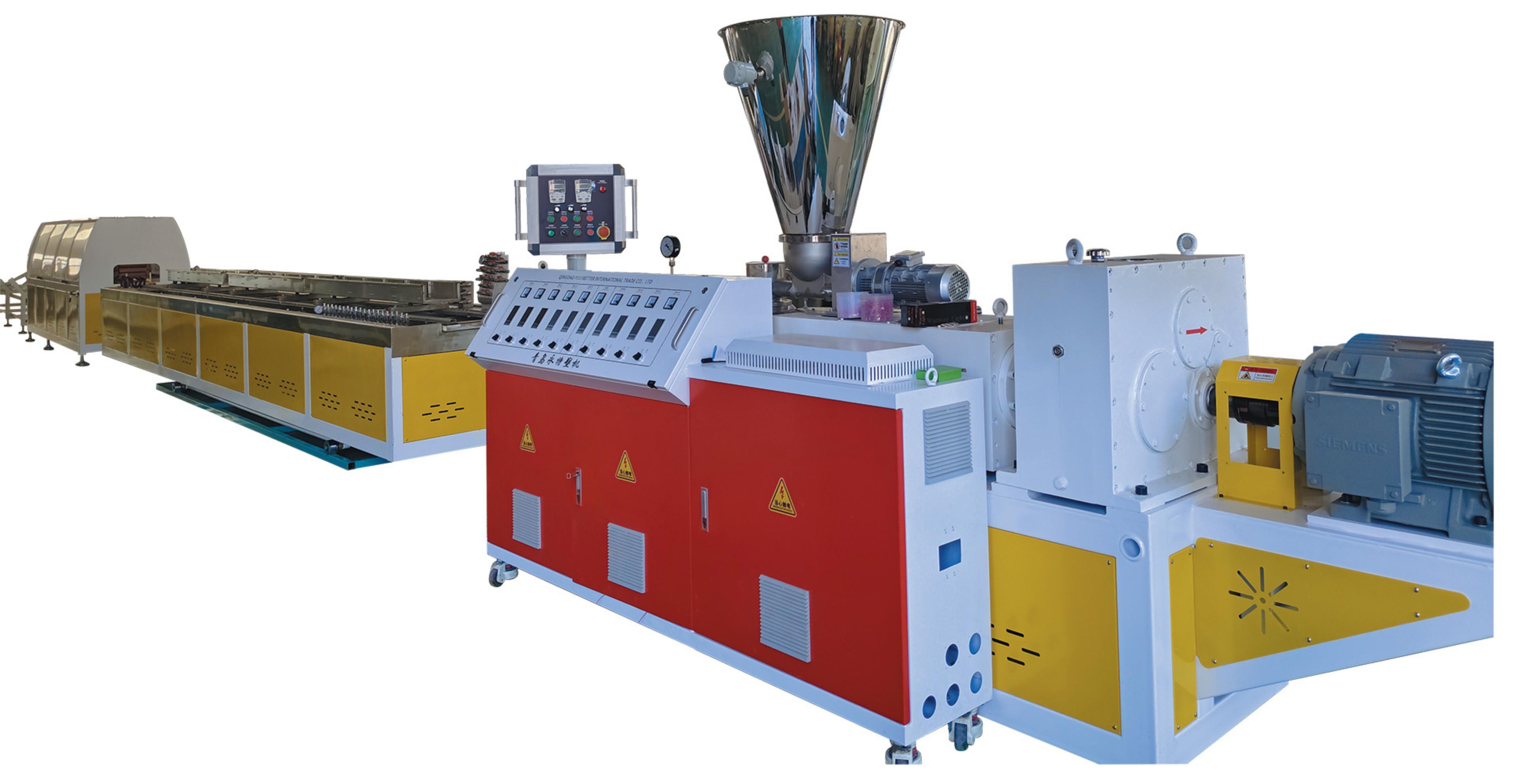
Top WPC Profile Machine Buying Guide for Manufacturers
2026-10-20
If you're sourcing a WPC profile machine, you already know the market is crowded with specs that look identical on paper. Yet on the factory floor, small differences in screw design, temperature control, and downstream calibration determine whether your profiles come out consistent or full of reject waste. This buying guide breaks down the features that actually affect payback time—not just brochure bullet points. From extrusion output stability to changeover flexibility for different profile shapes, we've organized the comparison so you can shortlist suppliers with confidence. And as a Yongte partner, you'll also see how our own machines handle the common pain points manufacturers share with us every week.
What Actually Matters When Comparing WPC Profile Machines
Most buyers start by checking screw diameter or motor power, but those numbers rarely predict how the line will run on a Monday morning with reclaimed material and a tight deadline. What separates a machine that holds tolerance from one that drifts is how the barrel temperature zones recover after a viscosity swing, whether the calibrator can be pulled without shutting down half the line, and how easily the operator can tweak melt pressure without digging through menus.
After a few months on the floor, the things that actually consume your time are tooling changes, purging between color batches, and fighting die lip build-up. A machine with quick-clamp die heads and a well-designed vacuum calibration table will save more labor in a quarter than a slightly larger motor will save in energy across a year. During demos, watch how long it takes the crew to switch from a deep fluted profile to a thin wall section—if that process feels like a project, it will become a permanent bottleneck.
Long-term value also depends on how the control system handles small failures. You want clear diagnostics for heater faults and motor overloads, not a generic alarm that forces a service call. Spare parts availability and local support matter more than a spec sheet, because any extruder will go down eventually. The ones that earn their keep are designed so a technician can replace a thermocouple or a calibration die without waiting on specialized tools or overseas shipping.
Beyond the Spec Sheet: Real-World Performance Checks
Real-world performance isn’t about benchmark numbers on a cold device. It’s about what happens after 30 minutes of navigation with the sun beating down, or when you switch between a video call and a heavy editing app. I’ve seen phones post top-tier scores then drop frames like crazy once the battery dips below 20%. A quick run-through of daily tasks—launching the camera from the lock screen, scrolling a long photo gallery, splitting the screen between a map and a podcast app—tells you more than a dozen synthetic tests.
Battery and thermals are the hidden saboteurs. A sleek spec sheet won’t show you that the back panel turns into a hot plate during a 4K recording, or that fast charging slows to a crawl after the first 25%. I prefer to run a real mixed-use day: two hours of streaming, an hour of navigation, some casual gaming, and constant background sync. If the phone gets uncomfortable to hold or the screen dims to manage heat, that’s a performance fail no matter the chip inside.
Then there’s the ‘fresh out of the box’ trap. Phones feel fast when empty, but fill the storage past 80% and you’ll see app launches stutter, camera saves lag, and updates take forever. I also check real-world connectivity—how quickly it reconnects after an elevator ride, or whether Wi-Fi calls drop when moving between rooms. These small, unglamorous checks are what separate a phone that’s pleasant to live with from one that only impresses in a lab.
The Hidden Costs Manufacturers Often Overlook
Manufacturers tend to focus on obvious expenses like raw materials, labor, and machinery. Yet beneath the surface lie costs that quietly drain profit margins without showing up on a standard balance sheet. These hidden costs include equipment downtime from poor maintenance schedules, excess inventory tied to inaccurate demand forecasting, and the slow accumulation of waste from inefficient production layouts. Over time, they compound into a sizable financial burden that many companies only notice when margins start shrinking.
Another overlooked area is regulatory compliance and energy consumption. Upgrading to meet changing environmental standards or dealing with scrap and rework from quality failures often gets treated as a one-off event rather than a recurring operational drag. Similarly, the cost of employee turnover—recruiting, training, and lost productivity during ramp-up—rarely appears on a line item but can exceed annual salary for skilled positions. Ignoring these factors leads to budgets that look healthy on paper while actual cash flow suffers.
Finally, supply chain fragility creates hidden exposure that manufacturers frequently underestimate. Relying on a single supplier for a critical component might save money upfront, but a disruption can halt production for days. Freight surcharges, expedited shipping fees, and overtime labor to catch up are often absorbed without being tracked. By bringing these invisible costs into clear view, manufacturers can make smarter trade-offs and protect their long-term profitability.
Matching Machine Capabilities to Your Production Goals
Production goals rarely line up with what a machine promises on paper. The first step is to strip back the spec sheet and look at the actual job mix: batch sizes, changeover frequency, tolerance demands, and the real floor space you have. A high-speed spindle might sound impressive, but if most of your work is low-volume prototyping with frequent setup changes, that extra speed just becomes idle capacity while you pay for rigidity you don't need.
Equally important is how the machine interacts with everything around it. Chip evacuation, coolant pressure, tool storage, and even the operator's reach can turn a capable platform into a bottleneck. If your goal is lights-out operation, you need to verify sensor redundancy and automatic tool breakage detection before trusting a vendor's claim. Matching capability means looking past the headline numbers and asking which constraints will actually govern your weekly output.
Finally, consider the path after the first year. A machine that exactly meets today's demand often leaves no room for a new product line or a step up in material hardness. Buying slightly ahead in spindle power or axis travel can be wasteful if it's never used, but building in modular automation or extra tool stations is often the difference between a machine that fits your goals now and one that still fits them in three years.
Vendor Evaluation: Questions Worth Asking Before You Commit
The moment a vendor demo ends, the real work begins. Too many teams skip straight to feature checklists or price comparisons, only to discover six months later that the partnership is dragging on delivery times, support, and even product direction. Before you sign anything, dig into the vendor's track record with clients who look like you. Ask for specific examples of how they've handled a sudden change in requirements, a missed deadline, or a dispute over scope. If they can't point to a concrete case study or hesitate to share client contacts, treat that as a red flag—not necessarily a deal breaker, but a clear signal to slow down.
Another layer to probe is the vendor's internal health. A vendor with high employee turnover, unclear ownership, or a recent acquisition may look stable on paper but struggle to maintain the same level of service you were promised during the sales cycle. Ask directly about team structure, who would own your account day-to-day, and what happens if your primary contact leaves. The goal isn't to grill them for the sake of it; it's to understand whether their operational reality can actually support the commitments being made in the contract.
Finally, push past the standard "what does success look like" question and get into failure scenarios. What happens if the integration fails on launch day? Who pays for rework if the vendor's work doesn't meet agreed-upon acceptance criteria? How are disagreements resolved, and is there a clear escalation path? Vendors that welcome these tougher conversations tend to be the ones with enough confidence in their own processes to weather inevitable bumps. Those that deflect or offer only vague assurances are often hiding the very gaps that will cost you later.
Future-Proofing Your Investment: Flexibility and Upgrades
Most purchasing decisions focus on immediate specifications, but the real cost often appears later when a single component cannot be upgraded. A system built with modular parts, open interfaces, and standardized connectors allows you to swap out only what needs improvement instead of replacing the entire unit. This approach shifts the conversation from initial price to long-term adaptability, which is where genuine savings accumulate.
Software-defined upgrades add another layer of protection. Rather than buying new hardware every time capabilities expand, you can unlock additional performance through firmware updates or license activations. This reduces downtime and keeps your equipment aligned with evolving requirements without forcing a complete overhaul. It also means your team spends less time on installation and more time on actual work.
Flexibility is not an abstract promise; it shows up in hinges that accept new modules, ports that follow industry standards, and control panels designed for remote updates. When every upgrade path is considered during design, you avoid the trap of being locked into a dead end. That is how a purchase becomes a platform for continued growth rather than a snapshot of today's needs.
FAQ
Focus on screw geometry and barrel material first. A line that can run high wood-fiber content without frequent barrel wear or melt temperature spikes will save more money over time than one with a slightly faster output rating. Ask for actual run data with your formulation, not just brochure specs.
A lot. WPC compounds are shear-sensitive; too aggressive a screw can burn the wood flour and create dark spots or brittle profiles. Look for a supplier that offers dedicated WPC screw profiles, ideally with venting to pull moisture and volatiles before they reach the die.
Not necessarily. Output only matters if the melt stays homogeneous and the profile holds dimensional tolerance at that speed. Pushing a machine past its stable throughput often leads to wavy edges, surging, or internal stresses that show up later as warping. Aim for the highest stable output, not peak output.
It's often the difference between consistent profiles and constant adjustment. Precise vacuum calibration tanks and multi-zone cooling prevent hollows, sink marks, and bowing. For solid WPC decking, cooling capacity and tank length need to match your line speed, otherwise you'll be slowing down the extruder.
Ask for references from manufacturers running similar materials and profiles, not just any customer. Check how quickly they supply spare screws, barrels, electrical parts, and whether they offer remote diagnostics. A cheaper machine can become very expensive if a two-week downtime for a minor part becomes normal.
For most WPC formulations, conical twin-screw extruders are preferred because they handle high filler loadings and provide better mixing at lower shear. Single-screw machines can work for simple, low-wood-content profiles or pre-compounded pellets, but they struggle with direct wood-plastic blends and moisture.
Tooling changes, die heaters, spare parts packages, commissioning fees, and training can vary widely. Some suppliers quote a bare extruder, while others include the vacuum tank, haul-off, saw, and stacker. Always get a line-by-line breakdown and ask what is not included.
Very important. Modern PLC systems with recipe storage, melt pressure/temperature trending, and automatic barrel heating zones reduce operator errors and make startup repeatable. If your operators need to manually tweak every setting each shift, quality will drift and scrap rates will rise.
Conclusion
When you're investing in a WPC profile machine, the decision rarely comes down to a single spec on a datasheet. Manufacturers benefit most from stepping back and looking at how the whole system behaves under real production loads. That means watching a machine run your actual material blend, not just the vendor's demo formula, and checking how consistently it holds temperature, pressure, and screw speed over an eight-hour shift. Many buyers get distracted by headline output numbers, but it's the stability during long runs—especially when regrind percentages shift or moisture levels fluctuate—that separates machines worth owning from those that just look good in a brochure. You also have to account for the costs that don't appear in the quote: spare screw and barrel lead times, energy consumption at your local utility rates, training time for operators, and the floor space needed for auxiliary cooling and calibration tables. These hidden items can easily add 15–20% to the true cost of ownership within the first two years.
Beyond immediate performance, matching the machine to your actual production goals requires honest assessment of your product mix. A machine optimized for wide, thick decking profiles may not handle thin trim or complex hollow chambers efficiently, so flexibility—adjustable calibration, quick barrel changes, and modular downstream equipment—quickly pays for itself if you plan to expand your catalog. When evaluating vendors, don't accept generic answers about "German engineering" or "high quality." Ask for references from plants running similar profiles at similar volumes, and request a trial with your own tooling and material rather than a standard sample. Also question how the control system handles recipe changes and whether software updates are included or treated as separate line items. Future-proofing matters because WPC formulations and profile designs keep shifting; a platform that allows you to add a second extruder, switch to a different screw geometry, or integrate inline embossing without replacing the entire line gives you room to adapt. In practice, the best buying decisions come from combining observed run stability, a clear-eyed total cost calculation, and a vendor willing to prove performance on your terms.
Contact Us
Contact Person: Ms Qin
Email: [email protected]
Tel/WhatsApp: 8613583233866
Website: https://www.yongteplast.com