

Top Rolling Machine Manufacturing: The Key to Efficient Metal Forming
2026-06-15
In the world of metal fabrication, the right rolling machine can mean the difference between wasted material and flawless output. But efficiency doesn’t come from just any equipment—it’s born from manufacturing expertise that truly understands metal forming. JIAN MENG has been quietly redefining what’s possible, combining precision engineering with real-world reliability. This article explores why top-tier rolling machine manufacturing is the hidden key to unlocking your shop’s full potential.
How Advanced Rolling Machines Redefine Precision in Metal Shaping
The shift toward adaptive control systems has turned rolling machines into micron-level sculptors of metal. Instead of relying on fixed settings, these machines now use real-time force feedback and laser measurement to instantly compensate for material springback and thermal drift. The result is a finished profile that matches the CAD model within a tolerance band so narrow it was once reserved for grinding operations.
Multiaxis synchronization plays an underappreciated role in achieving complex geometries. Today’s servo-driven rollers can alter their angles and pressure independently while the workpiece is in motion, enabling nonsymmetrical channels and variable thicknesses in a single pass. This eliminates the need for secondary bending or welding steps that previously introduced alignment errors.
Beyond shape conformity, advanced rolling also redefines what quality means in terms of surface integrity. Precise load distribution reduces grain fragmentation and microcracking, leaving the metal stronger than when it entered. Combined with automated in-process gauging, the technology catches deviations before they become defects, drastically cutting scrap rates while preserving the innate durability of the material.
The Materials Science Behind High-Performance Roll Forming
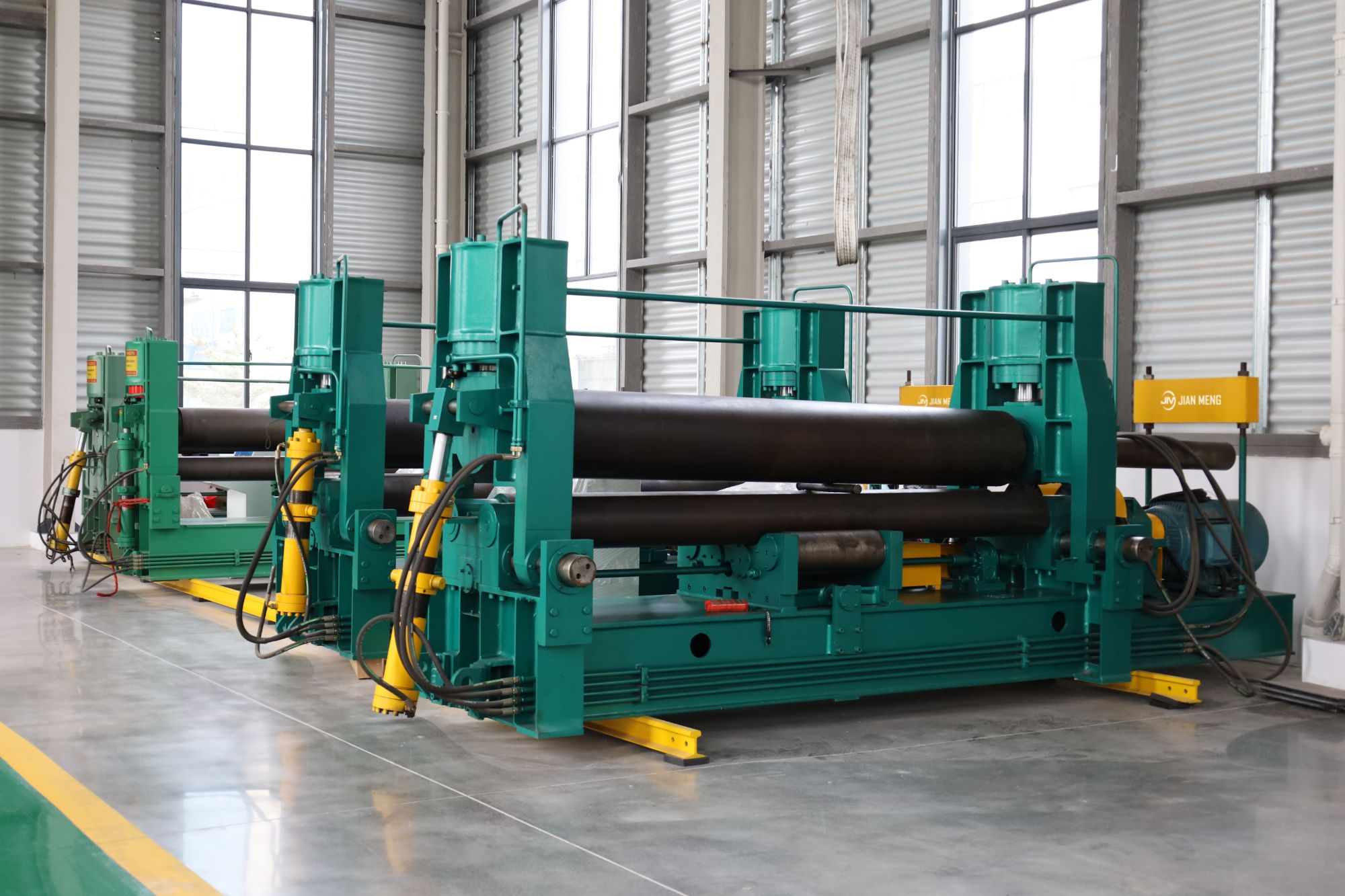
Understanding the interplay between material microstructure and forming parameters is essential in high-performance roll forming. The process begins with selecting alloys that offer a balance of strength, ductility, and work-hardening behavior. Advanced high-strength steels, aluminum–lithium alloys, and dual-phase materials are increasingly used to meet lightweighting demands without sacrificing structural integrity. Their tailored grain structures—achieved through controlled rolling and heat treatment—directly influence how the material flows through successive forming stands, minimizing springback and reducing the risk of edge cracking.
At the tool–material interface, friction and wear become critical factors when processing high-strength sheets. Coatings such as diamond-like carbon and nano-composite layers are applied to roll surfaces to extend tool life and maintain consistent surface finish. Meanwhile, real-time monitoring of forming loads and strain distribution allows for adaptive control of roll gaps and speeds, compensating for variations in incoming strip properties. This fusion of material science with mechatronic precision is what transforms a conventional roll forming line into a high-performance system capable of producing complex profiles with tight tolerances.
Thermomechanical effects also play a pivotal role, particularly in forming advanced multiphase steels. The heat generated during plastic deformation can trigger dynamic strain aging or phase transformations if not properly managed. Engineers counteract this by designing pass schedules that distribute strain evenly and by incorporating inter-pass cooling or in-line annealing. The result is a finished part with predictable mechanical properties, free from residual stresses that could compromise fatigue life or corrosion resistance.
Streamlining Production: Automation Trends in Modern Rolling Mills
Modern rolling mills are shedding their old, manual-intensive image as automation weaves deeper into every stage of production. It’s no longer just about isolated robots handling heavy coils; today’s systems integrate sensors, real-time analytics, and adaptive controls that can adjust roll gaps and speeds on the fly. This shift isn’t just about speed—it’s about precision at levels that human operators alone could never reliably sustain over a full shift. When a mill can predict and compensate for temperature drift or incoming material variations before they cause a flaw, the downstream savings in scrap and rework become substantial.
A quiet but important trend is the move toward autonomous decision-making on the plant floor. Rather than sending all data up to a central system and waiting for instructions, edge devices and local controllers now manage many corrective actions instantly. For instance, if vibration sensors detect an abnormal chatter pattern in a finishing stand, the system can automatically tweak lubrication or reduce speed slightly—often without any operator intervention. This doesn’t eliminate the human element; instead, it frees experienced crews to focus on complex exceptions and continuous improvement, rather than constantly monitoring gauges. The result is a more resilient process that catches problems while they’re still small, long before a costly cobble or dimensional miss.
Perhaps the most practical shift for many mills is the embrace of digital twins that mirror the entire rolling line. These virtual models ingest live process data and allow engineers to test new roll pass designs or cooling strategies without interrupting production. When combined with predictive maintenance algorithms—which flag degrading bearings or hydraulic leaks based on subtle pressure changes—the mill moves from a reactive “fix it when it breaks” posture to something much closer to planned reliability. The payoff shows up in longer campaigns between roll changes, fewer unplanned stops, and a consistent product that customers notice. For an industry built on thin margins, this kind of integration turns automation from a cost into a proven competitive lever.
Energy Efficiency and Sustainability in Rolled Metal Manufacturing
Modern rolled metal manufacturing has shifted toward closed-loop water systems that drastically cut consumption and prevent thermal pollution. Instead of single-pass cooling, mills now recycle process water through advanced filtration and cooling towers, maintaining consistent temperatures for both equipment and product quality. This approach not only conserves millions of gallons annually but also reduces the energy needed to pump and treat fresh water.
Smart energy management plays an equally critical role. Real-time monitoring of rolling forces, motor loads, and furnace atmospheres allows operators to fine-tune parameters moment by moment, avoiding the wasteful spikes common in older mills. Regenerative drives on heavy roughers and finishing stands capture braking energy and feed it back into the grid or neighboring machinery, sometimes shaving 10–15% off a line’s total electricity demand.
Long-term sustainability also depends on the materials themselves. Growing use of high-strength, thin-gauge steels means downstream users can achieve the same structural performance with less weight, cutting lifecycle emissions well beyond the mill gate. Meanwhile, advanced refractory linings and oxygen-enriched combustion in reheat furnaces are pushing thermal efficiencies above 80%, ensuring that every joule of input contributes more directly to the final product rather than escaping as lost heat.
Customization Capabilities That Drive Competitive Edge
Most businesses don’t fit neatly into a box, yet software tools often force them into rigid molds. The difference between a one-size-fits-all platform and one that bends to your workflows is stark. When you can modify dashboards, automate unique tasks, or align features with niche industry needs, you stop wrestling with the tool and start working with it. That shift alone creates a moat—customers rarely leave for a competitor that can’t match the fit they’ve come to depend on.
Real customization goes beyond skin-deep color changes. It means offering APIs that let power users build exactly what they need, permission systems that mirror organizational structures, and data models that adapt without breaking existing logic. The companies that invest in this kind of deep flexibility find themselves not just retaining clients, but becoming a backbone—something their users couldn’t easily replace even if they wanted to. In practice, it turns a service into a partnership, and a commodity into a strategic advantage.
Real-World Applications: From Automotive to Aerospace
The flow of innovation between automotive and aerospace engineering has quietly reshaped both industries. Lightweight alloys and carbon-fiber composites, originally perfected for aircraft fuselages, now reduce weight and improve fuel efficiency in everyday cars. Conversely, the mass-production assembly lines that churn out millions of vehicles have taught aerospace manufacturers how to increase output without sacrificing precision, especially in the burgeoning small-satellite sector.
On the software side, autonomous driving research has spilled over into unmanned aerial systems. The sensor fusion algorithms that help cars interpret chaotic city streets are being repurposed for drones navigating complex airspace. Meanwhile, aerospace-grade inertial navigation and redundant safety architectures are becoming standard in high-end automotive driver-assistance suites, bringing flight-proven reliability to the road.
Even in testing and validation, the cross-pollination is evident. Automotive crash-test simulations borrowed from aerospace impact analysis, and now spacecraft designers are adopting rapid prototyping cycles from the auto industry to iterate on components faster. It's a continuous loop where lessons from the highway inform designs that leave the atmosphere, and vice versa.
FAQ
Top rolling machine manufacturing refers to the production of machinery designed to pass metal stock through one or more pairs of rolls to reduce thickness, improve uniformity, or impart desired mechanical properties. It's fundamental to metal forming because it enables mass production of sheets, plates, and structural shapes with precise dimensions and consistent quality, often while enhancing material strength through work hardening.
They streamline production by operating continuously at high speeds, processing large volumes of metal with minimal waste. Advanced automation and control systems allow for rapid adjustments, reducing downtime. The ability to handle multiple stands in tandem further boosts throughput and energy efficiency, cutting overall production costs.
The primary categories include two-high, three-high, four-high, and cluster mills. Two-high mills are versatile for basic operations, while four-high and cluster mills are preferred for thin gauge and high-strength materials due to their smaller work rolls supported by larger backup rolls, minimizing deflection. Continuous and planetary mills are also employed for specialized applications.
Commonly processed materials include carbon steel, stainless steel, aluminum, copper, brass, and titanium alloys. Each material requires specific temperature and pressure settings—hot rolling is used for large reductions and toughness improvements, while cold rolling achieves superior surface finish and tighter tolerances for hardenable alloys.
Automotive, aerospace, construction, and shipbuilding industries rely heavily on rolled metal products. For example, automakers use high-strength rolled steel for lightweight body panels, while aerospace depends on precision-rolled titanium and aluminum for structural components. The energy sector also uses rolled pipes and plates for pipelines and pressure vessels.
Critical design elements like roll gap adjustment, bearing arrangements, and frame rigidity directly affect thickness accuracy and surface finish. Properly engineered rolls with specific cambers and surface treatments prevent defects like edge cracking or waviness. Adaptive control systems further compensate for thermal expansion and material springback in real time.
Integration of Industry 4.0 principles, such as IoT sensors for predictive maintenance and digital twins for process simulation, has significantly enhanced machine uptime and product quality. Hybrid rolling-combining casting and rolling in a single step-and electrically driven rolls with precise torque control are also reducing energy consumption and increasing flexibility.
They employ high-grade alloy steels for rolls and frames, often hardened through induction or differential heat treatment. Precision grinding and laser alignment during assembly guarantee tight tolerances. Regular maintenance protocols, coupled with advanced lubrication systems, minimize wear. Some manufacturers also apply hard-facing coatings like chrome carbide to extend roll service life.
Conclusion
Precision has become the hallmark of top-tier rolling machine manufacturing, where advanced sensors and adaptive control systems now drive micron-level accuracy in metal shaping. The integration of high-strength alloys and refined metallurgy ensures that rolls withstand extreme pressures without compromising surface finish, while sophisticated cooling and lubrication techniques extend tool life. Automation is reshaping production floors, with smart mills using real-time data to adjust speeds, gaps, and tensions autonomously, slashing waste and idle time. These interconnected upgrades mean that a single line can shift from delicate sheet work to heavy plate forming with minimal human intervention, keeping operations lean and responsive.
Efficiency is equally defined by energy consciousness and flexibility. Modern machines capture regenerative braking energy and optimize motor loads to lower consumption, aligning with stricter sustainability targets without sacrificing throughput. Customization has evolved from simple profile changes to on-the-fly adjustments driven by digital twins and customer specifications, letting manufacturers serve niche markets profitably. This blend of green engineering and agile tooling proves its worth in aerospace panels, automotive structural members, and even architectural components, where consistent quality and fast changeovers transform rolling from a commodity process into a strategic advantage. The result is a manufacturing ecosystem where cost, speed, and environmental responsibility reinforce each other.
Contact Us
Contact Person: Jeanie
Email: [email protected]
Tel/WhatsApp: +86 19805122954
Website: https://www.jianmeng.com