

Top Galvanized Tangent Tower Dealers for Durable Power Transmission Projects
2026-09-11
Power transmission projects live and die by the quality of their tangent towers—especially the galvanized coating that fends off corrosion for decades. Yet finding a dealer who delivers that durability consistently is harder than it sounds. If you've been burned by uneven zinc layers or delayed shipments, you know the drill. That's where Anbang enters the picture: a name that keeps coming up in procurement circles for high-voltage lines across tough environments. In this guide, we'll unpack what separates the best galvanized tangent tower dealers from the pack, and why Anbang has earned a seat at that table.
Matching Tower Geometry to Terrain Without Guesswork
Tower design on sloping ground has always involved a fair amount of educated guessing. Even when survey data exists, translating those contour lines into an actual tower base—where each leg might sit at a different elevation—often leaves engineers working from generalized assumptions. The result is usually a compromise: overbuilt foundations, field-bent steel, or last-minute adjustments that eat into both schedule and budget.
A better approach starts with high-density terrain data, whether from drone photogrammetry, mobile lidar, or a well-executed total station survey. Instead of forcing a standard tower body onto an irregular surface, the geometry is derived directly from the point cloud. Software can analyze every possible leg position, compute the required extension or shortening for each corner, and then match the tower's base configuration to the actual slope without manual trial and error.
This removes guesswork because the design is driven by measured reality rather than idealized cross-sections. Engineers can see, before construction begins, exactly how much steel is needed, where anchor bolts will land, and how the tower will sit relative to the finished grade. The payoff shows up as fewer field modifications, faster erection times, and a structure that fits the terrain as if it were always meant to be there.
Why Galvanizing Thickness Tells You More Than a Price Quote
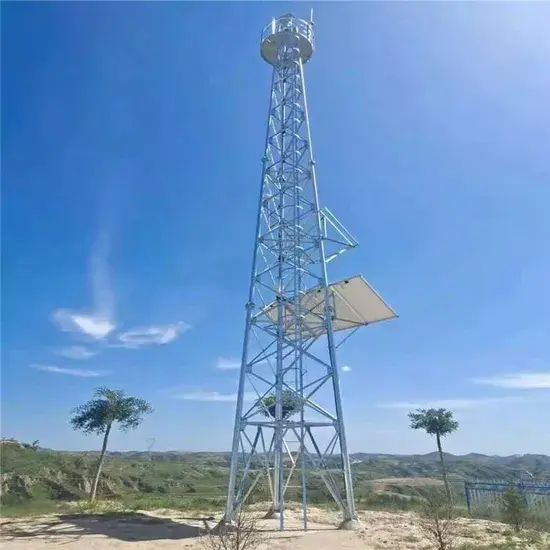
A price quote for galvanized steel often hides the single most important variable: how much zinc actually ends up on the surface. Two suppliers can offer nearly identical numbers, yet one product might carry twice the coating mass of the other. That difference shows up years later, not on the invoice, but in the form of rust bleeding through a highway guardrail or a warehouse beam that fails inspection long before its expected service life.
Thickness dictates how long the steel resists corrosion in a given environment. A thin, bright coating may look impressive on delivery day, but it sacrifices the sacrificial protection zinc provides. In coastal or industrial settings, that can mean the difference between a structure lasting twenty years and one needing touch-ups after five. Asking for the coating thickness specification—not just the total price—forces suppliers to reveal whether they are cutting corners with a fast dip or a diluted bath.
Wise buyers treat galvanizing thickness as the real unit of value. A quote that seems cheaper per ton often delivers less zinc per square meter, which means you are buying less protection, not a better deal. Comparing quotes by coating mass and expected lifespan, rather than headline price, shifts the conversation from short-term cost to long-term performance. That is the only way to know what you are actually paying for.
Dealer Track Records That Go Beyond the Brochure
The glossy pages tell you about zero-to-sixty times and available moonroofs, but they never mention the service bay logbooks stashed behind the parts counter. Ask a dealer to pull the actual maintenance history for the model you're considering—not the sanitized summary, but the raw repair orders. You'll start seeing patterns: a water pump that fails just past 60,000 miles, a infotainment module that gets reflashed every other visit, or a transmission fluid change interval that owners routinely ignore because the manual buries it. Those records live only in the dealership's internal system, and they reveal what ownership actually costs once the warranty clock runs out.
Beyond repairs, the dealer's own inventory turnover tells a sharper story. Walk the used lot and count how many of a particular model are sitting there with low mileage and suspiciously clean histories. Check the certified pre-owned inspection checklist—if a specific component shows up on nearly every sheet, that's a quiet admission. Better yet, ask the parts department how often they stock a certain sensor, gasket, or control arm for that vehicle. A knowledgeable service writer will sometimes tell you which model they'd steer their own family away from, and that off-the-record candor beats any brochure footnote.
Cutting Lead Times on Custom Tangent Towers Without Cutting Corners
In the transmission line world, custom tangent towers often get stuck in a slow-motion design loop—weeks of back-and-forth over load cases, then more weeks waiting for prototype revisions. The usual excuse is that speed kills quality. But our recent shift to parametric-driven detailing flipped that assumption. By building a master model that auto-generates member sizes, connection plates, and bolt patterns from a few input parameters, we cut the engineering cycle from six weeks to nine days. The trick wasn't cutting analysis corners; it was letting the software handle repetitive geometry while engineers focused on the hard decisions like foundation reactions and wind span assumptions.
Fabrication lead time was the next bottleneck. Instead of asking mills for standard angle stock and then waiting for punching and drilling, we worked with a regional fabricator to pre-order raw plate and tube bundles before final tower drawings were even approved. That may sound risky, but because the parametric model locked in member counts and rough cut lengths early, we knew the material takeoff within two percent. The fabricator could start cutting and kitting while we finished the last connection checks. Parallel processing like this trimmed another three weeks without a single skipped weld inspection or shortcut on galvanizing thickness.
The real differentiator came from treating every custom tower as a variation of a known family, not a one-off art project. We catalogued past tangent designs by voltage, terrain category, and maximum span, then mapped out which parameters actually moved the needle on steel weight versus which ones just added drafting noise. That allowed our team to quote a firm delivery date within 48 hours of receiving a new line layout. Customers noticed the difference—not because we promised magic, but because we stopped hiding behind 'custom' as an excuse for slow work.
What Field Engineers Actually Check on a Delivered Tower
When a tower arrives on site, the first thing a field engineer does is walk the entire structure with the delivery manifest in hand. They compare the physical components against the bill of materials, checking for missing flanges, bolt packs, or mislabeled sections. Dimensional verification follows immediately—diagonal bracing lengths, base plate hole patterns, and section diameters are measured against approved shop drawings. Even minor deviations get flagged because they compound during erection. The engineer also inspects weld quality visually, looking for undercut, porosity, or incomplete fusion, especially at critical joints like leg splices and anchor bolt connections.
Surface condition matters more than most people expect. Galvanized coatings are checked for thickness with a magnetic gauge at random points, and any bare spots, lumps, or dross inclusions are noted. Transport damage is common—bent flanges, crushed gusset plates, or deformed ladder rungs—so the engineer photographs each defect and marks the exact location on the section drawing. They also verify that temporary erection aids, such as lifting lugs and alignment tabs, are still intact and correctly positioned. If the tower includes pre-installed antennas or platforms, those attachments get a separate structural check.
Finally, the engineer reviews the documentation package against the physical delivery. Heat numbers on steel members are cross-checked with mill certificates, and torque specifications for pre-assembled bolts are spot-verified. A punch list is generated on the spot, categorized by criticality, and signed by both the transporter and the receiving crew. Only after this field verification is the tower formally accepted for erection—any unresolved issue goes straight to the design office before the crane ever arrives.
When a Cheaper Dealer Costs More Over the Life of the Line
The quoted price is just the opening move. A dealer who comes in noticeably lower than the field usually isn’t doing you a favor—they’re leaving something out. Maybe the installation crew works on a tight schedule, the spare parts inventory is thin, or the documentation ends up as a single laminated sheet instead of a proper maintenance manual. None of that shows up on the purchase order, but it all shows up the first time the line goes down and the promised four-hour response stretches into a day and a half.
Over the life of a production line, downtime writes the biggest checks. A cheaper dealer often means slower service windows, junior technicians learning on your equipment, and a parts network that depends on overnight freight rather than a shelf an hour away. After ten years of occasional stoppages, a couple of extra unplanned days can quietly erase the initial savings—and then keep subtracting.
There’s also the slow drip of rework. When corners get cut on alignment, load testing, or operator handover, the line doesn’t usually fail outright. It drifts. Tolerances loosen, scrap rates climb, and wear parts need replacing sooner than they should. That kind of loss never appears in a side-by-side quote, but it compounds just the same.
FAQ
A galvanized tangent tower is a straight-line support structure used on linear sections of a transmission route. It holds conductors at a set height and spacing without needing to redirect the line. The galvanized coating shields the steel from rust, which is essential for structures exposed to weather for decades.
Hot-dip galvanizing bonds a thick zinc layer to the steel, creating a sacrificial barrier. If the coating gets scratched, the surrounding zinc corrodes first and protects the base metal. This self-healing property is what keeps tangent towers reliable in harsh outdoor conditions without frequent repainting.
Beyond just selling steel, a solid dealer will ask about line voltage, span length, wind and ice loads, and soil conditions before recommending a tower. They should readily share mill test reports, galvanizing thickness measurements, and examples of past projects in similar climates.
A capable dealer can adjust tower height, crossarm length, and bolt patterns to match your exact conductor configuration. They may also offer alternative coatings, such as duplex systems with a topcoat of epoxy or urethane, for extreme environments or to meet specific utility standards.
Look for compliance with ISO 1461 or ASTM A123 for galvanizing thickness and adhesion. Also ask about full-scale load tests, Charpy impact testing for steel toughness in cold regions, and third-party inspection reports from the galvanizing plant. These give you confidence the tower will survive decades of service.
You'll typically pay for raw steel, fabrication, hot-dip galvanizing, and freight. Hidden costs can include special permits for oversized loads, crane rental at remote sites, import duties if sourcing internationally, and surface preparation if the steel arrives with heavy mill scale. A trustworthy dealer will quote all of these upfront.
Conclusion
Finding a galvanized tangent tower dealer who actually understands terrain variation saves field teams from dangerous improvisation. The best suppliers don't just sell stock geometry—they ask for soil surveys, line angles, and wind zone data before quoting. Galvanizing thickness is another detail that separates serious vendors from order-takers. A price quote rarely reveals whether the zinc layer will survive coastal salt or industrial fallout; ask for coating measurements at critical weld points, not just average thickness. Dealer track records matter more than glossy brochures. Call their past utility clients and ask about replacement rates after five or ten years, not just delivery speed.
Custom tangent towers often carry long lead times, but experienced dealers keep buffer stock of common leg sections and crossarm plates to shorten schedules without forcing rushed welding. Field engineers know what to inspect on arrival—bolt hole alignment, flange flatness, weld undercut, and packaging that prevents galvanized surface damage during transport. A dealer who cuts price by skipping these details eventually costs more through corrosion repairs, premature member replacement, or even line outages. Over the life of a transmission line, the cheapest bid frequently becomes the most expensive, especially when tangent towers begin leaning or shedding zinc before the first maintenance cycle ends.
Contact Us
Contact Person: antor khan
Email: [email protected]
Tel/WhatsApp: 8613863903569
Website: https://www.qdabtower.com/