

Top 10 Membrane Filter Presses for Efficient Solid-Liquid Separation
2026-09-23
Solid-liquid separation often feels like a bottleneck in industrial processes, but the right filter press turns it into a smooth, cost-effective step. Membrane filter presses, in particular, have redefined what efficient dewatering looks like—especially when you need drier cakes and shorter cycles. In this roundup, we're looking at ten standout models that combine robust engineering with real-world performance, including options from Sinou that consistently punch above their weight. Whether you're upgrading an existing line or building from scratch, the next few minutes will help you spot the features that actually matter.
Why Membrane Filter Presses Pull More Water Out of Sludge
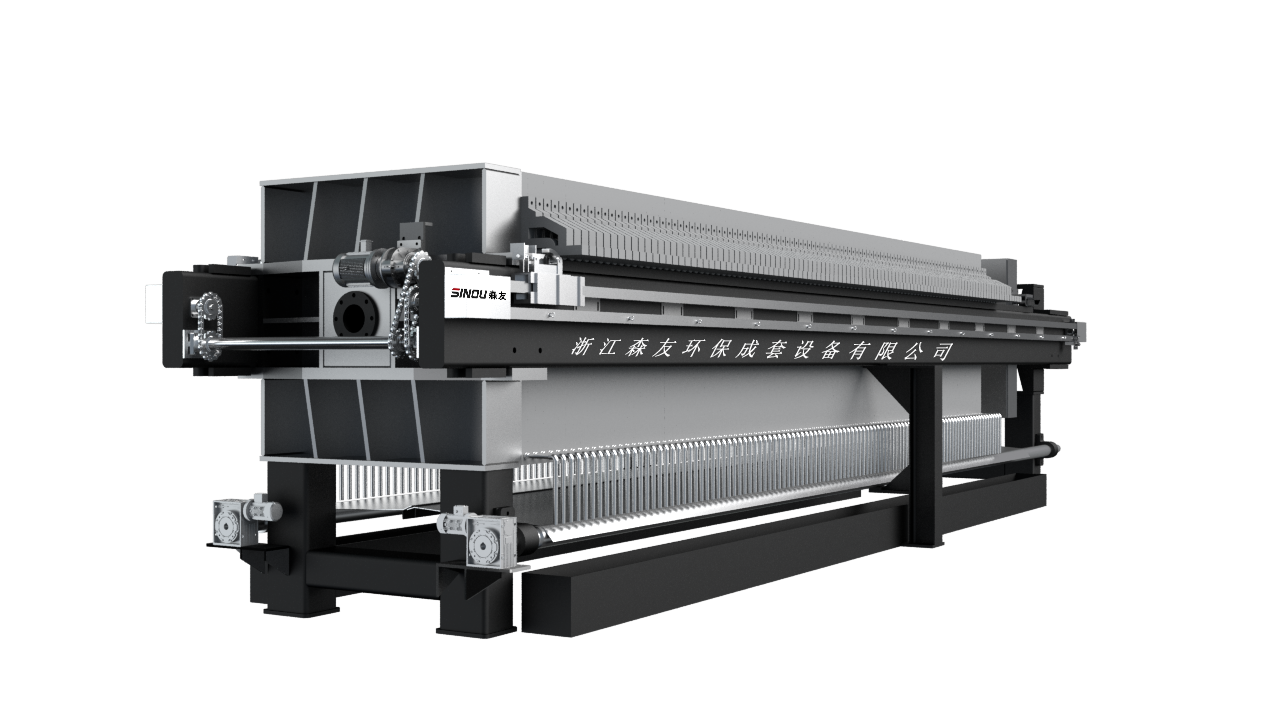
The real difference lies in the second squeeze. A conventional filter press stops once the feed pump reaches its pressure limit, leaving a cake still saturated with capillary-bound moisture. Membrane plates change that by adding a flexible diaphragm that inflates against the cake after the initial filtration cycle. This mechanical squeezing collapses micro-channels and forces out water that simple hydraulic pressure cannot move. The result is a denser cake and a moisture content that routinely drops below what fixed-chamber presses can achieve.
Unlike relying on feed pressure alone, the membrane expands uniformly across the entire plate surface, so every section of the cake receives the same compaction force. That evenness prevents wet cores and soft spots that plague thick sludge cakes. Operators can also control the squeeze pressure and holding time to match the sludge's compressibility, making it especially useful for hard-to-dewater materials like biological sludges or fine mineral tailings.
The lower moisture content translates directly into lighter, smaller cakes for disposal or further processing. With less water to evaporate in downstream dryers or incinerators, energy costs drop noticeably. In many plants, the membrane press pays for itself through reduced hauling fees and lower fuel consumption alone, before even counting the operational advantage of a cleaner, drier discharge.
The Design Features That Make or Break Filtration Cycles
Pleat geometry often gets overlooked, but it dictates how evenly contaminant loads spread across the media. Sharp, tightly packed pleats may boost initial surface area, yet they can create dead zones where flow stalls and sludge concentrates. Slightly wider, shallower pleats tend to keep channels open longer, letting particles deposit in a more uniform pattern and delaying the sharp pressure spike that ends a cycle early.
Sealing details matter just as much as the media itself. A rigid end cap with an aggressive radial seal might survive assembly but can leak after thermal cycling or slight housing distortion. Designs that use a flexible, lip-style seal or an axial compression gasket tend to forgive minor misalignment, preventing unfiltered bypass that quietly ruins downstream cleanliness.
Flow distribution inside the housing can be the silent cycle killer. If the inlet stream blasts directly against one section of the element, that area loads first and triggers a premature differential pressure alarm while the rest of the media remains nearly clean. Baffled inlets, generous plenum spaces, or a perforated diffuser sleeve coax the fluid into a slower, more balanced path across the full filter length, extracting far more service life from the same footprint.
How to Spot a Press That Will Struggle with Your Slurry
A press that balks at your slurry usually shows its limits long before the first cycle ends. Watch the feed pump: if it cannot hold a steady pressure curve through the initial fill, the cake will form unevenly and the cloth will blind within hours. Also check whether the plate pack has enough filtration area for the solids load you are actually running, not the vendor's best-case number. Oversized chambers force the press to work harder to push water through a thin, patchy cake, which leads to wet discharge and longer cycle times.
Another tell is the hydraulic closing system. If the press cannot maintain clamping force when the slurry thins out or the feed surges, you will see leakage at the plate joints and a drop in downstream dryness. Finally, ask about cloth support and cake release. A press built for easy slurries often lacks the drainage texture or the plate design needed for sticky, fine, or fibrous material, so the cake hangs onto the cloth and must be scraped off manually. That labor cost shows up in every batch.
Real-World Throughput Numbers from Operating Plants
When you step onto the floor of a running facility, the gap between nameplate capacity and actual output becomes impossible to ignore. A polymer extrusion line rated for 2,400 kg per hour might chug along at 1,780 kg through a full shift once you account for die changes, feedstock variability, and the occasional jam that eats fifteen minutes of production. These are the numbers operators scribble on whiteboards and supervisors defend in morning meetings. They don't come from vendor brochures; they come from months of logging cycle times and weighing finished batches on a floor scale.
Across different sectors, the pattern repeats with its own texture. A beverage filling plant pushing 36,000 bottles per hour on paper often sustains 28,000 to 31,000 when label alignment checks, cap torque adjustments, and conveyor micro-stops pile up. Similarly, a cement grinding unit might benchmark at 110 tons per hour but average 82 tons once clinker hardness swings and separator efficiency dips are factored in. Interestingly, plants that publish their real throughput internally—not just to corporate but to the line crews themselves—tend to close that gap faster, because nobody can hide behind optimistic specs.
What emerges from these operational logs is a simple truth: real-world throughput is less about the machine's peak capability and more about the system's steady-state behavior under normal chaos. One automotive stamping plant found that its 18-stroke-per-minute press ran at 13.4 strokes after including die lubrication cycles, coil changes, and a few unplanned stoppages every hour. Rather than buying a faster press, the team focused on reducing those small interruptions and lifted actual throughput by 9% in six weeks. That's the kind of number that matters when you're paying wages, utilities, and depreciation whether the line moves or not.
Sizing a Press Without Falling for Common Sales Pitches
Most press sales reps will steer you straight to tonnage because it’s an easy number to inflate. What they often skip is the full picture: stroke length, ram speed, bed size, and daylight. A 100-ton press with a short stroke might not handle a deep-draw job that a smaller-tonnage, long-stroke machine could do comfortably. Before you compare quotes, map out the actual work envelope for your largest part, including any die height or ejection stroke. That single step exposes inflated tonnage pitches faster than any spec sheet comparison.
Another classic trap is the “room to grow” upsell. You’ll hear that a bigger press protects future jobs, but unless you have a signed contract for that extra capacity, you’re just paying for idle steel and a larger footprint. Buy the press that fits the work you actually win on a regular basis. For occasional oversized parts, explore local job shops or short-term rentals instead of locking your floor space and budget into a machine you’ll rarely push past 60 percent capacity.
Finally, look past the sticker price. Low upfront cost often hides higher energy draw, slower cycle times, or expensive replacement parts with long lead times. Ask for real-world running costs from current users, not the brochure’s best-case numbers. Request a test run with your own tooling or a similar part profile, and pay attention to how the press behaves under load—not just at idle. A press that’s cheap to buy but costly to run will eat your margin quietly for years.
Maintenance Moves That Keep Cake Dryness Consistent
A cake that turns dry on day two usually points to storage habits, not the recipe. One reliable move is to cool the cake completely on a wire rack before wrapping it. Warm cake trapped in plastic creates steam, which condenses and then evaporates unevenly, pulling moisture from the crumb. Once cool, wrap the layers tightly in a single layer of cling film, pressing it directly against the surface to block air pockets. This keeps the internal moisture from migrating to the edges, where staling starts first.
Refrigeration can be a silent enemy unless the cake is properly sealed. If you must chill a frosted cake, let it sit uncovered in the fridge for about twenty minutes so the frosting forms a thin crust, then cover it loosely with a cake dome or overturned bowl. This prevents the frosting from absorbing fridge odors while allowing the crumb to breathe just enough to avoid condensation buildup. For unfrosted layers, brushing the cut surfaces with a light sugar syrup before wrapping adds a subtle moisture barrier that doesn’t make the cake soggy.
When serving over several days, cut only what you need and keep the rest intact. Exposed cut edges dry out faster than the outer crust, so press a piece of parchment or wax paper against the sliced side before re-wrapping. If you notice the cake starting to firm up, place a slice of bread or a few apple wedges in the storage container overnight; the cake will pull moisture from the fruit without taking on flavor. Small adjustments like these keep the crumb soft and even from the first slice to the last.
FAQ
A membrane press adds an inflatable diaphragm behind each filter cloth. After the initial feed cycle, the membrane inflates to squeeze the cake, which drives out extra liquid and produces drier solids than a fixed-volume recessed chamber. That extra squeeze often cuts downstream drying costs.
Mining, chemical processing, food and beverage, and wastewater treatment plants tend to see the fastest payback. Anywhere sludge disposal costs are high or product recovery matters, the drier cake from a membrane press reduces hauling weight and sometimes improves product yield.
Focus on plate size, chamber volume, maximum squeeze pressure, and automation options. A larger plate pack isn't always better if your slurry volume fluctuates. Check the closure system and whether the PLC allows staged feed and squeeze profiles—those details often matter more than the number of plates.
Keep the squeeze water or air clean, inspect diaphragms for cuts during every cloth change, and avoid over-tightening the plate stack. Tracking cycle counts per plate helps spot fatigue before a rupture. Also, never exceed the manufacturer's stated squeeze pressure, even if the PLC allows a manual override.
Yes, but only if the feed pump and membrane pressure are matched to the material. Sticky cakes may need a slower fill rate, a lower initial squeeze, and a cloth release aid. Some operators alternate between low-pressure filling and short squeeze pulses to prevent blinding.
Automatic plate shifters cut cycle time between batches, while integrated cloth washing keeps pore openings clear longer. On a top-tier membrane press, both are usually controlled by the same PLC, so you can schedule a wash after every X cycles without manual intervention. That consistency matters more than raw filter area.
Not always. Above a certain point, extra pressure compacts the cake and reduces porosity, which can actually slow further liquid removal. The best results come from pairing the right feed pressure, fill time, and membrane squeeze curve for the specific solids, rather than chasing the highest bar rating.
It lowers hauling and drying costs through drier cake, reduces cycle times with automated plate shifting, and saves on filter cloth replacements when wash systems run predictively. The trade-off is higher upfront cost, but for high-volume operations the payback typically lands within two to three years.
Conclusion
Membrane filter presses earn a top-ten spot by pulling more water out of sludge than standard recessed-chamber units. The extra squeeze after the initial feed cycle turns a sticky, high-moisture cake into something closer to a dry solid, which cuts hauling costs and opens up disposal or reuse options. But not every membrane press handles a tricky slurry well. Plate design, membrane material, and feed pressure make a real difference when you're dealing with abrasive particles or a slurry that shifts viscosity from batch to batch. If a unit only advertises total chamber volume without asking about your solids loading and filterability, you'll likely end up with a press that struggles mid-cycle. The best machines pair a stiff core or bladder with good filtrate drainage, not just a bigger footprint.
Real-world throughput numbers from operating plants often tell you more than a spec sheet. A well-sized press can cycle in 30 to 45 minutes, but if the feed pump can't hold a steady pressure ramp or the cloth blinds early, cake dryness falls off quickly. Maintenance moves matter just as much as the initial purchase: checking plate alignment, replacing torn membranes before they leak, and keeping the cloth wash system on a schedule keep cake moisture consistent month after month. Sizing should also ignore the usual sales pitch about 'bigger is better.' Running a press too large for your daily solids inventory leaves thick cakes with long idle times, while an undersized unit forces operators to skip proper air blow or membrane squeeze just to keep up. The top performers balance plate pack, feed characteristics, and realistic cycle time instead of chasing a single impressive number.
Contact Us
Contact Person: HaiYan
Email: [email protected]
Tel/WhatsApp: +86 18957325588
Website: https://www.senyoubeton.com/