

Stainless Steel Carriage Bolt Wholesaler Tips for Sourcing Corrosion-Resistant Bolts
2026-10-12
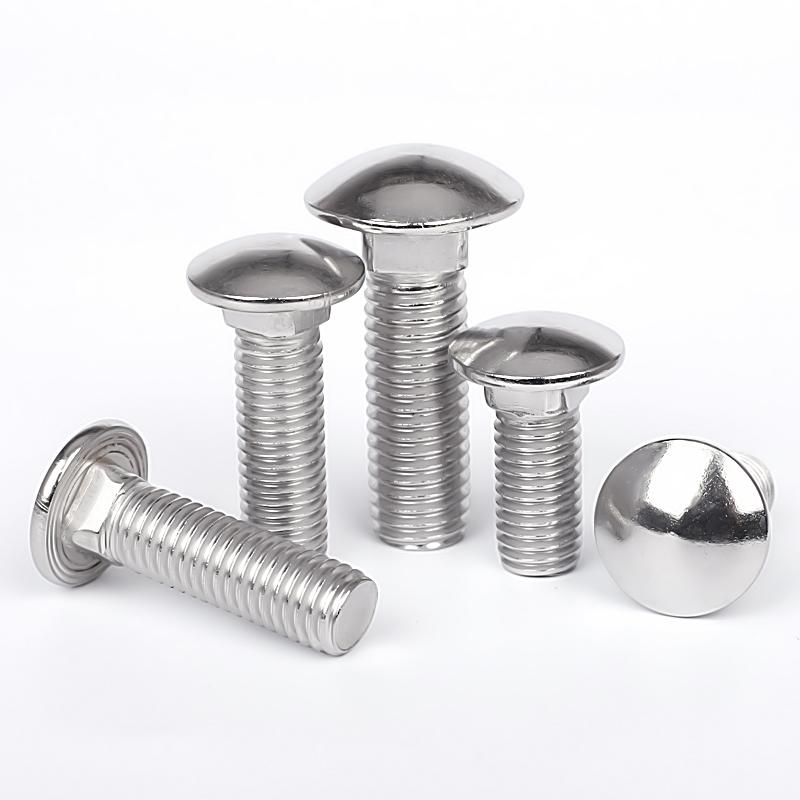
Not all stainless steel carriage bolts are created equal—and buying from the wrong wholesaler can leave you with rust spots, stripped threads, and angry customers. Whether you're stocking for marine, construction, or outdoor hardware, sourcing corrosion-resistant bolts takes more than checking 'stainless' on a label. Here's what to look for, and how Wanluo makes it easier to get it right.
Why 316 Stainless Often Beats 18-8 for Harsh Environments
The real difference between 316 and 18-8 stainless comes down to molybdenum. 316 adds about 2-3% of this element, which dramatically improves resistance to chlorides, acids, and salt spray. In coastal installations or chemical processing, that extra alloying means the surface stays intact instead of developing pitting or crevice corrosion. 18-8, typically 304 grade, works fine for indoor architectural trim or food equipment, but it can start rusting within months if exposed to de-icing salts or marine air.
Temperature is another factor people overlook. 316 maintains its strength and corrosion resistance at elevated temperatures far better than 18-8, especially above 800°F. This makes it a safer choice for exhaust systems, heat exchangers, or any component that cycles between hot process fluids and ambient conditions. While 18-8 may soften or sensitize under sustained heat, 316 holds up without forming carbide precipitates that invite intergranular attack.
Cost always enters the conversation, and 316 does run about 20-30% more than 18-8. But in harsh environments, the longer service life and fewer replacements usually erase that initial premium. A failed railing bracket or pump housing costs far more in labor, downtime, and safety risk than the material upgrade. If your application sees salt, chlorine, or acidic cleaners on a regular basis, skipping the molybdenum is a gamble that rarely pays off.
Reading Mill Test Reports Without Getting Lost
A mill test report isn’t a narrative—it’s a dense sheet of numbers, codes, and abbreviated test results. Most people get lost because they start at the top and read straight down. Instead, jump to the heat number and the specification reference first. Those two lines tell you whether the rest of the document even applies to your order. If the heat number doesn’t match your packing slip or the spec is a generic “commercial quality” rather than ASTM A36 or A572, stop there and ask questions before reviewing anything else.
Once you’ve confirmed the basics, focus on three sections: chemical composition, mechanical properties, and any supplementary testing notes. Don’t scan every element in the chemistry table—carbon, manganese, phosphorus, and sulfur usually matter most for weldability and strength. For mechanicals, yield and tensile strength plus elongation give you the real story. A common mistake is overlooking the “actual” vs. “minimum” values; actuals often exceed the spec, which is fine, but a wide gap can signal inconsistent heat treatment or processing.
Finally, watch for missing signatures, illegible stamps, or test dates that don’t align with the production run. A clean MTR should show the mill’s name, the testing lab, and traceability back to the original heat. If anything looks photocopied, altered, or incomplete, treat it as a red flag. Taking five minutes to check these details beats discovering a material mismatch after it’s already cut, welded, or installed.
Questions Wholesalers Should Ask Before Committing to a Batch
A single flawless sample can easily mask the real story behind a supplier's production line. Before signing off on a large order, ask about the rejection rate on the previous three runs and request photos from the middle of the last production cycle, not just the polished first pieces. If the factory hesitates to share batch-level quality data or refuses to discuss how they handle mid-run defects, that silence is often louder than any glossy brochure.
Minimum order quantities and payment terms are where most negotiations get stuck, but the questions that matter more are about what happens after the goods leave the dock. What is the exact process for claiming defective units, and who covers the return freight? How quickly can a partial reorder be turned around if demand spikes? Wholesalers who only focus on landing cost per unit often discover too late that a cheap batch becomes expensive once you factor in dead stock and chargeback headaches.
Dig into the supplier's own sourcing practices before you trust them with your cash flow. Ask for the names of their raw material vendors for the specific components going into your batch, and check whether those sub-suppliers have faced labor or environmental violations in the past two years. A batch is not just a transaction—it is a snapshot of a longer chain of decisions, and wholesalers who skip the uncomfortable questions end up carrying the reputational risk alone.
When Passivation Matters More Than the Bolt Itself
In many corrosive service environments, the mechanical properties of a bolt become secondary to the integrity of its passive film. A standard 316 stainless steel fastener might meet every strength requirement, yet fail catastrophically within weeks if the surface is not properly passivated. The difference often comes down to a few nanometers of chromium oxide that stand between the metal and an aggressive chemical stream.
Consider semiconductor fabs or pharmaceutical cleanrooms, where a single rust spot or metallic particle can shut down a production line. Here, the bolt is not at risk of breaking—it is at risk of contaminating the product. Passivation removes free iron and other surface contaminants, leaving a chemically inert layer that resists pitting and crevice corrosion. Without that layer, even the most expensive alloy becomes a liability.
Not all passivation processes are equal, and the choice of chemistry matters as much as the choice of metal. Citric acid treatments are increasingly preferred over nitric acid for environmental and safety reasons, but they can leave trace iron on certain stainless grades if not monitored. A bolt that passes a simple salt spray test may still fail in real-world exposure to chlorides or hot acids. That is why, in critical applications, the passivation specification is often held to tighter tolerances than the bolt's dimensional or hardness requirements.
Spotting Fake Stainless Before It Reaches Your Warehouse
A quick pass with a magnet isn't the final word—cold-worked 304 can show some pull—but a strong, uniform attraction across flat sheet usually points to ferritic or low-nickel substitutes. Check the surface under good light: real 316L tends to have a slightly warmer, greyer tone, while cheap 200-series often looks bluish or overly mirror-bright. Watch for inconsistent rolling marks, uneven pickling, or weld zones that rust within days of arrival.
Carry a small kit of spot test drops for molybdenum or nickel. On 316, the molybdenum test should hold its color for a set time; if it fades fast, you're probably holding a lower grade. Handheld XRF guns give the clearest answer in seconds, but they're not cheap—rent or share one for high-value incoming batches. For lower volumes, a single acid etch test on a hidden edge can reveal if the chromium content is below spec.
Don't accept mill certificates at face value. Match the heat number on the paperwork to the marking on each bundle, then pull one random sheet per pallet and run your own verification. Set a rule: any supplier whose material fails twice in a quarter goes on probation. Price is the most common tell—if a quote lands far below the market range for 316L, treat it as a red flag, not a bargain.
Stocking Strategies That Keep Corrosion Claims Off Your Desk
Corrosion claims rarely start with a dramatic failure. They start with a quiet afternoon in the warehouse, a pallet of parts that sat too long against a damp wall, and a packaging choice that was "good enough" last season. The fix isn't a better claims form—it's a stocking strategy that treats rust prevention as part of inventory turnover, not an afterthought. Keep volatile corrosion inhibitors (VCI) and desiccants in rotation, mark their lot dates clearly, and never let a bulk order of bare metal sit in the same corner where the roof leaked in March.
One practical move is to separate long-stored items from fast movers and give each shelf a humidity history, not just a bin location. If you track dew point near metal shelves the way you track reorder points, you'll catch the weeks when ambient moisture climbs and VCI emitters exhaust early. Ordering extra VCI film or desiccant packs in late spring, before summer humidity spikes, costs pennies compared to reworking a single rusted gear set.
Finally, build a first-expired-first-out system for protective packaging materials. That roll of VCI paper from 2022 under the workbench won't save anything once its inhibitors have off-gassed. Rotate rust preventives, re-oil bare steel samples quarterly, and photograph incoming parts before they enter storage. When a claim does surface, you'll have the lot dates, storage conditions, and packaging records to close it in minutes—not weeks.
FAQ
Stainless steel carriage bolts resist rust because the chromium in the alloy forms a thin, self-repairing oxide layer on the surface. This layer blocks moisture and salt from reaching the underlying steel. For marine environments, 316 stainless with molybdenum handles chloride attack far better than standard 18-8 or 304, which may still pit after prolonged salt exposure.
Ask the wholesaler for a mill test report (MTR) that lists the exact grade and heat number. Visual checks are unreliable because both grades look nearly identical. You can also request a spot test with a handheld XRF analyzer, which reads the molybdenum content; 316 will show around 2-3% molybdenum, while 304 shows none.
Look for an MTR that matches the lot number stamped on each box or pallet, not a generic certificate reused for every shipment. The MTR should show chemical composition, tensile strength, and the standard the bolts were made to, such as ASTM A193 or ISO 3506. Be wary of suppliers who cannot trace a batch back to the original mill.
Yes. Stainless carriage bolts made to ISO 3506 will often carry a marking like A2 or A4 on the head, with A4 indicating molybdenum-bearing 316-grade material. However, many Chinese and Indian mills use their own markings, so the marking alone is not proof. Always pair head markings with an MTR and, ideally, an independent lab test for critical orders.
Insist on sealed, lot-controlled packaging and ask for photos or video of the packing process before shipment. Mixed batches usually happen when a supplier combines leftovers from different production runs. A reliable wholesaler will label each carton with the heat number and grade, and will allow you to send a third-party inspector to pull random samples from the shipment.
Ask whether the bolts are passivated after machining, since cutting and threading can expose non-stainless particles that lead to surface rust. Also ask which passivation method is used — nitric acid or citric acid — and whether the supplier can provide a passivation test report. For marine use, ask if electropolishing is available, because it removes free iron and smooths the surface to reduce corrosion sites.
Lead times depend on whether the wholesaler stocks the exact size and grade or has to place a mill order. Stocking distributors can ship in days but often charge more per piece. Mill-direct wholesalers offer lower unit prices but may need 30 to 60 days for production, plus extra time for passivation, testing, and ocean freight if the bolts are made overseas.
The biggest mistake is choosing a grade based only on price, such as buying 304 for a coastal application where 316 is required. Another common error is ignoring thread fit and tolerance — low-cost carriage bolts may have undersized heads or poor threads that fail during installation. Buyers also forget to confirm packaging, since loose bulk shipments can lead to scratches that compromise the passive layer.
Conclusion
Sourcing stainless carriage bolts for demanding environments rarely comes down to a simple “316 is better” rule. Yes, 316 generally outperforms 18-8 in chloride-heavy settings like coastal or chemical exposure, but the grade alone doesn’t guarantee performance. I’ve seen plenty of 316 lots fail because the passivation step was skipped or poorly executed. Reading a mill test report (MTR) shouldn’t be a formality—check the actual chromium, nickel, and molybdenum percentages against the spec, not just the grade stamp. And before you commit to a batch, ask pointed questions: Is the heat number traceable back to the melt? Who did the passivation, and to what standard? If a supplier can’t answer those quickly, walk away.
Counterfeit stainless is a real problem, and it often looks perfect until it hits salt spray. Use a strong magnet as a first screen—austenitic grades like 304 and 316 should be essentially non-magnetic, though cold-formed heads can show slight attraction. A chemical spot test for molybdenum can separate 316 from 304 in seconds. In the warehouse, keep stainless fasteners away from carbon steel dust and grinding sparks; even tiny iron particles on the surface will rust and trigger a warranty claim. Store by grade, label heat numbers clearly, and keep a small sample from each lot for future disputes. Rotating stock and controlling humidity are boring tasks, but they cut corrosion complaints faster than any fancy alloy upgrade.
Contact Us
Contact Person: Shane
Email: [email protected]
Tel/WhatsApp: 8613357785029
Website: https://www.wanluohardware.com