

Silent Generator Manufacturing: How Quiet Power Solutions Are Engineered
2026-10-25
You can hear a cheap generator from three blocks away. You can stand next to a well-engineered silent generator and hold a normal conversation. That gap isn't luck—it's manufacturing. At DINGBO POWER, we treat noise reduction as a core design parameter, not a bonus feature. In the sections ahead, we'll look at the specific engineering choices—enclosure materials, vibration isolation, exhaust routing—that make quiet power possible without derating performance. If you've ever wondered how a diesel engine can run at full load and still whisper, keep reading.
Chasing Decibels Down to Their Source
The first reading jumps to 84 dB near the intersection, but that number alone hides more than it reveals. A delivery truck idles by the curb, a ventilation fan rattles overhead, and somewhere behind a brick wall a compressor kicks in. Pulling each thread means standing still long enough to notice how the sounds overlap and mask one another.
Most people assume the loudest source is the obvious one, yet chasing a decibel down often leads to smaller, overlooked contributors. The hiss from a damaged window seal can add more sustained energy than the occasional bus. Once you start isolating sources with a directional microphone, the city stops being a wall of noise and becomes a layered set of mechanical voices.
There is no single villain in the soundscape. Instead, there are dozens of tiny decisions—a missing gasket, a loose panel, a fan blade slightly out of balance—that add up to a constant hum. Tracing each one to its origin is slow work, but it changes how you hear every street.
Inside the Acoustic Shell of a Silent Generator
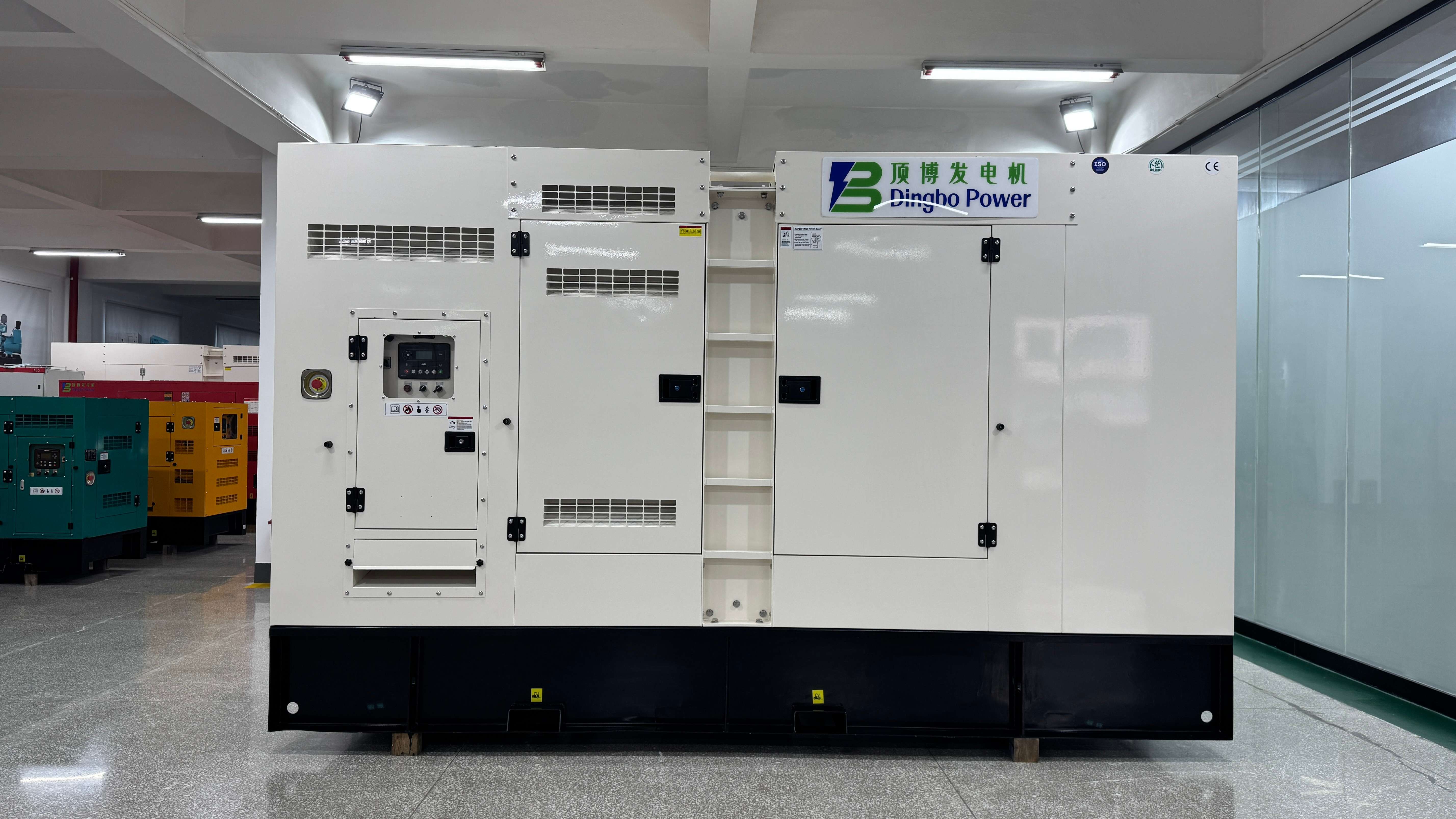
Peel back the steel panels of a silent generator and the first thing you notice is how little empty space remains. Dense foam baffles line every interior wall, their wedge-shaped surfaces breaking up sound waves before they can escape. The enclosure itself isn't just a box—it's a tuned cavity where inlet and outlet ducts snake through offset channels, forcing air to change direction multiple times. Each turn strips away another layer of high-frequency whine from the engine.
Beneath the foam, a layer of mass-loaded vinyl adds weight to the shell, damping the low-frequency rumble that ordinary insulation can't touch. The generator frame sits on rubber isolators that float above the base, so vibrations never travel directly into the floor. Even the exhaust system passes through a separate muffler chamber before exiting, mixing hot gases with cooling air to reduce both noise and surface temperature.
The real cleverness is in the airflow path. A silent generator still needs to breathe, but any opening is a potential leak for noise. Here, cooling air enters through a labyrinth of staggered baffles, moving fast enough to keep components cool but slow enough to lose acoustic energy. By the time the exhaust stream reaches the outside, it has been folded, absorbed, and dispersed until the loudest thing left is the faint rush of moving air.
Materials That Swallow Sound Without Adding Bulk
Conventional acoustic panels often trade thickness for performance, but a new class of metamaterials breaks that rule. By arranging microscopic resonators in repeating patterns, these sheets trap low-frequency vibrations within air cavities smaller than the wavelength itself. The result is a sound absorber barely thicker than a few millimeters, yet capable of quieting a diesel engine's rumble.
Unlike foam or fiberglass, which rely on porosity and mass, these structures redirect energy through labyrinthine paths. Laser-cut slits and folded channels force sound waves to travel far longer distances inside the material than its physical depth suggests. This geometric trickery means a panel no thicker than a smartphone can match the damping of a bulky studio wedge, opening up uses in car doors, HVAC ducts, and thin apartment walls.
Practical deployment has moved beyond lab curiosities. Some designs use 3D-printed lattices that flex and dissipate energy across a broad spectrum, while others embed tiny weighted membranes tuned to specific hums from machinery. The appeal is obvious: architects and product designers get acoustic control without sacrificing space, and builders finally have a way to hush interiors without sandwiching layers of insulation into every cavity.
Cooling Strategies That Keep the Noise Floor Low
Most cooling tricks trade silence for a few extra decibels of headroom, but the smartest builds never make that bargain. Start by ditching high-RPM fans in favor of larger, slower-spinning blades that move the same air while staying below the threshold of human annoyance. Pair them with a case that routes intake air directly over VRMs and chipset heatsinks, so nothing needs to spin faster than idle to stay stable.
Another overlooked move is undervolting before adding more fans. Dropping a CPU or GPU by 50–100 mV often shaves several watts of heat, which means your existing cooling doesn't have to work as hard and the noise curve stays flat even under load. Combine that with acoustic padding on side panels and rubber-mounted fan frames, and the result is a machine that idles near 20 dBA and barely rises during renders.
Finally, consider a semi-passive PSU and a GPU with a zero-RPM mode. These components only spin their fans past a certain temperature, so during light tasks the only moving parts are two slow case fans. That's the real secret to a low noise floor: not adding more cooling, but removing the need for it in the first place.
Muffler Design for the Deepest Exhaust Tones
A genuinely deep exhaust tone starts with chamber volume and flow path. Instead of a straight-through glasspack, a three-chamber layout with offset perforated tubes forces low-frequency pulses to expand and slow down. This drops the resonant peak below 120 Hz and keeps the note from turning raspy under load.
Baffle location and outlet tube tuning change the same variables in a different way. A reflective wall roughly one-third of the way down the muffler body sends a delayed pressure wave back toward the inlet, reinforcing the fundamental frequency. The final resonator stage should neck down gradually rather than dump into a wide opening, which prevents the deep tone from collapsing into a hollow flutter at part throttle.
Packing choices shape the top end without sacrificing low-end weight. About 60 percent fill density with basalt or ceramic mat absorbs high-frequency crackle, while a thin stainless steel wool wrap around the inner shell stops metallic ringing. Leaving a small unbaffled dead space near the outlet cap also helps round off the note so it stays deep but never boomy.
Proving Silence in Real-World Sound Tests
Real-world sound tests rarely resemble lab conditions. A drive that measures 21 dBA in an anechoic chamber can still become audible inside a quiet home office once the refrigerator kicks on or a car passes outside. To prove actual silence, you need to measure in the environments where the hardware will live, not just on a spec sheet.
One approach is to place the device on a wooden desk, mic it at three distances—say 15 cm, 50 cm, and 1 meter—and record both the ambient baseline and the device under load. The baseline matters more than the absolute number. If the room sits at 28 dBA and the drive pushes it to 28.4 dBA, that difference is far more meaningful than a manufacturer's claim of "silent."
Another trick is to capture short, unweighted spectra rather than a single A-weighted figure. A faint 2 kHz whine can be perceived as louder than a 40 dBA broadband hum, because the ear is most sensitive in that range. Plotting the noise floor before and after powering the component makes the silence visible—a flat line with no new peaks is the real proof.
FAQ
The core difference is how vibration and airflow are managed. Standard generators let the engine's mechanical noise escape through thin panels and open exhaust paths. Silent models use isolated engine mounts, multi-chamber mufflers, acoustic foam, and sealed enclosures with baffled air intake and exhaust. It's less about adding one big silencer and more about designing every path—solid, liquid, and air—so noise can't travel freely.
Manufacturers typically place the running generator in a semi-anechoic chamber and take sound pressure readings at set distances, often 7 meters, from multiple angles. They also measure sound power to understand total acoustic energy emitted. Testing isn't a single pass; prototypes go through iterative tuning of the enclosure seals and exhaust routing until the decibel readings stay within the target range under varying loads.
Surprisingly, it's often the airflow path rather than the muffler. If air has to snake through a lined labyrinth, much of the noise gets absorbed before it exits. Combining that with a well-tuned exhaust silencer and rubber-isolated engine mounts can drop levels by 20 dB or more. A rigid, damped enclosure also prevents panels from resonating and acting like speakers.
Generally no, not if the silencing is integrated from the start. Modern silent generators use the same engines as conventional units but with better thermal management. Some early designs suffered overheating because enclosures restricted airflow, but current baffle systems and high-temperature insulation allow full power output while keeping surface temperatures safe. Efficiency changes are negligible.
It can be improved, but rarely reaches the performance of a purpose-built silent generator. Retrofitting usually means building an external acoustic enclosure, adding a better muffler, and isolating the frame. However, manufacturers engineer silent models with noise control in the base frame, cooling system, and alternator coupling from the beginning. Without that integration, you often end up with reduced cooling or added bulk.
Beyond standard electrical and load tests, it goes through acoustic mapping, vibration analysis, and thermal imaging under full load. Engineers look for hot spots caused by restricted airflow and listen for tonal peaks that are more annoying than broadband noise. Field tests in real environments—like night-time construction or hospital backup—help refine the final enclosure design so it doesn't just meet a spec sheet number but stays pleasant in actual use.
The extra cost comes from multi-layer enclosures, specialized acoustic materials, precision-fit panels, and the engineering hours spent tuning airflow. It's not just a metal box; each layer has to handle different frequencies. Additionally, quality control is tighter because gaps as small as a few millimeters can ruin the soundproofing. You're paying for a system that prevents noise, heat, and vibration from fighting each other.
They use materials that won't sag, crumble, or absorb oil—like closed-cell foam and reinforced barrier mats. Vibration isolators are spec'd for long-term fatigue. Seals and latches are tested through thousands of open-close cycles to ensure the enclosure stays tight. Some brands also run accelerated aging tests with heat cycling and dust exposure to confirm that acoustic performance doesn't degrade sharply after the first few hundred hours.
Conclusion
Building a truly quiet generator starts long before the first enclosure panel is cut. Engineers chase vibration and combustion noise to their origins, isolating the engine mounts, stiffening resonant brackets, and reshaping intake paths so that fewer decibels ever escape. The outer acoustic shell isn't just a box; it's a tuned barrier with layered damping sheets and mass-loaded vinyl that break up sound waves before they can radiate outward. Inside, the material choices matter more than thickness alone. Open-cell foams and fibrous composites absorb mid- and high-frequency energy without turning the unit into a bulky, heat-soaked cabinet. The result is a compact design where the noise never gets a chance to build momentum.
Keeping things quiet gets harder when heat has to leave. Silent generators rely on low-speed fans, baffled air paths, and ducted exits that let cooling air flow freely while forcing sound to bounce through absorbing channels before it reaches the outside. The exhaust note, often the deepest and most stubborn tone, is tamed with multi-chamber mufflers and resonance tubes sized to cancel specific low-frequency peaks. But the real proof comes in sound tests. Manufacturers run the units under full load, measuring decibel levels at multiple distances and angles to catch any tonal whine or rumble that a spec sheet might miss. Only after those real-world readings meet the target do the generators earn their silent label.
Contact Us
Contact Person: Rita
Email: [email protected]
Tel/WhatsApp: +8613481024441
Website: https://www.dbdieselgenerator.com/