

Shock Absorber Boot Exporter Selection Tips for Global Buyers
2026-11-16
Finding a dependable shock absorber boot exporter is rarely just about unit price. Freight damage, inconsistent rubber compounds, and vague compliance claims can turn a simple order into a costly headache. These selection tips for global buyers focus on what actually separates reliable suppliers—and why XIAYI keeps showing up on shortlists.
When the Factory Tour Overturns the Brochure
The glossy photos promised precision, but they never mentioned the smell of warm cutting oil or the way a veteran machinist runs a thumb along a fresh edge, checking for a burr the camera would never catch. That first step onto the floor quietly dismantles the version of the company printed on coated paper.
What stays with you is not the scale of the line or the speed of the robots. It is the pause before a shift handover, the worn tape on a control panel, the slight nod between two workers when a tolerance finally holds. Those details have no place in a brochure, and that is exactly why they carry more weight than any headline.
By the time the tour ends, the official story has been replaced by something rougher and far more believable. You leave with the sense that quality is not a guarantee written in a marketing deck, but a habit rehearsed in small, unphotographed moments.
Rubber Compounds That Hide Their Weaknesses in Fine Print
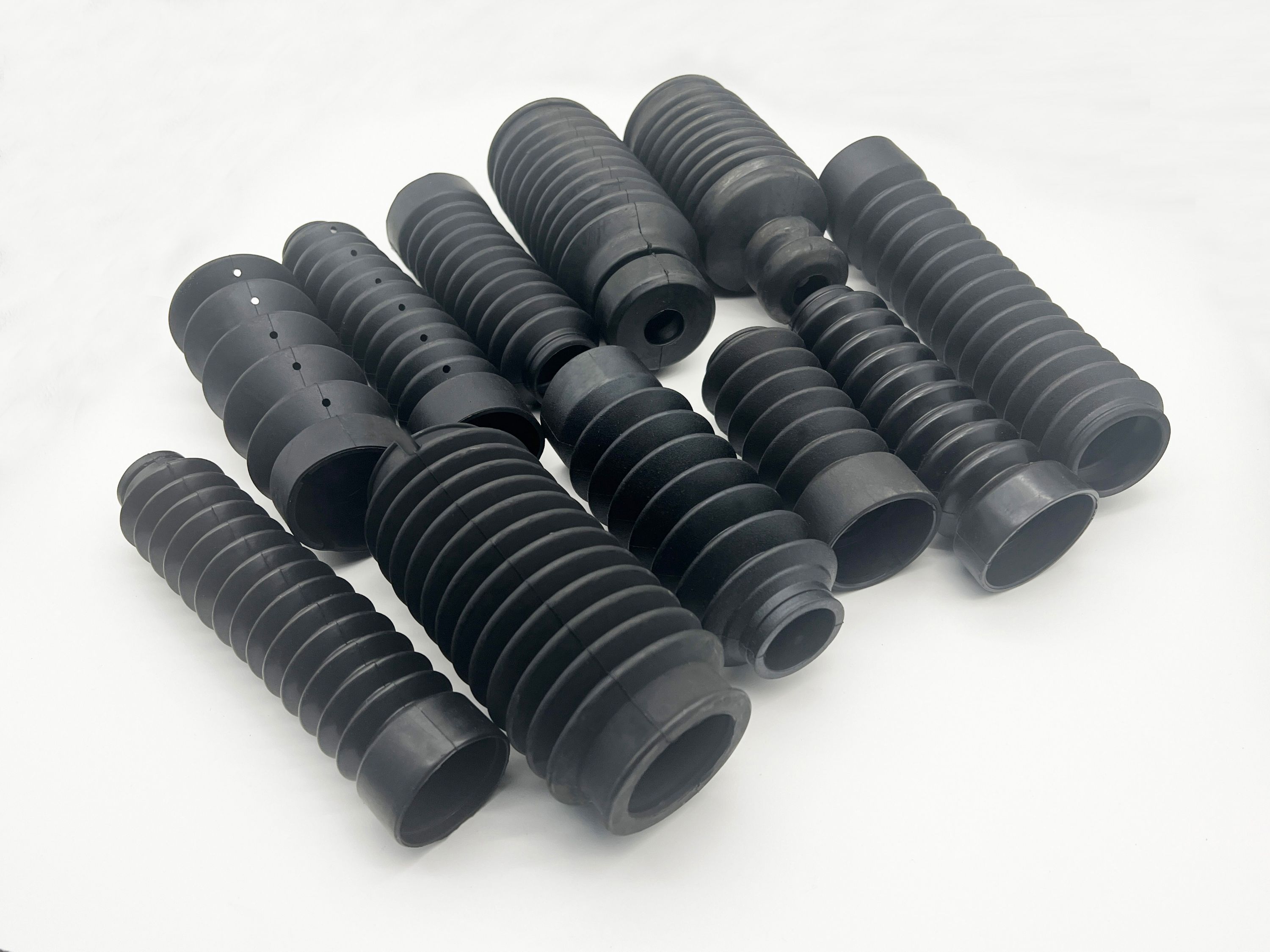
A datasheet can show tensile strength above 18 MPa and call it a durable material, while the footnote quietly limits that result to a fully cured slab tested at room temperature after a short post-cure. The same compound may lose a third of its tear strength after a few hundred hours at 90°C, or stiffen badly once the plasticizer migrates. Those changes are rarely printed next to the headline value.
Compression set is another place where the fine print does the heavy lifting. A supplier will list 18% compression set, but the method matters more than the number. Some compounds are tested for only 22 hours at 70°C. Ask for the value after 70 hours at 100°C or 125°C and the ranking changes quickly. Low-temperature flexibility can also be presented as a brittle point that says nothing about how much force the part needs to flex at minus 20°C.
Chemical resistance tables often give a misleading sense of confidence because they summarize immersion in a single fluid at one concentration and one temperature. In service, a seal may see diluted acid in the morning and hot oil by afternoon. The safest approach is to ask for aging data under your actual operating conditions, not the standard test fluid that makes the compound look stable.
Why Salt Spray Hours Flatter a Boot That Fails in Traffic
A boot can sit in a salt fog cabinet for hundreds of hours and still earn a clean corrosion rating, but that figure says very little about what happens when you put a foot down in January slush. The test rewards stillness. A boot is hung in place, misted with warm saline, and inspected for rust around eyelets and buckles. It never bends the toe box, scrapes the shifter pad, flexes the ankle hinge, or grinds grit into the stitching. Those are the forces that break a boot apart long before rust appears on a rivet.
Real traffic works differently. Road spray, diesel film, grit, and constant flexing create a wet-dry cycle that a salt fog cabinet cannot reproduce. A boot can look untouched after 72 hours in the chamber and then delaminate at the sole, crack across the forefoot, or lose its waterproof liner within a few weeks of daily riding. The salt spray number flatters the boot because it isolates a single failure mode—corrosion on exposed metal—and turns that into a headline.
Riders rarely retire a boot because a D-ring rusted. They retire it when the sole peels away, a seam opens, or the ankle support goes soft. If a brand leans on salt spray hours as proof of toughness, ask what happened during repeated heel strikes, wet leather drying overnight, and toe scuffs against curbs. Those tests are harder to pass and far less convenient to print on a hang tag.
Container Packing Mistakes That Only Surface at the Warehouse
The paperwork said forty-eight cartons, the seal matched, and the driver pulled away without a second glance. But three days later, when the warehouse crew started unloading, the real story came out. Pallet racking posts had punched through the sides of boxes that looked fine from the loading dock. The freight forwarder's "expertly packed" container had heavy machinery parts stacked directly on top of fragile retail packaging, with nothing but a single sheet of cardboard between them. By the time the third pallet was pulled out, the receiving team had already photographed crushed corners, snapped plastic banding, and a slow leak of liquid detergent spreading across the floor.
Some mistakes are impossible to see until the container doors swing open under warehouse lights. Improper weight distribution doesn't always show up on the manifest, but it becomes obvious when a forklift tries to lift a pallet that's leaning fifteen degrees to one side. Goods packed too tightly against the walls rub together during transit, leaving scuff marks and torn shrink wrap that only reveal themselves after the container is half emptied. Even the classic error—mixing incompatible cargo in one container—can hide behind a clean bill of lading until someone notices the smell of food spices soaked into fabric rolls or the corrosion starting on metal fittings placed near open chemical drums.
What makes these packing failures so frustrating for warehouse managers is that they arrive silently. The container arrived on time, the customs clearance was smooth, and the delivery appointment was kept. Yet the moment the receiving team starts breaking down the load, every shortcut taken during packing becomes a physical problem on the dock. Rushed blocking and bracing, missing dunnage, double-stacked pallets without corner boards—these decisions made three weeks ago in another country turn into repacking labor, damage claims, and stockouts that no one noticed until the very last step of the supply chain.
Certifications That Are Checked Only When Something Goes Wrong
Most companies hang certificates on a wall and never think about them until an auditor asks for proof or a client flags a missing credential. That is when someone scrambles through filing cabinets and old emails, only to discover the document expired seven months ago. The irony is that these certifications are often framed as trust signals, yet nobody verifies them during the actual work. They only become urgent after a failure, a complaint, or a contractual dispute.
What makes this pattern worse is that the lack of routine checks creates a false sense of security. A certificate might look current on the surface, but the underlying requirements can change long before renewal. Insurance policies, safety permits, data handling credentials, and even diversity badges can drift out of alignment while daily operations continue unchanged. By the time someone actually looks closely, the gap has usually grown wide enough to cause real damage.
A more practical approach is to treat these documents as living obligations rather than wall decorations. That means scheduling internal spot checks, keeping a single source of truth for expiry dates, and making one person accountable for updates before problems appear. The goal is not to build more bureaucracy; it is to make sure the moment of failure is never the first time anyone checks whether a certification still means something.
The First Email Exchange as a Supplier Filter
The first email you send isn't just a greeting. It's a test of how well you listen. When I reach out to a potential supplier, I skip the generic "dear partner" opening and reference one specific detail from their catalog or a recent change in their product line. If they reply with a canned template, the conversation ends there. A supplier who can't read beyond the subject line won't catch a subtle deviation in a custom order later.
Response time matters, but so does the shape of the response. A short, direct answer that asks one pointed question back tells me more than a lengthy brochure pasted into an email. I've had vendors who answered within minutes with nothing but an attachment, and vendors who took a day but admitted they needed to check a material spec with their workshop. The latter almost always gets the second message.
The way a supplier handles ambiguity in that first exchange reveals their default under pressure. Ask about a finish they don't list, or a lead time that conflicts with their website. Do they invent an answer to sound capable, or do they pause and give you a range with caveats? That pause, written into an email, is worth more than any certificate they attach.
FAQ
Start with the rubber compound and the vulcanizing process rather than the price list. Ask for batch test data covering tensile strength, elongation, and ozone resistance. A supplier that can explain its material choices clearly is usually easier to work with when problems come up.
Request shipment records from the last year, including the actual sizes and vehicle applications. The depth of their mould library matters more than the total number of moulds. You want a supplier that can quickly match common models in your region without treating every order as a new development project.
Look beyond a generic ISO certificate. Ask for material test reports on oil resistance, ozone aging, hardness, and tensile strength. If you ship to Europe or North America, check whether they understand REACH, RoHS, and local packaging and labelling rules before the goods arrive.
Ask for a live video tour of the mixing, curing, trimming, and inspection areas. Have them pick random finished boots and measure critical dimensions on camera. Third-party inspection reports help, but only if the test points are specific to your product instead of a broad pass or fail statement.
A quote far below the market, hesitation to share material details, no clear answer on temperature range, repeated changes to lead time, and noticeable differences between samples and bulk production. If technical questions are answered with 'almost' or 'about', treat it as a sign of weak process control.
For a core wear part like this, a manufacturer with its own mixing and vulcanizing shop is usually the safer choice. The performance depends heavily on formula and process control, and direct contact makes batch traceability easier. A trading company can still work well when you need multiple product lines in one shipment.
Cover several sizes and materials instead of ordering one part number in large volume. Ask for batch test sheets to be packed with the shipment, keep reference samples for comparison, and test the boots in a limited sales area before scaling up. That gives you a clearer picture of both product quality and the supplier's packing and logistics habits.
Conclusion
A glossy brochure rarely survives the first walk through the production floor. Buyers who ignore the factory tour often end up with suppliers whose tooling is worn, whose curing lines are poorly controlled, and whose clean-room claims vanish behind a loading dock. The rubber compound itself deserves more than a data sheet headline. Ask for the fine print: low-temperature brittleness, compression set after heat aging, ozone resistance under dynamic strain, and batch-to-batch variation. Many boots look identical on the surface but fail after a season because the compound was tuned for a lab sample, not for repeated flexing on a strut. Claims about salt spray hours can be just as flattering. A boot that survives a static cabinet test may split after months of gravel spray, mud packing, and constant articulation, so real-world fatigue tests or fleet trial data carry more weight than a single corrosion number.
Packing is another quiet risk. Cartons that leave the plant neatly arranged can arrive with boots crushed, nested too tightly, or deformed by heat inside a container, especially when pallets are mixed or strapping cuts into the rubber. Ask for loading plans, package dimensions, and photos from previous shipments before the goods reach the warehouse. Certifications tend to matter only after a failure, but checking their scope, validity, and whether production actually follows the audited process should happen before an order is placed. The first email exchange often reveals more than a supplier audit. A vague reply, a copied introduction, or no specific questions about the vehicle platform, annual volume, and required tolerances is a signal in itself. The exporters worth keeping are the ones who read the inquiry and respond with numbers, constraints, and honest lead times rather than another brochure.
Contact Us
Contact Person: Leela
Email: [email protected]
Tel/WhatsApp: 8613586885132
Website: https://www.xiayishockparts.com