

Sampling Valve Manufacturer Explains Key Considerations for Reliable Sampling Systems
2026-09-21
When a sampling system fails, the consequences go far beyond a wasted sample—they can compromise product quality, safety, and regulatory compliance. That's why AVM, as a sampling valve manufacturer, insists that reliability starts long before the first valve is installed. In this article, AVM engineers break down the key considerations that separate a dependable sampling system from one that quietly underperforms—covering everything from valve selection and dead-leg minimization to maintenance realities. If you've ever wondered why some sampling points never seem to give consistent results, the answers may be simpler—and more actionable—than you think.
Material compatibility rarely gets the attention it deserves
In most design reviews, material compatibility gets pushed to the margins. Teams obsess over load ratings, thermal limits, and cost per unit, but the quiet failure mode of two materials eating away at each other rarely makes the agenda. A galvanic reaction between stainless steel and aluminum might take months to show, yet by the time it does, the fix costs more than the initial savings.
The trouble is that compatibility is not a single property you can pull from a datasheet. It depends on temperature swings, exposure to cleaning agents, even the presence of residual stress. A seal that performs fine in a lab test can degrade quickly when installed next to a copper alloy in a humid environment. Without early testing, you are essentially betting that real-world conditions won't diverge from the spec sheet.
The companies that do take it seriously tend to treat material pairing as a design constraint, not an afterthought. They keep a working list of known bad combinations, involve suppliers in prototype reviews, and run simple compatibility coupons before committing to full production. It is not glamorous work, but it prevents the kind of field failures that erode trust far faster than a missed deadline.
Where dead legs hide and how they affect sample integrity
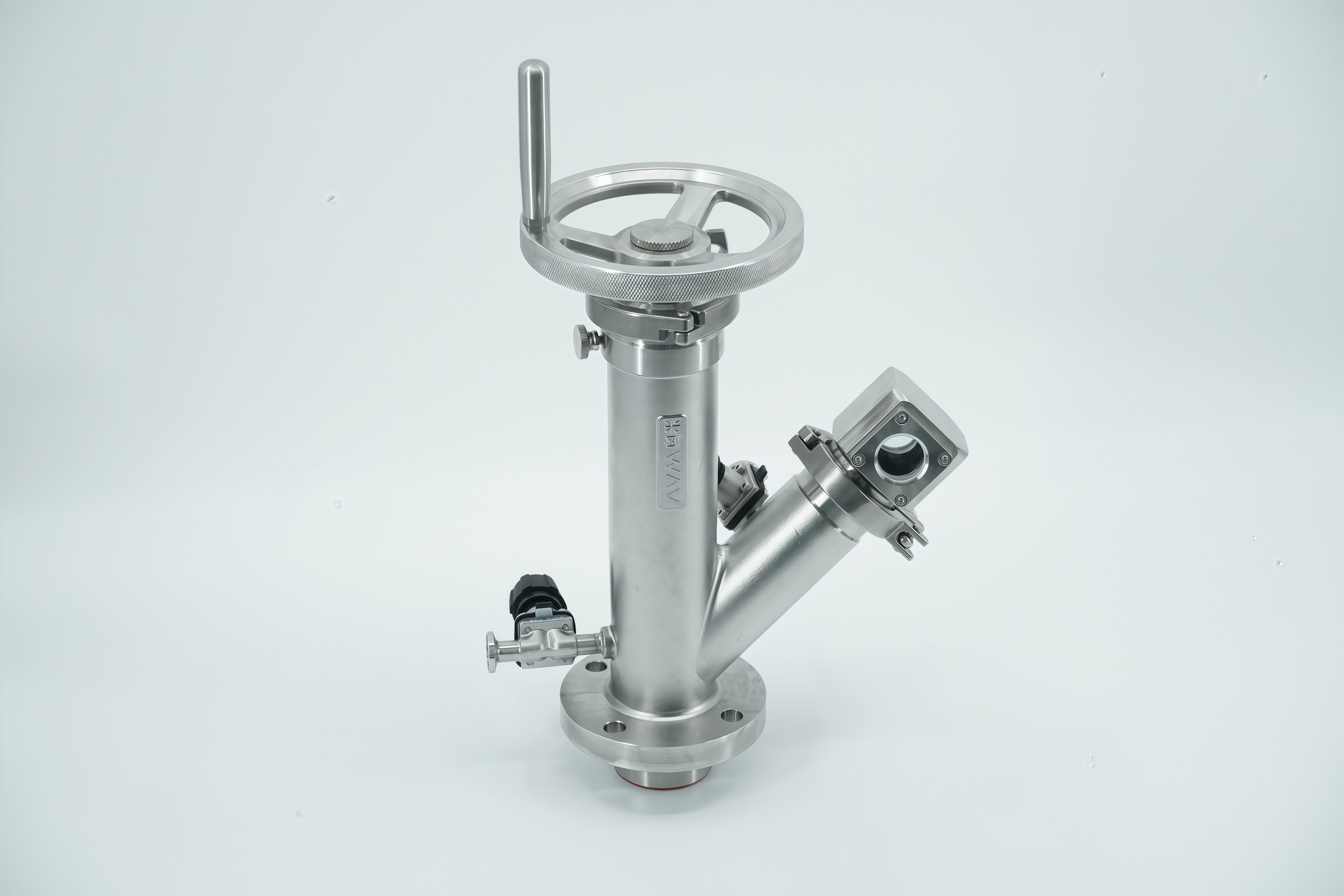
Dead legs rarely announce themselves. They sit off the main flow path—branch connections, unused ports, instrument tees—where process fluid goes to stagnate. Because that trapped volume doesn't flush during normal operation, it becomes a reservoir of previous samples, corrosion byproducts, or microbial growth. When a grab sample is pulled, the first thing that reaches the bottle is not current process fluid; it's whatever has been sitting in that dead leg, often at a different temperature, pH, or oxygen level.
The integrity problem shows up in subtle ways. You might see a dissolved oxygen reading that drifts without reason, or a particle count that spikes only after the line has been running for an hour. In sanitary systems, a dead leg longer than a few diameters of the branch pipe can hold enough stagnant liquid to support biofilm. Once that biofilm sloughs off into the sample, the result is a false positive for contamination—or worse, a false negative if the sample was meant to detect an early upset and the dead leg diluted it away.
Finding dead legs takes some deliberate looking. Walk the line with a process and instrumentation diagram, not just the piping layout. Check every tee, every valve that doesn't normally open, every abandoned tap that was capped but not cut back. The shortest fix is to remove the branch entirely or move the sample point to a flowing section, not a pocket. If a dead leg can't be removed, keep it as short as possible—ideally less than one and a half pipe diameters—and document it so future sampling doesn't inherit the same hidden bias.
Valve design choices that reduce cleaning time
A valve that drains completely often cuts cleaning time before any chemical cycle begins. Sloped internal galleries, a bottom-ported body, and a stem seal that sits flush with the flow path keep product from pooling near the seat. When residual liquid cannot find a low spot to settle, rinse water moves through faster and carries less soil with it. In many dairy and beverage lines, that alone removes several manual flush steps.
Quick-access connections also help. Replacing a bolted flange with a tri-clamp or a snap-on bonnet lets an operator expose the internal cavity in seconds instead of minutes. Polished wetted surfaces below 0.8 µm Ra reduce bacterial attachment and let detergent shear off films more readily. Pair that with a diaphragm or pinch design that isolates the actuator from the product zone, and the moving parts stay dry. There is less lubricant contamination to wash away and fewer crevices to scrub by hand.
The real cost of ignoring pressure and temperature limits
When a system runs past its rated pressure or temperature, the immediate danger is rarely a catastrophic burst. The silent killer is fatigue. Components expand, contract, and deform microscopically with every cycle beyond the intended envelope. Over time, seals lose their memory, threads stretch, and valve seats erode at rates no maintenance schedule accounts for. The repair bill arrives months later, often during a different shift, with no obvious link to the original over-limit event.
There's also a hidden energy toll. Operating at elevated temperatures degrades lubricants faster, forcing more frequent oil changes and increasing internal friction. Pumps and compressors work harder against higher thermal expansion, consuming extra power without delivering extra output. Pressure excursions can cause cavitation in pump inlets or micro-leaks in connections that go unnoticed until utility bills and emissions reports quietly climb quarter after quarter.
Perhaps the most expensive cost is the loss of design margin. Every time a vessel or line is pushed beyond its rated conditions, the safety factor originally built into the material is partially consumed. A pressure spike that doesn't cause failure still leaves behind residual stress. A temperature overshoot can alter metallurgical properties, making the next excursion more dangerous than the last. The true price isn't the one-time replacement part; it's the permanent reduction in the system's ability to handle future upsets.
Why representative sampling is harder than it looks
Ask most people how to get a representative sample and you'll hear the same recipe: pick enough people at random and the sample will mirror the population. The trouble starts the moment you try to define what the population actually is. Is it everyone living in a city, everyone eligible to vote, everyone who owns a smartphone, or everyone who might walk past a certain billboard? Each choice shifts the boundaries and changes what counts as representative. Even with a clear definition, you need a sampling frame—a list of every unit you could possibly draw from—and that frame is rarely complete. People move, phone numbers go out of service, and some groups are simply absent from public records. The gap between your neat definition and the messy list you can actually sample from is where representativeness quietly breaks down.
Then there's the assumption that random selection automatically balances out hidden differences. It doesn't. Nonresponse is the classic saboteur: if busy, distrustful, or hard-to-reach people are less likely to answer, their absence isn't random. A survey of registered voters might perfectly reflect the voter file yet still miss the large share who never pick up unknown numbers. Similarly, an online panel can be perfectly balanced on age, gender, and income while still overrepresenting people who enjoy taking surveys—a trait that correlates with opinions in ways you won't notice until after the damage is done. Representative sampling isn't just about drawing names from a hat; it's about fighting a dozen quiet selection pressures that don't announce themselves in the summary statistics.
Maintenance mistakes that lead to unreliable results
A lot of reliability problems start with something as simple as treating maintenance like a chore to squeeze between production runs. When a team skips scheduled lubrication or waits for a filter to clog before replacing it, small amounts of wear accumulate in ways that are easy to miss until a bearing runs hot or a sensor drifts out of tolerance. The machine looks fine right up until it doesn't.
Another common mistake is assuming that if some torque is good, more must be better. Over-tightened fasteners strip threads and warp housings, while over-greased bearings overheat and blow out seals. Using whatever replacement part is on hand instead of the specified component creates the same kind of silent drift. A slightly different viscosity oil or a generic seal material can change clearances and thermal behavior just enough that the equipment never quite returns to its baseline performance.
What makes these errors so dangerous is that they don't cause immediate failures. A hastily calibrated sensor or a misaligned coupling will still run, just with a little more vibration or a little less accuracy. By the time the problem shows up in output quality or unplanned downtime, the original mistake has been forgotten. The machine gets blamed, but the real issue was a rushed job weeks earlier.
FAQ
People often focus on the valve itself and forget about the connection point to the process. If the valve sits in a low-flow area or isn't flush with the pipe wall, you'll pull a sample that doesn't match the actual process. We always tell customers to look at the entire sample path, not just the valve body.
Dead legs trap old product that then contaminates fresh samples. For example, a valve with a long stem or an unused tee creates a pocket where material stagnates. The fix is to keep the distance from the process line to the seal face as short as possible—ideally under one pipe diameter—and choose a valve that opens directly into the stream.
A piston-type or ram-type valve is usually the right call for thick or particle-laden fluids. These designs close flush with the pipe wall, so there's no cavity for solids to pack into. We've seen ball valves fail in slurry service because the seats get worn or the ball gets jammed, but a well-specified piston valve can run for years without a rebuild.
There's no universal schedule, but we recommend inspecting the seal and seat every six to twelve months, depending on how aggressive the process is. If you notice the handle getting stiff or a slight drip when closed, don't wait—replace the soft parts immediately. A worn O-ring behind the seat is the cause of most cross-contamination issues we've diagnosed.
Yes, many models are designed for CIP and SIP. Look for a valve with a smooth bore, no crevices, and materials that can handle steam temperatures. For sterile processes, you need a design where the steam contacts all product-contact surfaces. We usually specify an external actuator so the valve can be cycled during the cleaning cycle to flush the seat area.
Stainless steel 316L is a good starting point, but if you have chlorides or strong acids, you may need Hastelloy C276 or titanium for wetted parts. Don't forget the soft goods—EPDM, Viton, and PTFE all behave differently with solvents and high heat. We once replaced a Hastelloy valve body only to find the real failure was a standard EPDM O-ring that swelled and blocked the sample port.
The sample must be taken from a turbulent flow zone, not from a dead-end or a low point in the piping. Make sure the valve is installed in a vertical or angled position so gravity doesn't cause settling. It also helps to purge a small amount before capturing the sample—otherwise you're analyzing the fluid that was sitting in the valve body, not the line contents.
Conclusion
A sampling system is only as trustworthy as its weakest component, and material compatibility is frequently that silent failure point. Process fluids can corrode or swell seals and body materials, releasing contaminants that compromise the sample before it ever reaches the lab. Equally damaging are dead legs—those stagnant pockets where residue hides and contaminates the next draw. A valve designed with minimal internal volume and smooth, crevice-free flow paths doesn't just improve sample purity; it cuts cleaning time dramatically because there are fewer places for product to linger. Ignoring pressure and temperature limits adds another layer of risk: a valve that works perfectly at ambient conditions may leak, seize, or distort under process extremes, turning a routine sampling task into a safety incident.
Representative sampling is harder than it looks because the sample must reflect the process stream at that exact moment, not an average or a diluted version. Poorly positioned taps, incorrect purging, or inconsistent draw rates can all skew results. And even the best-designed valve will produce unreliable data if maintenance is treated as an afterthought. Reusing worn gaskets, overtightening fittings, or skipping the recommended rebuild intervals may seem like cost-saving shortcuts, but they invite leaks and dead volume to come back. The manufacturer's guidance on materials, pressure-temperature envelopes, and cleaning protocols isn't just paperwork—it's the difference between a sample you can defend and one you have to explain away.
Contact Us
Contact Person: Ananda
Email: [email protected]
Tel/WhatsApp: 8619016718200
Website: https://www.wzaomi.com