

Robotic Bending Supplier Selection Tips for Automated Metal Fabrication
2026-10-28
Choosing a robotic bending supplier isn't just about specs—it's about avoiding costly integration headaches down the line. Yet most selection guides recycle the same generic advice. Here at HUNSONE, we've seen what actually separates a reliable partner from a one-time vendor. This guide breaks down the supplier selection tips that matter for automated metal fabrication, so you can skip the trial and error.
Start With Your Five Ugliest Parts, Not the Vendor's Highlight Reel
Most people kick off software evaluations by watching a vendor's shiny demo. The interface glides, the charts animate beautifully, and the salesperson narrates every step with practiced ease. But that reel was built to dazzle, not to mirror your daily grind. Flip the script. Open your current system and list the five ugliest parts of your workflow—the ones that make you mutter under your breath, the clunky workaround you've tolerated for three years, the export that always breaks at 4 p.m. those are your real requirements. Any vendor worth your time should address those first, not hide behind a highlight reel.
The problem with starting from vendor highlights is that they rarely intersect with your mess. A flawless dashboard means nothing if you still have to copy-paste between two incompatible tools every morning. So take those five ugly spots and turn them into a test. Ask the vendor to show exactly how their product handles each one. If they skip, deflect, or promise a custom fix "later," walk away. The ugly parts aren't distractions—they're the filter that separates practical fits from expensive detours.
This approach saves more than time. It saves you from the slow burn of buyer's remorse, the six-month implementation that only automates the easy stuff while your worst bottlenecks stay untouched. Starting with what's broken forces honesty into the conversation. The vendor's highlight reel will always look good, but your five ugliest parts tell you whether the tool actually works where it counts.
The Robot Is Rarely the Problem, the Supplier's Bending Knowledge Is
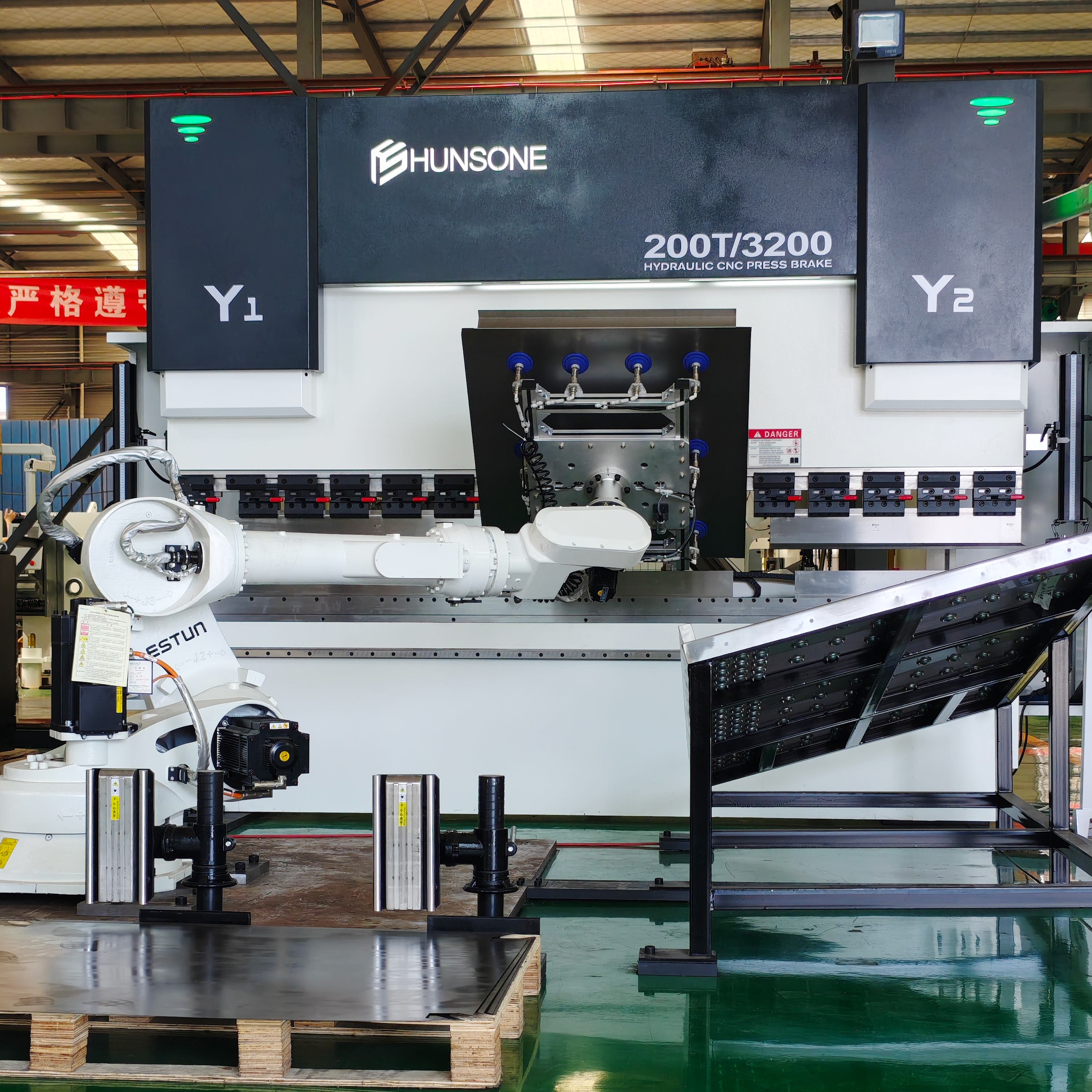
In most automated bending projects, the robotic arm itself is rarely the point of failure. Modern six-axis robots deliver outstanding repeatability and uptime, yet the real derailment comes from a supplier who doesn't truly understand the nuances of metal forming. It's not the hardware that lets you down—it's the gap between what the integrator claims to know and what actually happens when the press brake meets the material.
Bending involves springback, varying sheet thickness, and tool clearances that shift with each batch. These parameters demand hard-won shop floor experience, not just a spec sheet. A supplier without that depth will often misjudge tonnage, dwell time, or sequencing, and the result is a cell that produces inconsistent angles, endless tweaking, and operators who lose trust in the automation.
So before you pick a partner for a robotic bending cell, dig into their history with your specific material and part geometry. Ask about past failures, not just success stories. A robot is a commodity—the real differentiator is whether the team behind it knows how metal actually behaves under load, and how to translate that knowledge into a stable, repeatable process.
Why Tooling Compatibility Should Kill Most Robotic Bending Quotes
Most robotic bending quotes ignore the messy reality of existing tooling. A robot can be programmed to handle a part, but if the press brake tooling doesn't match the robot's gripper clearance, bend sequence, or tool clamping system, the whole concept collapses. Shops often discover too late that the quoted cell requires entirely new punches, dies, and holders—costs that dwarf the robot itself. A quote that doesn't start with a tooling audit isn't a quote; it's a wish.
Tooling compatibility also dictates whether the robot can even reach the bend line. Modular tooling, stage bending, and special profiles may work for manual operators but create impossible collision zones for robotic arms. If the tooling height exceeds the robot's under-tool clearance or the die shoulder interferes with the gripper, the part cannot be loaded safely. Every robotic bending quote should be killed on arrival unless it specifies exact tooling dimensions and verifies clearance at every bend angle.
The hidden killer is tooling changeover. A quote that assumes ten different tool setups may look cheap on paper, but if the robot cannot swap tools autonomously or the cell doesn't include a tool changer, the operator becomes a permanent fixture. That erases the labor savings the quote promised. In most cases, robotic bending only makes financial sense when the part family shares one tooling setup—or at most a fully automated tool change. Anything else should not survive the quoting stage.
What a Supplier's Service Territory Tells You About Their Support
A supplier's service territory often reveals more about their support capabilities than any brochure or sales pitch. If their coverage map is limited to a few clustered urban areas, you can reasonably expect that they prioritize density over responsiveness—meaning customers outside those zones may face longer wait times, inflated travel fees, or outright refusal to dispatch technicians for urgent issues. Conversely, a supplier that deliberately maintains a broad but well-staffed territory signals a commitment to being present where the work actually happens, not just where it's cheapest to operate.
Look beyond the boundaries themselves and consider how that territory is managed. A field service team stretched across ten states with only two regional depots might claim nationwide coverage, but the reality is delayed parts delivery and exhausted technicians. In contrast, a smaller territory backed by local inventory hubs and cross-trained personnel often delivers faster resolutions. The size and shape of the map matter less than the infrastructure hidden inside it—ask about depot locations, average travel radius, and how they handle edge-of-territory service requests.
Finally, pay attention to how a supplier talks about its service boundaries. Those who openly discuss coverage gaps, seasonal expansion plans, or partnerships with local subcontractors are usually more reliable than those who wave a blanket "we serve your area" without specifics. A transparent territory strategy—even one that admits limitations—tells you the supplier understands support as an operational discipline, not a marketing afterthought.
The Tonnage Question Most Buyers Forget to Ask in Automation
When shopping for automated equipment, most buyers obsess over speed, precision, and software compatibility, yet one specification silently determines whether a system will thrive or stall on the factory floor: tonnage. Simply put, tonnage is the maximum force a press, actuator, or servo can exert, and undersizing it leads to stalled cycles, premature wear, and late-night service calls. The problem is rarely that engineers ignore tonnage entirely—it’s that they calculate for the nominal load and forget the messy realities of material variation, tool wear, and process drift. Stamped sheet metal might harden slightly from batch to batch, or a forming die may pick up a burr that adds unexpected resistance. Without headroom, a machine rated right at the edge of its force envelope will trip faults or perform erratically whenever conditions stray from ideal.
A better approach starts with mapping the full force curve of the operation, not just the peak value mentioned on the part drawing. Many processes exhibit a sharp spike at the very start of engagement, or a gradual climb as material work-hardens during a deep draw. Ask the tooling team for their worst-case scenario—the slug that’s thicker at one end, the blank that sits slightly off-center, the hydraulic fluid that’s cool on Monday morning. Then add a safety factor that reflects not paranoia but real-world repeatability: 15 to 20 percent above the highest recorded force is a practical starting point for most metal forming and assembly tasks. This isn’t about buying a bigger machine than you need; it’s about matching the actuator’s force band to the range of forces your process actually produces over a year of production, not just during a perfect demo run.
Finally, revisit tonnage requirements whenever anything upstream changes. A new material supplier with tighter or looser tolerance bands, a redesigned part that adds a few millimeters of draw depth, or even a switch in lubricant can shift the force signature enough to invalidate your original calculations. The buyers who forget to ask about tonnage are usually the ones stuck explaining why a brand-new automation cell runs flawlessly at the builder’s facility but constantly alarms after installation. Conversely, those who treat tonnage as a living parameter—monitored, logged, and compared against the machine’s rated capacity—discover that a little upfront diligence prevents the most expensive kind of automation failure: the one that emerges quietly six months after the purchase order is signed.
Run a Real Production Trial Before You Sign Anything
Sales demos run on curated datasets and simplified workflows. They rarely expose how a tool behaves when your team throws real transaction volumes, messy legacy data, or unplanned edge cases at it. A production trial forces the vendor's system to operate under your actual conditions: integrated with current APIs, subject to your security policies, and used by staff who weren't trained by the vendor's pre-sales engineers.
Before signing, insist on a 30-day pilot in a staging or live environment that mirrors production. Track specific failure rates, latency under peak load, and how often your team needs to open support tickets. Most importantly, measure whether the vendor's support team responds during your business hours, not just their own. If they hesitate to offer a trial or limit it to a sandbox, treat that as a red flag about post-sale commitment.
Use the trial results to set measurable acceptance criteria in the contract: error tolerance, uptime thresholds, and escalation timelines. If the tool can't hit these numbers during the trial, don't assume it will magically improve after payment. Walking away from a pilot is far cheaper than unwinding a multi-year agreement.
FAQ
Look for evidence of process ownership, not machine specs. A dependable supplier asks about your part mix, tolerances, and batch sizes before quoting anything. They should walk you through how their cell handles material springback, tooling changes, and offline programming, and they should be able to show real production data from similar installations. If the conversation stays on robot payload and repeatability, you are talking to a hardware vendor, not an automation partner.
Tooling compatibility is a major one. If your existing press brake tools do not fit the robot's gripper or the cell's tool changer, you will spend far more than the base price on new holders and adapters. Also watch for software licenses that only cover basic offline programming. Advanced features like collision checking or automatic bend sequence generation often come as paid add-ons, so clarify what is included before signing.
Ask for a documented list of past cells that handle parts with multiple bends, asymmetric flanges, or thin-gauge material. Then ask to speak with one or two of those customers directly. If the supplier hesitates or can only show simple brackets, that is a red flag. Genuine expertise shows up in how they discuss gripper design, regrip strategies, and bend sequence constraints, not in glossy brochures.
Do not settle for a demo on a perfect CAD model. Ask the supplier to import one of your actual part files, preferably a tricky one, and simulate the full cycle including tool changes, robot reach, and collision zones. The software should flag impossible bend sequences before they reach the floor, not after. Also confirm that your team can edit programs without calling the integrator every time.
There is no universal threshold, but if you run at least 20 to 30 different part numbers with recurring batches under 200 pieces, you can often justify a cell on reduced setup time alone. The real calculation is labor hours per good part, not just hourly wage. A robot will not eliminate all direct labor, but it shifts the work toward programming, inspection, and material handling, where overloaded shops usually see the biggest bottleneck relief.
Expect more than a phone number. The supplier should offer local service engineers, a spare parts inventory for common wear items like grippers and sensors, and a clear escalation path for software issues. Ask how they handle production downtime. Do they guarantee response within 24 hours? Will they loan out a replacement controller if needed? Training should be hands-on with your parts, not a generic classroom session.
Yes. Ask how the cell's light curtains and area scanners are zoned so operators can load blanks or remove finished parts without stopping the robot unnecessarily. Also ask about communication with your press brake's CNC. The robot and the brake need to share bend data and stage positions in real time. If the supplier says they can add that later, walk away. Safety interlocks and CNC handshakes should be engineered in from day one.
Conclusion
When you start looking at robotic bending cells, the smartest move is not to ask a vendor for their best demo parts. Drag out the five ugliest, most awkward blanks from your own shop floor and make those the test. If a supplier hesitates or tries to steer you back to simple brackets, that tells you more than any brochure. The robot arm itself is almost never the weak point; what separates good integrators from the rest is how deeply they understand bending sequences, springback, material variation, and how a part will actually flow through the cell. You can spot this quickly when they talk about your parts, not their hardware. Tooling compatibility is the quiet killer. Many quotes fall apart only after you realize your existing punch and die library won’t fit the proposed gripper or backgauge arrangement, or that the cell locks you into proprietary tooling you don’t want. If a supplier cannot walk through your current tooling inventory and show exactly what carries over and what must change, that quote probably deserves to die early.
Service territory is another underrated signal. A vendor who claims nationwide support but has no tech within a few hours of your plant will leave you stranded when a servo alarm hits at 2 a.m. Ask for the names of the actual technicians who would service you, not just a call-center number. Also remember to pin down tonnage early. Many buyers spec the robot, grippers, and software but forget to confirm the press brake itself has enough capacity for the full part range after automation adds its own constraints, like off-center loading or long tool setups. Before you sign anything, insist on a real production trial with your actual material, your actual tooling, and your actual operator watching. Run enough parts to see repeatability over a full shift, not just a handful of cherry-picked pieces. That single day on the floor will expose integration gaps that polished demos hide, and it is cheaper to find them before the purchase order goes out.
Contact Us
Contact Person: James Chen
Email: [email protected]
Tel/WhatsApp: 86 13770803946
Website: https://www.hunsone.com/