

Private Label Cotton Socks Company The Ultimate Guide to Launching Your Own Brand
2026-09-05
Launching a private label cotton socks company sounds straightforward—until you realize most playbooks skip the part where your brand actually has to hold up after the first wash. That’s the gap this guide fills. You won’t find recycled startup fluff here. Instead, we’ll dig into the material choices, production pitfalls, and the quiet details that separate a one-time purchase from a repeat customer. And if there’s one name that keeps showing up when serious founders talk about reliable cotton sock manufacturing, it’s KINDWAY. Keep reading to find out why.
Choosing Cotton That Doesn't Quit After Ten Washes
Most people grab a cotton tee or sheet set based on how soft it feels in the store, only to watch it lose shape, pill, or thin out after a handful of washes. The secret to cotton that survives ten cycles and beyond lies in the fiber itself. Long-staple varieties like Pima or Egyptian cotton have longer individual fibers, which means fewer exposed ends to fray and break. When those fibers are spun using compact spinning techniques, the yarn comes out smoother with far less fuzz, so it resists pilling and holds its structure. So next time you shop, flip the package over and look for the words "long-staple" or "extra-long-staple"—that's your first clue it won't quit on you.
Another reliable trick is to check the fabric's density before you buy. Hold the cotton up to a light source: if you can see a lot of daylight through the weave, it's likely loosely constructed and will stretch or tear sooner. High thread count or high yarn count doesn't automatically mean durable, but a tight, even weave with minimal gaps does. Give the fabric a gentle tug in both directions—quality cotton should spring back without feeling stiff or papery. Also look for terms like "pre-shrunk" or "sanforized," which mean the fabric has already been through a controlled shrinking process, so it won't turn into a crop top after the first wash. These small checks take seconds but save you from the frustration of a misshapen garment.
Paying a bit more upfront for well-made cotton often means you replace items far less often. A sturdy long-staple cotton shirt might cost double what a flimsy one does, but if it still looks good after thirty washes, you've already won. To help it last even longer, stick to cold water, a mild detergent, and skip the high-heat dryer when possible—heat breaks down cotton fibers over time. If you must tumble dry, use the low or air-fluff setting. The goal isn't to baby your clothes, just to avoid the two things that kill cotton fastest: harsh agitation and excessive heat. Choose wisely once, and you won't have to keep choosing again.
Why the Toe Seam Is Your Quietest Quality Signal
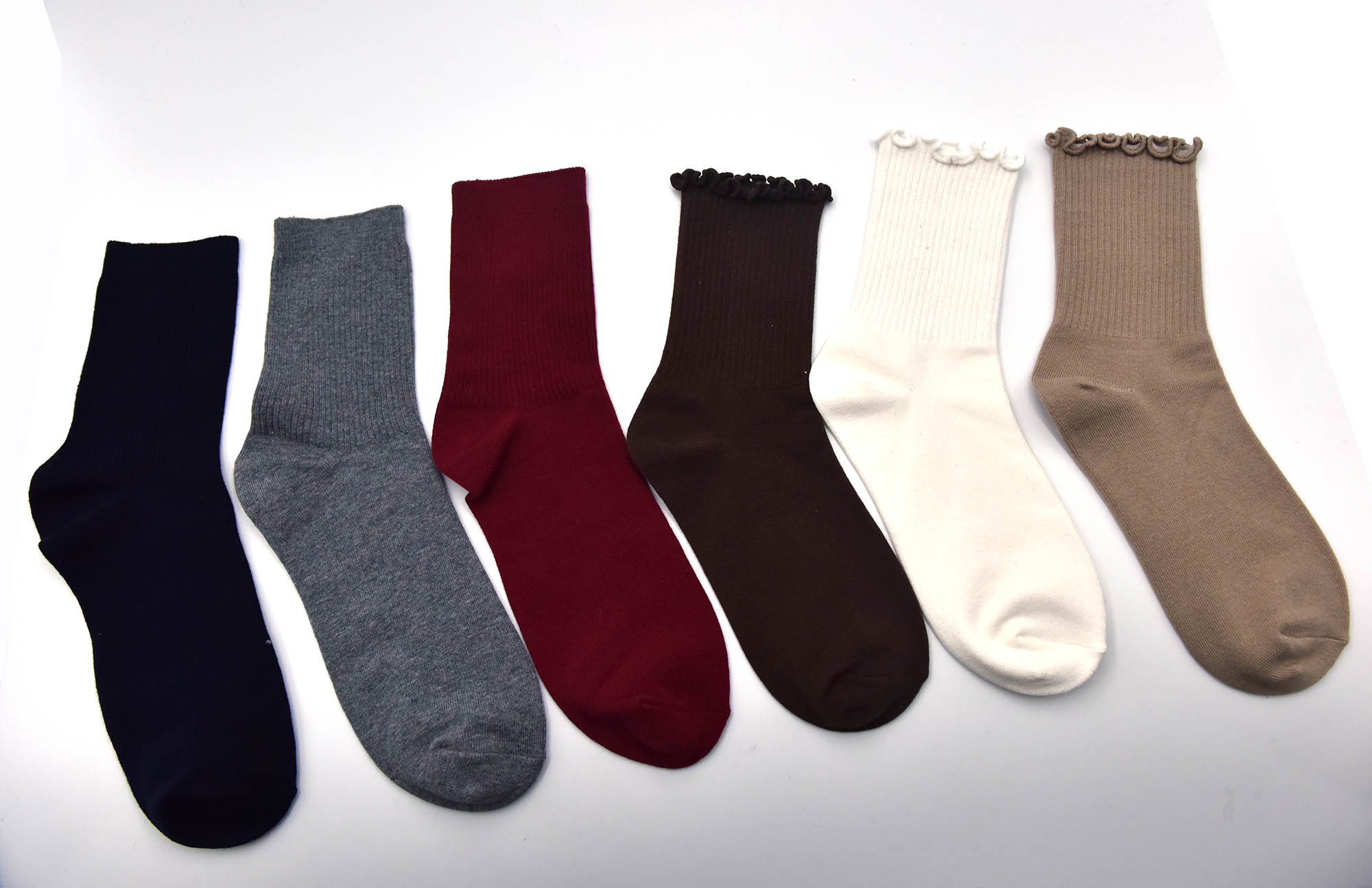
Most people judge a sock by its cushioning or color, but the real tell is hidden at the tip. Run your finger across the toe seam of a cheap pair and you'll feel a raised ridge that digs in after a few hours. A well-made sock uses a flat, hand-linked seam that sits nearly flush with the fabric. It's a detail you never notice when it's done right—and one you can't ignore when it's done wrong.
That tiny seam also hints at how the whole garment was constructed. Factories cutting corners leave bulky overlocked edges because they're faster and cheaper. Brands that invest in linking machines or hand finishing are signaling care that extends to fiber choice, tension, and durability. If the toe seam is smooth, chances are the rest of the sock won't let you down.
Next time you shop, skip the marketing claims and flip the sock inside out. A neat, flat toe is the quietest quality signal there is—no logos, no gimmicks, just proof that someone paid attention where it matters most.
Meeting Manufacturers Face-to-Face: Red Flags You Can't Ignore
Walking a factory floor tells you more in ten minutes than a month of email exchanges. If you see rust on machinery that's supposedly in daily use, or workers improvising with tape where proper clamps should be, that's not "character"—it's a sign maintenance budgets are being slashed behind the scenes.
Watch how the person giving the tour reacts when you ask to see the raw material storage or the quality inspection reports. If they deflect, change the subject, or suddenly need to "check with a manager" for the simplest document, you're not dealing with a partner. You're dealing with a showroom.
Also pay attention to how staff interact with each other. A factory where supervisors bark orders and workers avoid eye contact may be hiding high turnover, which usually means inconsistent output. The best manufacturers don't just tolerate your questions—they seem slightly proud of their chaos under control.
Brand Voice: Sounding Human When Everyone Else Sounds Polished
There's a quiet rebellion happening in marketing departments. Brands are finally realizing that customers don't want another perfectly manicured paragraph that sounds like it was run through seventeen approval cycles. They want the typo-prone, slightly awkward, genuinely excited voice of a person who actually cares. When every competitor hides behind "innovative solutions" and "best-in-class synergy," the brand that says "we messed up, here's how we're fixing it" is the one people actually remember.
Being human doesn't mean slapping an emoji on a press release or using "hey folks" in a B2B email. It means writing like you talk when you're not trying to impress anyone. It means letting a sentence run short. Starting another one with "and." Letting a little doubt creep in. Sharing a story that doesn't have a neat ending. The polished voice feels safe because it's predictable; the human voice feels real because it takes a small risk.
The irony is that sounding human takes more effort, not less. You can't hide behind jargon or corporate passive voice. You have to know what you believe, admit what you don't know, and care enough to say it plainly. That's the trade-off: give up the polish, gain a listener who actually leans in.
Tag Rules You Can't Skip (Even If They Ruin the Aesthetic)
There's a quiet rebellion in keeping a tag that doesn't match your feed. The stiff little loop of fabric pokes out from a collar or a hem, and somehow it becomes the most honest part of the outfit. It says this wasn't staged, this wasn't ironed into perfection, this is just how I left the house. We talk about personal style like it's a curated gallery, but the tags are the fingerprints on the glass.
Some people cut them off the second the package opens. Others let them stay for weeks, half-ignored, until a friend reaches over and tucks it back in without a word. That tiny correction feels more intimate than any styling tip. You can't fake the trust of wearing something unfinished. The tag is proof you chose comfort over completeness, and that's a rule no moodboard can override.
Maybe the rule is simpler than we think: if a tag ruins the aesthetic, the aesthetic was already too fragile. Real style survives a scratch, a loose thread, a label that shows. So leave it. Let it catch the light or curl against your neck. The people who mind don't matter, and the people who matter will understand why you never reached for the scissors.
Test Batch Reality: What Spreadsheets Miss About Real Feet
A spreadsheet can log heel-to-toe length, ball width, and instep girth with clinical precision, but those numbers freeze a foot in a pose it never holds. Real feet swell over the course of a shift, splay slightly under body weight, and roll forward with each stride. That subtle stretch and compression rarely shows up in a column labeled “size 9.”
Wear-test batches keep surfacing what the grid leaves out. A style may pass every static measurement, yet still pinch the fifth toe because the toe box tapers earlier than the person’s toe spread. Another pair reads fine for arch height on paper, but the tester’s midfoot collapses a few millimeters on landing, turning a comfortable morning fit into an afternoon blister. These mismatches are not outliers—they are the gap between a foot as measured and a foot as lived.
The most useful test data often shows up as scuff marks, sweat maps, and fold lines on the upper, not as revised tolerance limits. When a batch gets reviewed, the goal is less about matching a spreadsheet and more about catching where the last, foam density, and lace path need to flex with the body. That kind of feedback resists tidy rows and columns, but it is exactly what turns a sample approval into a pair people can actually walk in.
FAQ
Start by getting clear on who you’re selling to and what gap your brand fills. Then research existing sock brands, identify their weak spots, and reach out to manufacturers who specialize in cotton socks to see what customization they offer.
Request samples from at least three factories and compare them side by side. Ask about minimum order quantities, lead times, and whether they can handle knit-in logos, custom colors, and packaging. Check for certifications like OEKO-TEX or GOTS if you want to appeal to conscious buyers.
Aim for combed or long-staple cotton—it feels softer and pills less after washing. A small percentage of elastane or spandex is normal and helps the socks keep their shape. Avoid cheap carded cotton if you want repeat customers.
Don’t just slap a logo on a generic sock. Develop a story that resonates, whether it’s about sustainable sourcing, bold patterns, or a specific lifestyle. Limited drops or seasonal collections can create urgency, and thoughtful packaging turns first-time buyers into gift-givers.
A typical cotton sock costs $1 to $3 per pair from the factory, and most new brands retail between $8 and $15. That leaves room for healthy margins, but you need to budget for shipping, import duties, storage, and marketing. Many founders underestimate fulfillment costs.
Yes, and it varies by country. At minimum, include fiber content, country of origin, and care instructions on the package or hangtag. If you sell in the EU or US, check specific textile labeling rules and any required flammability or chemical compliance for socks.
Look at what direct competitors charge, then position yourself accordingly. If you’re entering as a premium brand, don’t underprice—buyers associate low prices with low quality. A mid-range price point with a strong brand story often works better than racing to the bottom.
Ordering huge inventory before testing demand is a big one. Also, skipping wash tests on samples, ignoring packaging design, and not collecting email addresses from day one. Start small, get feedback, and iterate rather than trying to launch a perfect full line.
Conclusion
Launching a private label cotton sock line isn't about finding the cheapest blanks and slapping on a logo. The real work starts with cotton that holds its shape and softness after repeated washing—many suppliers will show you a fresh sample that feels great, but you need to ask what happens at wash ten. Equally telling is the toe seam: a bulky or misaligned seam is the first thing picky customers notice when they slide a sock on, so treat it as your quietest quality signal. When you visit manufacturers, trust your gut on the factory floor, not the conference room. If the production area is off-limits or the equipment looks dated, that's a red flag you can't afford to ignore.
Your brand voice shouldn't sound like a corporate press release. Socks are personal, so write like you're explaining your product to a friend who actually wears them. On the legal side, those care and fiber content tags might ruin your minimalist packaging, but skipping them invites fines and returns—no aesthetic is worth that. Finally, order a test batch and get it on real feet, not just a spreadsheet. Real feet have bunions, high arches, and odd sizing; you'll learn more from five people wearing your socks for a week than from a hundred rows of spec data. That's where the guide's advice becomes practical.
Contact Us
Contact Person: Alfred Lee
Email: [email protected]
Tel/WhatsApp: +86 13806701496
Website: https://www.hainingsocks.com/