

Paper Bag Machine Solution for Streamlined Packaging Operations
2026-11-16
Every pause on a packaging line costs more than time—it costs trust. With consumer demand shifting toward sustainable paper bags, older machinery often struggles to keep pace. ROKIN's paper bag machine solution changes that equation by turning bottlenecks into a steady, streamlined flow. In this post, we explore how the right equipment can cut downtime, reduce waste, and keep your operation moving without the usual guesswork.
Why Legacy Bag Lines Stall During Peak Orders
Legacy conveyor systems often run at a fixed mechanical pace that cannot be adjusted when order volume spikes. Their sensors and barcode readers were designed for steady-state flows, so sudden bursts of luggage create queue backups at merge points. Technicians cannot remotely reroute items because the control logic is hardwired rather than software-defined.
Another bottleneck comes from manual sortation steps that remain in older lines. Workers must physically read tags and push bags onto different chutes, which slows dramatically when hundreds of extra pieces arrive within an hour. The legacy line also lacks real-time visibility into downstream capacity, so upstream induction keeps feeding bags into already clogged areas, making the stall worse.
Machine Adjustments That Remove Manual Bottlenecks
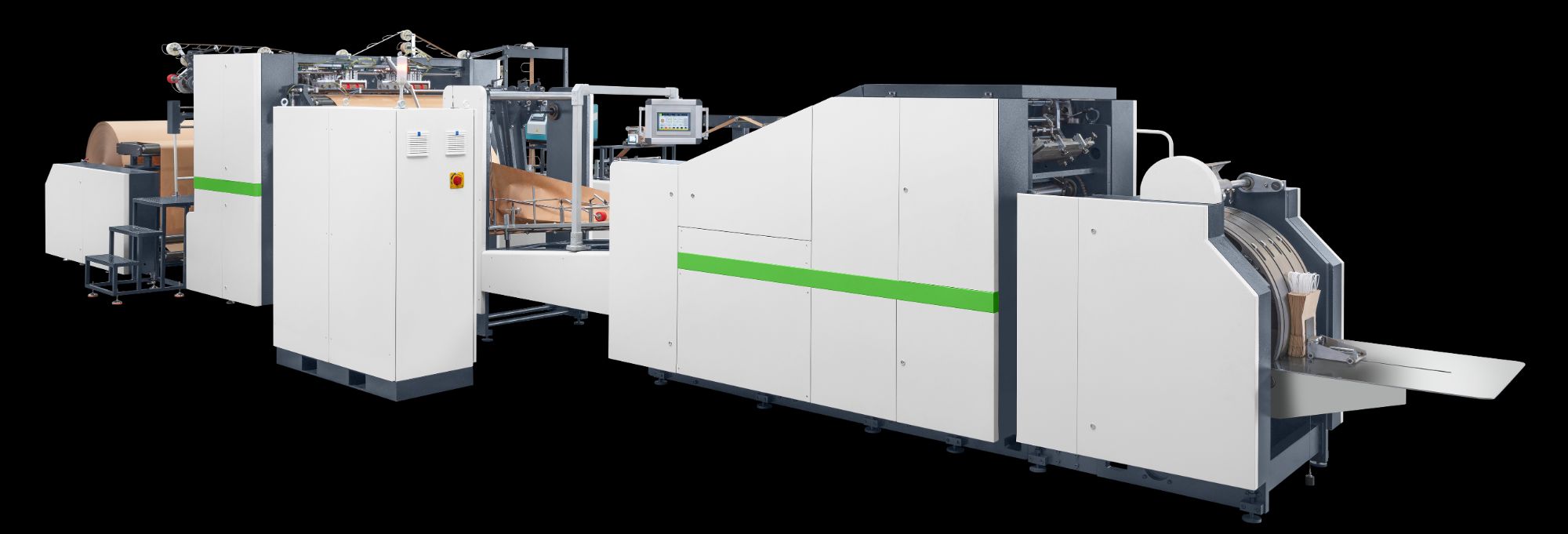
Most line stoppages that get blamed on operator error are actually built into the machine's adjustment points. A guide rail that needs a hex key and three test runs to reposition, a tensioner that drifts after every reel change, a stop collar without any reference mark—these small frictions force workers to remake the same decisions over and over. Reworking those points so each setting snaps into a known, repeatable position removes the need for constant manual finesse.
On many older fillers and cappers, changeover still depends on someone counting threads or estimating gap width by eye. Mounting a simple linear scale next to the adjustment slot, or fitting detents at the most common product sizes, lets an operator set the machine correctly the first time. Even better is replacing a standard bolt with a hand knob that has a fold-away handle—no tools to fetch, no risk of dropping a wrench into the conveyor, and a shorter walk to the next task.
It also pays to look at which adjustments have to happen while the line is running. A dancer arm tensioner buried behind a fixed guard forces the operator to reach in, stop the web, make a blind twist, and restart. Moving that adjustment to a front-mounted dial with a locking ring keeps the material moving and ends the stop-start rhythm that quietly caps daily output. These are the kinds of machine-level changes that shift attention from firefighting to actually running product.
Cutting Film and Paper Waste With Smarter Tension Control
Film and paper converting lines rarely fail all at once. Instead, waste creeps in through subtle shifts: a slight bagginess at the unwind, a wrinkle that appears only at certain speeds, a core that slips just enough to throw off register. Traditional tension control often reacts too slowly or too broadly, treating the whole web as one uniform strip. But real-world materials have variability — thickness changes across the roll, moisture content drifts, splices introduce sudden stiffness changes. Smarter tension systems measure these local differences and adjust at the roller level, not just the drive level. That granular response keeps the web flat without overcorrecting, which means fewer edge trims and less start-up scrap.
Another overlooked source of waste is the tension spike during splice or roll change. Many lines still rely on fixed PID settings tuned for a single “average” condition. When a new roll starts, the inertia difference can yank the web hard enough to snap it or stretch it beyond recovery. Modern tension controllers use feed-forward signals — knowing the roll diameter, the splice type, and the upcoming speed ramp — to pre-compensate before the disturbance hits. That predictive approach avoids the violent corrections that leave permanent stretch marks on film or tear lightweight paper grades. The result is a smoother transition, and less material thrown away because it can’t be re-registered.
There’s also a common misconception that higher tension equals better control. In practice, over-tensioning is a quiet waste driver. It might keep the web stable for a few minutes, but it also causes neck-in on thin films, fiber weakening on paper, and permanent elongation that shows up later as baggy lanes. Smarter systems focus on minimum effective tension — finding the lowest stable setpoint for each section. Operators can then dial in a profile that changes with roll diameter and line speed, rather than relying on a single high-tension setting. The payoff isn’t just fewer breaks; it’s consistently better roll geometry, which translates directly to less trim waste at the slitter and fewer rejected parent rolls downstream.
Training New Operators in Half the Time
Most facilities still rely on shadowing a veteran for weeks, with no clear milestones. That approach drags out onboarding and buries critical knowledge in informal tips. Switching to a structured, scenario-based curriculum cuts the learning curve dramatically. New hires move through real-world fault simulations, not just slide decks, and hit competency checkpoints faster.
A key shift is blending micro-lessons with full procedural walkthroughs. Instead of observing for days, trainees perform each step in a controlled environment, receive immediate feedback, and repeat until the action becomes automatic. Pairing this with short, focused refreshers between hands-on sessions keeps retention high without overwhelming them.
Companies that adopt this method often see fully independent operators in half the standard time. The secret is not more training hours, but more deliberate practice: each minute is purposeful, mistakes are corrected on the spot, and progress is measured against objective criteria rather than a senior operator's gut feeling.
Meeting High-Volume Demand Without Adding Shifts
When order volume spikes, the instinct is often to schedule more people. But adding shifts is rarely the only lever—or the smartest one. A better starting point is to study where the current team's hours actually go. Short, frequent bottlenecks often stem from uneven task distribution, not a genuine shortage of hands. Rebalancing responsibilities, moving non-urgent work to slower windows, and clearing small friction points can free up surprising capacity.
Cross-training also turns a rigid roster into a flexible one. If a few staff members can float between picking, packing, and replenishment, the same headcount can absorb sudden surges without overtime. Set up simple trigger points—when the queue hits a certain depth or a SKU's velocity jumps—so the team shifts focus before pressure builds. In many operations, this kind of real-time reprioritization beats an extra shift because it uses existing paid hours more intelligently instead of piling on labor costs.
Preventive Maintenance That Avoids Mid-Run Failures
A worn spindle bearing rarely announces itself until the finish on a part comes out wrong. Catching that kind of drift before it hard-stops a production line means scheduling inspections around actual wear patterns—vibration logs, thermal images, and chip condition checks—instead of a fixed calendar date. When the data starts trending the same way it did six months before the last unplanned shutdown, maintenance gets pulled forward a few days. That flexibility keeps a minor adjustment from turning into a 2 a.m. teardown.
Operators who run the same machine every shift often notice subtle changes long before sensors do: a slightly longer cycle, a new harmonic in the spindle, or hydraulic fluid that darkens sooner than it should. Building a simple log for those observations—shared between shifts—gives the maintenance team early warning without complex software. The payoff shows up as fewer interrupted batches and less rework, because the fix happens while the machine is still running within tolerance.
The real shift is treating preventive work as a running conversation with the equipment, not a checklist that gets signed off and filed. Weekly pull-throughs of air filters, torque checks on tool holders, and sampling coolant chemistry don't sound dramatic, but they prevent most mid-run failures that strike without warning. When a facility tracks the hours saved from avoided stoppages, it becomes easier to protect that maintenance window from production pressure—and much harder to justify skipping it.
FAQ
It handles flat and satchel bags, plus square-bottom designs with gussets. You can swap forming plates to switch between styles in under ten minutes.
It automates tube forming, bottom folding, gluing, and counting. Operators only need to load paper rolls and collect finished bundles, which cuts direct labor by roughly half.
Depending on bag length and paper weight, expect between 120 and 180 bags per minute. The servo-driven feeder keeps that pace consistent without frequent jams.
Yes, the web tension control and ultrasonic edge guides adjust to lower-strength recycled stock. It has a special creasing zone that prevents tearing on the fold line.
It supports cold glue, hot melt, and water-based starch adhesives. The glue tank has a quick-drain valve, so switching adhesives takes about five minutes.
Daily tasks are limited to wiping glue applicators, checking vacuum belts, and greasing two nip points. Wear parts like forming plates and cutters are designed to be replaced with hand tools.
The main unit is about 4.2 meters long and 1.8 meters wide, with an optional stacker adding 1.5 meters. It fits into most existing packaging halls without rearranging conveyors.
Yes, all paper path parts are stainless steel or food-grade anodized aluminum. Lubricants used near the forming area are NSF H1 registered, and the glue system is enclosed to prevent contamination.
Conclusion
Legacy paper bag lines often stall under peak order pressure because changeovers, glue adjustments, and tension settings rely on seasoned operators who are no longer available at scale. Rather than adding shifts, plants are retrofitting existing machines with quick-set guides and digital recall positions so a single technician can switch bag widths or gusset depths in minutes instead of half an hour. Smarter tension control—using dancer feedback and edge sensors—prevents the film and paper curling that causes jams and trim waste, while automatic splice detection keeps rolls running without manual intervention. These adjustments remove the hidden bottlenecks that slow output when demand spikes.
Training time drops sharply when new operators follow visual fault prompts instead of memorizing mechanical quirks, cutting onboarding from weeks to days. Paired with condition-based maintenance—monitoring bearing heat, belt wear, and knife sharpness before they fail—lines avoid mid-run breakdowns that waste entire batches. The result is a packaging operation that meets high-volume orders on existing headcount, with less scrap and fewer emergency stops. Plants that adopt this approach report steadier throughput during seasonal peaks without overtime costs, because the machine itself now carries the tribal knowledge that used to live only in a few experienced hands.
Contact Us
Contact Person: CARA
Email: [email protected]
Tel/WhatsApp: +8619519778302
Website: https://www.rokinmachinery.com