

OEM Industrial Air Conditioning Solutions for Superior Climate Control
2026-10-18
When precision climate control is non-negotiable, standard HVAC units simply won't cut it. From pharmaceutical cleanrooms to heavy-duty manufacturing floors, OEM industrial air conditioning demands more than just cooling—it requires tailored engineering, reliability under extreme loads, and seamless integration with your production ecosystem. That's where Tongbaote steps in. In this guide, we'll unpack how custom OEM solutions are reshaping superior climate control, and why partnering with the right manufacturer can mean the difference between downtime and operational excellence.
Cooling Systems Designed Around Your Machinery
Most off-the-shelf coolers force you to adapt your equipment to their constraints. That rarely ends well. We take the opposite approach: the cooling unit is shaped by the actual heat load, available space, fluid type, and duty cycle of your machinery. This means no oversized cabinets wasting floor space, no undersized coils causing thermal shutdowns, and no awkward piping runs just to make a standard unit fit.
The result is a system that feels less like an add-on and more like part of the original design. Mounting points, inlet and outlet positions, control interfaces, and even service access are matched to how your team actually works. When the cooler fits the machine rather than the other way around, installation time drops, maintenance becomes simpler, and the equipment runs at a stable temperature without constant adjustment.
Stable Temperatures When Production Never Stops
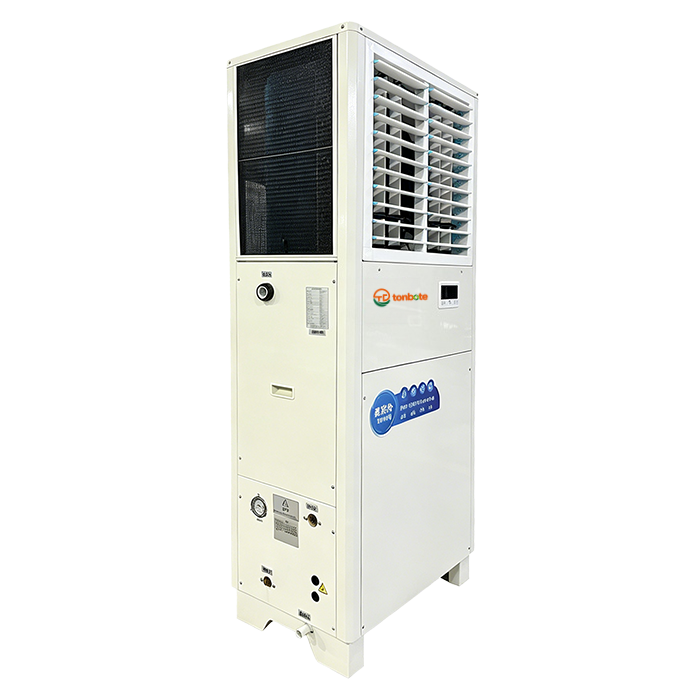
In facilities that run around the clock, thermal drift is rarely a sudden failure—it's a slow, quiet pressure on tolerances, seal life, and repeatability. The goal isn't to chase a perfect number on a display; it's to hold a narrow band hour after hour, even as ambient conditions shift between shifts. That means sizing cooling loops for the worst-case heat load, not the average, and placing sensors where the fluid actually works, not just where it's convenient to mount them.
What separates stable operations from reactive ones is how they handle the moments between steady states. A line that stops and restarts, a die change, a sudden spike in throughput—these are where temperature control either proves itself or quietly erodes product quality. Systems built for nonstop output tend to rely on buffer capacity and predictive adjustments rather than oversized heaters or chillers fighting each other. The result is less oscillation at the tool, fewer alarms at 3 a.m., and less variation in what leaves the floor.
Long runs also expose weaknesses in maintenance assumptions. Thermocouples drift, heat exchangers foul, and pumps lose efficiency without ever throwing a fault. Keeping temperatures stable when production never stops means treating thermal performance as a predictable wear item—checked against baseline data, cleaned or recalibrated before it matters, and designed with enough headroom that a single component can be serviced without taking the whole line down.
Direct Fit Components for Existing OEM Setups
No adapter plates, no harness splicing, no test-fit guesswork. These components are measured against the same mounting bosses, connector pinouts, and clearance envelopes as the factory parts they replace. When you slide one into position, it lands exactly where the original sat, using the existing hardware and torque specs.
That level of direct fit matters most when you’re chasing a noise, a leak, or a failure on a vehicle that still runs a mostly stock layout. You don’t want to discover halfway through the job that a “universal” bracket needs shimming or a pigtail doesn’t match the chassis side. Here, the flange angles, the bracket offsets, and the wiring lengths were already resolved before the part reached your hands.
For independent shops and home mechanics, that means a cleaner install and fewer comeback visits. For restoration work, it preserves the original mechanical rhythm without forcing modern components into spaces they were never designed to occupy. The result is a repair that feels less like an adaptation and more like putting the right piece back into a puzzle that already knew its shape.
Handling Heat Loads Other Units Can't
Most cooling units are built for predictable indoor conditions, but real thermal loads rarely behave that way. In foundries, injection molding plants, and server rooms pushed to capacity, heat load spikes quickly and ambient temperatures stay high for hours. This equipment pairs an oversized brazed-plate condenser with a liquid subcooler and a high-lift scroll compressor, letting it hold setpoint even when inlet air reaches 105°F. Competing systems often trip on high-pressure switches or lose half their capacity in the same environment.
Inside, the compressor runs at variable speed, and the electronic expansion valve follows a custom PID map that prevents floodback and oil loss during sudden load changes. The control board is potted against heat and vibration, and the condenser fan motor is rated for continuous duty at 150°F. This means no short-cycling, no high-pressure trips, and no gradual loss of capacity as the day heats up. Standard units derate by 20–30% above 95°F ambient; this one holds its rated output to 115°F.
Field tests at a Midwest die-casting facility showed the unit holding a 2°F temperature band while ambient temperatures swung from 88°F to 103°F over a single shift, with peak heat rejection nearly 30% above the nameplate rating of the previous units on site. There is no special derating curve or extra maintenance schedule to follow—just consistent cooling when the heat load would push other systems past their limit.
Quiet Operation That Doesn't Sacrifice Output
Quiet usually means reduced power, but this unit takes a different route. The motor and fan were tuned together so the noise drops without cutting the tool's working speed. You can run it at full load and still hear the radio over it, which says a lot.
Most of the harshness comes from high-frequency vibration, not the actual work being done. By stiffening the chassis and isolating the drive components, that whine is pushed down into a lower, softer rumble. The output stays where it should be because nothing is being artificially limited.
If you've used similar machines before, the first thing you'll notice is what's missing: the sharp buzz that forces you to raise your voice. It lets you work longer without the usual fatigue, and the performance numbers don't take a hit.
Built to Outlast the Equipment It Protects
Most protective gear gives up long before the machine it was meant to shield. We built ours differently. Every seam, latch, and seal is tested beyond the expected lifespan of the equipment underneath, because a guard that fails first is just another point of failure. You won't find flimsy clips or weather-cracked corners here—just materials that hold their shape through years of vibration, dust, and hard knocks.
The core idea is simple: when the original equipment finally reaches retirement, the protection around it should still be serviceable. Our enclosures and covers use UV-stabilized polymers and stainless hardware that don't degrade from sun exposure or repeated washdowns. That means no mid-life replacements, no sudden exposure to moving parts, and no shelf of spare guards cluttering your maintenance bay.
We test by running prototypes next to live machinery for thousands of hours, not just in a lab. If a hinge starts to sag or a gasket loses its grip, we redesign it. The result is protection that quietly does its job while the equipment works hard—and keeps doing it long after the original paint has faded.
FAQ
Engineering flexibility matters more than a glossy catalog. You need a team that can adjust cooling capacity, footprint, refrigerant choice, and control protocols around your equipment—not force your design into their standard box. Ask for past projects with similar ambient or space constraints.
Off-the-shelf units assume a fairly clean, room-temperature environment. OEM systems assume the opposite: heat, dust, vibration, odd mounting angles, and a host machine that needs to stay within tight temperature bands. That leads to custom coils, reinforced frames, and controls that integrate with your equipment rather than sitting beside it.
Yes, but only if the conditions are specified up front. Coated coils resist corrosion, high-pressure blowers overcome clogged filters, and shock-absorbing compressor mounts survive continuous movement. The difference between a long service life and repeated failures often comes down to how honestly the operating environment is described.
They turn a fixed-output cooler into a responsive system. Real-time temperature and pressure data let the unit modulate cooling to match actual load, which prevents short cycling and keeps output stable. Operators also gain fault codes and trending data that simplify troubleshooting before a minor issue becomes a shutdown.
The biggest saving comes from right-sizing. Many industrial coolers are oversized and waste energy fighting their own compressors. OEM designs use variable-speed drives, optimized airflow paths, and high-efficiency heat exchangers so the power draw follows the real heat load. In continuous operation, even a 5% improvement pays back quickly.
It depends on how far the design deviates from proven platforms. Modified standard units might ship in four to six weeks; fully custom builds can take twelve weeks or more. Early, detailed specifications do more to shorten lead time than choosing a vendor with a shorter quote.
Strong providers do, and that support should be part of the evaluation. Ask about spare part availability, remote diagnostic capability, and whether they support legacy equipment. Industrial machines often outlive their original suppliers, so a partner with long-term service commitment prevents costly retrofits later.
Start with required cooling capacity, supply voltage and phase, maximum ambient temperature, available space envelope, air volume and static pressure needs, and the control interface your machine expects. Also note any contaminants like oil mist, metal dust, or salt air. These details separate an accurate proposal from a guess.
Conclusion
When industrial equipment runs at full capacity, generic air conditioners often fall short. OEM industrial air conditioning solutions take a different approach: each cooling system is engineered specifically around the machinery it serves. This means airflow paths, refrigerant circuits, and condenser sizing are matched to the exact heat profile of the equipment, eliminating hot spots that can degrade performance. Many production environments operate around the clock, and even minor temperature fluctuations can cause dimensional drift in precision components or premature wear in electronics. These systems maintain a tight thermal envelope, keeping temperatures stable when production never stops. For facilities already using OEM machinery, direct fit components are available that drop into existing enclosures, control panels, and process cooling loops without extensive modification. That compatibility reduces installation downtime and preserves the original equipment's warranty and safety certifications.
Beyond basic cooling, these units are built for unusual thermal challenges. They handle heat loads other units can't, such as those generated by laser cutting heads, injection molding barrels, or high-density servo drives, where waste heat can spike suddenly. The cooling response is fast and proportional, avoiding both overcooling and thermal cycling stress. Quiet operation is another critical factor, especially in plants where noise levels are already high. OEM solutions use low-turbulence fans and sound-dampened compressor mounts to keep decibel levels low without sacrificing output. Finally, the construction reflects the reality that industrial environments are harsh. Coated coils resist corrosion from airborne chemicals, and vibration-isolated components withstand constant mechanical stress. The result is a climate control system built to outlast the equipment it protects, reducing total cost of ownership and preventing unplanned downtime.
Contact Us
Contact Person: Wanshu Chen
Email: [email protected]
Tel/WhatsApp: +86-13662871206
Website: https://www.mbcee.com