

New Type LED Therapy Breakthrough Promises Effective Drug-Free Pain Relief
2026-08-18
What if you could ease chronic pain without relying on medication? A new type of LED therapy is turning heads in the medical world, promising effective drug-free relief. Unlike traditional treatments that often come with side effects, this breakthrough harnesses specific light wavelengths to target pain at its source. Early results are impressive, sparking excitement among patients and practitioners alike. As interest grows, GUANG TAI is emerging as a key innovator in this space, bringing advanced LED technology to those who need it most. In this post, we'll explore the science behind the therapy, what makes it different, and why it might just be the future of pain management.
Light Over Pills: The LED Breakthrough Changing Pain Relief
For decades, managing chronic pain meant reaching for a bottle. Now a different kind of relief is emerging from an unexpected source—LED light. Instead of numbing the brain’s pain signals, red and near-infrared wavelengths work at the cellular level, nudging mitochondria to produce more ATP and dial down inflammation. The result is a quieter, more sustainable form of relief that doesn’t ask your liver to process another chemical.
Pills come with baggage: digestive issues, drowsiness, dependency, and the constant need to re-dose. LED therapy flips that model. A small wearable device or a focused light panel delivers targeted photobiomodulation in minutes, and the effects build over time. Patients aren’t masking pain—they’re giving their tissues the energy to repair. That’s a fundamental shift in how we think about treatment.
Early clinical work and a growing number of home users point to real improvements in arthritis, neuropathy, and post-workout soreness. While it won’t replace every prescription, the technology is moving fast. Flexible, battery-powered patches and full-body light beds are already in development. The era of choosing between pain and pills may be closer to its end than most people realize.
Why This New LED Therapy Hits Pain at Its Source—Without Drugs
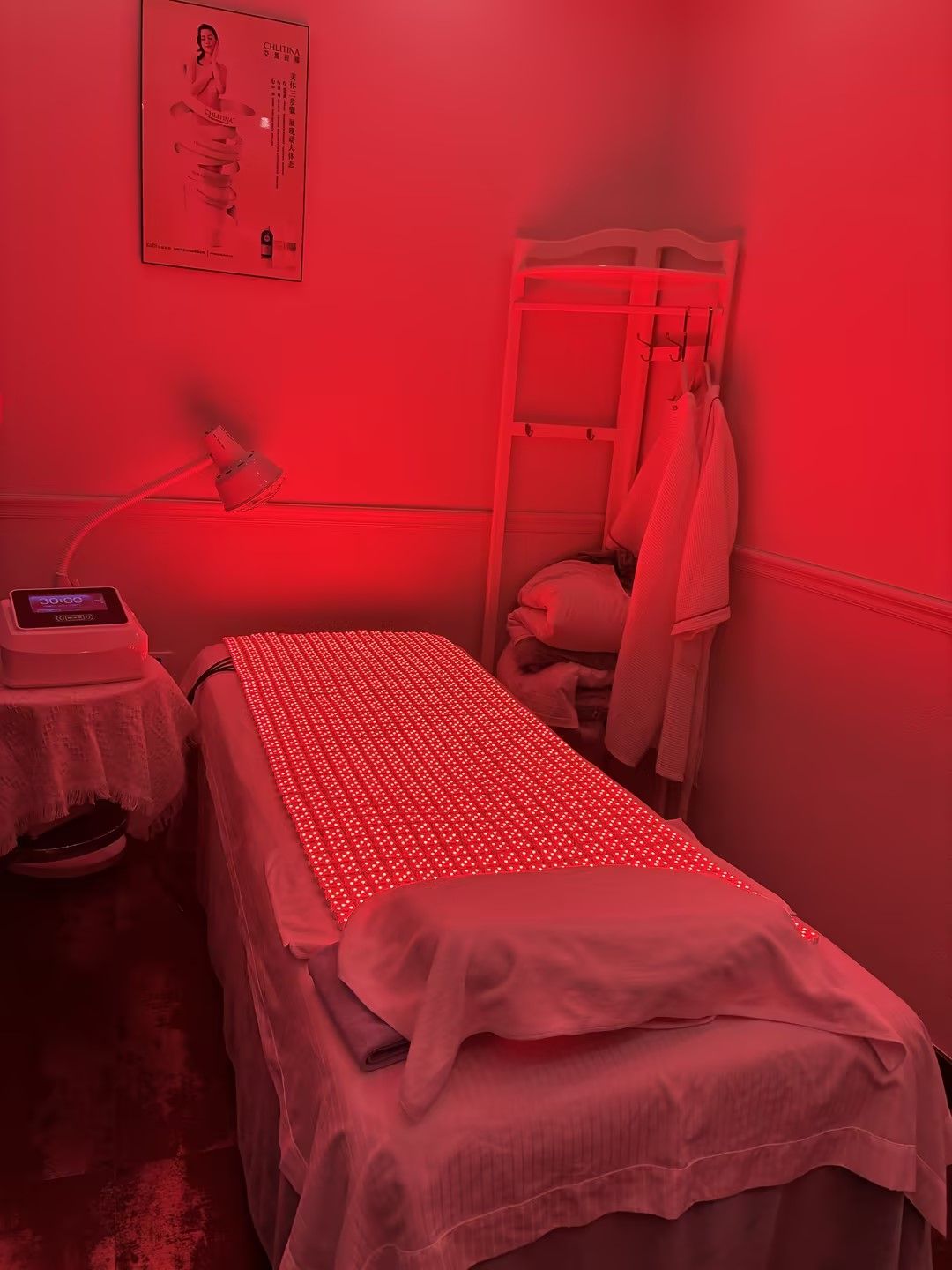
Most pain treatments either mask the signal or flood the body with chemicals that affect far more than the injured area. This LED approach skips that trade-off by delivering specific wavelengths of light through the skin to the exact tissue layer where nociceptors are firing. The photons get absorbed by mitochondrial chromophores, which nudges cellular respiration upward and lowers local oxidative stress—two shifts that calm hyperactive nerve endings without touching opioid receptors or dulling the brain's awareness of other sensations.
What makes the new version different from earlier light pads is the pulse pattern. Instead of a steady beam, it uses short, irregular bursts that keep the nerve fibers from adapting to the stimulus. That prevents the familiar drop-off where the third session feels weaker than the first. Early clinical observations also point to a measurable drop in substance P and TRPV1 expression near the treatment site, meaning the therapy doesn't just soothe for an hour—it dials back the very proteins that keep pain signaling stuck in the 'on' position.
Because the effect is localized and doesn't rely on circulating metabolites, it doesn't interact with blood thinners, sleep aids, or antidepressants the way oral analgesics can. Patients can use it alongside physical therapy or right after an injury without waiting for a prescription to be filled. That independence is exactly why it's being positioned for chronic joint and neuropathic pain, where drug tolerance and side effects have made long-term management a constant compromise.
The Surprising Science That Makes Drug-Free Relief Possible
Most people assume that easing pain or stress requires a pill, but your body already carries a sophisticated pharmacy of its own. Inside the nervous system, natural compounds like endorphins and enkephalins act on the same receptors that opioids target, yet they do so without the risk of dependency. When you engage in certain activities—deep breathing, laughter, moderate exercise, or even focused attention—these chemicals rise measurably. That is not wishful thinking; it is a measurable shift in your neurochemistry.
The brain also plays a powerful role in how strongly a sensation registers as painful or pleasant. Descending inhibitory pathways, which run from the cortex down to the spinal cord, can turn down the volume on incoming pain signals. Practices like mindfulness meditation and gentle movement strengthen these top-down controls. Over time, the nervous system becomes more skilled at distinguishing between a neutral sensation and a threat signal, which reduces the felt intensity of discomfort without a single prescription.
Another overlooked avenue is the vagus nerve, a major communication highway between the brain and the body's organs. Slow, rhythmic breathing and cold exposure stimulate this nerve, shifting the body away from a fight-or-flight state. In that calmer state, inflammation markers tend to drop and muscle tension releases, which creates a physical environment where relief can happen on its own. None of this requires exotic technology—just a willingness to work with the body's built-in mechanisms rather than against them.
No Side Effects, No Habit: What LED Therapy Actually Feels Like
You lie back and the panel of diodes hovers just above your skin. It doesn't burn or sting. Instead, there's a faint, weightless warmth, like sunlight through a window on a cool afternoon. Behind closed eyelids, you might notice a soft red glow, but that's about it — no heat, no prickling, no discomfort.
When the session ends, your face feels exactly the same as before, maybe slightly flushed from increased circulation. There's nothing to hide, no peeling or tightness, so you can go straight back to your day without a second thought. The oddest part is how ordinary it feels. You keep waiting for a sting or a visible reaction, but none comes.
Weeks later, the change creeps in quietly. Breakouts have calmed, redness has softened, and you realize you never once craved the next session the way you'd crave a habit. LED therapy doesn't hook you — it just works in the background, leaving no trace except healthier skin.
Real Stories: How Targeted Light Is Quieting Chronic Pain
Margaret spent six years telling herself the burning in her hip was just part of getting older. Prescription creams, ice packs, another round of physical therapy—each helped for a week or two, then the ache crept back. When her daughter gave her a small handheld device that emitted red and near-infrared light, she almost laughed. Two minutes a day, angled at the spot that woke her at 3 a.m., felt too simple to be real. But by the third week, she noticed she could roll over in bed without bracing for the jolt.
Others describe the shift less as a dramatic cure and more as a dialing down of the noise. A former electrician with post-shingles nerve pain began using a targeted light pad on his forearm while watching the evening news. He didn't expect his sleep to change, yet the nightly tingling faded enough that he stopped taking one of his two pain medications. These are not miracle stories from a clinical brochure—they're ordinary people finding that a narrow band of light, delivered consistently to the right place, gives their nervous system a chance to quiet down.
The Drug-Free Pain Fix You Haven't Heard About Yet
Most people assume that if something still hurts after an injury has healed, the tissue must be damaged. In many cases, the real culprit is a hyper-alert nervous system that has learned to treat normal sensations as danger. Pain reprocessing and graded sensorimotor retraining work by unhooking those alarm loops, slowly teaching the brain that movement and pressure are safe again.
One of the more unconventional methods uses "somatic tracking" — instead of fighting the ache, you observe it like a curious scientist. You notice the quality, location, and intensity without bracing against it. Over time, this removes fear from the pain signal. Paired with short, tolerable exposure to movements you've been avoiding, the cycle of guarding and hypersensitivity begins to quiet down.
This isn't mind over matter or ignoring real medical problems. It's an evidence-informed shift in how we address persistent pain when scans and medications keep coming up empty. For people who have tried everything and still feel stuck, learning to retrain the brain's pain response can be the missing piece that finally makes a difference.
FAQ
Older devices usually emit a single continuous wavelength, but this one alternates between 660 nm and 850 nm in rapid pulses. That pulsed pattern prevents tissue adaptation and lets the light penetrate to nerves and joints that continuous beams often miss, so relief tends to be more noticeable.
The specific wavelengths trigger cytochrome c oxidase in mitochondria, which increases ATP production inside stressed cells. That extra energy calms overactive pain nerves, reduces local inflammation, and speeds up repair of damaged soft tissue — a biological route that doesn't rely on blocking pain signals chemically.
Early trials show the strongest responses in chronic low back pain, knee osteoarthritis, and diabetic neuropathy. Because the mechanism addresses both inflammation and nerve hypersensitivity, it also shows promise for post-surgical pain and fibromyalgia flare-ups.
The device is designed with automatic shut-off, skin-contact sensors, and an intensity cap that keeps output well below tissue-damaging levels. That makes home use practical, though a first session with a physical therapist is still recommended to map the correct placement for specific pain patterns.
Many users report reduced pain within 20 to 30 minutes of finishing a session, but the effect is usually cumulative. For chronic conditions, a noticeable drop in baseline pain often appears after five to seven sessions spread over two to three weeks.
A 2023 randomized controlled trial involving 120 participants with chronic lower back pain found a 42% greater reduction in pain scores compared to sham treatment after four weeks. Another pilot study on knee osteoarthritis reported improved joint mobility and less reliance on NSAIDs among frequent users.
The most common side effect is mild warmth or transient redness at the treatment site, which fades within an hour. People taking photosensitizing medications, those with active cancer near the treatment area, and pregnant women should avoid using it until they consult a doctor.
It works best as a complement rather than a standalone cure. Combining the LED therapy with stretching, strengthening exercises, and good sleep hygiene tends to produce longer-lasting results than any single approach, and some patients find they can lower their painkiller dosage over time.
Conclusion
For years, chronic pain sufferers have been cornered into choosing between prescription risks and simply learning to live with discomfort. A new type of LED therapy is changing that calculation, offering something almost radical in its simplicity: pain relief that works without a single pill. Instead of masking signals, the device delivers specific wavelengths of light that penetrate skin and muscle, reaching the cellular engines where pain actually begins. The idea sounds almost too gentle to be effective, yet the science behind it is surprisingly grounded — light energy nudges mitochondria to produce more ATP, reduces local inflammation, and helps nerves stop firing their constant distress call. Early adopters describe it as a warm, pulsing sensation that fades into a quiet sense of relief, nothing like the numbness of medication or the sting of a needle.
What sets this approach apart isn't just what it does, but what it doesn't do. There's no grogginess, no dependency, no need to time doses or worry about interactions with other treatments. People who've spent years cycling through pills report that a short daily session feels less like a medical procedure and more like a reset button for overworked tissue. Some compare it to how sunlight on skin can lift a mood, except the light here is tuned to a narrow band that targets pain pathways directly. Because the therapy is non-invasive and requires no recovery time, it fits into ordinary routines — a few minutes in the morning, a longer session after physical work. The stories coming back are consistent: better sleep, longer walks, and a slow return to activities that once seemed off-limits. It's not magic, and it won't replace every intervention, but for a growing number of people, targeted LED light is proving that effective drug-free pain relief isn't a distant promise — it's already here.
Contact Us
Contact Person: Leon Yi
Email: [email protected]
Tel/WhatsApp: +86 17363316873
Website: https://zzgt.en.alibaba.com/