

Load Break Switch Exporter: What Global Buyers Need to Know
2026-08-13
Most load break switch sourcing guides read like spec sheets—dry and useless when you're stuck in customs. If you're buying across borders, you need more than a datasheet: you need to understand regional certification traps, real-world breaking capacity, and whether your exporter will still answer emails after payment. Deepwill has spent years untangling these issues for global clients. This introduction gives you a clear-eyed view of what actually matters before you place your next order.
Questions Worth Asking Before You Compare Load Break Switch Quotes
Pricing sheets rarely tell the whole story. Before you line up quotes side by side, ask how each manufacturer defines “interrupting capacity.” Some rate their switches at a power factor that flatters the number, while others stick to the harsher conditions your grid actually sees. If a supplier hesitates to share test waveforms or derating curves, that’s a signal the quote may be built on optimism rather than engineering.
Next, dig into the mechanics of the switch itself. Does the quoted model use a snap-action mechanism or a slow-make design? Ask about contact wear under frequent operation, and whether replacement parts are stocked locally or shipped from across an ocean. A lower upfront price can evaporate fast when you’re paying for overnight freight on a tiny spring that nobody keeps in inventory.
Finally, challenge the warranty language. Many load break switch quotes include fine print that excludes faults caused by “improper coordination” or “ambient dust.” That sounds reasonable until you realize your substation sits near a gravel road. Ask for a written example of a claim they’ve actually paid out, not just the policy document. The answer often reveals more than the price tag ever will.
The Market Access Puzzle and Where Certifications Fit
Breaking into a new market often feels like assembling a jigsaw puzzle without the picture on the box. You have product standards, labeling rules, customs paperwork, local testing requirements, and sometimes even cultural expectations that vary from one region to another. One missing piece—say, a misunderstood voltage tolerance or an overlooked packaging symbol—can stall the entire shipment at the border. Certifications act as the corner pieces here: they give you a fixed reference point, a recognized signal that your product has already met a defined set of benchmarks. But the tricky part is knowing which certifications actually matter for your target market, because the same logo can mean different things in different countries.
Many companies assume that a certification earned at home will automatically open doors abroad. In practice, cross-recognition remains uneven. A CE mark helps within the European Economic Area, but it won’t replace a PSE mark in Japan or an S-mark in Argentina. Even where mutual recognition agreements exist, local authorities may still demand supplementary documentation, a local representative, or a specific test report from an accredited lab in-country. This is where the puzzle gets frustrating: you can have a technically compliant product and still be denied entry because your certification pathway didn’t align with the regulator’s expectations.
The better approach is to treat certifications not as a one-time badge, but as a mapping tool. Before you even book a trade show booth, map out the exact conformity assessment chain for your product category and destination. Ask three questions: Which standards are mandatory, which are voluntary but expected by buyers, and which can be self-declared? Then look for certification bodies that offer multi-market coverage—for example, an IEC test report that can be converted into several national certificates. By fitting each certification into its proper place early on, you reduce the risk of last-minute detours and keep the market access puzzle from becoming a barrier instead of a gateway.
Why Some Switches Thrive in Harsh Grid Conditions and Others Fail Early
The difference between a switch that survives years of voltage spikes, dust, and temperature swings and one that fails within months often comes down to overlooked design choices. Many manufacturers focus on rated current and voltage, but real-world survival depends on how the internal contacts handle micro-arcing, whether the housing truly seals out fine conductive particles, and if the actuator mechanism resists metal fatigue from repeated thermal cycling. A switch built for clean lab conditions rarely sees the slow degradation that a grid-side installation faces daily.
Materials matter more than most spec sheets suggest. Silver-alloy contacts, for example, can resist welding under surge conditions better than pure copper, but only if the contact gap and spring force are tuned for the actual load profile. Similarly, a polycarbonate housing might pass a basic IP rating yet still allow moisture ingress through the actuator boot after a few thousand operations. The switches that thrive are often those where engineers tested them on actual feeder lines with real harmonics and transients, not just on a bench with a resistive load.
Another common failure point is the terminal connection. In harsh grid environments, vibration plus thermal expansion loosens screw terminals over time, leading to hot spots and eventual burnout. Designs that use spring-cage or compression lug terminations, combined with a locking feature on the actuator, tend to last far longer. The early failures are rarely dramatic; they are usually slow thermal runaways triggered by a marginal connection that would have been caught by a more rigorous cycle test including vibration and rapid temperature change.
Custom Builds Without the Custom Price Tag
Most people assume custom means coughing up extra cash before the first component is even chosen. That’s a fair assumption when a supplier starts from scratch every time. We don’t. Our build platform uses a set of proven, ready-to-configure foundations, so the heavy engineering work is already done. You decide on finishes, layout, and a handful of performance options; we assemble to order. The result is a product that feels made for you without the line-item charges for design time, prototyping, and retooling that usually inflate the final bill.
A big part of keeping costs down is refusing to treat every order as a one-off experiment. We stock common chassis, frames, or core components in volume, which lets us negotiate better pricing and pass that on. Customization is focused where it matters visually and functionally—colors, materials, connectors, storage layouts—rather than reinventing the underlying structure. That means you aren't paying a premium for someone to solve a problem that has already been solved.
The payoff shows up at checkout and long after. Customers routinely tell us their configured build came in at or near the price of a comparable off-the-shelf model. They get the exact combination they want instead of settling for close enough. No inflated “custom” markup, no surprise fees for minor tweaks—just a build that matches your workflow, space, or taste without the usual premium attached.
What Serious Exporters Do Before a Load Break Switch Leaves the Factory
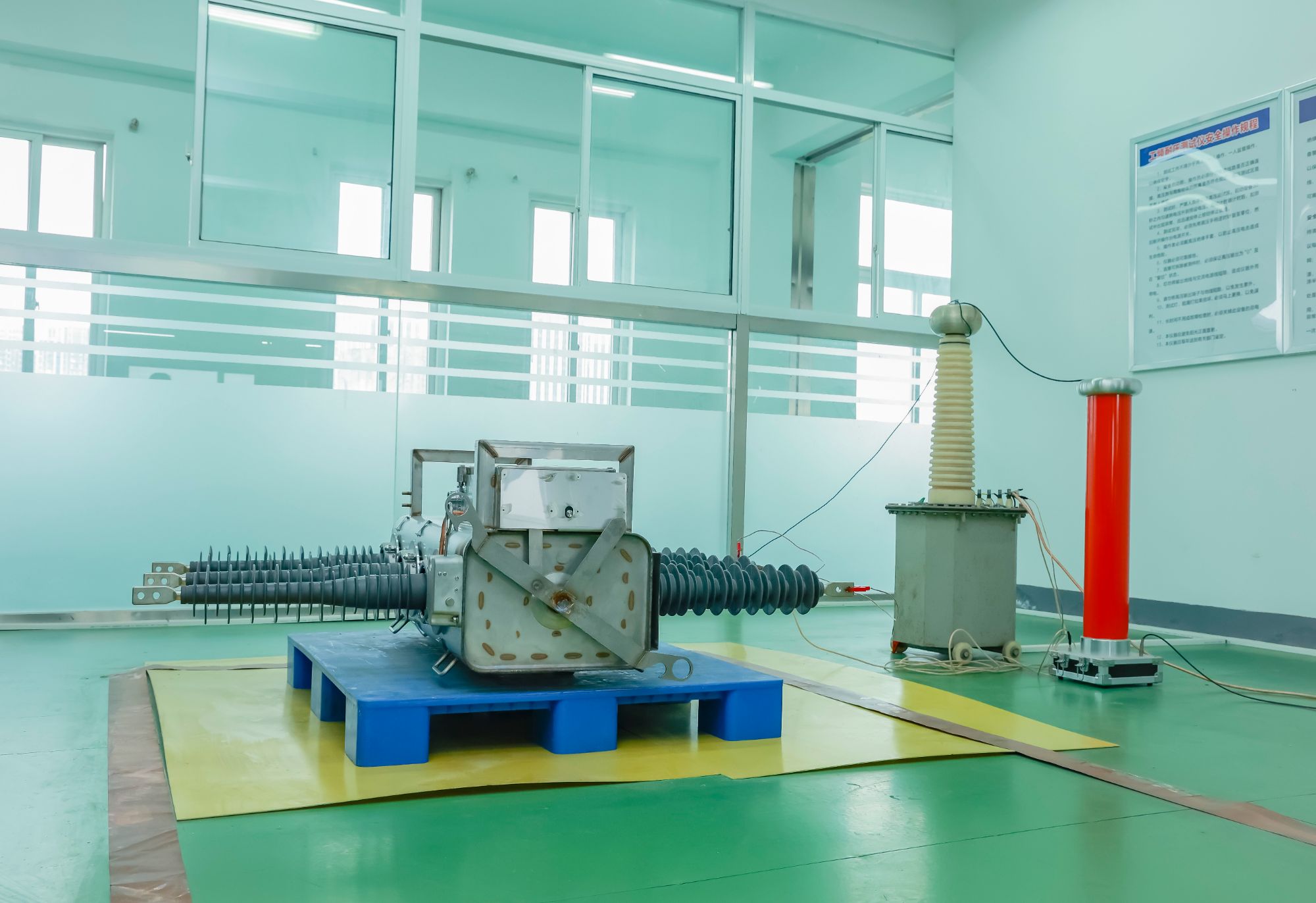
Before any load break switch is cleared for export, a serious manufacturer runs it through a battery of functional checks that go well beyond a simple continuity test. Each unit is subjected to a full open-close cycle under rated load, with timing and contact resistance recorded against the design tolerances. Insulation resistance is measured phase-to-phase and phase-to-earth, and a high-potential test is applied to confirm that no hidden dielectric weakness will surface during transit or commissioning. Any deviation, no matter how minor, triggers a rework and retest loop rather than a quiet pass.
Export-specific requirements demand attention that domestic shipments rarely need. The switch is mounted on a custom-machined pallet with shock-absorbing corners, then sealed inside a vapor-barrier bag with desiccant packs before the crate is closed. Labels are printed in the destination country’s language, including handling warnings and torque specifications. A complete documentation package—wiring diagrams, test certificates, and a signed declaration of conformity to IEC or ANSI standards—is placed in a waterproof pouch attached to the outside of the crate, not buried inside where customs might miss it.
Traceability is the final but equally critical step. Each load break switch carries a unique serial number that is laser-etched on the frame and cross-referenced in the manufacturer’s database with the full test history, including the name of the technician who performed the final inspection. Copies of the factory test report, calibration records for the instruments used, and high-resolution photographs of the unit in its shipping configuration are archived for at least ten years. This level of record-keeping gives the overseas buyer a clear audit trail and makes field troubleshooting far faster if a question ever arises.
The Hidden Costs Between the Port and the First Switch Operation
Budget sheets tend to stop at the switch list price, but every centimeter between a port and its first real switching decision carries costs that rarely make the spreadsheet. Optics, whether pluggable modules or embedded transceivers, vary wildly in price and power draw even when the spec sheet says they are equivalent. A cheap third-party SFP may pass a quick link test yet fall over under thermal load two months later. Then there is the cabling itself: fiber bend radius, patch panel density, and the labor to trace a single strand through a maze of overhead trays all consume time and money before the switch ever learns a MAC address.
The hidden costs continue at the interface between physical layer and forwarding silicon. Link training, forward error correction settings, and buffer allocation are not automatic wins on every platform. A port can negotiate at the right speed but silently drop cells because the optics vendor and switch firmware disagree on equalization parameters. Engineers burn hours swapping transceivers, running bit error rate tests, and reading register dumps. That troubleshooting time is real operational expense, yet it is invisible in the capital budget and often blamed on the network team instead of the supply chain.
Long term, these edge costs compound. Higher power draw per port forces cooling upgrades or reduces rack density. Marginal signal integrity shortens the life of a patch cable or forces scheduled replacement of entire port groups. Every failed first-switch operation due to a marginal optic or a dirty connector means a truck roll or a remote-hands call. Those charges, repeated across hundreds of ports, quietly eat the savings that motivated the original purchase. The gap between the port and the switch is not empty space; it is a cost channel that deserves its own line item.
FAQ
Ask for production line photos with date stamps, request a live video tour, check business licenses and ISO certificates, and look for specific machinery like stamping presses or coil winding equipment. A genuine factory will usually share these without hesitation, while a trading company may offer vague answers.
For Europe, IEC 60947-3 and CE marking are typical. North American buyers often need UL 98 or UL 508 recognition. Some regions also ask for type test reports from accredited labs. Always match the certificate number to the exact model you are ordering, not just the series.
Terminal type and size, operating handle orientation, arc chamber material, creepage distance, and whether the switch includes visible blade isolation. Without these, two quotes can look similar in price but differ significantly in suitability for your panel design.
Raw material procurement takes one to three weeks, followed by machining and assembly, then routine testing and aging checks. Packaging and sea freight documentation add several more days. In total, many exporters quote five to nine weeks, but first orders with new tooling can extend to twelve.
Yes, especially for first-time orders. Inspectors can verify contact alignment, insulation resistance, mechanical operation counts, and packaging strength. They also catch mismatched labels or missing manuals that are easy to overlook in photos.
At minimum, they should provide wiring diagrams, installation guides in your language, replacement part availability for at least five years, and a clear warranty period for mechanical and electrical failures. Some exporters also offer remote video support for commissioning.
Specify the contact material and silver alloy thickness in the purchase agreement, request sample torque tests for terminal screws, and ask the exporter to include a spring force test report for each batch. This narrows the gap between prototype quality and mass production.
Often it is document errors such as incorrect HS codes, vague packing lists, or missing certificate translations. These hold cargo at customs longer than production itself. Ask the exporter to send draft documents for your confirmation before they book shipment.
Conclusion
Before comparing load break switch quotes, a global buyer should dig into more than the sticker price. Ask suppliers how they validate interrupting performance at the specific voltage and power factor of your grid, not just at lab conditions. Confirm whether the switch has been type-tested to IEC 62271-103 or an equivalent national standard, and whether the test reports match the exact configuration being offered. Market access is rarely uniform: a certificate accepted in one region may be meaningless in another, so map local approval requirements early. Harsh environments expose weak points quickly. Switches with properly sealed arc chambers, UV-stable insulation and corrosion-resistant mechanisms usually survive coastal humidity, desert dust and rapid thermal cycling, while cheaper units fail within months. If you need a non-standard pole spacing or a specific cable entry, look for exporters using modular platforms. That way custom builds stay close to standard lead times and avoid full bespoke engineering costs.
Serious exporters do not stop at design approval. They run routine checks on every unit before packing: contact resistance, open-close timing, high-voltage withstand, and mechanical operating force. Some also record a short video of the final test and attach it to the shipment file, which helps resolve disputes later. The costs that surprise buyers usually appear after the port. Import duties, local type registration, warehousing, and the first on-site service visit can add heavily to the invoice. Spare parts like arc chutes and auxiliary contacts should be ordered with the main shipment because later air freight and customs delays are expensive. Buyers should also ask for accurate drawings, bilingual manuals, and clear packing lists. In many tenders, the switch with the lowest unit price becomes the most expensive if it needs repeated adjustments or fails after a few hundred operations. A dependable exporter will discuss total cost of ownership and long-term support before a single switch leaves the factory.
Contact Us
Contact Person: Julion
Email: [email protected]
Tel/WhatsApp: 8617351370631
Website: https://www.deyunelectric.com