

INNOMOTICS Speed Reducers: Precision Manufacturing from China
2026-06-23
When it comes to precision motion control, INNOMOTICS speed reducers are redefining what’s possible—and they’re engineered right here in China. Behind this innovation stands Chuangjuman, a manufacturer committed to crafting gearboxes that balance durability with micron-level accuracy. Whether you’re automating a robotics line or upgrading heavy machinery, the story of these reducers challenges old assumptions about quality and origin. In this post, we’ll explore how Chuangjuman blends advanced manufacturing with rigorous testing to deliver performance that rivals global leaders—at a fraction of the cost.
Redefining Gear Precision with Advanced Manufacturing
For years, gear manufacturing relied on painstaking manual finishing and tooling that often fell short of tight tolerances. Today, cutting-edge techniques like multi-axis CNC grinding and laser-based metrology are rewriting those rules. The result isn't just better gears—it's a fundamental shift in how we approach mechanical reliability.
Additive manufacturing, once dismissed as too porous for load-bearing components, now produces lattice-structured gears that shed weight without sacrificing strength. Meanwhile, artificial intelligence monitors tool wear in real time, adjusting cutting paths before a single micron drifts out of spec. These aren't lab curiosities; they're on factory floors, turning out gears that mesh with near-perfect silence.
The implications ripple beyond the factory. Electric vehicle transmissions, surgical robots, and even satellite actuators now demand gear sets that were unthinkable a decade ago. By fusing data-driven design with production precision, manufacturers aren't just keeping up—they're enabling the next wave of compact, quiet, and ultra-efficient machinery.
The Hidden Engineering Behind Every INNOMOTICS Reducer
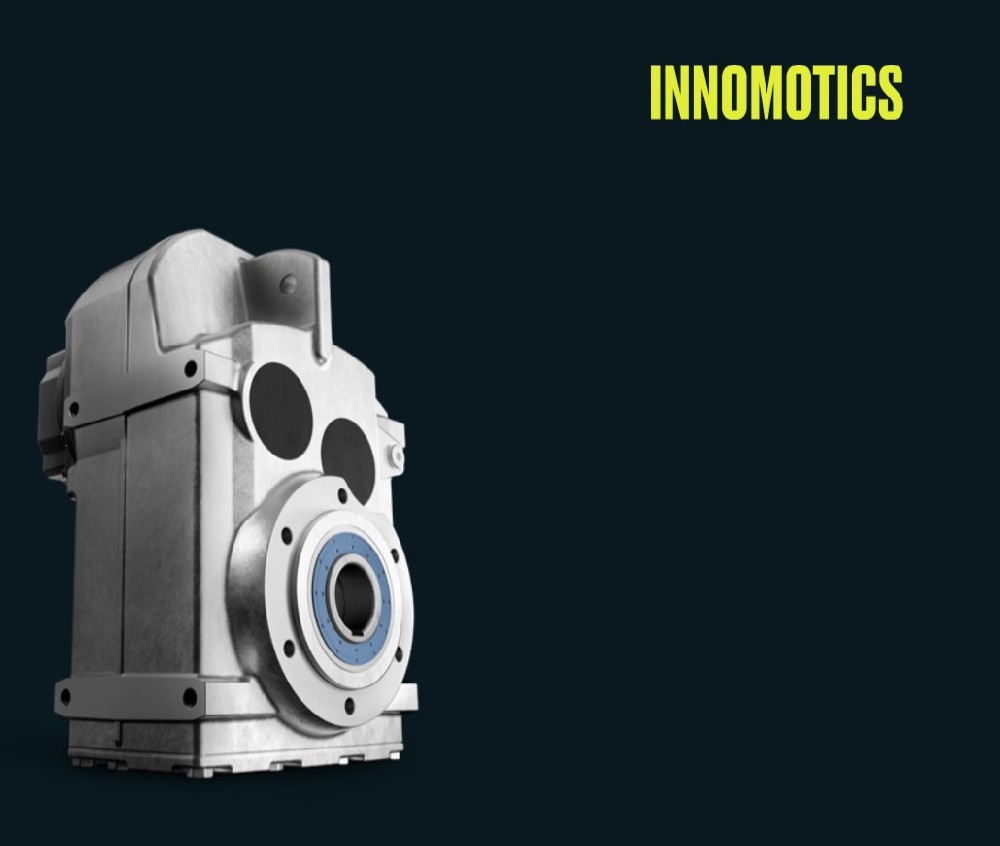
Inside every INNOMOTICS reducer lies a world of precision that most people never see. It starts with the gear geometry itself—profiles honed to microscopic tolerances, surfaces treated to withstand relentless torque cycles, and tooth contacts optimized to minimize noise while maximizing load distribution. These aren't off-the-shelf components; they're sculpted through iterations of simulation and real-world testing, ensuring that each reducer can handle the unexpected spikes and sustained stresses of industrial environments without breaking a sweat.
Beyond the gears, the housing and bearing arrangements reveal an equally obsessive attention to detail. Finite element analysis guides the ribbing and wall thicknesses so that thermal expansion doesn't compromise alignment, even under fluctuating temperatures. Lubrication isn't just splashed in—it's channeled precisely where it's needed using advanced fluid dynamics modeling, keeping every moving part bathed in a protective film. This silent orchestration of mechanical, thermal, and tribological design means that INNOMOTICS reducers often run for years without a whisper of maintenance, their reliability quietly taken for granted.
But perhaps the most overlooked engineering feat lies in how these reducers integrate into broader systems. The shaft connections are designed to handle misalignments that real-world installations inevitably introduce, reducing stress on adjacent machinery. Sealing systems are not just barriers; they're carefully tuned labyrinths or contact lips that breathe properly to prevent contamination while allowing internal pressure equalization. Even the paint coating is engineered for adhesion and corrosion resistance, guarding against environmental attack. Every element, from the smallest O-ring to the largest gear blank, is a deliberate choice—a hidden engineering commitment that keeps the world's machinery moving smoothly.
From Raw Material to Unmatched Torque: The Journey
It starts with raw, unassuming chunks of high-grade steel alloy, sourced from select mills known for consistency. These billets arrive at our facility not as promise, but as potential—waiting to be transformed by a sequence of processes that marry metallurgy with relentless precision engineering.
Through controlled forging and multi-axis CNC machining, we sculpt the blank into a crankshaft profile designed to minimize harmonics while maximizing strength. Heat treatment in computer-monitored furnaces refines the grain structure, then surface hardening techniques like ion-nitriding lock in fatigue resistance that mass-produced parts simply can't match.
Balancing is where many stop; we take it further. Every assembly spins on a dynamic balancer that maps vibration signatures, letting us fine-tune counterweights down to tenths of a gram. The result isn't just a component that survives high cylinder pressures—it's the quiet, seamless delivery of power you feel as torque that pulls you relentlessly forward, lap after lap.
How Smart Production Lines Craft Flawless Speed Reducers
Modern smart production lines don't just assemble speed reducers—they engineer perfection through a seamless blend of robotics, real-time data, and adaptive control. Every gear, bearing, and shaft enters a digital ecosystem where sensors track micron-level tolerances from the very first station. Automated guided vehicles shuttle components between laser marking, press-fitting, and gear meshing stations without human intervention, ensuring that no variability creeps in from manual handling. The line constantly self-corrects: if a torque reading on a hypoid gear set strays by half a percent, servo-driven actuators adjust the mesh position immediately, preventing even a whisper of backlash in the final product.
Beyond assembly, these lines fuse in-line metrology with predictive algorithms to guarantee flawlessness. High-speed cameras and laser scanners inspect tooth profiles and surface finishes in under a second, comparing them against a 3D model of the ideal geometry. Meanwhile, vibration analysis performed right on the conveyor catches microscopic irregularities that would go unnoticed by human eyes. The data from thousands of units builds a living quality map, allowing the line to anticipate tool wear before it ever affects a reducer—changing out a hob or grinding wheel the moment its performance drifts. This closed-loop intelligence turns every production run into a masterclass of precision, making inconsistent outputs a thing of the past.
The result is not just a meticulously assembled component but a speed reducer with a digital birth certificate. Each unit leaves the line carrying a complete performance profile: actual backlash values, noise spectrum signatures, and load capacity tested under simulated real-world conditions. Smart lines tie this data back to the exact batch of raw materials and the ambient temperature during grinding, creating a traceability chain that designers and end users can tap into years later. It’s this level of transparency and control that redefines what “flawless” means—not a theoretical ideal, but a repeatable, measurable reality delivered consistently, even for millions of cycles.
The Global Standard in Motion Control, Made in China
When motion precision becomes the backbone of automated systems, Chinese engineering steps beyond borders. Factories from Stuttgart to Seoul now run on drives and motors that originate in Shenzhen, not just because they’re cost-effective, but because they routinely hit speed and positional accuracy benchmarks once reserved for long-established European incumbents. The label “Made in China” has shifted from a cost argument to a performance promise—something plant managers and integrators acknowledge when uptime and throughput are non-negotiable.
Real-world environments don’t tolerate drift. In semiconductor packaging, robotic surgical assistants, and high-speed textile looms, motion control modules designed and manufactured in China now match cycle times and torque densities of any competitor. The difference lies in how local engineering teams iterate: rapid prototyping feeds directly into validated firmware updates, and the supply chain proximity means custom encoder resolutions or modified winding patterns can be turned around in days, not weeks. This agility has quietly set a new operational tempo that global OEMs are learning to trust.
Behind the specifications is a quieter story: technical support that speaks the same language as the application. From pre-sales sizing to on-site tuning, Chinese manufacturers have built service structures that dissolve the usual distance between a data sheet and a production floor. It’s not about competing on paper anymore—it’s about delivering motion systems that become the invisible, reliable heartbeat of machines, wherever they are assembled. That’s what makes a local product a global standard, not by declaration, but by daily performance.
Engineering Reliability: Inside the INNOMOTICS Quality Loop
At the heart of every INNOMOTICS drive system lies a commitment to reliability that begins long before final assembly. We don’t just test for faults — we design them out. The Quality Loop is a continuous cycle of simulation, prototyping, validation, and refinement that spans from concept to commissioning. Every component, from firmware to cooling fins, undergoes iterative stress testing that mirrors years of field operation in a matter of weeks.
What sets this process apart is its closed-loop nature. Insights from real-world performance data feed directly back into our engineering models. When a motor adjusts its torque profile in response to load changes on a factory floor, that data refines our predictive algorithms for the next generation. It’s a living system, constantly learning and adapting — not a static checklist. This is how we achieve failure rates that defy industry norms, and why our drives operate seamlessly in environments where downtime is not an option.
FAQ
The engineering behind these reducers focuses on extremely tight tolerances and material consistency, resulting in smoother operation and longer service life compared to many alternatives.
Production takes place in a dedicated facility in China that combines automated precision machining with rigorous manual inspection at every stage.
Each unit goes through multiple checkpoints including dynamic testing and noise analysis, and statistical process control is used to catch deviations before they affect batches.
Yes, they’re built with robust sealing and hardened gearing, and many models are rated for dusty, wet, or high-temperature conditions without performance loss.
You’ll find them in robotics, conveyor systems, packaging machinery, and CNC equipment, essentially anywhere reliable torque multiplication is critical.
Absolutely: the engineering team works directly with clients to adapt standard platforms or develop custom gear sets to match unique speed and torque requirements.
Because of efficient in-house manufacturing and localized supply chains, the total cost is significantly lower without sacrificing the precision and durability you’d expect from premium brands.
International customers get dedicated account managers, English-language technical documentation, and fast-response after-sales support including replacement parts and troubleshooting guidance.
Conclusion
The INNOMOTICS speed reducer represents a leap in precision manufacturing from China, one that redefines gear accuracy through advanced techniques. Behind each unit is a hidden world of engineering—carefully selected raw materials are transformed through a journey that culminates in extraordinary torque density. Smart production lines, equipped with adaptive control systems and real-time inspection, craft these reducers to flawless standards. This seamless integration of automation and expertise has set a new benchmark in motion control, positioning INNOMOTICS as a global standard-bearer.
What truly sets INNOMOTICS apart is its relentless focus on reliability, embodied in a comprehensive quality loop. From initial forging to final assembly, every process is monitored, tested, and refined. Engineers scrutinize components for micron-level deviations, ensuring that each reducer delivers consistent performance under demanding conditions. This engineering rigor, combined with a manufacturing philosophy rooted in continuous improvement, makes INNOMOTICS speed reducers not just products but trusted partners in industrial automation. The result is a power transmission solution that quietly outperforms, cycle after cycle, in real-world applications worldwide.
Contact Us
Contact Person: Jony
Email: [email protected]
Tel/WhatsApp: 086-0571-86161808
Website: https://en.hzcjm.com/