

Heavyweight Sound-Absorbing Blanket Manufacturer for Superior Noise Control
2026-10-23
Most soundproofing advice stops at foam panels and acoustic tiles, but there's a quieter workhorse you're probably overlooking: the heavyweight sound-absorbing blanket. It's not flashy, yet it handles noise in studios, factories, and home offices with surprising efficiency. As a manufacturer focused on superior noise control, Top Packaging has turned this unassuming product into a serious acoustic tool. Here's what separates a real solution from just another thick piece of fabric.
Why Thicker Barriers Beat Foam Panels in Low-Frequency Noise
Low-frequency noise behaves differently from the mid and high frequencies that acoustic foam is designed to handle. A 50 Hz wave is roughly 6.8 meters long, and porous absorbers like foam simply don't have enough depth or density to interact with that energy. Thicker barriers, on the other hand, add mass per unit area, and that mass forces the long, slow pressure waves to do real work to pass through. The result is a measurable drop in transmitted rumble that foam panels can't touch.
There's also a practical issue with how foam is typically installed. It's almost impossible to get an airtight seal with foam panels, especially around edges and corners. Low-frequency sound finds those tiny gaps and flows straight through. A thicker solid barrier, when properly mounted, creates a continuous surface that interrupts the pressure differential across the room boundary. That means the energy has to move the entire barrier rather than slipping through leaks.
Finally, thicker barriers perform better because of their internal damping and stiffness. While foam relies on open-cell friction, a dense barrier layer can convert low-frequency vibration into heat through constrained-layer damping or simply through its own flexural behavior. It's not about absorbing every frequency; it's about reducing the amount of low-end energy that reaches the other side in the first place.
Inside the Weave: Mass-Loaded Vinyl vs. Recycled Fiber Cores
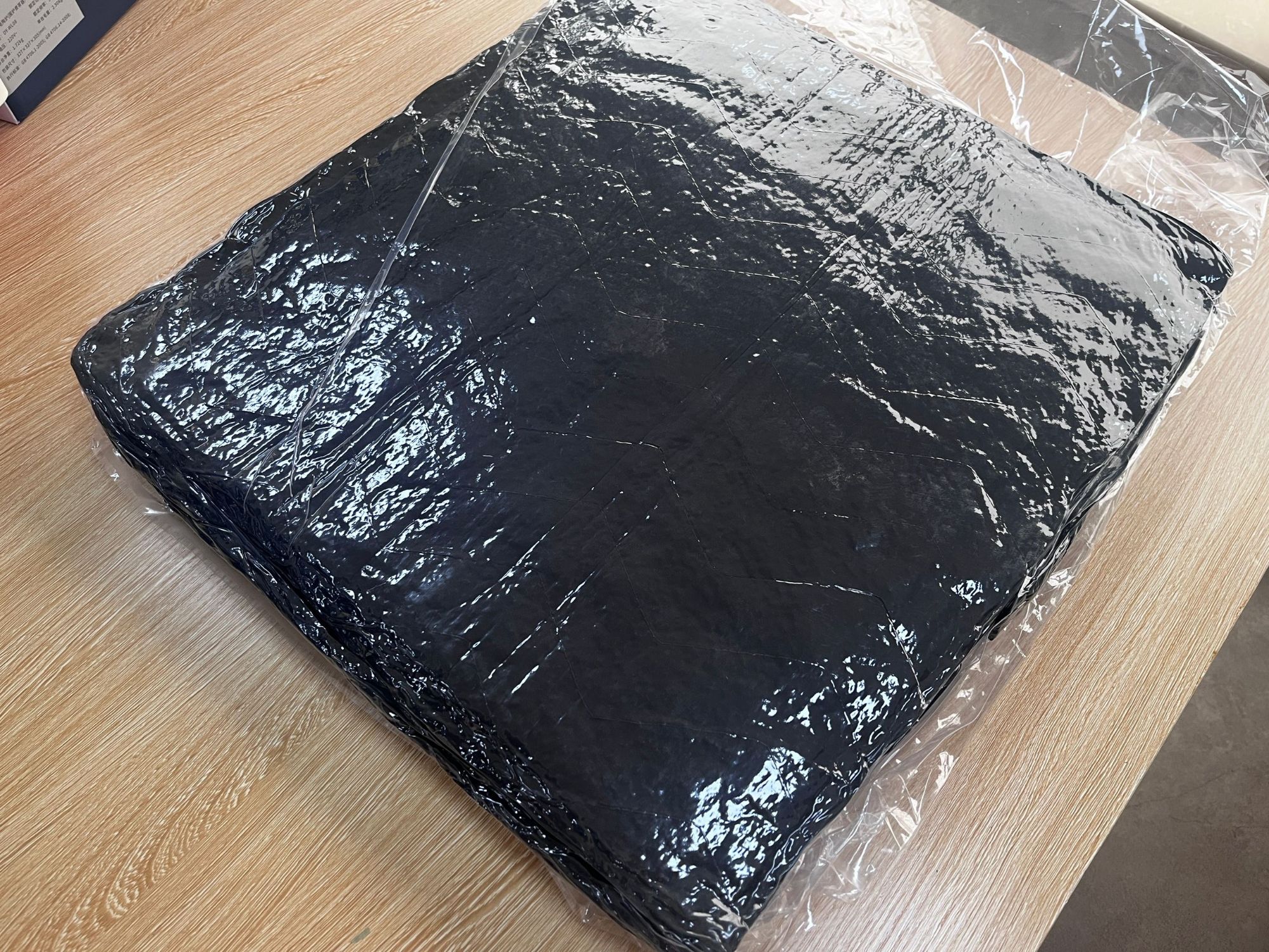
The choice between mass-loaded vinyl and recycled fiber cores often comes down to what you're actually trying to quiet. Peel back the fabric on most acoustic panels and you'll find one of these two materials doing the heavy lifting, but they tackle sound in very different ways.
Mass-loaded vinyl is all about density. It's heavy, limp, and designed to block sound transmission through walls, floors, or ceilings. Think of it as a barrier: low-frequency rumble from traffic or HVAC systems hits that mass and loses energy instead of passing straight through. The trade-off? That weight makes installation trickier, and the material can be pricey. It's also not much of an absorber on its own, so pairing it with something softer is often necessary.
Recycled fiber cores, by contrast, are lighter and far more forgiving to work with. Made from compressed cotton, denim, or polyester scraps, they soak up mid- and high-frequency reflections inside a room, reducing echo and flutter. They won't stop a neighbor's subwoofer from bleeding through the wall, but for cleaning up dialogue intelligibility or taming a lively office, they're hard to beat. Plus, the sustainability angle is a genuine bonus, not a marketing afterthought.
From Generator Enclosures to Studio Doors: Fit Without Gaps
A generator enclosure built with visible seams or loose panels does more than look unfinished—it lets noise escape, invites moisture, and shortens the life of the equipment inside. The same principle applies to studio doors: any gap around the frame breaks the acoustic seal, allowing sound to leak in both directions. Fit isn't just about aesthetics; it's about function under pressure. When every edge meets cleanly, the structure behaves as a single unit rather than a collection of parts.
Achieving that kind of fit requires more than careful measuring. Materials expand and contract with temperature, hinges settle, and daily use shifts alignment over time. For generator enclosures, this means choosing panel joins that tolerate vibration without separating. For studio doors, it means installing adjustable seals and checking alignment after the first few weeks of operation. The goal is a fit that holds, not one that merely looks right at installation.
In both cases, the lesson is the same: gaps are where problems start. A tight fit reduces maintenance calls, improves sound isolation, and simply feels more professional under the hand. Whether you're closing a steel cabinet around a diesel engine or pulling a heavy studio door shut, the click of a well-fitted edge is the sound of a job done properly.
How Custom Grommets and Velcro Edges Change Installation Time
Swapping standard hardware for custom grommets and Velcro edges rarely feels dramatic in the catalog, but on-site it ripples through every stage of the job. Grommets pre-set to exact spacing eliminate the guesswork of hole punching and alignment, so a panel that used to take two people fifteen minutes to secure now goes up in under five with one installer. Velcro edges push that further: instead of fighting tension while drilling or threading fasteners, you press the material into place, adjust it once, and lock the bond. The real time savings show up in awkward corners and overhead runs where traditional fasteners demand repeated repositioning and extra hands.
There is also a hidden efficiency in how these components handle rework. With conventional edges, a misaligned hole or a stripped anchor means pulling the whole section down and starting over. Custom grommets hold their registration even after a few tension cycles, and Velcro lets you peel back a few inches, shift the fabric or panel, and reseat it without leaving damage. Installers end up doing fewer full resets, which cuts total labor in ways that do not show up in a simple product spec sheet.
Teams that have made the switch report that their cutting and layout process changes too. Because grommet positions and Velcro strips are factory-set to match the application, you can skip most of the measuring and marking usually done at the job site. That shifts time from preparation to actual mounting, and it reduces the chance of a late-stage surprise when a panel does not fit. The result is less standing around, fewer tool changes, and a tighter overall schedule without any added complexity for the installer.
What a 10 dB Reduction Actually Sounds Like on a Factory Floor
Imagine standing near a metal stamping press cycling every couple of seconds. At 95 dBA, each impact lands like a physical jab to the ears. Drop that level by 10 dB and the same press still commands attention, but the punishing edge softens. It isn't quiet by any stretch—more like turning down a car stereo from full blast to a level where you can still feel the bass but also hear your own thoughts.
The most immediate difference is speech. At the higher level, a coworker three feet away has to lean in and shout, and even then you might catch only every third word. At 85 dBA, that same conversation can happen in a raised but normal voice. Over a ten-hour shift, that reduces mental fatigue, cuts down on misunderstood instructions, and makes people less likely to remove earplugs just to hear a warning call.
Then there's the shift-end difference. Workers often describe the old noise as a ringing that followed them home. After a 10 dB reduction, that ringing fades faster and the heavy, dull feeling in the ears isn't as pronounced. The floor still isn't silent, but the change buys back a small measure of comfort without slowing production.
Ordering Oversized Blankets Without Paying Freight Penalties
The trick with oversized blankets is understanding how carriers calculate dimensional weight. If a package exceeds certain length or girth thresholds, standard ground rates jump to freight or oversized surcharges. Many buyers unknowingly pick a blanket size that pushes the box just over a limit. Check the carrier's published size caps for your region before finalizing the order, and compare those numbers against the packaged dimensions listed by the seller.
Another overlooked factor is packaging compression. Blankets are bulky but often compressible. Vacuum sealing or tight rolling can reduce the package height or circumference enough to move it below the freight-penalty threshold. Ask the supplier whether they offer vacuum-packed shipping for individual units. Even a reduction of a few inches in girth can keep the shipment in the standard parcel rate.
Finally, split the order when possible. If you need multiple oversized blankets, bundling them into one giant carton almost guarantees a freight quote. Instead, place separate orders or request that each blanket be shipped in its own carton, even if they leave the warehouse on the same day. The per-unit shipping cost may look higher at first, but it is usually far less than a single freight penalty.
FAQ
The weight comes from a dense, layered core combining mass-loaded vinyl with high-density fiberfill. That construction forces sound waves to lose energy as they pass through, so you get real reduction in both airborne and structural noise instead of just a thin decorative cover.
Custom sizing is available for most orders. We regularly cut panels to fit odd-shaped equipment, enclosures, and architectural openings, and we can add hems or edge treatments to match the installation. Standard sizes ship faster if that's a concern.
They work best around loud mechanical systems like HVAC units, generators, compressors, and pumps. Industrial workshops, theaters, studios, and even server rooms use them to reduce echo and contain noise at the source without permanent construction.
Most installs use the reinforced grommets spaced along all edges, typically every 12 inches. For temporary walls or equipment enclosures, hang them with heavy-duty hooks or cable ties. Overlapping panels by at least 30 percent and sealing the perimeter with hook-and-loop strips will noticeably improve low-frequency performance.
The outer facing is usually a reinforced vinyl or canvas that resists oil, moisture, and abrasion. Inside, a quilted layer of acoustic fiber surrounds a mass-loaded vinyl barrier, which gives the blanket its sound-blocking and sound-absorbing properties in one piece.
Yes, the standard lineup passes flame-resistance tests for most commercial and industrial interiors. If you need a specific rating like ASTM E84 or a low-VOC option, we can supply documentation and material data sheets before you place the order.
All blankets include reinforced grommets as standard. We can also add Velcro edges, straps with buckles, or D-rings depending on how frequently you plan to move them. Let us know the mounting surface and we'll suggest the right hardware pack.
The edges are double-stitched and the grommets are backed with heavy webbing, so they survive regular handling without tearing. The outer shell wipes clean with mild detergent, and the internal layers won't settle or shift if the blanket is kept flat when stored.
Conclusion
When a facility wrestles with persistent low-frequency rumble, thin foam panels rarely deliver the relief that operators expect. A heavyweight sound-absorbing blanket built around dense mass-loaded vinyl or a tightly packed recycled fiber core changes that equation. The extra mass resists the long sound waves that pass straight through lighter materials, which is why generator enclosures, compressor bays, and industrial chiller rooms often turn to these blankets rather than stacking acoustic foam. The key is not just thickness; it is how the internal layers are arranged to absorb, block, and dampen vibration without creating a rigid, brittle panel. Because each blanket is cut to the actual dimensions of the machine or opening, it wraps around irregular frames and seals against the floor, preventing the small air gaps that undo most noise control efforts. Studio doors and duct casings benefit from the same tailored approach, with edges that meet cleanly instead of leaving a sliver for sound to escape.
Installation time drops sharply when the manufacturer adds custom grommets along the top edge or Velcro strips down the sides. Instead of wrestling with wire ties or drilling new brackets, a crew can hang a 40-pound blanket in minutes, which matters when a line is down or a night shift needs immediate relief. On a busy factory floor, a 10 dB reduction may not sound dramatic in a spec sheet, but in practice it turns a piercing whine into background noise that lets workers hear each other without shouting. For oversized enclosures, the right manufacturer also knows how to fold or roll panels to avoid dimensional freight penalties, keeping the delivered cost predictable even when a blanket stretches past eight feet. That combination of dense cores, gap-free fit, fast hardware, and sensible shipping is what separates a true heavy-duty supplier from a generic acoustic vendor.
Contact Us
Contact Person: Shelly
Email: [email protected]
Tel/WhatsApp: 86-577-64286522
Website: https://www.topmovingpad.com/