

Forged Steel Globe Valve Manufacturer Evaluation Guide for Industrial Projects
2026-11-16
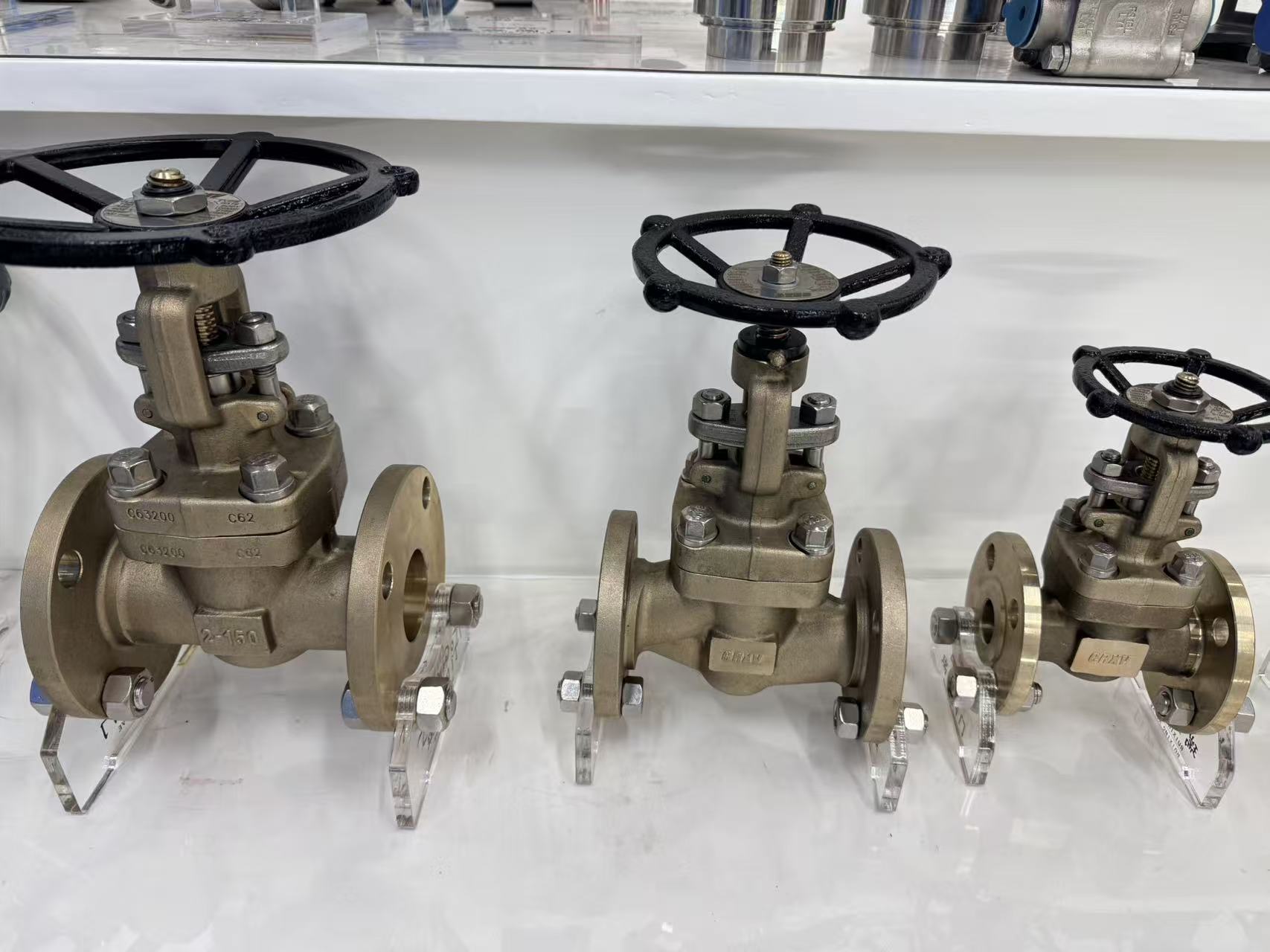
Most plant engineers don’t lose sleep over globe valves until a steam line misbehaves at 3 a.m. By then, the real problem isn’t the valve itself—it’s the evaluation shortcuts taken months earlier. This guide cuts through the usual spec-sheet noise and shows what actually separates a dependable forged steel globe valve manufacturer from the rest, from material traceability and trim options to pressure-class pitfalls. Along the way, we’ll use CRXV as a reference point for how a serious supplier handles the details that matter on industrial projects.
What a Forged Steel Globe Valve Must Prove in High-Temperature Service
A forged steel globe valve headed into high-temperature service cannot rely on its room-temperature pressure rating. The body and bonnet material, typically A105, F11, F22, or a stainless grade for more aggressive conditions, must hold adequate tensile and creep strength at the actual operating temperature. A shell that passes a cold hydro test but begins to deform under sustained load at 900°F or 1000°F is a liability. Verification usually means reviewing pressure-temperature curves under ASME B16.34, checking the grade against the required wall thickness, and confirming that hardness and ductility have not drifted into a range that promotes cracking after repeated exposure.
Seat tightness is the second thing on trial. The disc and seat in a globe valve are usually faced with Stellite or a similar hardfacing, but the real test comes from differential thermal expansion between the trim, the body, and the stem. As the valve heats up, these parts grow at different rates and can unload the seating force just enough to produce a visible leak. A credible qualification therefore cycles the valve from ambient to operating temperature and tests shutoff after each cycle, not just once at a stable midpoint. The stem and wedge-like disc must also survive repeated backseating and throttling without galling or losing the machined seat alignment.
Beyond that, the pressure boundary has to stay tight where the stem enters and where the bonnet meets the body. Die-formed graphite packing with a live-loading system usually stands a better chance than ordinary braided packing because it keeps a controlled load as the material consolidates and the stem cycles. The bonnet gasket has to resist relaxation, oxidation, and blowout, especially in steam or hot hydrocarbon service. At the upper end of the temperature range, bolting also matters; B7 studs lose strength quickly above roughly 750°F, so B16 or other high-temperature bolt materials become part of the proof rather than an afterthought.
Reading Material Certificates for More Than Just the Grade
A stack of reading certificates on the kitchen table used to mean one thing: another solid grade on a book report. But the real value often turns up later, when a child asks to stay up fifteen extra minutes because the chapter ended on a cliffhanger. That shift from earning a sticker to genuinely needing to know what happens next is the part nobody prints on the certificate.
Parents sometimes tuck the paper in a drawer and miss the quieter milestones. A reluctant reader who rereads the same graphic novel until the spine softens is building stamina, not wasting time. A student who argues with a friend about a character's choice at lunch is practicing interpretation more intensely than any worksheet could measure.
The certificate still matters as a small ritual, but its better use is as a bookmark for the moment reading stopped being a task. If the grade on it eventually fades, the habit underneath rarely does.
How Forging Ratios and Grain Flow Affect Long-Term Seat Tightness
A seat that holds pressure at commissioning may still loosen after thousands of thermal cycles, and the difference often traces back to how the metal was worked. Higher forging ratios pack the material’s internal structure more uniformly, closing micro-voids that later become leak paths under sustained clamp load. But the payoff is directional: if grain flow runs perpendicular to the seating face, stress relaxation concentrates at the boundary where refined and coarser bands meet, gradually eroding contact pressure without any visible surface wear.
What gets overlooked is how grain orientation interacts with the thin oxide layer that forms on the seat during service. When flow lines run parallel to the sealing surface, the oxide adheres in a continuous sheet and resists flaking, so the original machined flatness survives longer. With poor orientation, oxidation advances along exposed grain boundaries, pitting the seat in a pattern that mimics erosion but originates from the forging itself. That distinction matters because no amount of lapping or re-torquing can restore tightness once the underlying flow structure is compromised.
For long-term stability, the most reliable approach is to specify the forging ratio not as a single number but as a distribution across the critical section. Suppliers that map grain flow before final machining can adjust die geometry so the densest, most continuous bands land exactly where the seat needs to resist creep and galling. In practice, this means a part that holds its torque retention curve flat past 10,000 hours, while a conventionally forged equivalent may show a slow but irreversible decay beginning at half that life.
The Difference Between a Tested Valve and a Documented One
A file full of material certificates and conformance letters can make a valve feel fully vetted before anyone has actually run it. Plenty of valves leave the factory that way: every drawing signed, every standard listed, but no one ever put pressure against the seat or cycled the stem under load. That paperwork is a record of intent, not a record of performance.
A tested valve, by contrast, has a traceable history of being asked to do its job. Someone closed it against rated pressure and measured seat leakage. Someone recorded opening torque, verified shell integrity, or cycled it enough to catch early stem galling or seal compression set. Those numbers describe real behavior, and they can be checked again later if something changes.
The difference shows up fastest in a shutdown or a leak event. A valve that was only documented can still hide a casting void, a misaligned seat, or a torn O-ring until it is too late. A valve that has been tested has already been pushed far enough to reveal those failures on the bench. Documents should support test results, not stand in for them.
Factory Audits That Reveal More Than a Capability Brochure
Most capability brochures show clean layouts, certifications, and a list of machines that all look impressive on paper. An audit reveals how decisions actually get made when no customer is watching, and whether the documented quality system is something people use or just keep on a shelf.
The useful findings are usually small and unglamorous: a maintenance record that skips a week, a fixture worn past its marked replacement date, an operator who hesitates before explaining a simple tolerance. Those details rarely appear in a polished PDF, but they tell you whether the factory can hold a standard when the schedule tightens.
It is less about scoring a perfect facility and more about understanding where attention drifts under pressure. A supplier with average equipment and honest processes can often outperform a better-equipped one that hides problems until inspection day.
When Post-Installation Support Determines the Real Project Cost
Most budgets stop the clock at go-live. That moment when the system finally switches on and everyone exhales is treated as the finish line, but anyone who has lived through a complex rollout knows the real spending starts after the vendor's implementation team walks out the door. Patches that arrive too late, integration quirks that surface only under real user loads, and a support queue that resolves tickets in days rather than hours all quietly inflate the total cost of ownership. What looked like a competitive license fee can become a continuous drain on internal teams, forcing your own engineers to become accidental experts in someone else's platform.
The difference between vendors shows up in the unglamorous details: how quickly a severity-one issue gets a named engineer instead of a scripted reply, whether updates are tested against your configuration or shipped as generic bundles, and whether the support contract includes proactive health checks rather than waiting for failures. When these elements are missing, the hidden cost is measured in overtime, delayed feature work, and the slow erosion of user trust. Projects that account for these variables from the start are the ones where the final invoice actually matches the budget sheet.
FAQ
Ask for traceable heat numbers, third-party material test reports, and proof that the forging stock came from an approved steel mill. Chemical composition and mechanical properties should align with ASME, EN, or equivalent project codes. A credible manufacturer will provide raw material certificates instead of a simple statement of compliance.
Request a plant walkthrough or recent photos and videos of the forging shop, equipment list, process flow diagram, and internal test logs. Ask which steps are subcontracted and require audit reports for outside suppliers. A genuine manufacturer should be able to show a continuous record from billet cutting through final pressure testing.
Confirm that the valve is designed to ASME B16.34 or a comparable standard and has clear pressure-temperature ratings for the required class, such as Class 800, 1500, or higher. Body materials like A105, F22, or F316 should match the service. Seat tightness should also be defined according to API 598 or ISO 5208 with an acceptable leakage level.
The package should include material test certificates, hydrostatic and pneumatic test reports, dimensional drawings, weld end details, stem packing and seat material lists, torque values, installation and maintenance manuals, a certificate of conformity, and any project-specific declarations of compliance.
It is often a deciding factor. The manufacturer should offer evidence from ISO 15848-1, API 622, or equivalent packing tests, showing leakage rates under design temperature and pressure cycling. For critical service, prefer valves with certified low-emission designs and batch or sample test data from production runs.
Watch for incomplete material traceability, reluctance to allow third-party inspection, unusually short lead times without existing stock, unannounced changes in forging sources, templated test reports or repeated certificate numbers, slow technical responses, lack of real production photos, and unwillingness to clarify deviations from standards.
Purchase price is only the starting point. Compare expected maintenance frequency under high pressure, thermal cycling, and corrosive media, along with packing replacement difficulty, seat reparability, spare parts lead time, and factory engineering support. A low-cost valve can become far more expensive if it causes unplanned shutdowns or fugitive leaks.
Third-party inspection independently witnesses material identification, forging reduction, welding if applicable, dimensional checks, pressure tests, and final coating. The project can appoint an inspection agency to cover critical hold points in the inspection and test plan and reject any concealed work that was not properly notified.
Conclusion
Evaluating a forged steel globe valve supplier starts well before a purchase order is issued. In high-temperature service, the valve body, bonnet, and trim must prove dimensional stability and resistance to thermal fatigue under cyclic conditions, not just pass a single pressure test. A thorough review of material certificates means tracing heat numbers, verifying actual mechanical properties, and checking that traceability extends to every pressure-containing part. Equally important is how the forging was produced: a higher forging ratio and controlled grain flow around the neck and seat area reduce the risk of micro-leakage paths developing after repeated thermal cycles. These characteristics are rarely visible on a finished valve, so they have to be confirmed through mill records and manufacturing process data rather than assumed from a standard product sheet.
The difference between a tested valve and a documented one often separates dependable manufacturers from those that simply ship hardware. Hydrostatic and pneumatic test reports should be tied to serial numbers, with clear pass criteria and calibration records for the test equipment. Factory audits should go beyond a polished capability brochure and look at how nonconforming parts are quarantined, how welders and inspectors are qualified, and whether in-process checks are actually recorded. Finally, post-installation support has a direct impact on total project cost. A manufacturer that can provide field service guidance, spare part interchangeability data, and quick technical responses reduces downtime and prevents small issues from becoming expensive shutdowns. Industrial projects are better served when these factors are weighed together instead of treating price and delivery as the only deciding criteria.
Contact Us
Contact Person: TIM
Email: [email protected]
Tel/WhatsApp: 8615857807381
Website: https://www.crxv.com/en/