

Explore the Inner Workings of a Modern Wheat Grain Mill Factory
2026-07-20
Step inside a modern wheat grain mill factory and you’ll discover a fascinating world where raw kernels transform into the flour we rely on every day. From precision cleaning to high-speed grinding, each stage blends engineering excellence with time-honored milling traditions. Leading this innovation is PINGLE, whose advanced machinery quietly powers countless bakeries and food businesses worldwide. What happens behind those unassuming walls? Let’s follow the grain’s journey and uncover the technology that keeps our daily bread fresh and consistent.
From Field to Flour: The Journey Begins
It starts quietly, with a seed pressed into the soil. The field, stretching under a wide sky, doesn’t shout about the work it’s about to do. But beneath the surface, roots push down, and green shoots break through, reaching for sunlight. Each day, the stalks thicken, the heads fill out, and the grain ripens. This is the part most people never see—the months of waiting, the gentle tilt of the crop in the wind, the farmer’s eye gauging the perfect moment when the wheat is just right.
Then comes the harvest. Combines rumble across the land, their blades cutting and threshing in one smooth motion. The grain pours into trucks, carrying with it the scent of earth and chaff. From there, it’s off to the mill, where the real transformation begins. Stones or rollers grind it down, sifting and separating until what emerges is that soft, pale powder we call flour. It’s a simple thing, born from a complex dance of nature and machinery, and it’s just the start of what ends up on your table.
Cleaning and Conditioning: Purifying the Grain
Before any grain can be milled or mashed, it must pass through a rigorous cleaning phase. Raw grain often arrives with field debris, broken kernels, stones, and even traces of mold or insect damage. The first step typically involves a combination of sieving and aspiration—shaking screens sort by size while air currents lift away lightweight chaff and dust. What remains undergoes magnetic separation to pull out any metal fragments that might have hitched a ride from harvest equipment. This isn’t just about purity; a stray stone can ruin a roller mill, and a nail can bring a whole production line to a halt.
Once the physical contaminants are removed, conditioning becomes the focus. This means carefully adjusting the moisture content and temperature of the grain to make the outer layers tougher and the inner endosperm more brittle. By adding a controlled amount of water—sometimes as little as half a percent—and letting the grain rest for a few hours to a full day, millers ensure that the bran will peel away cleanly during milling. This yields a brighter, less ashy flour and reduces the risk of bran powder contaminating the final product. In malt houses, conditioning takes a different turn: the grain is steeped in cycles, alternating wet and dry periods to awaken the embryo without drowning it, setting the stage for even germination.
The real art lies in balancing these processes to suit the specific grain and its destination. Soft wheat destined for cake flour might need gentler conditioning to preserve its delicate starch profile, while hard wheat for bread flour can handle more aggressive moisture and tempering times. Barley headed for a malt kiln demands precise steeping schedules to reach the ideal moisture for enzyme development. Even corn intended for masa harina undergoes its own purification rite—a lime bath that removes the tough pericarp and unlocks nutrients. Without this invisible choreography of cleaning and conditioning, the most basic of foods—bread, beer, tortillas—would lose their texture, shelf life, and safety.
The Gristing Process: Blending for Consistency
Getting a uniform mash starts long before the tun fills up. The gristing phase is where we marry different malts, each bringing its own enzymatic power, color, and flavor, into a single, consistent blend. Without careful proportioning, even the best base malt can produce variable extraction rates, and subtle specialty grains might clump or channel, creating dead zones. The trick lies in understanding how each component behaves—some crush more finely, others produce more flour—and adjusting the blend ratios to compensate. It’s a quiet dance of numbers and feel, aiming for that sweet spot where every scoop of grist tells the same story.
Blending for consistency demands a good look at what you’re working with. Malt from different silos or batches can vary in moisture, kernel size, and friability, so a rigid recipe often falls short. That’s where a bit of intuition and spot checks come in: we might shift the proportion of a high-enzyme malt if the base lot seems sluggish, or add a touch more husk material to keep the bed loose. The goal isn’t just hitting a target color or gravity—it’s creating a predictable rhythm in the brewhouse. When the grist behaves the same way, run after run, the whole process feels less like guesswork and more like a well-rehearsed routine.
Some brewers overthink the numbers, chasing perfect lab specs while the actual mash suffers from channeling or stuck runoff. Blending isn’t just arithmetic; it’s about how the particles pack together, how water finds its way through, and how the enzymes get distributed. A well-blended grist pours like it’s all one grain, with no pockets of flour or whole husks floating around. That uniformity is what keeps extraction efficiency steady and the lautering smooth, even on a busy brew day. Paying attention to the way things mix rather than just the recipe percentages turns grist blending from a chore into a craft.
Roller Mills in Action: Crushing and Separating
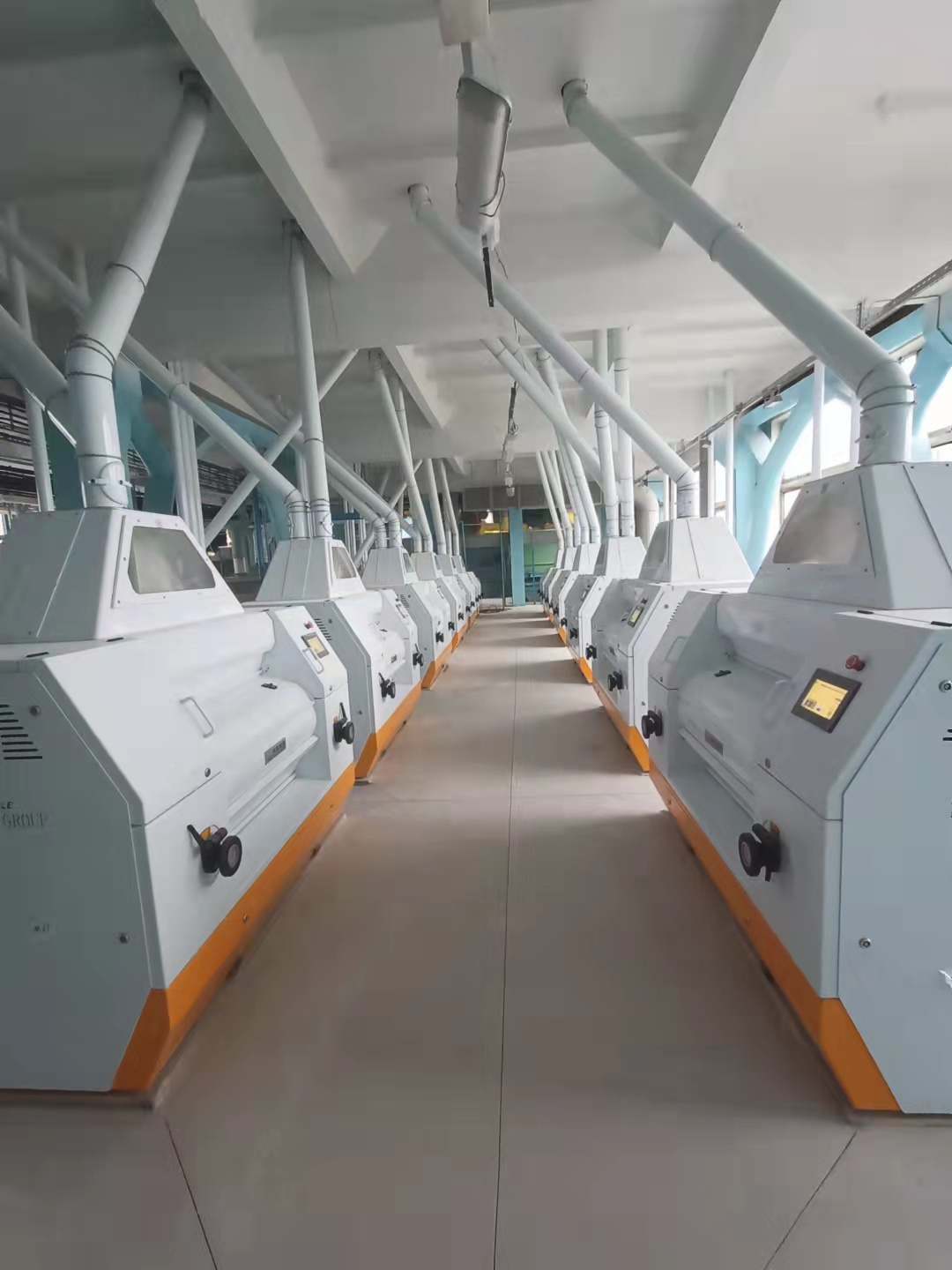
Watching a roller mill at work feels almost hypnotic. The grain slides in through the top, disappearing between two large, counter-rotating cylinders. In an instant, the kernel is fractured, not ground to dust, but cleanly cracked open. This gentle breaking preserves the integrity of the bran and germ, which can then be sifted away with remarkable precision. It’s a dance of pressure and friction, all carefully tuned to unlock the inner parts of the grain without overheating the flour.
The real art comes after that first crush. A series of sieves, all shaking and humming, separate the mixture into coarse and fine fractions. Bigger flakes are sent back for another pass, sometimes through rollers set just a tiny fraction closer together. Smaller particles graduate down the line, getting progressively finer with each stage. What emerges is a spectrum of textures, from hearty wholemeal to silky white flour, all because the machine can peel layer after layer off the grain in a controlled, almost surgical way.
What makes this whole setup shine is the sheer consistency. Each pair of rollers can be adjusted independently, so a miller can dial in exactly the right crack for wheat, rye, or spelt. Modern sensors monitor things like moisture and feed rate, making adjustments on the fly. It’s a blend of old-world mechanical wisdom and subtle automation—heavy iron and stone once did this work, but today’s roller mills do it cleaner, faster, and with a repeatability that bakers have come to rely on.
Sifting and Grading: The Art of Particle Separation
The process of sifting and grading transforms a jumbled mix of particles into neatly organized fractions, each defined by size and uniformity. It’s a practice that feels almost meditative—watching material cascade over screens, the subtle dance of separation governed by motion, mesh, and material. Every industry, from pharmaceuticals to food production, relies on this quiet art to ensure consistency and quality, yet the underlying principles remain beautifully simple: a controlled disruption that coaxes like particles together.
Grading takes this a step further, demanding precision beyond basic sizing. It’s not just about passing or retaining particles; it’s about creating distributions that meet exacting standards. Whether using vibrating sieves, rotary trommels, or air classifiers, the goal is the same—coaxing order from chaos while respecting the delicate nature of the materials at hand. The subtle adjustments of amplitude, angle, and airflow can mean the difference between a perfect batch and one destined for reprocessing.
Packaging and Quality Control: Ready for the World
Every product undergoes rigorous inspection before it even meets the packaging line. Our quality control team checks for consistency, durability, and compliance with international standards, ensuring that nothing leaves the facility unless it meets our precise benchmarks. From material stress tests to functional trials, we simulate real-world usage so you never have to question performance.
Once approved, items are secured in packaging designed to survive global transit. We don’t just throw things in a box and hope for the best—custom foam inserts, moisture-proof wraps, and reinforced corners are standard. The packaging itself is part of the quality promise, reflecting the care that went into the product inside.
Before shipping, a final inspection checks batch codes, labels, and package integrity. This final line of defense catches any last-minute oversights, guaranteeing that what arrives on a doorstep anywhere in the world is exactly what customers expect. It’s not just about passing a test; it’s about delivering confidence.
FAQ
As soon as a truck pulls in, samples are taken from multiple points in the load to check moisture, protein, and contaminants. If it passes, the wheat is weighed and then dumped into a receiving pit. From there, it travels via conveyors and bucket elevators to large storage silos, where it’s held until the mill needs it. Automated systems track each batch so the mill can blend different wheat types to hit exact flour specifications.
After storage, the wheat goes through a rigorous cleaning line. First, a magnet removes any ferrous metal, then a separator uses sieves and air flow to shake out larger debris like stones, straw, and chaff. Next, a destoner gets rid of stones that are the same size as wheat kernels by using vibration and upward air. Finally, a scourer rubs off surface dirt and loose outer layers, and an optical sorter uses cameras to kick out discolored or foreign grains before they ever reach the mill.
Conditioning adjusts the moisture of the wheat so the bran becomes tougher and the endosperm softer, making it easier to separate them during milling. In modern mills, this isn’t just a guess—moisture is added in a high-speed dampener, then the wheat rests in bins for up to 24 hours. Sensors monitor temperature and humidity, and the system automatically calculates the exact water needed based on incoming grain hardness and target moisture, ensuring consistent results batch after batch.
The heart of the mill is a series of roller mills, each with two corrugated or smooth cast-iron rolls spinning in opposite directions at different speeds. As conditioned wheat passes between them, one roll rips open the kernel while the other scrapes out the endosperm. The gap is precisely set—often to fractions of a millimeter—to minimize bran fragmentation. After each pass, the material goes through a sifter, and the coarse particles are sent to subsequent sets of rolls, gradually reducing the endosperm into fine flour.
Consistency relies on automation and blending. Throughout the process, sensors check ash content, color, and particle size in real time. Computer-controlled valves direct different flour streams from various stages into holding bins. The miller then blends these streams in precise proportions to create the desired flour type—whether it’s all-purpose, bread flour, or cake flour. Near-infrared analyzers continuously verify that the final product meets specs before it ever reaches the packing line.
Air systems are integral to the entire operation. Pneumatic lifts transport ground stock between floors, while controlled air currents cool the product since the grinding generates heat that can damage gluten. Cyclone separators and filter bags capture airborne dust, but the real trick is using aspiration channels: these remove light bran flakes from the stream after each roller pass, improving efficiency and lowering the overall energy consumption of the mill.
Besides the obvious wheat bran and wheat germ, the mill also produces middlings—fine particles of bran and endosperm that didn’t make it into the flour. In a modern setup, these aren’t wasted. Bran is often pelletized for animal feed or food additives, while wheat germ gets stabilized to prevent spoilage and sold as a nutritious oil or supplement. Even the dust collected from filters is often added to animal feed, and some facilities use heat recovery systems to capture the energy generated during milling.
Conclusion
Stepping into a modern wheat flour mill reveals a meticulously orchestrated journey that transforms humble grain into the silky powder we rely on daily. It all starts with carefully selected wheat arriving from the fields, where each load is sampled and tested to ensure it meets strict quality standards. The grain then undergoes a rigorous cleaning and conditioning phase: powerful magnets, screens, and aspirators remove stones, chaff, and impurities, while precise water tempering adjusts moisture levels to toughen the bran and soften the endosperm. This preparation is vital for the next stage—the gristing process—where diverse wheat varieties are expertly blended to achieve a consistent protein profile and baking performance, much like a craftsman mixing different flours for a signature loaf. Once conditioned, the grain enters the heart of the mill: imposing roller mills that gently crack open the kernels in a series of corrugated rolls, gradually peeling away the bran and separating the nutrient-rich germ from the starchy core. A symphony of sifters and plansifters then takes over, utilizing a cascade of nested sieves that shake and stratify the ground material by particle size. Here, the art of particle separation truly shines, as fine flour is sifted out at each stage while larger middlings are sent back for further reduction. Finally, the freshly milled flour is pneumatically conveyed to holding bins, where an exhaustive quality control regimen checks for protein, moisture, ash content, and rheological properties before automated lines fill and seal the bags. Every gram is traceable from field to package, ensuring that when those sacks leave the factory, they carry not just flour but a promise of purity and performance.
Contact Us
Contact Person: Jiakuo Wu
Email: [email protected]
Tel/WhatsApp: +86-13011566087
Website: https://www.pinglemachine.com