

Energy Storage Cabinet Manufacturer Insights for Smarter Energy Management
2026-10-18
The shift toward smarter energy management is no longer a distant goal—it's happening right now on factory floors, in commercial buildings, and across utility grids. Yet most operators still treat the energy storage cabinet as a commodity, not a strategic asset. That's where the real insight gap lies. At UNC, we've spent years working alongside manufacturers to uncover what actually separates a high-performing storage cabinet from one that merely passes spec sheets. In this post, we pull back the curtain on key manufacturing decisions—thermal design, cell matching, enclosure durability, and modularity—that directly impact total cost of ownership and long-term reliability. Whether you're evaluating your first deployment or scaling a fleet, these insights will help you ask sharper questions and avoid costly oversights.
Rethinking Thermal Design for Daily Charge Cycles
Most battery thermal designs still chase peak heat rejection during fast charging or high-speed discharge, assuming the worst-case scenario defines the system. Yet real-world daily charging is rarely a flat-out race to 100%—it is a sequence of partial top-ups, overnight slow charges, and intermittent opportunity charging. These cycles generate modest but persistent heat, and over months that steady thermal load can degrade cell uniformity far more than an occasional hot session. Rethinking thermal design here means shifting from peak-power cooling toward managing low-intensity, high-frequency heat accumulation inside the pack.
A practical shift involves placing thermal buffers closer to the cells that experience the most repetitive cycling, not just the ones nearest the coolant inlet. Graphite-based spreaders, thin phase-change layers, and asymmetric cooling channels can flatten the small temperature differences that build up across hundreds of shallow cycles. Rather than increasing pump flow or radiator size, the goal becomes evening out the thermal history of every cell so that daily charge and discharge routines do not slowly create a divided pack—where some cells always run a few degrees warmer and age faster.
Another underexplored angle is letting the battery management system learn from actual user charging patterns instead of relying on fixed thermal maps. If a vehicle mostly charges at home overnight, the cooling loop can prioritize silent, low-power heat dissipation during those hours and pre-condition the pack just enough to avoid morning cold-start stress. By treating daily charge cycles as a thermal rhythm rather than a series of isolated events, designers can reduce complexity, cut energy spent on active cooling, and extend battery life without chasing extreme performance numbers that rarely occur in everyday driving.
The Real Reason Modular Cabinets Outperform Monolithic Builds
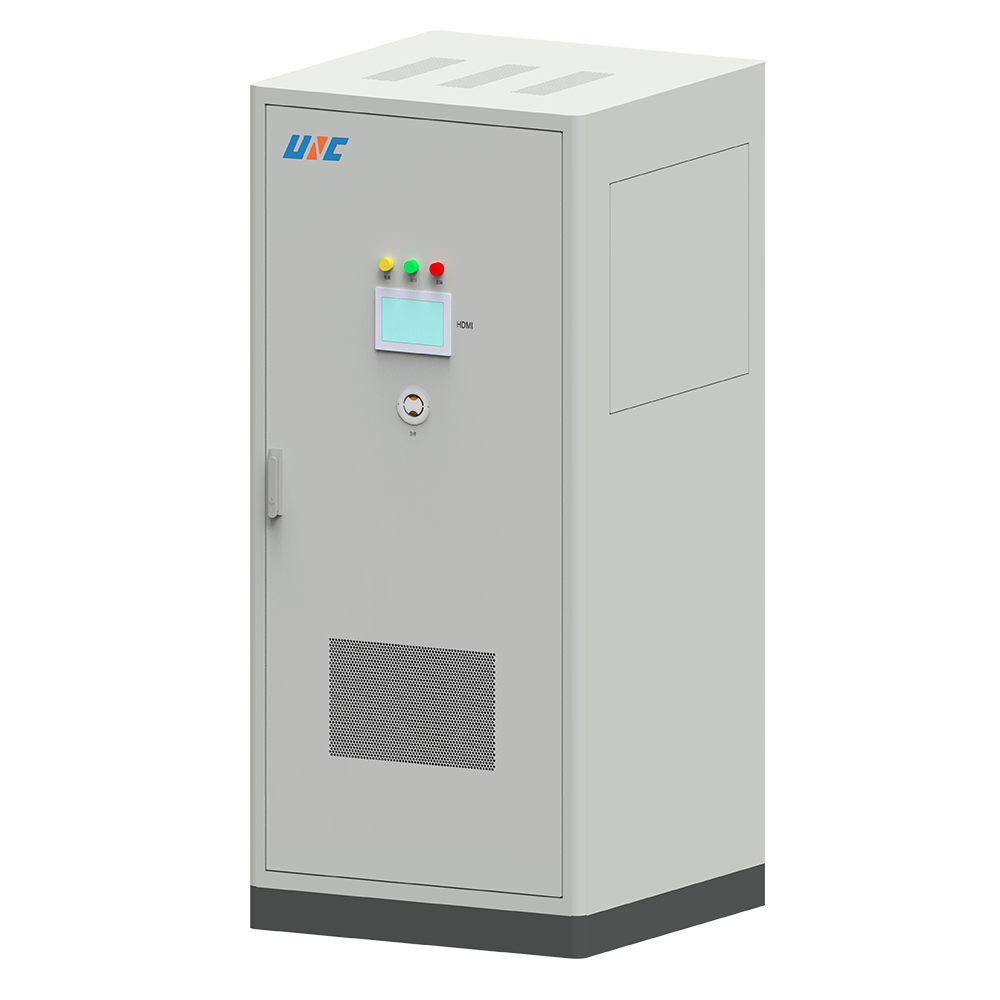
Most people assume a single, continuous cabinet run is the premium choice—fewer seams, cleaner lines, more “custom.” But that assumption falls apart the moment you actually live with one. A monolithic build is a snapshot of a single moment in your needs. The real advantage of modular cabinets isn’t that they’re cheaper or easier to assemble; it’s that they treat your storage as a system that can evolve without tearing out drywall.
When a shelf layout stops working, you swap a drawer unit for open shelving or add a roll-out tray in an afternoon. With a built-in monolith, that same change means a saw, a carpenter, and a week of dust. Modular pieces also hide their joints behind standardized reveals and consistent proportions, so you get the visual quiet of a custom run without the permanence. Over time, the ability to repurpose a cabinet from kitchen to laundry room or workshop isn’t a compromise—it’s a functional upgrade no fixed build can match.
And then there’s the repair reality. A cracked door or water-damaged base in a monolithic cabinet often means replacing an entire section or living with the damage. Modular systems let you order a single matching component years later, because the manufacturer hasn’t moved on to a new carcass size. That long-term serviceability is the quiet reason modular cabinets don’t just compete with monolithic builds—they outlast them in daily use.
Firmware as a Service Life Extender for Storage Assets
Storage hardware rarely dies of old age; it dies of outdated firmware. Most arrays and drives are retired long before their physical components wear out simply because the embedded code can no longer keep up with new protocols, security patches, or performance optimizations. A firmware-as-a-service model flips that script. Instead of replacing the box, you subscribe to continuous firmware updates that are tested against your exact hardware configuration and workload patterns. This extends the useful life of storage assets by years, reducing both capital expenditure and e-waste.
The real value comes from treating firmware not as a one-time factory image but as a living layer that adapts. For example, a SAN deployed five years ago might struggle with modern NVMe-oF traffic or lack support for the latest encryption standards. A managed firmware service can push out compatibility shims, scheduler tweaks, and media wear-leveling algorithms that make the old controller behave like a newer revision. Because the updates are delivered and rolled back via a cloud control plane, IT teams avoid the risky manual flashing that often causes outages.
Vendors offering this service typically bundle telemetry and predictive analytics. The firmware continuously reports drive health, error rates, and thermal profiles back to the provider, who then tunes the next update to your specific environment. That feedback loop means a storage asset purchased a decade ago can still meet today's performance and security expectations. Instead of a rip-and-replace refresh every five years, you get a subscription that keeps the hardware viable until the silicon genuinely fails — and even then, the firmware can help you plan a graceful migration rather than an emergency scramble.
Enclosure Integrity Under Extreme Weather and Grid Stress
When a substation enclosure faces driving rain, ice loading, or prolonged heat waves, its seals and gaskets are the first line of defense. Over time, UV exposure and thermal cycling can harden rubber edges, opening tiny gaps that let moisture creep toward busbars and breakers. Regular inspections often miss hairline cracks along weld seams until a pressure wash or a sudden drop in temperature reveals the leak.
Grid stress adds another layer of strain. Voltage sags and harmonics can push internal components to run hotter than their nameplate ratings, which accelerates outgassing from insulating materials and increases the risk of condensation inside sealed compartments. A well-designed enclosure accounts for this thermal breathing by placing vents low and drains slightly higher, so water doesn't pool where it can short a terminal block.
In regions with frequent lightning or salt spray, material choice matters more than paint thickness. Stainless steel hinges and compression latches resist pitting far better than powder-coated mild steel, and door interlocks that tolerate a few millimeters of frame deflection keep the arc-flash boundary intact even when the ground has shifted under freeze-thaw cycles.
How Manufacturing Tolerances Shape Long-Term Reliability
Tight tolerances are often mistaken for a guarantee of durability, but the relationship is far less linear than most design guides suggest. A bearing specified with radial play under five microns may perform flawlessly on a test bench, yet the same clearance can become a liability once thermal expansion, shaft deflection, and contamination enter the picture. Components that are machined too precisely for their operating envelope tend to seize, gall, or wear unevenly because there is no room for the microscopic movements that actually protect mating surfaces over time.
The real driver of long-term reliability is tolerance alignment across the entire assembly, not the pursuit of individual perfection. When a housing bore, shaft diameter, and retaining ring groove each carry their own tolerance band, the stack-up can quietly push a rotating assembly into misalignment or preload that was never intended. Field failures rarely trace back to a single dimension being oversized or undersized; they emerge from the cumulative effect of small deviations combining in ways that lab testing never captured. Manufacturers who survive decades in demanding applications are usually the ones who opened up tolerances in non-critical areas to absorb variation elsewhere.
There is also an underappreciated economic angle. Overly tight manufacturing tolerances raise scrap rates, slow down production, and multiply inspection costs without delivering a proportional gain in service life. A well-designed product accepts that perfect dimensions are impossible and instead creates robustness through clearance, surface finish, and material pairing. In practice, this means a slightly looser fit with the right lubricant often outlasts a precision-ground fit that cannot tolerate a few microns of wear debris. Reliability, in other words, is designed into the tolerance spread, not squeezed out of it.
Interfacing Storage Cabinets with Legacy Energy Systems
Bringing modern storage cabinets into older energy infrastructure often means dealing with control protocols that were never designed for bidirectional communication. The trick is to treat the cabinet not as a standalone smart device, but as a passive participant that the legacy system can still poll and understand. Simple relay outputs, dry contacts, or analog 4–20 mA signals tend to work much better than trying to retrofit full digital handshakes into aging PLCs or SCADA front ends.
Another practical route is to use a small gateway that sits between the cabinet's internal battery management system and the legacy controller. This gateway speaks the old language—Modbus RTU, Profibus, or even raw serial—while quietly handling all the newer diagnostics on the cabinet side. Field engineers often prefer this because it avoids re-cabling entire substations or re-certifying safety loops just to get state-of-charge data flowing.
It is also worth checking whether the legacy system cares more about breaker status, temperature, or voltage thresholds than about detailed telemetry. By mapping only the essential alarm and control points to existing input cards, you avoid overwhelming old polling routines with data they cannot parse. Sometimes the cleanest interface is a simple set of potential-free contacts wired directly into the legacy annunciator panel, leaving the fancy cabinet software to log the rest on its own.
FAQ
A robust cabinet isn't just a metal box holding batteries. It has to manage heat in uneven ambient conditions, contain potential cell failures, and allow technicians to swap components without shutting down an entire string. The best designs treat the cabinet as an active subsystem—integrated sensors, passive venting paths, and busbar layouts that minimize hot spots. Field data from sites with dust, humidity, and wide temperature swings tends to expose weaknesses that lab testing misses.
We start with cell-level data and propagated failure modeling rather than relying on blanket fire suppression. That lets us place gas detectors where they actually catch early venting, and design deflagration panels that relieve pressure before it damages adjacent racks. Batteries with lower thermal runaway propensity help, but so do compartmentalized modules and ceramic fiber barriers. The cost balance comes from knowing which zones need protection—not armoring everything equally.
Modular cabinets bring factory consistency: every unit is wired, tested, and burned in before shipping. On site, you avoid months of construction and inspection delays. Developers also like being able to add capacity in smaller increments rather than oversizing from day one. If a battery module degrades or a BMS board fails, the cabinet can be isolated and swapped while the rest of the system keeps running. That kind of operational flexibility is hard to match with a poured concrete room.
The BMS is the cabinet's brain, but it has to communicate with higher-level energy management software. Good cabinets expose granular data—cell voltages, internal temperatures, insulation resistance, state of health trends. That allows site controllers to shift charge and discharge schedules based on tariff signals or demand peaks. We've seen sites cut peak demand charges by 15% or more simply because the cabinet's thermal model told the EMS to derate before a hot afternoon rather than after hitting a fault threshold.
It depends on the duty cycle. For short-duration, low-cycle applications, forced air with well-designed ducting is often enough and cheaper to maintain. But once you're doing daily deep cycles or operating in consistently hot climates, liquid cooling pays back through slower battery degradation and higher round-trip efficiency. We advise customers to model the expected kWh throughput over five years—if cooling losses and replacement costs outweigh the upfront difference, liquid cooling becomes the smarter choice.
Look for UL 9540A test results at the module and cabinet level, not just the cell. That tells you whether the design passed thermal propagation tests without fire spreading. IEC 62619 gives you industrial battery safety benchmarks, and NFPA 855 informs site-level spacing and ventilation. Also ask for the manufacturer's own abuse test reports—nail penetration, overcharge, external short. A supplier that hesitates to share those details is often cutting corners.
We put high-failure items like fuses, contactors, and BMS boards behind separate front-access panels so technicians don't have to enter the battery compartment. Modules slide out on rails with quick disconnects, and there's a visible isolation switch that locks out. Clear diagnostic LEDs and an RJ45 or wireless connection near the door let techs pull fault logs without suiting up. It's small stuff, but it reduces mean time to repair by hours and keeps people out of the highest-risk zone.
We're moving toward higher DC voltages—1500V and beyond—which reduces copper losses but demands better arc flash protection. Digital twins are becoming practical: a cabinet reports its thermal and electrical behavior to a cloud model that predicts failures weeks in advance. There's also growing interest in second-life EV battery cabinets, which require flexible BMS tuning and more conservative thermal envelopes. I suspect we'll see more integrated inverters inside cabinets as power electronics shrink.
Conclusion
Daily charge cycles push thermal management far beyond the static assumptions found in older cabinet designs. Instead of oversized cooling that wastes energy, manufacturers now map heat distribution across each cell string and adjust airflow or liquid cooling zones accordingly. This granular approach keeps temperature gradients tight, which directly reduces degradation. Equally important is the shift away from monolithic enclosures: modular cabinets let operators replace or service a single rack without taking the whole asset offline, and they scale more cleanly as site loads change. Firmware plays a less visible but equally critical role—it monitors state-of-health trends, recalibrates charge curves, and can delay costly cell replacement by squeezing more usable cycles out of existing hardware.
Enclosure integrity is tested by more than just rain and dust; grid stress events like voltage sags or frequency swings create thermal and mechanical strain that poor seals or weak latches cannot hide for long. Manufacturers that hold tight machining and assembly tolerances see fewer hot spots, better connector mating, and less vibration-induced wear over a decade of service. When storage cabinets must interface with legacy energy systems, the difference often lies in protocol translation and flexible control logic rather than raw power ratings. Smart integration panels that speak multiple utility protocols and allow staged ramp rates prevent nuisance trips and unlock revenue from demand response or backup services without replacing existing infrastructure.
Contact Us
Contact Person: Manager Leng
Email: [email protected]
Tel/WhatsApp: 8613764878967
Website: https://www.unc-energy.com