

Custom Milk Production Line Solutions for Streamlined Dairy Processing
2026-07-27
Dairy processing demands precision, efficiency, and adaptability—qualities that off-the-shelf equipment rarely delivers. At INTOP Machinery, we believe your production line should fit your vision, not the other way around. Whether you're scaling up or refining niche products, customized solutions can transform bottlenecks into breakthroughs. Discover how tailored milk processing systems are reshaping dairies worldwide.
Tailored Milk Processing Systems for Every Dairy
Every dairy operation has its own rhythm, scale, and vision. That’s why we avoid one-size-fits-all approaches and instead design milk processing lines that fit your reality—whether you’re a small farm bottling raw milk or a mid-sized plant expanding into yogurt and cheese. From the layout of pasteurizers and separators to the control logic that manages flow and temperature, each system is configured around your space, capacity goals, and product plans. We listen closely to how you work, then engineer a footprint and process flow that reduces crossover, simplifies cleaning, and protects product integrity from intake to packaging.
Customization goes beyond equipment selection. We think about your future growth, energy constraints, and the specific characteristics of your milk supply—like fat content variability or seasonal volume swings. Modular designs let you start with what you need today and add modules later without ripping out what’s already working. Automation levels are scaled to your team’s comfort: some dairies want push-button simplicity, others prefer granular control over every CIP cycle and pasteurization hold time. Either way, we build in safeguards that make consistent, high-quality output second nature, even as operators change shifts.
What really sets a tailored system apart is how it handles the intangible details—like gentle product handling to preserve cream structure, or smart routing that cuts water and chemical use during sanitation. We’ve helped dairies squeeze extra shelf life out of ESL milk by fine-tuning thermal profiles, and others reduce waste by capturing and reusing process water. At every step, the aim is to give you a line that feels like it was built for your product, your people, and your market. Because when the system truly fits, the results show up in lower downtime, higher yields, and a product that consistently meets the taste and safety standards your customers expect.
End-to-End Production Line Customization
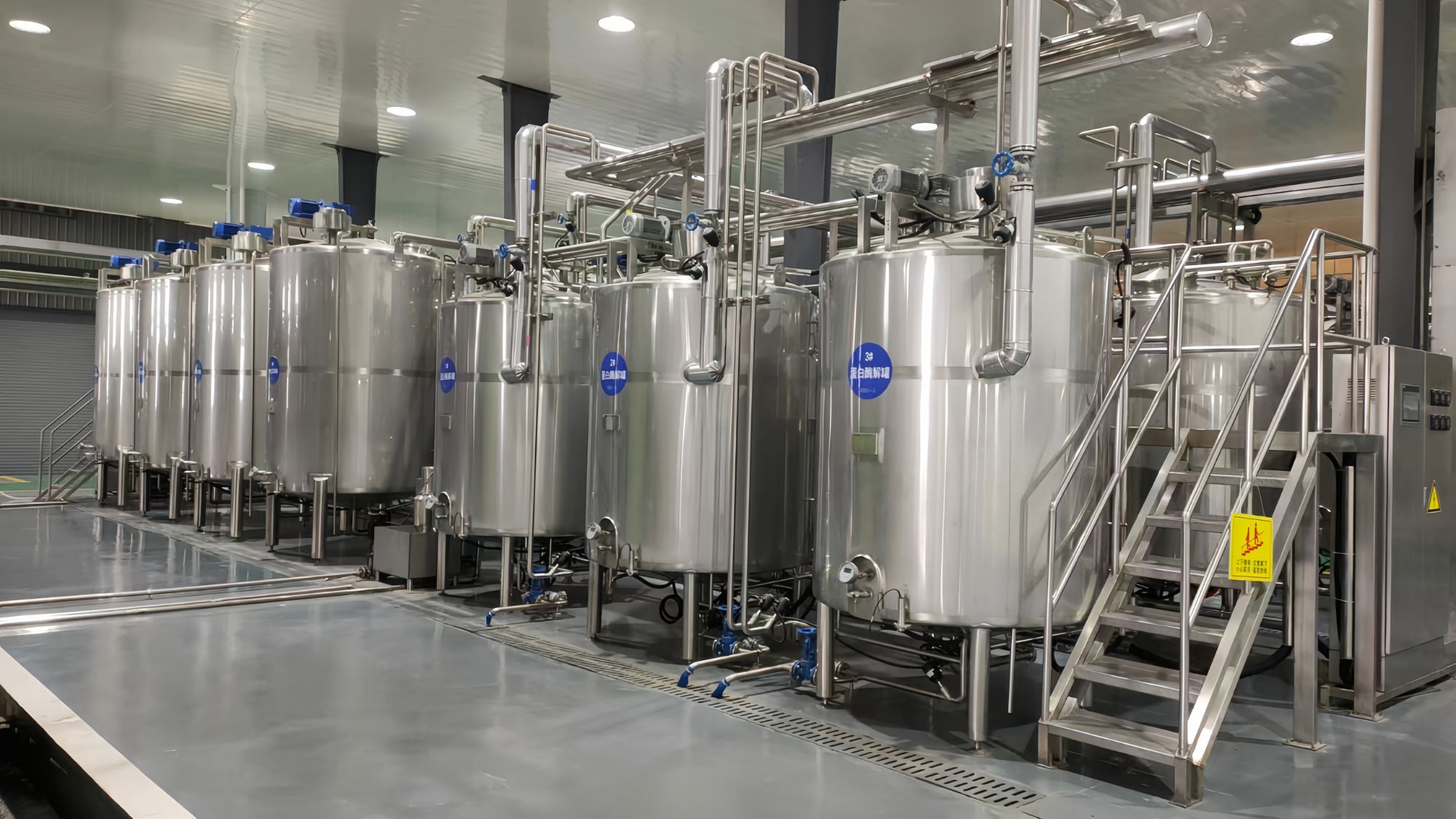
Tailoring a production line from start to finish is more than just assembling machinery—it's about weaving your unique operational DNA into every station. We start by mapping your current workflows, pinpointing bottlenecks, and reimagining the entire flow to match your exact throughput goals. No two lines we build are alike, because no two businesses face the exact same challenges.
Our approach blends deep automation expertise with a stubborn refusal to settle for off-the-shelf fixes. From the initial raw material intake to the final packaging stage, we engineer each segment to speak the same language. Custom grippers, bespoke conveyor layouts, and adaptive control systems are standard fare, not afterthoughts. This design philosophy slashes integration headaches and lets you scale without rewriting the playbook.
What sets this apart is the relentless focus on future-proofing. While we lock in today's requirements, we embed modularity that anticipates tomorrow's pivots. Quick-change fixtures, reconfigurable workcells, and open communication protocols mean your line evolves with market shifts, not against them. It's not about selling you a static solution—it's about building a platform that grows with your ambition.
Optimizing Workflow with Bespoke Equipment
The moment you integrate custom-built machinery into your operations, the friction points that once slowed your team begin to dissolve. Standardized tools force work to bend around their limitations, but purpose-fit equipment aligns directly with how your crew actually moves through tasks. That alignment trims seconds from each repetition, and over a shift, those seconds compound into hours of reclaimed time.
What often gets overlooked is how tailored solutions reshape the physical flow of a workspace. Instead of navigating around a machine that only half-fits the process, people move naturally from step to step. Rethinking the position of controls, the height of feed trays, or the sequence of automated triggers might seem like minor adjustments, but they remove the subtle hesitations and awkward reaches that quietly erode momentum all day long.
Over months of daily use, the difference shows up not just in output numbers but in the reduced strain on everyone involved. When equipment anticipates the next move rather than demanding constant corrections, the entire rhythm of the floor shifts. Tasks that used to require conscious effort slip into a smoother cadence, freeing mental bandwidth for the kind of judgment calls and improvements that no machine can handle on its own.
Smart Automation for High-Volume Milk Handling
In large-scale dairy operations, moving thousands of liters of milk daily demands systems that think ahead. Smart automation steps in here—not just to speed up the flow, but to anticipate bottlenecks before they form. Sensors track volume, temperature, and flow rates in real time, adjusting pump speeds and valve positions without human intervention. This means milk is handled gently and quickly, preserving quality while keeping the line moving at peak capacity.
Beyond basic transport, the real advantage lies in data-driven cleanliness and safety protocols. Automated CIP (Clean-in-Place) cycles are triggered precisely when needed, based on actual usage patterns rather than fixed schedules. This reduces chemical and water waste, while ensuring every pipe and tank is pristine for the next batch. The system learns from each cycle, refining rinse times and temperatures to strike the perfect balance between hygiene and resource efficiency.
Integration with cloud-based dashboards gives operators a clear, remote view of everything from milk reception to dispatch. Alerts pulse through their devices only when human judgement is required—like a sudden change in viscosity or an unexpected drop in pressure. It’s this blend of autonomous control and intelligent exception handling that transforms a conventional milk line into a responsive, self-optimizing network, freeing staff to focus on strategic tasks rather than routine checks.
Hygienic Design Maximizing Product Shelf Life
Every surface that comes into contact with product must eliminate niches where microbes can take hold. Smooth, radiused corners, continuous welds ground flush, and self-draining layouts ensure no food residue or cleaning fluids remain after sanitation cycles. When equipment is built without dead legs, crevices, or threaded connections, the risk of biofilm formation drops dramatically, directly translating to extended freshness for the final packaged goods.
Material choice plays an equally critical role. Non-porous, corrosion-resistant alloys like 316L stainless steel resist chemical attack from aggressive cleaning agents while preventing metal ion migration that could trigger spoilage reactions. Elastomers and seals designed for high-temperature cycling maintain their integrity over thousands of cleanings, never becoming a source of hidden contamination. This durability keeps the processing environment consistently hostile to spoilage organisms without degrading the food's sensory profile.
Beyond individual components, hygienic design considers how people interact with the machinery. Tool-free disassembly encourages thorough sanitation by making routine deep cleans fast and ergonomic. Sloped surfaces and enclosed cable runs eliminate dust traps, and strategically placed inspection ports let operators verify cleanliness visually. These practical details foster a culture where sanitation isn't a chore but an integral part of production flow, helping product emerge from the line with maximum possible shelf life already built in.
Scalable Solutions Growing with Your Dairy Business
Every dairy operation starts with a vision, but that vision rarely stands still. Markets shift, herd sizes evolve, and what worked yesterday might not fit tomorrow. That’s where truly scalable solutions come in—not as a one-time fix, but as a flexible framework that adapts alongside your farm. Whether you’re expanding from a small family setup to a larger commercial enterprise or simply refining your processes, the right tools should make growth feel natural, not forced.
Practical scalability shows up in modular equipment and smart systems that you can extend at your own pace. Imagine adding milking units without a complete overhaul, or layering in advanced sensors and data analytics when you’re ready to deepen your insights. This isn’t about buying everything upfront—it’s about building a core that welcomes upgrades. Components talk to each other seamlessly, so as you introduce new capabilities, they integrate without disrupting your daily rhythm.
Beyond hardware, a genuinely scalable approach includes guidance that grows with you. It’s the reassurance of dependable service and straightforward advice, from initial planning through each expansion phase. The goal is to keep your focus on animal welfare and product quality, while the supporting infrastructure quietly handles the heavy lifting. When your solutions can stretch and flex, you’re free to concentrate on what matters most: a thriving, future-ready dairy business.
FAQ
Start by mapping out your daily volume, product range, and space constraints. Then talk to engineers who can design the layout and equipment specs around those parameters rather than forcing you into a pre-packaged setup.
By aligning tank capacities, pasteurizer flow rates, and filler speeds exactly with your output targets, you avoid bottlenecks and idle time. Integrated controls let you swap recipes fast, and smart routing cuts down product travel.
It can be more upfront than off-the-shelf, but you pay for what you need and nothing extra. Over time, the efficiency gains and lower waste typically offset the initial outlay, making the total cost of ownership competitive.
Prioritise CIP-ready closed systems, automated separation and standardisation, in-line quality sensors, and energy-recovery pasteurisers. A central HMI that gives real-time data on every stage helps you tweak performance on the fly.
A typical timeline runs from four to eight months, depending on complexity and site readiness. Detailed planning upfront along with clear communication keeps the project on track and avoids last-minute delays.
Absolutely. With the right buffer tanks and adjustable homogenisers, you can switch between whole, skimmed, lactose-free, or flavoured milks in a single run. Batch recipes are stored in the control system for quick changeovers.
You'll want on-site commissioning, operator training, and a preventive maintenance schedule. Remote diagnostics and prompt spare parts delivery make a big difference in keeping uptime high after the line is handed over.
Conclusion
Every dairy operation faces unique challenges, from the scale of production to the types of milk products they handle. Custom milk production line solutions address these by offering tailored systems that adapt to specific needs—whether it’s pasteurizing, homogenizing, or packaging. By designing end-to-end processes, dairies can eliminate inefficiencies and reduce manual intervention. Bespoke equipment not only streamlines workflow but also integrates smart automation for high-volume handling, ensuring consistent output without compromising on quality.
Hygiene is paramount in dairy processing, and custom lines prioritize sanitary design to extend product shelf life. Features like crevice-free surfaces, automated CIP systems, and controlled environments minimize contamination risks. Moreover, these solutions are scalable, allowing dairy businesses to grow without overhauling their entire infrastructure. From start-ups to large enterprises, a well-planned custom line future-proofs operations, balancing efficiency, safety, and flexibility in a competitive market.
Contact Us
Contact Person: Laura
Email: [email protected]
Tel/WhatsApp: +86 13957758832
Website: https://www.intopmachinery.com