
Custom Dredging Equipment Manufacturer: Precision-Built Solutions for Your Toughest Projects
2026-05-11
When standard dredgers fall short, precision engineering makes the difference. For projects that demand more—whether in extreme environments or tight specifications—the right custom solution isn't just an option; it's a necessity. YaKai Dredger has spent years perfecting bespoke equipment that turns your toughest challenges into operational successes. Here's why choosing a specialized manufacturer can redefine what's possible on your next project.
Engineering That Starts With Your Project Brief, Not a Catalog
Every project carries its own set of demands, constraints, and aspirations. Rather than forcing your needs into a predefined box, we begin by immersing ourselves in your brief—listening closely to what you’re trying to achieve, the environment it will operate in, and the hurdles you face. This foundation allows us to shape an engineering approach that’s truly bespoke, never a recycled idea pulled from a shelf.
When design starts from a catalog, you’re limited to what already exists. That often means compromises you shouldn’t have to make. By treating your brief as the sole driver, we sidestep those limitations. The result is a solution that fits seamlessly—whether it’s an unusual material requirement, a tight spatial constraint, or a performance target that off-the-shelf components can’t hit. We engineer from first principles, not from a parts list.
This mindset doesn’t just lead to better outcomes; it changes the entire collaboration. You’re not being sold a product—you’re partnering in a process where every decision traces back to your original goals. It’s engineering with a purpose, stripped of assumptions and built around what you actually need.
Why Off-the-Shelf Falls Short on Complex Dredge Sites
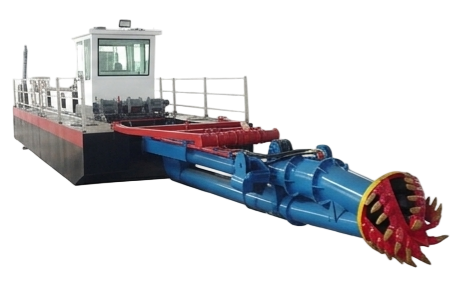
When you're working on a straightforward, predictable dredge job, a standard off-the-shelf dredge can get the job done. But real-world sites are rarely that simple. Complex dredge sites throw curveballs—unexpected soil conditions, tight environmental regulations, steep slopes, or the need to operate in shallow waters. A one-size-fits-all machine simply wasn't designed for these challenges. It may lack the power to cut through compacted material, the maneuverability to work around fragile ecosystems, or the precision to avoid over-dredging. Relying on stock equipment often leads to costly downtime, inefficiency, and even safety risks.
Customization becomes critical when the dredge needs to adapt to the site's specific personality. Think about a project where you're dealing with a mix of silt, clay, and unexpected debris— an off-the-shelf cutter head might clog or wear out prematurely. Or consider a site near a protected shoreline where turbidity must be kept to an absolute minimum; a standard dredge might not have the advanced monitoring or silt curtain integration you need. Every complex site has its own set of constraints, and a generic dredge just can't pivot to meet them all. That's where tailored solutions make the difference, ensuring that the equipment works with the environment, not against it.
Beyond the immediate operational hurdles, there's the long-term cost equation. While an off-the-shelf dredge might have a lower upfront price tag, it often becomes a money pit on a complex site. Constant repairs, reduced productivity, and the risk of environmental fines can quickly erase any initial savings. A customized dredge is engineered to handle the specific wear and tear, optimize fuel efficiency, and maintain high production rates, ultimately delivering far better value over the lifespan of the project. In the end, a machine that fits the site like a glove outperforms one that expects the site to fit it.
Material Science That Keeps Equipment Running in Abrasive Slurries
When handling abrasive slurries, the relentless scouring action can rapidly degrade pumps, valves, and piping. Traditional materials like cast iron or standard stainless steel often succumb to erosion and corrosion within weeks, leading to costly downtime. Advanced material science addresses this by engineering surfaces and bulk materials that actively resist wear. Hardfacing alloys, ceramic-metal composites, and nanostructured coatings create barriers that deflect and absorb the impact of suspended particles. By carefully controlling grain boundaries and phase distributions, these materials exhibit remarkable durability without sacrificing toughness — ensuring equipment stays operational far longer.
Beyond hardness alone, tailored microstructures play a decisive role. High-chromium white irons, for instance, utilize a matrix of martensite supporting ultra-hard M7C3 carbides. This combination withstands gouging and micro-cutting while retaining just enough ductility to avoid brittle fracture under cyclic loading. Even more specialized are reaction-bonded silicon carbide and tungsten carbide overlays, where the bonding process creates a seamless metallurgical union with the substrate. Such innovations allow components to survive in environments that would quickly chew through conventionals alternatives, effectively rewriting maintenance schedules.
Recent strides in additive manufacturing have opened avenues for functionally graded materials that transition from tough cores to wear‑resistant exteriors in a single component. This eliminates the sharp interfaces where delamination often starts. Simultaneously, researchers are mimicking biological structures — like the layered armor of abalone shells — to produce coatings with self‑healing properties and directional crack deflection. These biomimetic approaches, combined with wear‑resistant polymers and elastomers for non‑metallic parts, are redefining the limits of what equipment can endure. The result is quieter, more predictable operation in mining, dredging, and chemical processing, where aggressive slurries used to be the primary adversary.
How Modular Design Shortens On-Site Assembly by Days
When a project relies on traditional stick-built methods, every beam, bracket, and bolt has to be cut, fitted, and secured at the location. Weather delays, coordination hiccups, and the sheer logistics of sequencing work on a tight site can turn a predictable schedule into a guessing game. Modular design flips that script by shifting the bulk of construction into a controlled factory environment. Pre-assembled modules arrive ready to connect—think complete bathroom pods, pre-wired electrical rooms, or entire structural frames with insulation already in place. These factory-built units aren't just pieces; they're finished chunks of the building, tested for quality before they ever see the site. Because this work happens off the critical path, the time needed for on-site assembly shrinks dramatically. Instead of weeks spent framing and finishing on scaffolding, crews can install a module in hours, trimming days or even weeks from the overall project timeline. It's not about working faster—it's about working smarter, where parallel workflows replace sequential bottlenecks.
One of the biggest time-eaters on any build is the back-and-forth between trades. An electrician can't rough in wiring until the studs are up, the plumber needs access before the drywall goes on, and suddenly a delay in one area cascades into a full-stop on another. Modular construction sidesteps much of this mess. Because modules are built in a factory, multiple trades can work on the same unit simultaneously—plumbing, electrical, and finishes all layered in during a single, orchestrated process. When these units land on site, they're already code-compliant and often pre-inspected. The on-site crew simply has to crane them into position and make the interconnections. This isn't just theoretical; projects like multi-story hotels routinely save five to seven days per floor compared to conventional methods. The real payoff shows during the fitting-out phase, where interior work that typically drags on for months gets compressed into a tight sequence of plug-and-play installations. The result is a schedule that fewer surprises can derail.
It's easy to picture modular as a collection of identical boxes, but today's systems are far more flexible. Designers can create modules that accommodate complex geometries, large-format windows, or mixed-use footprints—all while retaining the speed advantage. The key is how the integration happens: rather than relying on custom cuts and field adjustments, modular units are produced with repeatable precision using digital models shared between the architect and the factory floor. This tight feedback loop means that when a module shows up, it fits the foundation, the neighboring modules, and the utility risers without the typical on-site wrestling match. Even better, the on-site assembly becomes less weather-dependent. With the core structure already enclosed at the module level, external cladding and weatherproofing often come pre-installed, so rain or snow has nowhere near the impact it would on a framed shell. The days saved aren't just a number on a Gantt chart—they translate directly to earlier occupancy, faster revenue generation, or simply getting a family into their home weeks sooner.
Beyond the Build: Sustaining Performance With Adaptive Support
Launching a product is just the first step; what really determines long-term success is how well it adapts to the shifting demands of real-world use. Adaptive support means building systems that don’t just react to issues but continuously learn from usage patterns, user feedback, and performance metrics to fine-tune themselves over time. This approach transforms maintenance from a series of emergency fixes into an ongoing evolution, keeping the product robust and relevant without constant manual intervention.
The key lies in embedding flexibility from the start—modular architectures, feedback loops, and automated diagnostics that anticipate bottlenecks before they become critical. When a feature sees unexpected load or a workflow changes, the underlying support structure adjusts resources, reroutes tasks, or even suggests process improvements. It’s less about having a perfect initial release and more about enabling the product to grow intelligently with its users, turning every hiccup into a chance for enhancement rather than a setback.
Proving the Promise: Unfiltered Stories From the Waterfront
The dock was never a place for pretty words. You'd see a man's word tested the moment a crate slipped its hooks and crashed into the bay—whether he'd own up or blame the rigging. I remember old Frank, who ran the night shift for twenty years, never once letting a shipment leave without his personal check. When the big storm of '07 ripped half the pier apart, he was the first one in the water, not because he had to, but because he'd promised the crew they'd all go home safe. That's what proving the promise meant down there: no speeches, just cold salt water and the truth of your actions when no one was watching.
Not every story ends with a hero. Some promises broke under the weight of exhaustion and bad luck. Take the Lundberg deal—a handshake agreement to move a season's catch through our port, sealed over cheap whiskey. When the market tanked, half the boats disappeared overnight, leaving us with rotting fish and a lesson in how fast loyalty can sour. The waterfront doesn't care about your intentions; it only remembers who showed up when the tide turned. Unfiltered means admitting that sometimes, the people you count on become ghosts before the sun rises.
I still walk the planks on clear mornings, past the new cranes and the automated loaders that've replaced half the old hands. But the promise lives on in the ones who teach their replacements the unwritten rules: never let a line fray, never leave a newcomer stranded on a ladder, and never, ever say you'll do something and then forget. It's in the way a weathered face nods at you from across the winch room, a quiet signal that your word still holds weight. The waterfront strips away the noise, and what's left is either solid or a story about why it wasn't.
FAQ
Every project comes with its own challenges, and off-the-shelf machinery often falls short. We engineer each dredger from the ground up to match your project’s exact specifications—whether it’s depth, sediment type, or working environment. That means no compromises, just a solution that fits seamlessly into your operation.
We start by understanding the specific conditions you’re facing, from abrasive materials to extreme weather. Our designs incorporate rugged materials, reinforced structures, and components tested beyond standard limits. Plus, every machine undergoes rigorous quality checks before it leaves our facility, so you can count on it when the work gets tough.
Our equipment handles everything from environmental remediation and inland waterway maintenance to complex offshore mining and harbor deepening. We’ve built machines for projects that require precision in tight spaces, as well as heavy-duty dredgers capable of moving millions of cubic meters. If it involves moving material underwater, we’ve likely engineered a solution for it.
Absolutely. Flexibility is part of our engineering DNA. We maintain close communication throughout the build, so if your scope shifts—such as encountering unexpected ground conditions or tighter deadlines—we can adjust the design accordingly. This often happens without major delays because we build in modular upgrade paths from the start.
Timelines vary based on complexity, but a typical custom build ranges from 6 to 14 months. We streamline the process by using advanced design-to-manufacturing workflows and maintaining a network of trusted material suppliers. We also keep you updated with clear milestones, so you always know where things stand.
We don’t disappear once the machine ships. Our team provides on-site commissioning, operator training, and a parts guarantee for critical wear components. We can also set up remote monitoring to catch issues before they cause downtime, and our engineers are available for follow-up modifications if your needs evolve.
We work globally, and remote locations are our specialty. We’ve delivered dredgers to the Amazon basin, Arctic coasts, and Southeast Asian archipelagos. We manage all logistics, including disassembly for transport when necessary and reassembly on site, so you don’t have to worry about how the equipment gets to the water.
It begins with a conversation. Tell us about your project—site conditions, material you’re moving, depth, and production targets. We’ll put together a preliminary design and a clear proposal. From there, we refine the details together until you have a dredger that matches your vision, on budget and on schedule.
Conclusion
When standard dredging equipment can't handle the unique demands of your project, a custom manufacturer steps in with solutions engineered precisely to your brief. Rather than picking from a catalog, every design begins with your site conditions, production targets, and material challenges. Off-the-shelf machinery often falls short on complex sites—where varying depths, compact spaces, or stubborn sediments require more than generic engineering. By focusing on material science, these custom builders select wear-resistant alloys and advanced coatings that endure abrasive slurries, extending service life and reducing unplanned downtime. This proactive engineering ensures that pumps, cutters, and pipelines survive the harshest working environments without constant repair.
Modular design further streamlines operations by slashing on-site assembly time; components arrive pre-fitted and tested, so they bolt together in days rather than weeks. The relationship doesn't end at delivery—adaptive support programs keep your equipment performing through remote monitoring, rapid parts replenishment, and on-the-ground technicians who understand your specific setup. Real stories from the waterfront prove the impact: a contractor reclaiming a contaminated canal navigates tight clearances with a customized cutter suction dredger, while a mining operation triples throughput after retrofitting a wear-resistant pump. These unfiltered accounts demonstrate that precision-built dredging solutions not only meet tough project demands but consistently exceed them, turning complex undertakings into successful, on-budget outcomes.
Contact Us
Contact Person: Nancy
Email: [email protected]
Tel/WhatsApp: (+86) 13869631558
Website: https://www.yakaidredger.com/