

Custom Bolts Exporter Guide to Sourcing High-Quality Fasteners for Industrial Projects
2026-09-25
Industrial buyers know the pain: a custom bolt order arrives with missing mill certs, off-spec threads, or coatings that flake before installation. This guide exists because those failures are avoidable when you know what to look for in a fastener exporter. From torque-critical assemblies in heavy machinery to corrosion-resistant studs for chemical plants, quality hinges on details most catalogs never show. We'll walk through the non-negotiable checks—material traceability, dimensional tolerances, and surface treatments—that separate a trusted partner from a costly reorder. And if you're looking for a supplier that treats these checks as baseline, Peak Fasten has built its export process around them. Let's get into what high-quality actually means before you sign off on your next PO.
What Actually Counts as High-Quality When You're Sourcing Custom Bolts
High-quality custom bolts rarely announce themselves through a polished finish alone. The real markers are buried in the paperwork and the machining details: a material certificate that lists the actual heat number and traceable chemical composition, not a generic spec sheet; dimensional reports showing thread pitch diameter, head height, and under-head radius stay within a few microns of print; and a surface treatment that survives the same salt spray hours batch after batch. If a supplier can’t show you these records before shipping, the bolts aren’t high-quality—they’re just unverified.
Another often-overlooked gauge is consistency across production runs. A single perfect sample means little if the next thousand pieces drift in hardness or plating thickness. Ask for CPK data on critical features like thread class and tensile strength, and pay attention to how the manufacturer handles hydrogen embrittlement risk after plating. A shop that bakes every batch and documents the oven logs is already operating at a different level than one that treats that step as optional.
Finally, true quality shows up in the details you can feel and trace: threads that engage smoothly without galling, a head marking that stays legible after torqueing, and a lot code that lets you trace a failed bolt back to the exact raw material coil. If you have to chase this information after delivery, the sourcing process has already failed the quality test.
The Questions Smart Buyers Ask Before Approving a Fastener Supplier
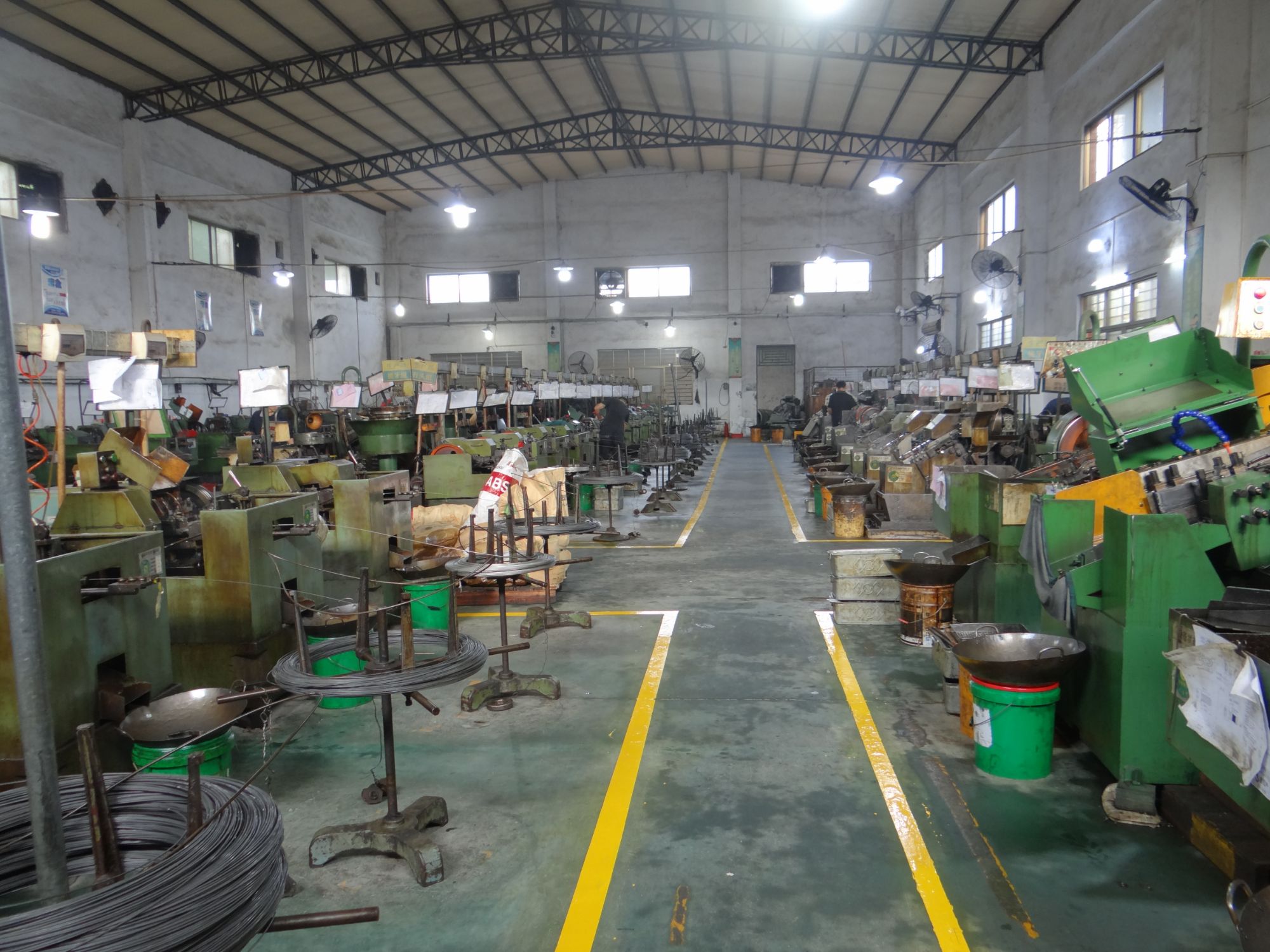
A polished catalog and a handful of sample parts rarely reveal what actually matters when a production line is waiting. Smart buyers start with lot traceability—can the supplier connect every box back to a heat number and raw material certificate? If that trail goes cold after a few months, a single bad batch can turn into an expensive recall with no clear cause.
It also pays to ask about how tolerances and finishes hold up once volumes climb. Plating thickness and thread dimensions often drift between first article and full production, and some suppliers only inspect until the contract is signed. Requesting current in-process data, not just a one-time capability study, will quickly separate operations that control their process from those that get lucky on a sample run.
Finally, watch how the supplier reacts when something goes wrong. Approval is less about a perfect scorecard and more about how problems are handled at 4 p.m. on a Friday. The suppliers worth keeping will openly describe a past failure and the steps they took to contain it—because that kind of honesty tells you far more than any polished capability statement.
Why Material Traceability Beats a Low Unit Price Every Time
A purchase order that prioritizes the cheapest quote often ignores a hidden cost: the unknown journey of the raw materials. When a supplier cannot show where inputs come from, every downstream process becomes a gamble. A batch of steel might have the right hardness on paper, but if the mill mixed scrap from inconsistent sources, the fatigue life in a load-bearing part could drop without warning. Traceability turns that uncertainty into a documented chain, from ore or pellet to finished bar. That record is not bureaucratic clutter; it is the difference between a part that passes today’s inspection and one that survives three years of real-world stress.
Price only tells you the number on the invoice. Traceability tells you the number of times a material was re-melted, the exact furnace lot, and whether the heat treatment followed the same curve as the last accepted batch. For a buyer, this means fewer line stoppages, fewer hidden scrap rates, and fewer emergency calls to alternative suppliers. A low unit price can evaporate quickly when one faulty shipment forces a recall or a rework of an entire assembly. In contrast, a material with a clear pedigree often ships with less incoming inspection, because the data already answers the questions a lab test would ask days later.
In industries where a failed component can hurt someone or shut down a production line, the logic flips: paying slightly more for a traceable material is actually the cheaper option. The premium is not for the metal itself; it is for the proof that the metal behaves the way the certificate says. Buyers who learn this stop chasing the lowest bid and start asking for lot numbers, mill certificates, and heat maps. That shift is not about being cautious for its own sake. It is about knowing that a material you cannot trace is a risk you cannot price.
Where Cheap Custom Threading and Coatings Come Back to Haunt You
Cheap custom threading tends to reveal itself at the worst possible moment. A tapped hole that's a hair undersized, a thread angle that's slightly off, or a root that wasn't stress-relieved can pass an initial gauge check but then chew up fasteners under real vibration. The torque wrench clicks, the joint feels tight, and then the bolt loosens halfway through a customer's first week in the field. That's when you're pulling prints, measuring pitch diameters, and wishing you'd paid for a thread grind instead of a bargain cut.
Coatings are even easier to fake in the short term. A thin zinc layer or a rushed phosphate bath will look uniform enough in the shipping box. Leave it in a damp warehouse for a few months, though, and you'll see rust tracing along the thread flanks or bubbles lifting at the sharp edges. The failure isn't just cosmetic—under the blister is bare steel, and every one of those spots is a starting point for corrosion fatigue or hydrogen embrittlement you can't inspect by eye.
What makes these choices sting is the lag time. The purchase order savings are long forgotten when you're re-machining a batch, issuing a recall, or standing in front of a customer explaining why their coated component looks ten years old after two seasons. Cheap threading and coatings don't just cost you the difference in price; they cost you the next order that never comes.
Designing a Sourcing Workflow That Won't Fall Apart Mid-Project
Most sourcing workflows collapse at the same three joints: ambiguous specifications, silent supplier drift, and no agreed trigger for escalation. A durable design starts by writing the failure modes next to each step—what exactly happens if the RFQ response is late, if the sample deviates, if the cost model shifts. Build the workflow backwards from those breakpoints, not forwards from a procurement template.
Assign owners to each transition, not each task. The moment a quote becomes a shortlist, someone has to own the comparison criteria; when a supplier enters negotiation, someone else owns the fallback plan. Keep the handoff visible with a one-page control sheet that logs decisions, open risks, and the next checkpoint date. If a checkpoint slips twice, the workflow forces a predefined recovery path—reduce scope, tap a backup supplier, or escalate to a senior buyer—instead of relying on willpower.
Finally, bake in a mid-project audit that reviews not just supplier performance but the workflow itself. Ask which step consumed the most rework, where information got stuck, and what assumption turned out to be false. That feedback loop turns a fragile process into one that gets sturdier each time it runs.
Red Flags in Export Paperwork That Can Delay Your Whole Order
Incorrect commodity codes or vague product descriptions are a fast way to stall an entire shipment. Customs authorities rely on the harmonized system to assess duties and confirm compliance, so even a one-digit error can trigger a manual review that eats up days. Many exporters assume a generic term like “machine parts” will pass, but without precise material, function, and composition details, officers often flag the entry for clarification. That back-and-forth rarely happens over email; it means holding the cargo at port while your buyer waits.
Mismatched values between the commercial invoice and packing list are another quiet order-killer. If the declared value doesn’t align with supporting documents, or if freight charges are listed inconsistently, the paperwork becomes a red flag for under-valuation or misdeclaration. Some teams copy figures from an old proforma without updating the final invoice, and the result is a customs hold that can span a week or more. This isn’t about fraud—it’s about sloppy version control that forces officials to stop the line.
Finally, missing certificates of origin or incomplete free trade agreement documentation can delay clearance long after the vessel arrives. Importers often assume a blanket certificate works for every product in a mixed container, but rules of origin are product-specific. When the paperwork lacks the required signature, stamp, or wording from the chamber of commerce, the goods sit in a bonded warehouse racking up demurrage. A simple pre-check against the destination country’s latest requirements can prevent a routine order from turning into a costly exception.
FAQ
A dependable exporter will ask about your load requirements, operating temperatures, and installation environment before quoting. They should provide material certifications, dimensional reports, and surface finish samples without being prompted. Generic suppliers often rely on stock lists and cannot accommodate unusual thread pitches or head markings.
Request a first article inspection report along with tensile, hardness, and proof load test results from the same heat lot. For critical applications, ask for independent lab testing on random samples from the production run rather than relying only on supplier certificates.
Hot-dip galvanizing, zinc-nickel plating, and PTFE coatings tend to perform well in corrosive settings. The right choice depends on exposure duration, pH levels, and whether the bolts will be removed for maintenance. A knowledgeable exporter can recommend a coating that balances cost and salt spray test hours.
Many set minimums because tooling and setup costs are amortized over the batch size, but some specialists accept smaller runs if you are willing to pay a modest tooling fee or use adjustable dies. It is worth asking directly, because minimums can vary widely depending on the complexity of the head and thread form.
Send full dimensional drawings or CAD files, material grade and any required heat treatment, thread standard and fit class, coating specification, target quantity, and required delivery date. Missing details like head marking or packaging instructions often cause back-and-forth that adds weeks to the process.
Look for consistent, burr-free threads and smooth transition radii under the head. Ask for surface roughness measurements if the bolts will experience cyclic loading. Poor finish or sharp tool marks can act as stress risers and reduce fatigue life, even if the material grade is correct.
Yes, in-house heat treatment gives you tighter control over hardness uniformity and reduces the chance of mixed batches from subcontractors. It also simplifies traceability when you need to audit the process or troubleshoot a failure.
Expect a material test certificate, dimensional inspection report, packing list, and any applicable conformity documents like EN 10204 3.1 or PPAP. For regulated industries, also request a certificate of origin and a detailed heat lot map linking each box to its production batch.
Conclusion
Sourcing custom bolts for industrial projects is less about finding the lowest unit price and more about confirming what's underneath the surface. A high-quality fastener isn't just one that meets dimensional specs; it's one where the mill certificate, heat treatment records, and coating adhesion tests all line up without gaps. Smart buyers press suppliers on material traceability before talking cost, because a bolt that can't be traced back to its heat lot is a liability waiting to fail. Cheap threading is another trap—rolled threads that are slightly off pitch may pass a quick visual check but will gall or strip under torque. The extra money spent on proper coatings and precise thread geometry pays off long before the first maintenance cycle.
A sourcing workflow that survives an industrial project needs checkpoints that catch problems early. Before approving any exporter, ask for third-party test reports, not just the supplier's own certificate. Then build a document review step into your process: export paperwork with mismatched HS codes, vague material descriptions, or missing heat numbers is a common reason entire shipments sit at the port. Don't wait until the container is on the water to verify those details. Set milestone inspections at the factory, review all paperwork before final payment, and keep a direct line open with the exporter's technical staff, not just the sales team. That way, the bolts that arrive are the ones you actually specified, on the schedule you planned.
Contact Us
Contact Person: Mason Lv
Email: [email protected]
Tel/WhatsApp: +86 13027998452
Website: https://www.peakfastentech.com