

CPP Film Masterbatch Manufacturer Selection Guide for High-Clarity Films
2026-08-19
Choosing the right CPP film masterbatch manufacturer can make or break your high-clarity film performance—yet many converters overlook the subtle differences in dispersion, purity, and melt stability until haze or gel defects show up on the line. In this guide, we cut through the marketing noise and walk you through the practical selection criteria that matter most for optical-grade cast polypropylene films. Along the way, you'll see how Xinwancai approaches clarity-driven masterbatch design differently, giving you a benchmark to evaluate any supplier against.
Optical Clarity Does Not Start With the Resin Alone
The assumption that a premium transparent resin will automatically produce clear parts usually breaks down long before the material reaches the curing stage. Most haze and cloudiness come from what happens at the mixing bench: a stir stick that was not wiped clean, a container that held a pigmented batch last week, or moisture pulled in from a humid room. Even aggressive mixing can whip in air bubbles too small to see but large enough to scatter light. Optical clarity starts with disciplined material handling, not with the resin data sheet.
Once the resin leaves the container, curing conditions take over. Uneven temperature across a mold or a build platform creates internal stress, and that stress often shows up as microcracks or a faint milky haze. A mold surface that looks smooth to the fingertip can still transfer fine tool marks onto the part, and any leftover release agent becomes a permanent optical defect. These variables rarely appear in a resin brochure, but they control how light actually travels through the finished piece.
Post-processing can rescue some mistakes, but it cannot rebuild optical quality from a badly prepared or poorly cured part. Polishing removes surface roughness, annealing relieves stress, and a clear coat can fill minor scratches. Yet if the resin was contaminated or cured too fast from the start, these steps only mask the problem. True clarity is a chain from raw material storage through mixing, curing, and finishing, and every link has to be clean and consistent.
The Dispersion Test Some Suppliers Prefer to Avoid
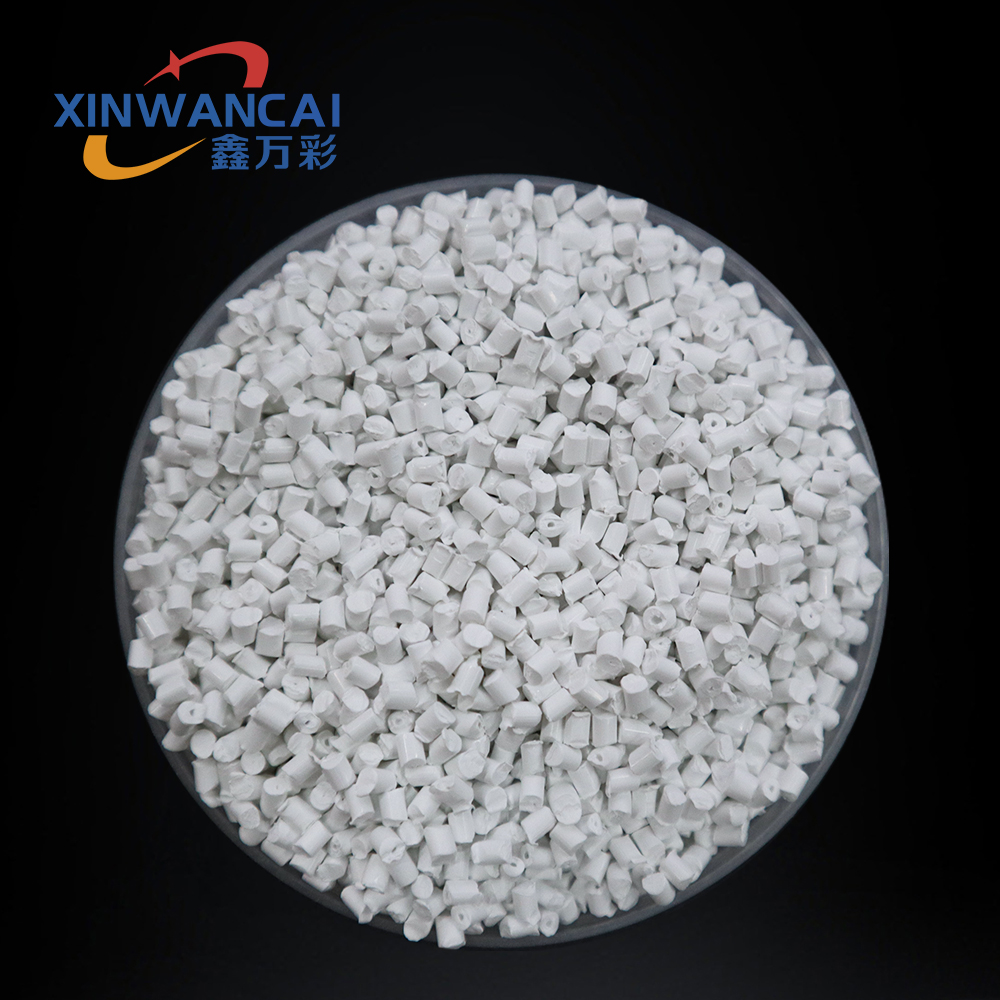
The dispersion test tells you how evenly pigment, filler, or additives are spread through a polymer. It is not a quick check, and most production floors would rather skip it. But when particles clump, you get weak spots, poor surface finish, and unstable processing. That is why sharper buyers keep asking for it despite the extra turnaround time.
Some suppliers avoid the test for practical reasons. The equipment is expensive, the procedure needs a trained operator, and the result is not always a simple pass or fail. Yet there is often a less pleasant side: the test can expose worn screws, poor mixing, or cheap raw materials that a supplier would rather not talk about. Avoidance becomes a quiet way to protect the status quo.
When nobody checks dispersion, the risk lands on the molder or the final customer. Parts can look acceptable and still hide streaks, weak zones, or inconsistent shrinkage that appear weeks later. Before signing a long-term supply deal, ask for actual dispersion data. A supplier who can hand over a clean result is usually one who runs a controlled process, not one hoping the problem stays invisible.
Carrier Resin Purity: The Quiet Haze Driver
Most haze problems don't start with an obvious formulation error. They start with a carrier resin that looks clean on paper but carries low-level impurities — catalyst residues, oligomers, oxidized fragments — that quietly seed light scatter. Because these contaminants often fall below the threshold of standard quality checks, they slip into production unnoticed. The result is a finished part that passes spec on day one, then drifts toward turbidity after weeks of UV, heat, or humidity exposure. Purity here isn't about lab-grade perfection; it's about removing the specific molecular noise that turns clear into cloudy.
What makes carrier resin purity such a stubborn issue is its invisibility in bulk. Two resins with identical melt flow and density can behave completely differently in optical applications, depending on trace metals, residual monomers, or gel particles. These impurities don't just scatter light directly — they also act as nucleation sites for haze-forming degradation products. A resin that tests "optically neutral" in the pellets may still generate internal fog once injection molded, because shear and thermal history unlock trapped volatiles. That's why experienced processors look beyond the certificate of analysis and run their own rapid haze screening under accelerated aging.
Controlling purity is less about chasing a single villain and more about managing a cascade. High-purity carrier resins preserve clarity by minimizing secondary reactions, reducing additive blooming, and keeping the refractive index uniform across the part. The payoff is rarely dramatic in a lab setting — only a few percentage points of transmission difference on day one. But after 500 hours of weathering, the gap widens. Haze builds slower, stays more diffuse, and avoids the patchy, milky zones that ruin perceived quality. In short, carrier resin purity doesn't shout; it quietly decides whether your clarity survives the real world.
Melt Flow Stability: A Telltale Sign of Production Control
When a line starts drifting out of spec, most operators chase temperatures or screw speeds first, yet the melt flow index often shifts before any visible defect shows up on the part. A stable melt flow rate means the polymer is arriving at the die with the same viscosity batch after batch, and that consistency is what keeps fill times, pack pressures, and final dimensions locked in. Watch the trend chart closely: a gradual upward creep in MFI usually points to molecular degradation from overheating or excessive shear, while a downward drift often signals contamination, moisture pickup, or a change in the feedstock blend.
Production control relies on catching these swings early, because once the melt flow moves outside the accepted window, every downstream adjustment becomes a guessing game. A good practice is to log the melt flow reading alongside barrel zone temperatures and back pressure at least once per shift, not just during startup. When the numbers stay flat within a narrow band, the process is essentially self-validating; when they start to wander, that is the telltale sign that something upstream has changed, whether it is a worn screw, a dirty screen pack, or a resin lot that does not match the previous shipment.
The key is to treat melt flow stability as a leading indicator rather than a final quality check. By the time a part fails a dimensional audit, the process has been unstable for hours. Comparing melt flow data across runs lets a plant spot gradual tool wear or heater degradation before it causes scrap, and it gives the materials team a clear signal when a supplier's lot-to-lot variation is too wide for the current process window. In short, a stable melt flow is not just a number on a report; it is the quiet confirmation that the entire production chain is still under control.
Custom Formulation: When Standard Grades Fall Short
Standard grades are built around broad market needs, but actual projects tend to expose the gaps that a generic data sheet won't flag. A custom formulation starts with a specific performance miss—heat deflection that's a few degrees shy, a melt flow that fights the tooling, or a chemical resistance requirement that off-the-shelf options simply ignore. Instead of forcing a near-fit, the formulation is adjusted at the ingredient level, balancing base resins, fillers, and additives to close that gap without layering on unnecessary cost.
The value often lives in properties that standard grades don't even list. Things like how a material behaves under high shear during fast filling, the way it holds color after prolonged outdoor exposure, or its tendency to plate out on molds during long runs can be tuned through iterative compounding. It's less about starting from scratch and more about reshaping an existing backbone to match the exact processing conditions and end-use environment.
Where this really pays off is on the production floor. A well-designed custom grade can lower scrap rates, shorten cycle times, or let a multi-part assembly be consolidated into a single molded piece. It won't fix every problem, but when a standard grade falls short, a custom formulation turns a series of small compromises into a practical, repeatable answer.
Pilot Runs: The Reality Check Before Full-Scale Orders
A spec sheet can promise tight tolerances, and a pre-production sample may look flawless, but neither survives contact with an actual assembly line. That’s where a pilot run earns its keep. By producing a limited batch under real shop-floor conditions—same operators, same fixtures, same material lots—you expose the small mismatches that only appear when pieces move in sequence. One common discovery: a part fits perfectly in isolation yet binds when installed against its mating component because thermal drift during machining shifted a hole location by half a millimeter. Catching that now costs a day of rework. Catching it after a 50,000-unit order costs a season.
A useful pilot goes beyond “does it work?” and asks “can we repeat it without babysitting?” Watch how the first ten pieces compare to pieces 201 through 210. Tool wear, fixture loosening, and operator fatigue show up as gradual drift, not sudden failure. During one pilot run for a medical device housing, a supplier noticed that insert torque values crept upward after three hours because a pneumatic driver’s pressure regulator was drifting. The fix was a $40 replacement part and a checkpoint added to the line. Without the run, that would have surfaced as intermittent cracking in the field—a far messier recall risk.
To get that value, agree on the pilot’s pass criteria before the first piece is cut. Define what “good” means for dimensional checks, cycle time, yield, and documentation. Then treat the pilot as a mini production release, not an R&D exercise. If a deviation appears, don’t rush to sign it off with a note that “engineering will fix it later.” Either fix the process during the pilot or remove the item from the purchase order. Full-scale orders reward the teams that use pilot runs as a true gate, not a formality.
FAQ
Focus on optical performance under realistic cast film conditions, not just data sheets. Ask for haze, transmittance, gloss, and gel count from trial runs on similar multilayer lines, and compare how the masterbatch behaves at different let-down ratios.
Lower molecular weight carrier resins with narrow polydispersity can reduce surface roughness, while ultra-fine functional additives that disperse without agglomeration prevent light scattering. Even minor incompatibility between the carrier and the skin layer resin will show up as a loss of gloss or a milky appearance.
High-clarity grades typically use a PP homopolymer or random copolymer carrier with a melt flow index close to the film resin, often in the 8 to 12 g/10 min range for cast film. Matching the crystallinity and refractive index of the skin layer avoids internal haze and improves additive distribution.
Ask if the production line uses twin-screw compounding with high shear mixing, what melt filtration mesh rating is used, and whether they can share particle size distribution data. Also ask how they handle heat-sensitive additives, because thermal degradation during compounding creates gels that ruin clarity.
In high-clarity CPP film, tiny variations in additive loading or carrier viscosity shift the refractive index and surface smoothness. If one batch performs differently, the film's haze, gloss, and seal appearance can change, forcing converters to adjust process temperatures and wasting production time.
Run a small-scale trial on the actual production line or a pilot cast film line using the intended skin layer resin. Measure haze, total transmittance, 60-degree gloss, and count visible gels per square meter at two or three let-down ratios, then compare against a control film without masterbatch.
Contamination such as metal fines, degraded polymer specks, or carbonized particles creates visible defects and light scattering centers. Reputable manufacturers use clean-room packaging, fine melt filtration, and raw material screening to keep gel counts low enough for optical-grade films.
Watch out for suppliers who cannot provide particle size distribution or gel count data, who send samples with visible specks or uneven color, or who show large batch-to-batch melt flow variations. Also be cautious if they refuse to disclose additive chemistry but cannot explain how their product achieves clarity on a physical level.
Conclusion
High-clarity CPP film rarely fails because of the base polypropylene alone. More often, haze and surface defects trace back to how the masterbatch behaves under real processing conditions. A supplier worth shortlisting will openly share dispersion data—how pigment or additive agglomerates break down at typical let-down ratios—rather than steer the conversation toward resin specs. Carrier resin purity gets overlooked, but low-molecular-weight tails or inconsistent comonomer content in the carrier can nucleate micro-crystallinity and scatter light. Likewise, melt flow stability across batches matters more than a single MFI number; drift here shows weak production control and leads to die-lip build-up or uneven gauge.
When standard grades cannot hit the clarity target, a manufacturer that can adjust wax selection, carrier rheology, or additive loading without simply adding more optical brightener is the safer partner. And no datasheet replaces a pilot run. Running the candidate masterbatch on your own cast line—at full speed, with the same chill-roll temperature and thickness—reveals whether clarity holds up, whether plate-out appears, and whether the supplier's claims survive contact with your process. Choose the manufacturer that treats these tests as routine, not as a favor.
Contact Us
Contact Person: JACK
Email: [email protected]
Tel/WhatsApp: 86 18650130917
Website: https://www.xinwancai.com/