

Core Filling Snack Production Line Supplier: Advanced Solutions for Efficient Manufacturing
2026-07-26
In the fast-paced world of snack production, crafting perfectly filled treats at scale is a relentless challenge—one that demands not just machinery, but a true manufacturing ally. Enter MINGDE, a supplier whose advanced core-filling lines are quietly reshaping efficiency benchmarks. Yet, what really sets their solutions apart from the standard offerings? The answer lies beyond the specs, in a philosophy that turns constraints into competitive edge.
Revolutionizing Snack Manufacturing with Core Filling Expertise
The shift toward center-filled snacks isn’t just a trend—it’s a fundamental rethinking of texture, flavor release, and shelf stability. By embedding sauces, creams, or pastes directly into baked or extruded matrices, manufacturers unlock multisensory experiences that conventional coating and enrobing methods can’t match. The real leap, though, lies in precision: controlling fill viscosity and deposition timing so accurately that even heat-sensitive fruit purées or dairy-based ganaches remain intact through high-speed forming and baking. This isn’t about simply adding a filling—it’s about engineering the entire product architecture around it.
What separates breakthrough production from mediocre attempts is the integration of co-extrusion know-how with ingredient science. Formulators manipulate water activity gradients between the shell and the core to prevent moisture migration, while simultaneously adjusting dough rheology so the outer layer expands uniformly without rupturing. Cold-pump systems keep temperature-sensitive fillings at peak freshness until the split second they meet the dough. The result? Snacks with a crisp outer shell and a distinctly creamy, oozy, or chewy center—delivered at scale without flavor degradation or textural compromise.
The market impact is undeniable: brands that master core filling quickly differentiate in crowded aisles, offering clean-label fruit cores, high-protein nut butter fills, or spicy umami bursts that invite repeat purchases. Beyond the novelty, there’s a strategic advantage—these techniques often require lower fat or sugar in the outer layer, supporting better nutritional profiles without sacrificing indulgence. For manufacturers willing to invest in the interplay of equipment, ingredients, and process control, core filling becomes more than a capability; it’s a platform for continuous innovation that responds directly to evolving consumer cravings.
Custom-Engineered Lines for Unmatched Product Consistency
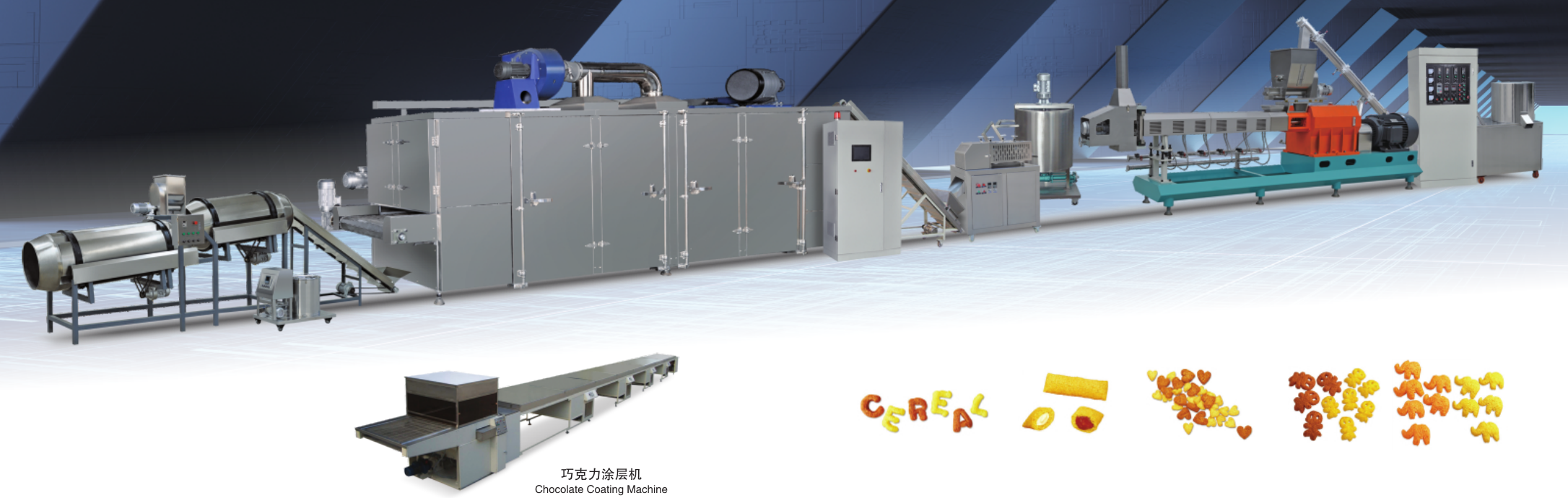
Every production line we build is a bespoke solution, designed from the ground up to match your unique product specifications. By tailoring every sensor, actuator, and control module, we eliminate the one-size-fits-all compromises that lead to variability. The result is a line that doesn’t just meet tolerances—it redefines them, delivering outputs so consistent that quality checks become a formality.
Conventional setups rely on off-the-shelf components that drift over time, requiring constant recalibration. Our approach hard-codes precision into the line itself, using proprietary synchronous drives and real-time feedback loops that self-correct micro-deviations before they compound. This isn’t about adding more inspection gates; it’s about engineering out the possibility of inconsistency from the first weld to the final packaging.
Clients often tell us the difference is visible within hours of commissioning. One food manufacturer saw seal-pressure variance drop by 40% without operator intervention—not because they hired better staff, but because the line’s architecture absorbed the variables humans shouldn’t have to manage. That’s the benchmark we aim for: a line so dialed-in that consistency becomes your baseline, not your aspiration.
Maximizing Throughput Without Compromising Quality
Scaling output while keeping standards high often feels like chasing two conflicting goals. The secret lies in designing systems that treat quality checks as a built-in rhythm rather than a separate gate. When teams embed verification steps directly into the flow—using real-time dashboards, automated smoke tests, and peer micro-reviews—they catch drift early without pausing momentum. This fusion of speed and scrutiny turns what could be a bottleneck into a steady pulse that actually reinforces pace.
Another underused lever is deliberate constraint. By capping work-in-progress and ruthlessly decluttering the pipeline, you force clarity on what truly matters. Teams naturally self-organize around highest-impact tasks, and the reduced cognitive load cuts down on rework. It's counterintuitive: putting on the brakes in the short term creates smoother, faster delivery over the long haul, all while keeping defects low.
Finally, invest in the human factors that automation can't touch. A culture that treats retrospective insights as precious fuel, where developers feel safe raising concerns early, will outpace any tooling setup. Pairing junior and senior contributors for high-stakes work not only spreads knowledge but also builds a living quality net that adapts faster than any script.
Sustainable Practices in High-Speed Core Filling Production
Modern high-speed core filling lines are rethinking material sourcing and waste cycles to lower their environmental impact without sacrificing throughput. Instead of defaulting to virgin polymers, many facilities now integrate regrind and post-industrial scrap directly into the filling stream, using real-time viscosity monitoring to adjust feed rates and maintain consistent core quality. This closed-loop mindset extends to chemical management too: automated dosing systems precisely meter catalysts and blowing agents, virtually eliminating overspray and reducing volatile organic compound emissions to trace levels. The shift isn't just about compliance—it's become a competitive advantage as lightweighting trends push material efficiency to the fore.
Water and energy footprints are being cut through smarter process architecture. By capturing heat from the mixing and curing stages, plants preheat incoming raw materials, slashing the natural gas demand of traditional drying steps. Cooling water is treated and recirculated in closed circuits, often with side-stream filtration that removes microplastics and cross-linked residues, preventing them from entering municipal systems. Motion-optimized robotics play a role too: linear filling heads now mirror the exact contours of conveyor-carried molds, minimizing the squeeze-out that would otherwise become scrap, and servo-driven pumps reclaim kinetic energy during deceleration phases, feeding it back into the grid or battery banks.
Transparency is the final piece of the puzzle. Real-time dashboards track carbon dioxide equivalents per thousand cores filled, pulling data from smart meters, resin lot certificates, and logistics APIs. This granular visibility allows line operators to make live adjustments—like choosing a low-carbon resin grade for a particular customer order—while automatically generating product-level environmental declarations. The result is a production cell that doesn't just hit cycle times but does so in a way that aligns with science-based targets, turning high-speed filling from a purely efficiency-driven operation into a genuinely sustainable manufacturing strategy.
From Concept to Full-Scale Output: A Partner in Innovation
Every breakthrough begins as a rough idea, often scribbled on a napkin or debated in a meeting room. We step in at this early stage, not as outsiders but as true collaborators who listen, question, and refine alongside your team. Our approach is rooted in understanding the core purpose of your vision—what problem it solves, who it serves, and how it can stand apart. Rather than rushing to execution, we help deconstruct and stress-test the concept, exploring angles you might not have considered. This shared exploration ensures that when we move forward, it’s with a blueprint that aligns ambition with practicality.
Moving from prototype to full-scale output requires more than technical skill; it demands a rhythm of iteration and trust. We embed ourselves in your workflows, adapting processes to fit your reality—not the other way around. Through small-batch testing, rapid feedback loops, and quiet recalibrations, we turn fragile models into robust solutions. The goal isn’t just to scale but to scale gracefully, preserving the integrity of the original concept while reinforcing it for real-world demands. You’ll notice fewer surprises and more quiet confidence as each milestone is met, because every decision is made with the end user and long-term viability in mind.
Innovation, in our experience, rarely follows a straight line. It zigzags through unforeseen obstacles, market shifts, and moments of doubt. That’s why our partnership extends beyond project timelines; we become a steady presence that helps navigate uncertainty without losing sight of the destination. Whether it’s advising on material choices, refining supply chains, or anticipating user fatigue, we bring a multidisciplinary lens that keeps your output fresh and resilient. The result isn’t simply a delivered product but a sustained capability—your team emerges stronger, equipped with insights and processes that outlast any single launch.
Smart Automation That Adapts to Your Unique Recipes
Your recipes have a life of their own—unique twists, secret ingredients, and that special something that makes them yours. Our smart automation system doesn't force your creations into rigid molds. Instead, it learns from each step you take, adjusting to your style effortlessly.
Imagine a kitchen assistant that understands your rhythm. It remembers that you prefer a slow simmer over rapid boiling, or that you like to tweak spice levels on the fly. By analyzing your patterns, the system offers subtle suggestions and precise control, making every cooking session feel like a collaboration rather than a chore.
As you experiment with new dishes or refine old favorites, the automation evolves. It fine-tunes timings, adjusts temperatures, and even reminds you of that pinch of salt you almost forgot. No two cooks are alike, and your recipes deserve technology that celebrates their individuality.
FAQ
It’s designed for a wide variety, including filled cookies, biscuits, wafers, and extruded snacks with cream, jam, or chocolate centers.
Advanced servo-driven depositors and real-time weight feedback systems automatically adjust portion sizes, keeping deviations under ±1% even at top speeds.
Many parts feature toolless quick-release mechanisms, and the open-frame design gives operators clear access to all critical zones without needing to dismantle major sections.
Yes, the modular filling stations can be swapped or flushed in under 15 minutes, and recipe settings are saved digitally for instant changeovers.
Beyond remote guidance, they typically dispatch engineers for on-site commissioning and run training sessions so your team hits target output within the first week.
Absolutely. The line uses standard communication protocols, and the supplier often works with third-party wrappers and cartoners to create a seamless handshake.
Conclusion
In the competitive landscape of snack production, a core filling line supplier that truly understands the nuances of confectionery and baked goods makes all the difference. Instead of offering a one-size-fits-all machine, the focus here is on engineering systems built around your product’s identity—whether it’s a delicate wafer needing precise cream injection or a hearty biscuit with a dense filling. This bespoke approach, where every roller, depositor, and cooling tunnel is calibrated to match specific viscosity and texture requirements, ensures unmatched consistency from the very first piece to the millionth. It’s not merely about speed; it’s about harmonizing throughput with integrity. You can push production volumes into the thousands per hour without seeing a single crack, smear, or underweight scrap, because the entire line is designed to treat quality as an inherent parameter, not an afterthought.
Beyond mechanical precision, the real evolution lies in how these lines handle variability. Smart automation bridges the gap between a chef’s original recipe and industrial repetition by letting operators fine-tune parameters like temperature curves and deposition pressure on the fly, and by learning from historical data to anticipate adjustments. Sustainability isn’t tacked on as a checklist item—it’s woven into the system’s DNA through energy-recovery modules, minimal material waste during start-up and cleaning, and the capacity to process alternative, eco-friendly ingredients that often behave unpredictably. Perhaps most critically, the supplier acts as a long-term innovation partner, walking with you from the earliest sketch of a new filled snack concept all the way to commissioning a full-scale, high-speed line. It’s this combination of deep technical knowledge and a collaborative spirit that transforms a mere equipment purchase into a strategic production advantage.
Contact Us
Contact Person: LILY SUN
Email: [email protected]
Tel/WhatsApp: 0086-13969103791
Website: https://www.snackfoodmachinery.com/