

Commercial Heat Pump System Factory: Inside the Production of Efficient Heating and Cooling Solutions
2026-10-31
Walking into a commercial heat pump system factory, you don’t just see machines—you feel the quiet ambition of modern climate control taking shape. At the heart of this operation is Tongbaote, a name that has become shorthand for reliable, energy-smart heating and cooling. But how does a factory turn raw components into the systems that keep offices, hotels, and hospitals comfortable year-round? This post takes you behind the scenes, from coil winding to final testing, revealing the engineering choices and quality checks that separate a good heat pump from a great one. If you’ve ever wondered what makes some HVAC solutions last decades while others struggle past warranty, the answers start here.
How Commercial Heat Pump Factories Balance Output and Precision
Meeting production targets without sacrificing accuracy requires careful choreography on the factory floor. Many commercial heat pump manufacturers rely on modular assembly lines where key components—compressors, heat exchangers, and control boards—are pre-tested before final integration. This allows workers to maintain a steady pace while catching dimensional or electrical deviations early, rather than discovering them at the end of the line.
Precision is reinforced through in-process checks that do not slow down throughput. For example, automated brazing stations paired with real-time temperature monitoring ensure consistent joint quality at high cycle rates. Simultaneously, batch-based calibration of expansion valves and sensors keeps tolerances tight, so each unit performs predictably even as volumes ramp up. The result is a rhythm where quality gates are embedded into the flow instead of tacked on as bottlenecks.
Workforce organization also plays a role. Skilled technicians rotate between high-precision tasks and faster sub-assembly steps, preventing fatigue while retaining a critical eye on refinement. Some plants use visual management boards to balance line speed with rework rates, adjusting staffing or tooling in real time. This practical blend of pacing, inspection, and human judgment lets factories ship in volume while holding the tolerances that commercial clients expect.
Inside the Testing Bays Where Heat Pumps Earn Their Ratings
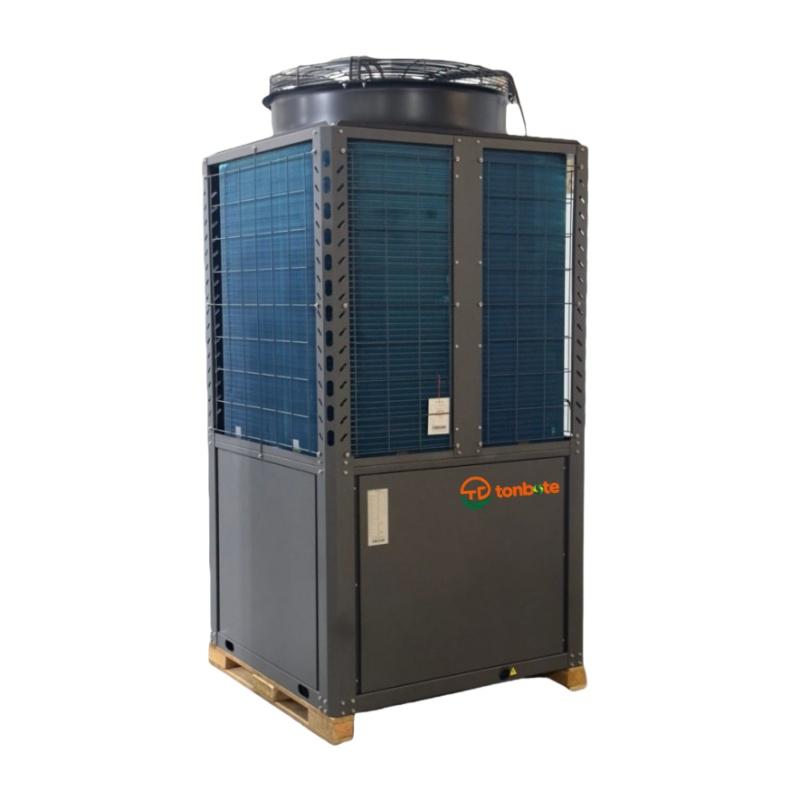
The concrete floor inside the bay slopes just enough to catch condensate, and the air smells faintly of refrigerant and warm electronics. A heat pump sits on a steel platform, wired to dozens of sensors that sample suction and discharge pressures every few seconds. Technicians call it the hot room for a reason: the walls hold a steady 95°F while the unit pulls heat from a space chilled to 17°F on the other side of a sealed partition. The setup mirrors a brutal winter morning, but here every variable is locked down so the only thing changing is the machine's own behaviour.
To earn a published rating, the unit has to run through a long script of steady-state and cycling tests. Frost is allowed to build on the outdoor coil, then a defrost cycle kicks in, and the sensors keep logging capacity and power draw through every transition. The data feeds into a calculation that spits out a coefficient of performance under very specific conditions, not a promise of what your house will see, but a repeatable number that lets one model be compared fairly against another.
The strange part is how quiet it gets between runs. The compressors shut off, the fans spin down, and a technician walks in with a clipboard to check refrigerant charge and wipe frost off the viewing window. Then the next unit rolls in on a cart, gets bolted to the same lines, and the process starts again, same temperatures, same airflow, same tolerances. That sameness is the whole point: the rating means nothing if the test bay doesn't do the same thing twice.
The Role of Compressor Matching in Production Efficiency
Compressor matching often gets overlooked until a plant hits a bottleneck or sees energy costs creep up without explanation. On the surface, it sounds like a straightforward engineering task—pick a compressor that meets the pressure and flow requirements. But in practice, the way a compressor integrates with the rest of the system determines whether you're running lean or bleeding money. A mismatched unit might still deliver the right pressure, yet cycle too frequently, overheat, or force downstream equipment to compensate in ways that accelerate wear.
The real efficiency gains come from looking at the whole operating envelope rather than a single design point. Production rarely runs at a constant load, so a compressor matched only to peak demand will spend most of its time working inefficiently at partial load. This shows up as higher specific power consumption, more frequent maintenance, and sometimes pressure fluctuations that affect product quality. Matching well means understanding not just the average load, but the peaks, turndown expectations, and how air or gas demand shifts across shifts or seasons.
What separates a good match from a poor one is often the willingness to question assumptions. For example, choosing a slightly smaller compressor with a properly sized storage tank can dramatically reduce cycling losses compared to oversizing the compressor itself. Similarly, matching the control strategy to the load profile—such as using variable speed drives or sequencing multiple units—can cut energy use by double digits. When compressor matching is treated as a dynamic system design problem rather than a catalog selection, production efficiency stops being a target and starts being a natural outcome.
Why Custom Coil Configurations Are Changing Commercial Projects
For years, commercial HVAC design leaned on cataloged coil selections that forced buildings to adapt to the equipment rather than the other way around. Custom coil configurations flip that logic. By adjusting row depth, fin density, and circuiting to match a project's exact airflow, fluid temperatures, and physical envelope, engineers can now squeeze more capacity out of a smaller footprint without sacrificing serviceability. This matters most in retrofits and high-density urban projects where every inch of mechanical space is contested.
Beyond fit, custom configurations are changing how projects approach energy performance. A coil tuned to a building's actual load profile reduces pump and fan energy because you are not compensating for mismatched pressure drops or oversized surface area. It also opens the door to non-standard materials and coatings that extend coil life in corrosive or coastal environments—something standard catalogs rarely address. The result is a quieter, longer-lasting system that aligns with tighter energy codes and owner expectations for lifecycle cost rather than first cost alone.
From Sheet Metal to Refrigerant Charge: A Walk Through the Line
A coil of galvanized steel sits at the head of the line, waiting to be unrolled. Within minutes the flat stock is notched, pierced, and sheared into panels that still smell of cutting oil. Press brakes fold them into cabinet shells and door frames, while robotic welders tack the corners with a brief blue flash. It’s easy to forget that every refrigerator or heat pump begins as raw metal that has to be handled, formed, and checked against a fixture before it can hold a charge.
Once the cabinet takes shape, it moves through a wash and powder coat booth, then into an oven where the finish hardens. At the next station, workers fit the evaporator and condenser coils, route copper lines, and lock the compressor onto its mounts. Brazing torches hiss as joints are heated and filled with alloy; a quick nitrogen purge keeps oxidation from forming inside the tubes.
After the sealed system is complete, the unit rolls into a vacuum chamber or is connected to a pump that pulls moisture and air out of the lines. A measured amount of refrigerant is injected, and the service valves are capped. The final stations run a pressure decay test and a short electrical check before the machine is wrapped, boxed, and sent to the loading dock.
What Buyers Should Expect From Factory-Level Quality Audits
Factory-level quality audits rarely follow the script that buyer teams imagine. Instead of a simple pass-or-fail walkthrough, expect a granular review of process control, from incoming material checks to final packing. The most telling moments often happen away from the conference room—watching how operators handle nonconforming parts, whether calibration labels on gauges are current, and how quickly line supervisors react to a drifting measurement. These observations reveal whether documented procedures are actually lived or just filed.
A meaningful audit also pressure-tests traceability. Ask to pull the records for a shipped batch, then follow that thread backward through production logs, inspection reports, and raw material certificates. If the factory can reconstruct the history of a single carton within minutes, that signals disciplined record-keeping. Delays, missing sign-offs, or mismatched lot numbers are early warnings that quality problems may be hidden in paperwork gaps rather than caught on the line.
Finally, expect the auditor to spend significant time on corrective action from previous findings. Many factories can recite their nonconformance list but struggle to show concrete changes made afterward. Ask for evidence: revised work instructions, retrained personnel, updated fixture drawings, or new poka-yoke devices installed since the last audit. The ability to demonstrate closed-loop improvement—not just detection—is the clearest sign that a factory treats quality as an ongoing practice rather than a periodic event.
FAQ
The production line covers air-source, water-source, and geothermal heat pumps, each engineered for different building sizes and climate conditions.
Every heat pump undergoes performance testing in climate-controlled chambers, and components like compressors and heat exchangers are sourced from certified suppliers to meet strict efficiency benchmarks.
From incoming material inspection to final refrigerant leak checks, the factory uses automated testing stations and manual audits at key assembly points to catch defects early.
Yes, the engineering team works with clients to adjust capacity, controls, and casing options, allowing the heat pumps to fit retrofit or new-build requirements without compromising performance.
The systems use reversing valves and variable-speed compressors to switch modes efficiently, maintaining stable indoor temperatures while reducing energy waste across large spaces.
The production floor uses low-GWP refrigerants and reclaims heat from testing processes, while all units are designed to meet or exceed regional energy codes.
Buyers receive technical documentation, remote diagnostics support, and access to a spare parts network, with optional on-site commissioning for complex installations.
They are used in office towers, hotels, schools, hospitals, and manufacturing plants, wherever consistent temperature control and long-term operating cost savings are priorities.
Conclusion
Walking through a commercial heat pump system factory, the first thing that strikes you is the deliberate tension between volume and precision. Automated sheet metal lines feed panels into brake presses that hold tolerances within a fraction of a millimeter, while nearby, technicians hand-fit reversing valves and sight glasses into refrigeration circuits. The balancing act shows up again in compressor matching: each unit's scroll or screw compressor is paired not just by nominal tonnage, but by its actual performance curve against the specific coil geometry and airflow resistance of the finished cabinet. A slight mismatch can drop part-load efficiency by several points, so production engineers run daily calibration checks on brazing stations and refrigerant charging scales. This is not an assembly line that prizes speed over judgment; it is a sequence of checkpoints where factory-floor data feeds back into the next build.
The testing bays are where the quiet work gets verified. Every commercial heat pump that leaves the floor spends time in a psychrometric chamber, subjected to conditions that mimic a Chicago winter morning or a Houston afternoon, while sensors log capacity, power draw, and defrost cycle behavior. Custom coil configurations have become a larger part of the mix, with buyers specifying slab, V-shaped, or microchannel coils to fit retrofit constraints or noise ordinances. A factory-level quality audit should look beyond the final sign-off: ask to see the refrigerant recovery log, the brazing purge records, and how rejected coils are traced back to the tube expander. When a factory invests in that kind of traceability, the result is not just a heat pump that meets its nameplate rating, but one that behaves predictably for the building owner ten years down the line.
Contact Us
Contact Person: Wanshu Chen
Email: [email protected]
Tel/WhatsApp: +86-13662871206
Website: https://www.mbcee.com