

Column Still Manufacturer: Crafting High-Efficiency Distillation Equipment for Modern Spirits
2026-06-01
In the world of modern spirits, efficiency and precision aren’t just ideals—they’re the backbone of every exceptional bottle. At the heart of this revolution lies the column still, a marvel of engineering that has redefined distillation. Yet, not all column stills are created equal. Enter DYE, a manufacturer that doesn’t just build equipment but crafts high-efficiency distillation systems tailored for today’s dynamic spirits industry. From smooth vodka to complex whiskey, the right still can mean the difference between a good spirit and a great one. So, what sets DYE apart in a sea of manufacturers? Let’s dive into the art and science behind their column stills, and discover how they’re shaping the future of distillation.
The Art of Precision in Column Still Design
Crafting a column still demands more than just assembling plates and pipes; it's a deliberate interplay of fluid dynamics and thermodynamics. Every internal component, from the weir height to the downcomer clearance, is calibrated to guide vapor and liquid into an intimate, choreographed contact. This precision isn't about chasing theoretical ideals alone—it's about coaxing out the most delicate esters while discarding harsh congeners, letting the spirit's character shine without distraction.
A well-tuned column behaves like a musical instrument, where even a fractional shift in reflux ratio can transform the final distillate's profile. The spacing between trays, the diameter of perforations, and the angle of bubble caps are not arbitrary choices; they're the result of countless iterations, often informed by decades of hands-on observation. It's a craft where science bends to sensory intuition, and where a distiller's ear for the subtle hiss of vapor can be as telling as any thermometer.
Beyond efficiency, precision in column design nurtures consistency without sacrificing personality. By controlling the separation with near-surgical accuracy, a distiller can replicate a signature flavor profile batch after batch, yet still leave room for the raw material's seasonal whispers to come through. This balance—between engineering exactness and the living soul of fermentation—is what elevates a column still from mere machinery to a storyteller in copper and stainless steel.
How Modern Engineering Shapes Spirit Quality
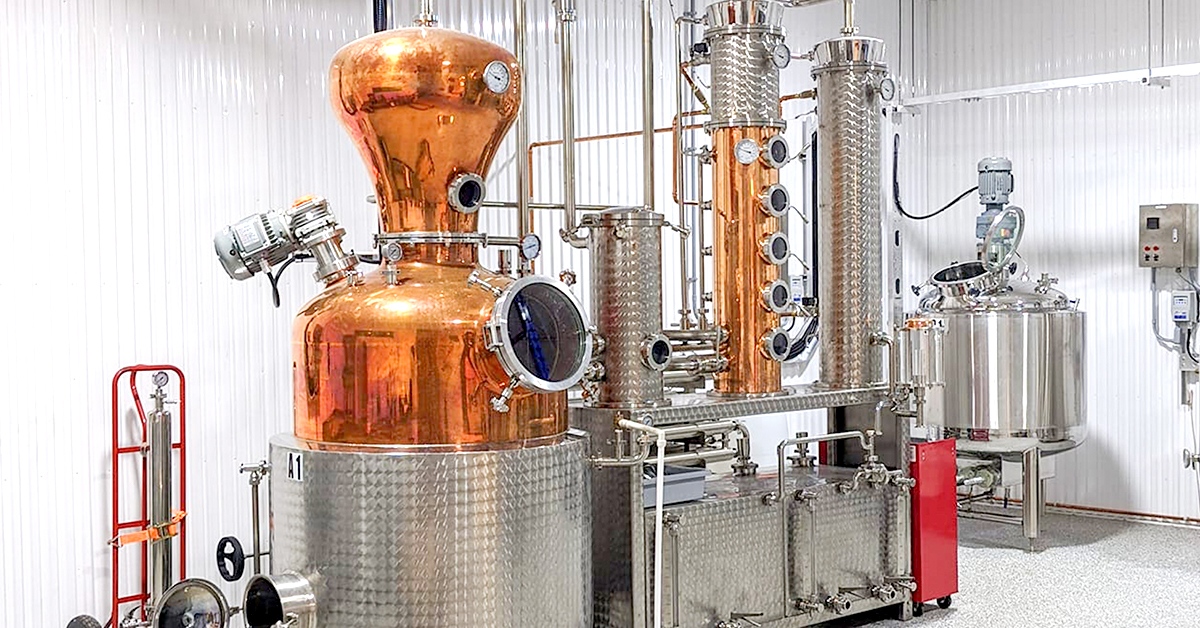
Precision and intention now define the production of spirits in ways once unimaginable. Modern engineering allows distillers to control every variable—temperature, pressure, fermentation kinetics—with microscopic accuracy. This isn't about stripping away character; it's about amplifying it. When a still can hold a temperature within a tenth of a degree, the volatile compounds that carry floral or fruity notes are captured at their peak. It's the difference between a rough sketch and a high-definition photograph of flavor.
Materials science has also entered the equation. Copper stills, long valued for their sulfur-scrubbing properties, are now engineered with specific surface textures and catalytic alloys that enhance reactions between compounds. Stainless steel isn't just for neutrality anymore; electropolished surfaces are designed to minimize unwanted adhesion while promoting a clean, crisp mouthfeel. Even aging vessels benefit from engineered porosity, using computer-modeled stave geometry to optimize oxidation and extraction without overpowering the base spirit.
Beyond hardware, software-driven systems bring consistency without sacrificing artistry. Feedback loops monitor fermentation in real time, adjusting nutrient additions or cooling rates automatically. This doesn’t replace the distiller’s palate; it gives them a broader canvas. By removing the guesswork from repeatability, engineers free distillers to explore bolder yeast strains or unusual grain bills, knowing the safety net of data will catch any missteps. The result is a spirit that feels simultaneously deliberate and daring.
From Raw Materials to Refined Performance
Every component's journey begins with carefully sourced raw materials, selected not just for their inherent properties but for how they'll respond under pressure, heat, and time. We inspect each batch at the molecular level, looking beyond standard certifications to understand the subtle characteristics that could affect final output. This early-stage scrutiny creates a baseline that shapes every downstream decision, ensuring consistency before the first machine even starts.
The transformation from rough stock to high-precision parts relies on a blend of art and engineering often missed in standard process sheets. Our technicians adjust feeds, speeds, and tool paths not just by the handbook but by reading the material's real-time feedback — the sound of a cut, the curl of a chip, the surface finish emerging under coolant. These micro-corrections, accumulated over thousands of cycles, turn a good part into one that performs flawlessly in the field, year after year.
Refinement doesn't end at final inspection. We stress-test randomly selected units against simulated operational extremes, comparing their behavior to the profiles we predicted from raw material data. The loop closes when those insights feed back into earlier stages, tweaking supplier specs or curing times. It's a continuous cycle where each finished product teaches us how to start the next one a little better.
Tailored Solutions for Every Distillery Profile
Each distillery has its own character, shaped by tradition, ingredients, and equipment. Our approach begins with understanding your unique profile—whether you're crafting small-batch gin or aging single malt in oak casks. We don’t believe in one-size-fits-all setups. Instead, we configure systems that match your process, from mashing temperatures to condensation rates, ensuring every batch reflects your vision.
Over the years, we’ve worked with artisan producers and established brands alike, learning that flexibility matters most. That’s why our solutions adapt as your needs evolve—scaling capacity without sacrificing the nuances that define your spirits. It’s about giving you the tools to experiment confidently and maintain consistency, run after run.
Beyond machinery, we consider the sensory details: how heat distribution affects flavor, or how a slight adjustment in cooling can bring out botanical notes. We’re not here to impose a method; we’re here to listen, then deliver a setup that feels like it was built just for you. Because in distilling, the details aren’t just details. They’re what make your product unmistakable.
Energy Efficiency Without Compromising Purity
Achieving high purity in industrial separation processes has long been synonymous with steep energy demands. Whether it's distillation columns running around the clock or membrane systems pushed to their pressure limits, operators have often accepted a trade-off: pure output at the cost of excessive power consumption. But that mindset is shifting as new materials and smarter engineering challenge the old assumption that you can’t have both efficiency and quality.
Recent advances in low-energy separation techniques are rewriting the rules. Hybrid systems that combine adsorption with cryogenic distillation, for example, can slash electricity use by targeting specific impurities before they even hit the main unit. Similarly, newer membrane chemistries allow operations at lower pressures while still hitting purity targets that once required energy-guzzling multistage setups. These aren’t just lab experiments—they’re being retrofitted into existing plants, trimming consumption without risk of off-spec product.
The practical payoff goes beyond lower utility bills. When you use less energy to hit the same purity specs, you shrink your carbon footprint and buffer against volatile energy prices. More importantly, the process becomes inherently more stable, since many of these innovations reduce thermal cycling and mechanical stress on equipment. It’s a quiet but substantial shift: designing for purity from the start while letting energy efficiency become a natural byproduct rather than an afterthought.
Behind the Craft: Innovations in Distillation Technology
The quiet hum of a modern distillery belies centuries of trial and error. Today’s artisans combine precision engineering with time-honored intuition, utilizing vacuum distillation to capture delicate floral notes that would otherwise vanish under high heat. By lowering the boiling point, they extract essential oils and spirits with an unprecedented purity, preserving the soul of the raw ingredient while shedding its harsher edges. It’s a dance between pressure, temperature, and patience—a process that respects tradition yet leaps boldly forward.
Beyond the still itself, monitoring technology has reshaped the craft. Sensors track real-time chemical signatures, giving distillers a live fingerprint of their batch. Rather than relying solely on taste and smell, they now have a second, data-driven nose. This symbiosis of master distiller and machine does not replace artistry; it amplifies it. A subtle shift in acidity or an unexpected ester profile can be caught early, allowing for adjustments that once took years of experience to master. The result is consistency without losing the unpredictable charm of small-batch production.
Material science, too, plays its part. Copper remains irreplaceable, but its inner surfaces are now engineered at a microscopic level to catalyze reactions more efficiently. New hybrid stills marrying copper with stainless steel control sulfite removal while retaining desired congeners. Meanwhile, sustainable practices—like closed-loop cooling and energy recovery—are no longer afterthoughts but integral to design, proving that innovation can honor both the earth and the spirit in the bottle.
FAQ
A column still—sometimes called a continuous still—uses a vertical column packed with plates or packing material to separate alcohol from the mash in one continuous run. That's the big difference from a pot still, which processes in batches and needs multiple distillations to reach a high proof. With a column still, you’re getting a more efficient separation, meaning you can produce a much purer, higher-proof spirit without stopping and starting.
Mainly for efficiency and control. A column still can run non-stop, so you’re not constantly cleaning and refilling. You can really dial in the purity level by adjusting the reflux, which is key for spirits like vodka or gin that need a clean foundation. Plus, it just takes far less energy and time per liter, making it a no-brainer for scaling up production without sacrificing consistency.
We never do cookie-cutter designs. Every build starts with a deep dive into what you’re trying to make—whether it’s a robust whisky or a delicate eau-de-vie—and how much of it. Then we spec the column diameter, the number of plates, the type of packing, even the copper-to-steel ratio, all to match your flavor targets and space constraints. If you want to experiment, we can build in extra plate ports or modular sections too.
That’s a common myth. You can absolutely get rich, complex flavors out of a column still—rum and American whiskey are often made this way. It all comes down to how you run it: lower the reflux and use fewer plates, and you’ll carry over more congeners and esters. Many of our clients play with that balance to get a signature character while still benefiting from the speed and consistency of a column setup.
Routine cleaning is the big one, especially if you’re working with molasses or grain-heavy mashes that can gunk up the plates. We recommend a regular CIP (clean-in-place) cycle and an occasional deep clean with acid to passivate the copper. Check your gaskets and sensors every few months, and give the insulation a once-over. A yearly professional inspection is a good idea to catch any wear before it becomes a production hiccup.
We bake efficiency right into the design. Our stills use high-grade insulation that cuts heat loss by a huge margin, and we tend to include a heat-recovery system that preheats the incoming wash with the hot distillate or spent stillage. For clients chasing that extra green edge, we’ve got options for integrating solar thermal preheating or biofuel-ready burners. The result is a lot less steam demand and a smaller carbon footprint per batch.
Conclusion
The creation of high-efficiency column stills begins with a meticulous attention to design precision, where every tray and downcomer is engineered to optimize vapor-liquid contact and separation clarity. Modern engineering leverages computational fluid dynamics and premium materials like high-grade stainless steel and copper to enhance heat transfer, corrosion resistance, and longevity. This foundation directly shapes spirit quality, as the controlled reflux and temperature gradients allow distillers to capture the most desirable congeners while stripping unwanted compounds. From raw material selection through advanced fabrication and surface finishing, the entire build process ensures that each still delivers consistent, repeatable performance, turning simple mashes into refined, character-rich spirits.
Beyond standardized models, true expertise shines in crafting tailored solutions that match the distinct profile of every distillery—whether it’s a small-batch craft operation or a large-scale continuous plant. Energy efficiency is woven into these designs through integrated heat recovery, vacuum distillation options, and optimized column diameters, cutting operational costs without ever compromising purity. Continuous innovation in automation, modular construction, and process controls further empowers distillers to fine-tune their production with real-time precision. This blend of custom engineering and forward-thinking technology keeps the craft of column still manufacturing at the forefront of the modern spirits industry.
Contact Us
Contact Person: Ada Xu
Email: [email protected]
Tel/WhatsApp: 0577-86806088
Website: https://www.dayuwz.com/