

CI Flexo Printing Machinery Manufacturer Strategies for Consistent High-Quality Prints
2026-11-16
In flexo printing, the difference between a sellable job and wasted substrate often comes down to how consistently a press holds registration, ink density, and impression. Yet many converters still blame material variation when the real bottleneck is machine control. This blog looks at the engineering and operational strategies behind repeatable print quality—from precision tension zones to temperature-stable doctor chambers—and how HuiPeng builds presses around those principles rather than treating them as afterthoughts.
Making Ink Viscosity a Machine Setting, Not an Operator Guess
For years, press operators have relied on a simple but flawed ritual: dip a stick into the ink, watch how it drips, and adjust by feel. That approach leaves too much room for variation from one shift to the next. Moving viscosity into a machine setting means the press itself reads the flow behavior in real time and adjusts the ink supply before a single sheet drifts off target. The result is not more automation for its own sake, but a consistent starting point that no longer depends on who happens to be standing at the console.
The shift starts with placing a viscometer or a similar inline sensor directly in the ink path. Rather than asking the operator to interpret a visual cue, the system measures resistance to flow under known conditions and compares it against a stored tolerance band. When the reading falls outside that band, a small solvent valve opens or a temperature jacket adjusts to bring the material back in line. Operators still oversee the run, but their attention moves from guessing at viscosity to watching for unusual patterns that might signal a worn blade or a contaminated batch.
One practical way to make this change stick is to treat viscosity like any other press parameter, such as registration or dryer temperature. Save the target range with each job recipe, let the machine log the actual values during the run, and review the data only when a defect appears. Over time, this builds a record that reveals how much variation was previously hidden in the "it looks about right" method. Once the setting becomes part of the job setup, the conversation changes from "who mixed the ink?" to "what did the sensor record?"
Why Registration Accuracy Starts with CI Drum Thermal Control
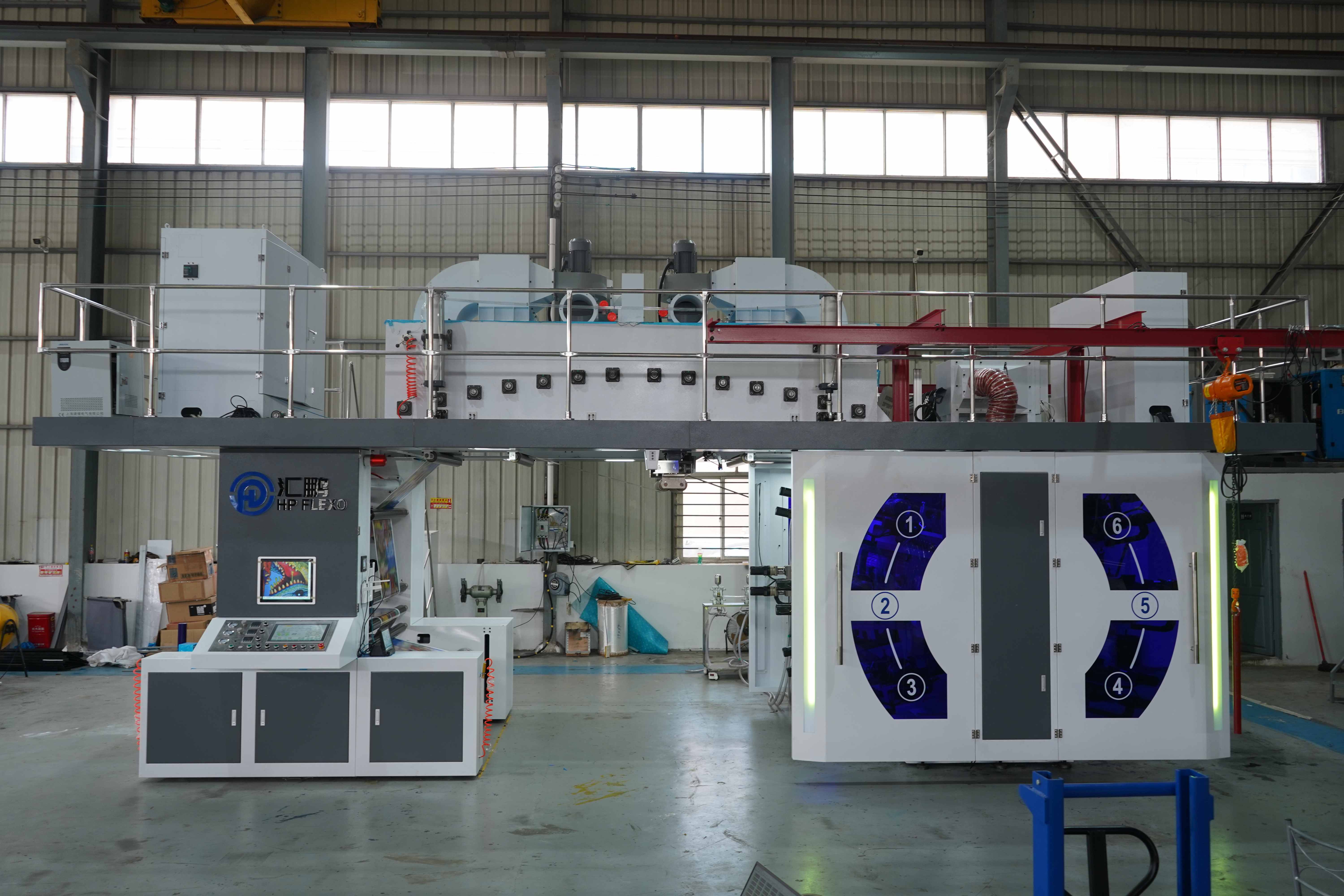
A CI drum is not a thermally neutral mandrel. It absorbs heat from bearings, inks, and surrounding air, then releases it unevenly across the surface. Because the web wraps around most of the cylinder, any dimensional change, even a few microns of growth, becomes a registration error that repeats on every station. When one end runs warmer than the other, the effect often hides behind apparent tension or plate problems, so operators tune the wrong variable.
Effective control targets surface uniformity rather than a single setpoint. A coolant circuit with uneven flow, or a draft from an open panel, can leave a cool band that behaves like a slightly smaller diameter. That local difference is small in absolute terms but large enough to matter in tight print work. Stabilizing the drum temperature first makes later registration adjustments less frequent and less extreme.
Speed ramps reveal how well the drum is actually managed. Friction in the bearings rises with speed, and the heat path into the drum body lags behind line acceleration. Without active thermal compensation, the machine can take several hundred meters to settle into a new equilibrium, generating waste that is easy to blame on tension controls. Bringing the drum into a controlled thermal band before acceleration keeps the process closer to the actual mechanical root of misregister.
Engineering Quick-Change Systems That Don't Compromise Plate Repeatability
Most quick-change hardware earns its reputation by cutting setup time, but the real test is whether the plate lands in the same place every shift. The usual failure point is a tapered pin or bushing that gradually wallows out under side load. A better approach pairs a hardened conical locator with a separate hydraulic or mechanical clamp so the locating surface never doubles as the clamping surface. That division of labor keeps the mating faces from fretting, which is what quietly destroys repeatability over weeks of tool swaps.
Thermal growth gets overlooked more often than it should. Steel plates and aluminum subplates move at different rates, so a lockup that feels tight at morning startup can shift a few tenths by midday. One practical fix is to reference the plate from a central bore and let the outer corners float, or to use ball-lock receivers with a slight axial spring preload that absorbs expansion without giving up radial stiffness. It also helps to keep the clamping force consistent; operators tend to over-tighten manual bolts, which bends the plate just enough to spoil an otherwise solid alignment.
Repeatability shouldn't depend on a single magic component. It comes from keeping the locating features shallow, clean, and lightly loaded while the clamps do the heavy work. In shops that make the switch, plate changes often drop from twenty minutes to under three without a measurable change in first-part accuracy. The best quick-change systems disappear into the background because they repeat well enough that you stop checking them.
The Payback of Automatic Viscosity and pH Control on Long Runs
For many coating and laminating lines, viscosity and pH drift is a slow bleed that operators learn to live with. A shift change misses a titrated check, a water top-up arrives late, and by mid-run the transfer characteristics have moved enough to force downgraded footage. Payback from automation doesn't announce itself in one dramatic event; it accumulates in the footage you no longer scrap, the splices you no longer stop for, and the color adjustments you no longer chase. On long runs, small repeated losses become the largest line item.
Automatic control closes the gap between what the formulation specifies and what the bath actually holds. pH probes tied to metering pumps keep the alkaline or acidic balance within a band far tighter than a clipboard schedule, while viscosity controllers trim with water or solvent as the bath evaporates. The return shows up as steadier coat weight, fewer doctor blade streaks, and a smoother transition through roll changes. Run after run, the payback is less about saving chemical and more about avoiding the hidden cost of off-spec product made while a manual correction was still about to happen.
There's also a labor dividend that gets overlooked. When operators stop babysitting a process, they can focus on inspection, splice preparation, and troubleshooting upstream. A long-run operation that automates viscosity and pH typically sees fewer alarms, less diluted or thickened material left at shutdown, and easier startups on the next job because the system can hold a known baseline. That consistency quietly reduces setup waste and gives scheduling more breathing room, which is where the actual financial return often hides.
Using High-Speed Cameras to Catch Defects Before Customers Do
On a beverage line pushing 2,400 cans a minute, a dented rim or a half-sealed lid can pass through in less than a blink. High-speed cameras placed right after the seamer catch those failures while the line is still moving. They do not slow production or rely on a single snapshot; instead they record thousands of frames a second and pair each frame with a microsecond-short flash to freeze motion. Software then compares every can against a tight set of dimensional and surface rules, flagging anything from a shallow crease to a misprinted date code before it reaches a case packer.
What makes this different from ordinary machine vision is timing. A torn film, a bouncing bottle cap, or a droplet falling into a seal can appear for only a few milliseconds. Standard cameras miss those events because they expose too long or trigger too late. High-speed systems are set up around the physics of the line: field of view, lens distance, and frame rate are tuned so the camera captures the exact moment a defect is visible, not just the frames before and after. The result is fewer false rejects and fewer escapes, which means less rework on the floor and far fewer complaints from the receiving dock.
The real payoff shows up when the footage gets used beyond sorting bad units. A filler that drips every few hundred cycles, a labeler that snags on one edge, or a cutter that dulls and starts tearing film all leave a visual pattern. Reviewing high-speed recordings lets maintenance teams walk straight to the failing component instead of guessing. Over time, that turns the camera from a simple gatekeeper into a diagnostic tool, reducing downtime and keeping defects from ever reaching a customer.
Substrate Variability Is the Real Enemy of Uniform Color
Uniform color rarely goes wrong in the can; it goes wrong on the surface. Panels from the same lot can take the same wet film and still dry a shade apart because sanding depth, porosity, temperature, and residual moisture alter how the coating flashes and how the pigments settle. A warm edge may tighten the film quickly, while a cooler patch stays open longer, and that small difference is enough to break the eye's sense of a single color.
Adding more color or burying the problem under a heavier coat usually makes the mismatch worse. One section of the substrate may absorb more binder, another may be sealed and slick, so the same formula builds at different film thicknesses and reflects light differently. The fix is not found in a stronger tint but in giving the coating a consistent foundation: an even surface profile, no lingering contamination, and a stable temperature before the first pass.
Once the substrate is allowed to vary, no amount of mixing-side correction will hold under changing light. The color will shift because the physical base beneath it is shifting. Treating substrate variation as a color issue from the start is what separates a finish that matches once from one that matches across the room.
FAQ
It usually comes back to how evenly the plate meets the substrate. A rigid drum, a narrow gap between the plate cylinder and anilox, and careful attention to tape compressibility all reduce the variation that shows up as heavy edges or weak centers.
Drift is often mechanical play and heat working together. Presses that use preloaded bearings, short web paths, and temperature-stable side frames remove most of the movement before automatic registration has to correct it.
The anilox-to-plate and plate-to-substrate impression settings need to stay parallel under load. A stiff base, minimal gear backlash, and a consistent doctor blade angle keep ink delivery uniform, so the vignette does not turn grainy halfway through the run.
It affects everything from ink viscosity to roller dimensions. Closed-loop temperature control on the drum and ink trays prevents the subtle shifts that make a color look fine in the morning but out of balance by midday.
Automated viscosity controls with simple correction ranges help, but the real difference is giving operators clear visual feedback and reducing the number of manual adjustments they have to remember. Fewer hand tweaks usually means fewer overcorrections.
Regular checks on doctor blade wear, bearing preload, and impression settings catch drift before it appears in the print. Cleaning the anilox on a fixed schedule matters more than deep-cleaning it rarely, because plugged cells change density before anyone notices.
At the moment of setting impression. A light, repeatable kiss impression avoids over-inking and dot gain, and operators who are trained to read the print rather than just the screen tend to catch small shifts earlier.
Quick-change sleeves, stored job recipes, and pre-registration settings let the next job start closer to sellable color. Smart designs also position wash-up systems so the ink path clears quickly without contaminating the next color.
Conclusion
Leading CI flexo press builders are moving consistency away from operator habit and into the machine itself. Ink viscosity, for instance, is treated as a controlled parameter rather than a judgment call made with a cup and stopwatch. Closed-loop systems meter solvent or water based on real-time readings, while automatic pH adjustment keeps water-based inks stable through long runs, reducing drift that would otherwise shift density and dot gain. The same thinking applies to registration. Instead of allowing the central impression drum to expand and contract with ambient temperature, manufacturers build thermal management into the drum so that sleeve position and repeat length stay predictable from startup to shutdown. Quick-change plate and anilox systems get attention too, but not at the expense of repeatability; the goal is to make a job change fast while preserving the mechanical and thermal equilibrium that keeps every plate in the same place on the next run.
Beyond the press, tighter print quality comes from managing what used to be accepted as normal variation. Substrate changes—thickness, surface energy, moisture content—are treated as process inputs rather than excuses for color drift. Machines are increasingly paired with high-speed camera inspection that reads the printed web continuously, catching streaks, voids, and registration errors before the roll reaches the customer. On long runs, the payback from automatic viscosity and pH control shows up as fewer interruptions and less ink waste, but the larger benefit is consistency across shifts. A press that detects a defect early and ties that data back to ink, substrate, or temperature adjustments gives operators a clear path to correct the cause instead of chasing symptoms. That is the difference between building a press that prints well on a demonstration and one that holds the same result on a third shift with different operators and a different roll of film.
Contact Us
Contact Person: Isaias
Email: [email protected]
Tel/WhatsApp: 86-13868693129
Website: https://www.hpflexo.com/