

China Galvanized Tangent Tower Solutions for Reliable Power Transmission Infrastructure
2026-10-06
When it comes to building a power transmission network that stands the test of time, every component matters—especially the towers that carry high-voltage lines across vast distances. Galvanized tangent towers are the unsung workhorses of these systems, offering the strength and corrosion resistance needed to keep electricity flowing reliably. At Anbang, we understand that the backbone of any grid is only as strong as its most vulnerable point. That's why our China-manufactured tangent tower solutions are engineered to meet rigorous international standards, combining precision fabrication with hot-dip galvanization for decades of maintenance-free service. In this blog, we'll explore the key role tangent towers play in transmission infrastructure, what sets Anbang's designs apart, and how choosing the right partner can prevent costly outages down the line.
Why Hot-Dip Galvanizing Alone Isn't Enough for Coastal and Industrial Corrosion Zones
Hot-dip galvanizing offers a sacrificial zinc layer that works well in mild environments, but coastal and industrial zones introduce aggressive electrolytes that dramatically shorten its effective service life. Salt spray and airborne chlorides create a continuously conductive, oxygen-rich moisture film on the surface, which drives rapid zinc dissolution. In these settings, the zinc coating does not simply weather slowly; it is consumed at rates that can exceed 5 µm per year, far faster than the 1 µm or less typical of rural inland areas.
Even a thick galvanized layer of 85 µm—the standard for structural steel—can be exhausted within two decades near a shoreline or heavy industrial plant. That timeline shrinks further when sulfur dioxide and nitrogen oxides from combustion processes mix with humidity, forming acidic condensates that attack the zinc and its patina. Rather than forming a stable, adherent zinc carbonate film, the surface develops porous, flaking corrosion products that offer little protection to the underlying steel.
A more durable strategy combines hot-dip galvanizing with a high-performance barrier coating, such as an epoxy primer and polyurethane topcoat, in a duplex system. This approach physically isolates the zinc from the aggressive environment while preserving its sacrificial capability at scratches or holidays. Regular inspection and touch-up remain essential, because once the zinc is locally depleted in a marine or chemical exposure zone, corrosion undercuts the adjacent coating and spreads rapidly along the steel surface.
Designing Tangent Towers for Uneven Terrain Without Adding Unnecessary Weight
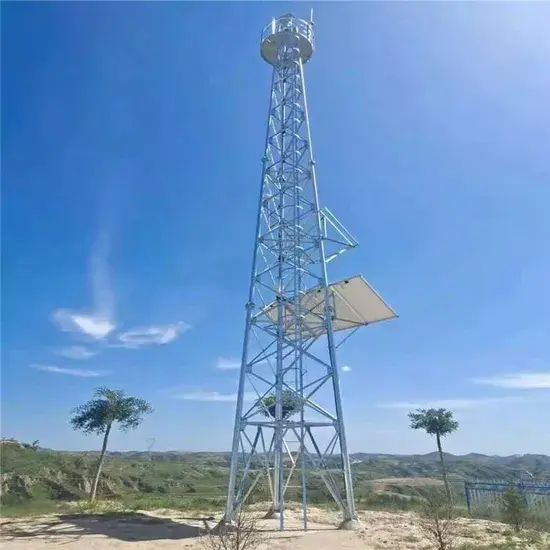
Uneven ground forces tangent towers to carry loads that a flat-site design rarely sees. One leg may sit on a ridge while the opposite leg drops into a swale, creating unequal reactions and small but persistent torsional moments. If the design starts from a standard symmetric tower and then simply increases member sizes to cover those extra stresses, weight climbs quickly. A better approach is to absorb the irregularity through geometry first: lengthen or shorten individual legs, adjust base plate elevations, and shift the waist of the tower so the load path stays direct.
Leg extension kits are often cheaper in steel than thickening every chord and diagonal. By allowing each leg to have a different extension length, the tower can be leveled without forcing the main body to grow heavier. Similarly, moving the cross-arm attachment points up or down a fraction can reduce the secondary bending caused by unequal conductor tensions on sloping spans. The key is to keep the primary members working in axial compression or tension rather than bending, because bending drives up section modulus and weight far faster than a small change in geometry.
Detailed site surveys help here. When you know the exact rock profile and slope breaks under each leg, you can design a foundation that works with the terrain instead of fighting it. A short stub column under one leg and a longer one under another may eliminate the need for heavier tower plates entirely. In many cases, local reinforcement of only the most stressed panel—rather than a uniform upgrade across the whole tower—brings the structure back within allowable limits for a fraction of the weight. That kind of targeted adjustment keeps tangent towers light without compromising reliability.
How Load Calculations Prevent Line Swing Failures in Extreme Wind and Ice Events
When wind pushes against an ice-laden conductor, the resulting lateral force is rarely uniform along the span. Ice changes the conductor cross-section, turning a smooth cylinder into an irregular shape that can catch gusts and create aerodynamic lift or drag. Load calculations break these forces into static and dynamic components: the dead weight of ice, the pressure of sustained wind, and the short-duration impulses from gusts that excite swinging or galloping. Without that breakdown, a line that looks stable on a calm day can swing far enough to slap an adjacent phase or ground wire once the wind picks up.
Engineers compare these calculated loads against the mechanical limits of insulators, crossarms, and conductor tension. If the predicted blowout angle under heavy ice and wind exceeds the allowed phase spacing, the design must change: wider crossarms, heavier dampers, different tensioning, or a shorter ruling span. The calculations also reveal whether fatigue from repeated small swings will weaken clamps or strands long before a single extreme gust causes a visible failure. That is why a purely static clearance check is not enough; the numbers need to account for how long the line keeps moving after each gust and how much energy the structure can absorb.
Field measurements after severe storms often show that the best-performing lines are not the ones with the highest safety factors on paper, but the ones where load assumptions matched the local exposure. A high-elevation pass with wet snow behaves differently from an open plain with freezing rain, and a line designed for one will swing differently in the other. Recalculating loads with actual ice thickness, wind direction, and temperature data lets utilities refine their standards so that a rare combination of glaze ice and crosswind does not turn a routine swing into a flashover or a broken insulator string.
The Manufacturing Steps That Cut On-Site Assembly Time and Rework
The real savings happen long before the first truck arrives at the job site. By shifting critical connections, alignments, and finishing work into a controlled factory environment, manufacturers eliminate the guesswork that typically slows down field crews. Prefabricated subassemblies with pre-drilled holes, welded brackets, and pre-applied sealants mean on-site labor focuses on positioning and fastening rather than measuring, cutting, or correcting mistakes made in unpredictable weather or tight spaces.
One often-overlooked step is dry-fitting entire modules on the factory floor, including all mechanical and electrical rough-ins. This catches interferences between ductwork, conduit, and structural members before they become expensive field conflicts. Tolerances are tightened to the millimeter, and each connection point is checked against a master digital model. When parts arrive labeled, bundled by zone, and accompanied by simple pictorial instructions, even less experienced crews can assemble them quickly without second-guessing.
Finally, quality gates at the end of each manufacturing station—such as torque checks on fasteners, pressure tests on piping, and dimensional scans on finished panels—prevent defective components from ever leaving the plant. This proactive approach turns rework from a reactive on-site scramble into a rare exception. The result is predictable assembly sequences, shorter crane times, and far fewer change orders tied to misaligned or missing parts.
Packing and Transport Methods That Keep Tower Sections Damage-Free to Remote Sites
Shipping tower sections to isolated locations demands far more than strapping steel to a flatbed. The real challenge starts at the yard, where each segment must be matched to a cradle system that accounts for diameter, wall thickness, and the uneven weight distribution caused by flanges and internal fixtures. Custom-cut timber or high-density foam saddles are often used, but the key is shaping the contact surfaces so the load rests on the reinforced zones rather than on vulnerable weld seams or access openings.
Once cradled, the sections are wrapped in breathable, tear-resistant covers that shed rain and road spray while preventing condensation from building inside the shell. On unpaved or mountainous routes, transport frames are fitted with independent suspension axles or hydraulic self-leveling trailers to keep the load from twisting. Mud flaps, stone guards, and spaced convoy speeds all play a role, but experienced drivers also monitor twist locks and lashing tension at every stop, since a shift of just a few millimeters can cause micro-fractures that go unnoticed until erection.
For the final leg, when roads disappear and only rough tracks remain, many teams switch to modular skid systems or low-ground-pressure trailers pulled by tracked vehicles. The tower sections stay on their cradles, but the skid shoes are widened and the pull angles are kept shallow to avoid point loading. Arrival at the remote site is only considered successful when each section is offloaded onto pre-leveled blocking, inspected with straightedges and feeler gauges, and confirmed free of dents, ovality, or coating damage—because fixing such issues in the middle of nowhere costs more than the entire transport budget.
Inspection and Maintenance Details That Lower Total Ownership Cost Over 40 Years
Over a 40-year span, the difference between a machine that barely survives and one that keeps running smoothly often comes down to small, consistent inspection habits. Checking fastener torque, electrical terminations, and lubrication points might seem trivial, but neglected corrosion or a loose connection can trigger cascading failures. A bearing that gets a few minutes of attention every quarter rarely turns into a seized shaft that requires a complete teardown and expensive replacement parts.
Good maintenance records act like a health journal for equipment. Tracking vibration levels, operating temperatures, and wear measurements lets owners spot a slow drift long before it becomes an emergency shutdown. That kind of visibility means repairs can be scheduled during planned downtime instead of paying overtime rates and rush shipping for parts. It also stretches the useful life of major components, delaying the capital expense of a full replacement by several years.
Parts selection matters more than many realize. Choosing certified or OEM-compatible components instead of the cheapest option often pays for itself through longer service intervals and fewer repeat fixes. Training in-house staff to recognize early warning signs—odd noises, minor leaks, slight temperature rises—turns routine walkarounds into a low-cost early detection system. None of this requires expensive software or a large team; it mostly requires discipline and a willingness to act on small problems before they become budget-breaking ones.
FAQ
These towers offer a strong balance of structural integrity and corrosion resistance. The hot-dip galvanizing process forms a metallurgical bond with the steel, making the coating highly resistant to flaking even under mechanical stress during installation or high wind loads. For utilities, that translates to fewer unplanned outages and a longer replacement cycle compared to painted or bare steel structures.
The zinc layer acts as a sacrificial anode. If the coating gets scratched, the surrounding zinc corrodes first, protecting the exposed steel from rust. In coastal areas with salt spray, a thicker zinc layer of around 85 to 100 microns is typically specified to handle the aggressive environment without needing frequent touch-ups.
Yes, many established factories have in-house testing labs and are certified to ISO 9001, and they routinely build to ASTM A123 for galvanizing and IEC 60826 for tower loading. Some also provide third-party inspection reports from SGS or BV before shipment, so buyers can verify compliance without visiting the plant.
Typically they need the voltage level, conductor type and diameter, number of circuits, basic wind speed, ice loading, terrain category, and the desired suspension insulator length. With those inputs, engineers can optimize the tower geometry such as body width, cross-arm length, and member sizes to minimize weight while keeping deflection within allowable limits.
The design is usually governed by a combination of wind and ice load cases specified by the local code. For typhoon-prone regions, the wind load factor is increased and thicker main leg angles or higher-strength steel like Q420 are used. For ice zones, the cross-arms are designed with extra slope to prevent ice accumulation and to shed snow quickly.
In normal rural or urban environments, the galvanized coating can last 30 to 50 years without major maintenance. Periodic visual inspections every 5 years are usually enough to check for bolt loosening or damage from vehicle impact. Only if the zinc layer is mechanically damaged during construction would you need to apply a zinc-rich touch-up paint.
Upfront, galvanized tangent towers may cost slightly more than painted steel, but the total life-cycle cost is lower because you avoid repainting every 10 to 15 years. Additionally, their optimized design with smaller member sizes can reduce foundation loads and transportation costs, which often offsets the initial coating expense.
Conclusion
China's galvanized tangent tower designs have moved well beyond a single protective coating. In coastal and industrial corridors where salt spray and chemical fallout eat through standard zinc layers, manufacturers now apply duplex systems—sealants or organic topcoats over the hot-dip galvanizing—along with thicker zinc specs and careful passivation. The same pragmatic mindset governs terrain adaptation. Instead of simply adding steel to handle uneven ground, engineers adjust leg extensions, base plate geometry, and bolt patterns so towers sit level on slopes without extra tonnage. Extreme wind and ice loading is treated as a dynamic problem: finite element models simulate conductor swing, galloping, and unbalanced tensions, letting designers refine member sizes and damping details before fabrication.
The factory process is equally tuned for remote builds. Pre-drilled, match-marked connections and trial-assembled subassemblies cut field fitting to a fraction of traditional methods, while jig-based welding keeps distortion low enough to avoid on-site rework. Packing uses custom saddles, edge protectors, and bolted bundle frames so galvanized surfaces survive rough roads to distant substations. For the owner, that foresight pays off over decades. Inspection-friendly details—like accessible splice points, numbered components, and corrosion monitoring tabs—support a maintenance schedule that swaps small parts rather than whole towers. The result is a tangent tower line with a realistic 40-year service life and a total cost of ownership that stays low well past the warranty period.
Contact Us
Contact Person: antor khan
Email: [email protected]
Tel/WhatsApp: 8613863903569
Website: https://www.qdabtower.com/