

China Electric Vehicle Charger Innovations Powering the Future of Mobility
2026-11-16
Every 10 seconds, a new electric vehicle hits the road in China—and the charging infrastructure is sprinting to keep up. But this isn't just about adding more plugs. From bidirectional charging to liquid-cooled cables, China's charger innovations are rewriting what mobility can be. At the center of this shift is BEILIN, a brand pushing boundaries that most drivers haven't even imagined yet.
Beyond the Plug – China's Quiet Overhaul of EV Charging
The most visible sign of China's EV push might be the rows of charging stalls at highway rest stops, but what's changing fastest is the layer nobody photographs. Grid operators in Zhejiang and Jiangsu are already testing chargers that respond to real-time load signals, temporarily dropping output by a few kilowatts during evening peaks without drivers noticing. Elsewhere, a growing number of public stations now accept one QR code across multiple operators, cutting the need to download yet another app.
Battery swapping is creeping back into the conversation too, especially for taxi fleets and logistics vans that cannot afford a 40-minute wait. Nio's swap stations get the headlines, but the quieter work is happening around standards for swappable packs, billing interoperability, and safety certification that would let smaller players join without building their own closed networks. Behind all of this sits a simple realization: the plug alone was never going to be enough.
Some residential compounds in Shanghai and Shenzhen have begun wiring chargers into building management systems, so a car can pause charging when the air conditioning load spikes and resume after midnight. That type of coordination rarely makes product launch events, yet it is precisely what turns a scattered collection of sockets into something closer to a responsive network. The overhaul is quiet, but it is rewriting how drivers, utilities, and automakers share the same electrons.
Liquid-Cooled Giants and the Race to 800 Volts
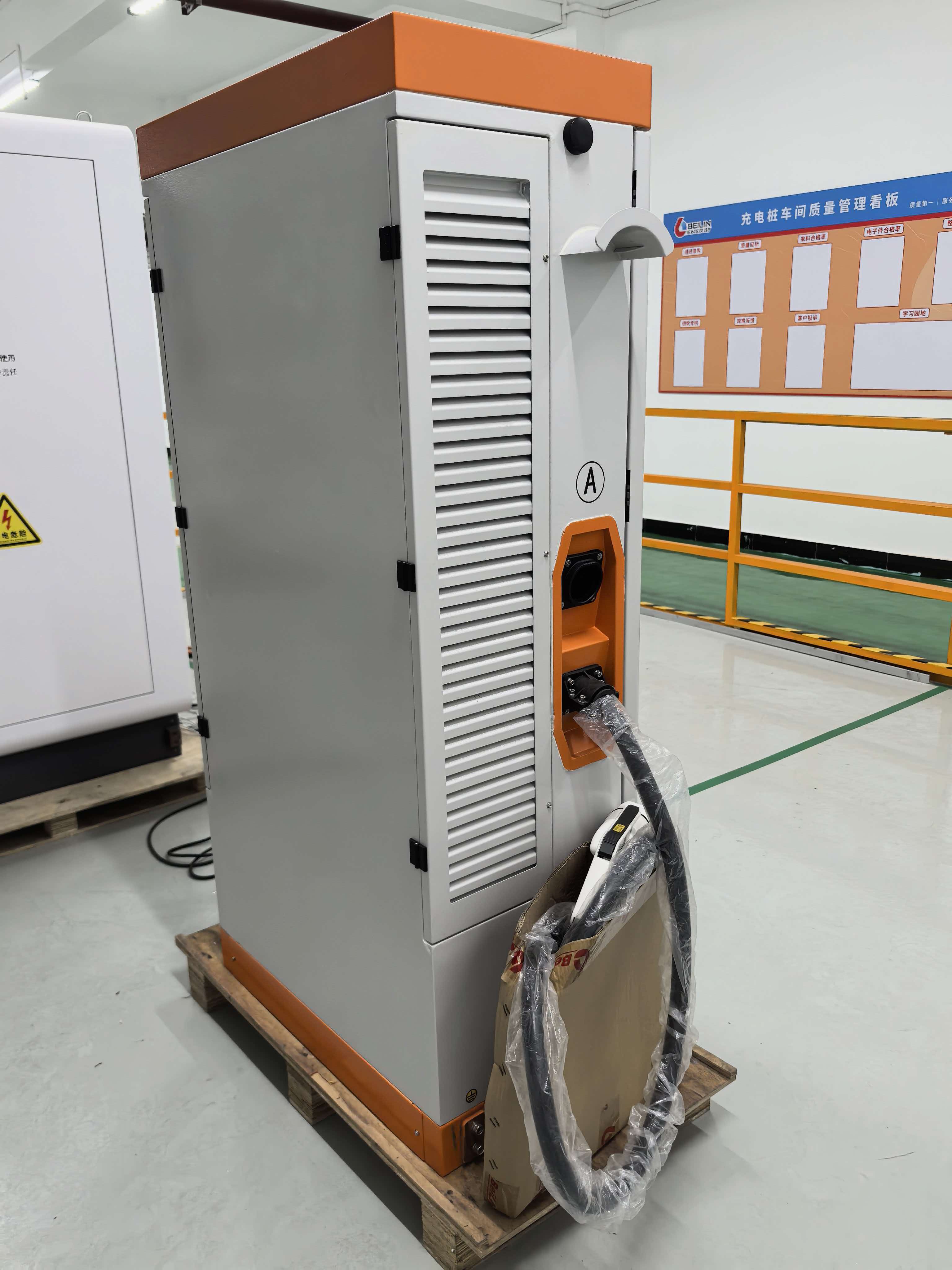
The jump to 800-volt architecture started as a niche experiment, but it has quickly become the battleground where premium electric vehicles fight for charging supremacy. Porsche fired the opening shot with the Taycan, pairing an 800V pack with a liquid-cooled charging system that could sustain 270 kW without the battery turning into a furnace. Hyundai and Kia followed with their E-GMP platform, while Lucid pushed the envelope further by blending a 900V system with ultra-compact drive units. The common thread isn't just voltage—it's the relentless focus on moving heat away from cells, connectors, and power electronics. At double the voltage, current halves for the same power output, which means thinner cables and less resistive heating. Yet the thermal load still concentrates in the battery pack, and that's where liquid cooling becomes the unsung hero.
A closer look at these liquid-cooled giants reveals how far thermal management has evolved beyond simple cold plates. Modern 800V packs use intricate networks of cooling channels woven between prismatic or cylindrical cells, often circulating a glycol-water mix at precisely controlled flow rates. The goal isn't just to prevent overheating—it's to keep every cell within a narrow temperature band so that charging curves stay aggressive for longer. In the Taycan, the cooling system also chills the onboard charger and the DC-DC converter, while the charging cable itself may be liquid-cooled at ultra-fast stations to handle 500 amps without melting insulation. This system-level integration explains why an 800V car can add 200 miles of range in under 20 minutes, while a 400V rival with similar battery chemistry often plateaus earlier. The engineering trade-off is complexity: more pumps, more seals, more failure points—but the payoff in repeatable fast-charging performance is hard to ignore.
The race isn't just about who reaches 800 volts first; it's about who can industrialize the cooling infrastructure that makes it practical. Tesla has famously stuck with 400V, instead pushing current to extreme levels and relying on robust thermal management of cells and Supercharger cables. Meanwhile, a wave of newcomers—from BYD to XPeng and even heavy-duty truck makers—are leapfrogging to 800V or beyond, betting that lower current will simplify everything from connectors to motor windings. Tier-one suppliers like Mahle, BorgWarner, and Modine are now offering modular liquid-cooling packages that let smaller automakers adopt high-voltage architectures without reinventing the thermal wheel. As charging speeds climb toward 350 kW and beyond, the distinction between a good EV and a great one increasingly comes down to how quietly and efficiently it sheds heat. The liquid-cooled giants understand this, and they're turning thermal management into a competitive weapon as potent as battery chemistry itself.
Vehicle-to-Grid Turns Every EV into a Roaming Power Plant
When you plug in an electric car, the usual assumption is that power flows one way—from the grid into the battery. Vehicle-to-grid technology flips that script. By adding a bidirectional charger, an EV can push stored energy back into the home or the wider electricity network. Suddenly, a car parked in the driveway isn't just waiting for its next trip; it's acting as a small, dispatchable power source. On a hot summer afternoon when air conditioners strain the grid, thousands of plugged-in EVs could collectively smooth out demand spikes, reducing the need for peaker plants.
The roaming aspect is what makes this concept particularly interesting. Unlike a stationary home battery, an EV moves around during the day. It charges at work, sits in a parking lot at the grocery store, and then comes home in the evening. Each of those locations becomes a potential point of grid interaction. If the owner agrees to leave the car plugged in and available, the utility can draw a few kilowatts when needed, and pay the driver for that service. Over time, these small transactions add up, offsetting charging costs or even turning the car into a modest income stream. The vehicle becomes less of a passive load and more of a flexible energy asset that travels with its owner.
Battery Swapping Stations That Outpace Your Coffee Break
Most drivers assume a quick top-up means plugging in and waiting around, but battery swapping flips that entirely. At a well-run station, the whole process—pull in, automated lift, fresh pack locked in, green light—takes less time than ordering a flat white at a busy café.
There's no cable fumbling, no app glitches, no hovering by the charger watching percentage points crawl. You stay in the car, or step out for a stretch, and the station does the heavy lifting underneath. By the time you'd normally be tapping your foot waiting for a latte, you're already merging back into traffic with a full battery.
That kind of speed changes how people think about electric driving. It turns refueling into a non-event, closer to a drive-through checkpoint than a scheduled stop. For delivery fleets, taxi drivers, or anyone who measures their day in minutes, it's the difference between losing a fare and gaining one.
Wireless Charging Lanes – The Road Itself Becomes the Charger
Imagine merging onto a highway and watching your battery charge climb while you simply drive. That is the premise behind wireless charging lanes: coils embedded just beneath the asphalt send energy through a magnetic field to a receiver pad mounted on the vehicle's underbody. There is no cable to plug in, no charging stop to schedule, and no range estimate to constantly recalculate. The road quietly tops up the battery in motion, turning ordinary travel time into charging time.
Under the surface, this is dynamic inductive charging at work. An alternating current flows through the road coils, creating an oscillating magnetic field that the vehicle pad picks up and converts back into direct current for the battery. The handshake between road and car happens continuously, with power levels adjusting for speed, alignment, and battery state. It is not perfect yet: efficiency drops when a car drifts outside the lane's sweet spot, and retrofitting existing highways is far more expensive than laying new pavement with charging built in. Still, the core physics has been proven in real-world pilots, from urban bus corridors to short highway test segments.
What makes this idea stick is that the road no longer just carries vehicles; it fuels them. Instead of every EV hauling around a massive battery for worst-case trips, cars could be designed with smaller, lighter packs and rely on charged roads for daily commutes or high-use freight routes. The most realistic near-term use is not every street but strategic stretches, such as airport loops, port terminals, and steep uphill lanes where energy demand spikes. If those segments work, the charger will have truly disappeared into the pavement.
From Megacity Grids to Rural Highways – Building a Charging Fabric
Dense urban cores already hum with charging stations tucked into parking garages and curbside spots, but the real test lies beyond the ring roads. Rural highways stretch for miles without a single plug, turning would-be electric road trips into exercises in range anxiety. Plugging these gaps isn't just about dropping hardware into empty lots—it means rethinking how energy reaches places where the grid was never designed for heavy, simultaneous draws. Think solar canopies shading rest stops, battery buffers that store cheap overnight power, and partnerships with the diners and farm stands that already anchor remote crossroads.
A true charging fabric weaves together high-power corridors for through traffic with slower, opportunistic charging where people actually linger: trailheads, county fairgrounds, the gravel lot behind the general store. Megacity drivers may top up in twenty minutes while grabbing coffee, but rural users often need to leave a vehicle plugged in for hours while they work a shift or hike a ridge. The hardware has to match that reality—weatherproof, vandal-resistant, and simple enough to operate with a card tap or phone swipe even where cell signal fades.
Building this layer means abandoning one-size-fits-all rollouts. A charging hub at an interstate exit in Kansas has different voltage needs, soil conditions, and traffic patterns than a sidewalk unit in Seoul. Local utilities, county engineers, and small business owners have to be in the room from day one, not handed a spec sheet after the fact. The goal isn't a uniform grid of identical stalls; it's a resilient mesh that flexes from the neon density of a megacity to the quiet dark of a two-lane highway, so no driver has to wonder if they'll make it home.
FAQ
Several firms now offer liquid-cooled superchargers that deliver up to 600 kilowatts, cutting a typical top-up to under ten minutes. Huawei and Xpeng are among those rolling out these high-power units along major highways, which makes long-distance travel far less stressful.
Battery swapping has moved beyond niche pilot projects. Nio operates over 2,000 swap stations where a drained pack is exchanged for a full one in about three minutes. This approach is especially attractive for taxi fleets and ride-hailing drivers who can't afford long charging breaks.
Yes, some cities are testing inductive charging pads embedded in parking spots and bus stops. While still limited, these systems let drivers simply park over a pad to start charging, removing cables entirely. It's particularly useful for autonomous vehicles and people with mobility challenges.
Smart charging platforms adjust power draw based on grid load and electricity prices. Many new chargers support vehicle-to-grid technology, allowing EVs to feed energy back during peak hours. Pilot projects in Beijing and Shanghai show this can stabilize local grids while earning drivers a small income.
China has largely unified around a national GB/T standard, which simplifies interoperability. More recently, the ChaoJi standard is being developed with global partners to support ultra-fast charging and backward compatibility, aiming to become a truly international protocol.
Yes, solar-powered charging stations with battery storage are popping up in less developed regions. These off-grid or micro-grid units use photovoltaic panels to charge an on-site battery, which then dispenses power to EVs even when the main grid is weak or unavailable.
They're using prefabricated, modular designs that can be assembled in hours rather than days. Some companies offer charger-in-a-box solutions that combine power electronics, cooling, and payment systems in a single container, drastically reducing civil works and permitting time.
The push toward autonomous ride-hailing and electric heavy trucks is driving development of robotic charging arms and megawatt-level chargers. For instance, automated connectors can locate and plug into a vehicle without human help, which is essential for driverless fleets operating around the clock.
Conclusion
China's EV charging story has moved far beyond simply installing more plugs. Liquid-cooled charging piles are pushing power delivery to 800-volt platforms, cutting a typical top-up to minutes rather than hours. In dense cities, battery swapping stations now complete a full exchange faster than it takes to order and drink a coffee, while experimental wireless charging lanes embedded in road surfaces let vehicles recharge as they drive. These are not pilot gimmicks; they are being woven into the daily rhythm of mobility, reshaping what drivers expect from an electric car.
At the same time, vehicle-to-grid technology is turning parked EVs into distributed power plants that feed energy back into the network during peak demand, helping stabilize megacity grids. The push extends beyond urban centers, with fast-charging corridors appearing along rural highways and in remote towns, linking communities that were previously overlooked. This quiet overhaul of hardware, software, and grid partnership is building a charging fabric that makes long-distance EV travel feel ordinary, while giving every car a role in the energy system. It is a distinctly Chinese approach: practical, rapid, and scaled to millions.
Contact Us
Contact Person: Jason
Email: [email protected]
Tel/WhatsApp: 8615876017548
Website: https://www.bei-lin.com/