

China DTH Drill Bit Supplier Guide to Choosing High-Performance Down-the-Hole Bits
2026-09-07
Finding a down-the-hole bit that can survive hard rock without draining your budget feels like a gamble. But if you're sourcing from China, the difference between a tool that lasts 500 meters and one that fails at 50 often comes down to details most buyers overlook. In this guide, we break down exactly what to look for in high-performance DTH bits—and why PULANKA has become the name experienced drillers trust.
What Separates a High-Performance DTH Bit from the Rest
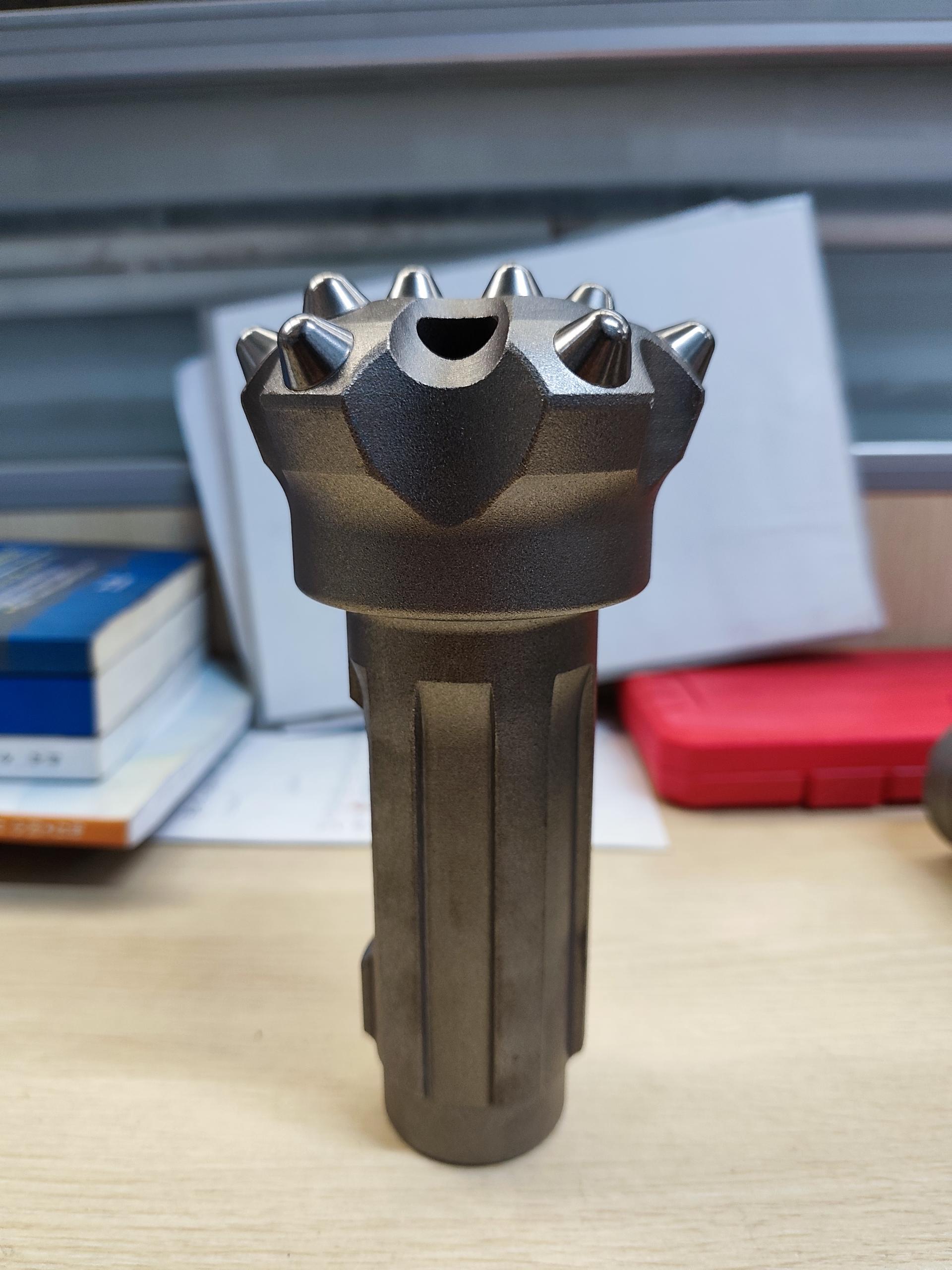
The difference starts with raw material and heat treatment. High-performance DTH bits use carefully selected steel alloys and tungsten carbide grades that tolerate repeated impact without early chipping or cracking. The hardening process is tuned so the bit body stays tough while the face and splines hold their shape under constant percussive load. Cheaper bits often skip these finer controls, and it shows once they meet abrasive or fractured ground.
Beyond materials, the geometry of the bit decides how much impact energy actually reaches the rock. Tooth shape, spacing, and angle all influence penetration rate and wear pattern. Good bits also pay attention to flushing grooves and air channels, clearing cuttings fast so the bit isn't re-grinding loose material. These details reduce blow energy loss and keep the hole straighter, especially at depth.
Finally, manufacturing consistency matters more than most spec sheets suggest. A high-performance bit has uniform brazing around each carbide insert, tight concentricity between the shank and head, and a face profile that wears evenly. That consistency translates into predictable footage per bit and fewer surprises mid-hole. In the field, it's that reliability under pressure that separates a top-tier bit from the rest.
Why Chinese Suppliers Are Closing the Quality Gap in Carbide
For years, buyers treated Chinese carbide as a budget fallback. That assumption is crumbling. A new generation of plants in Zhuzhou and Zigong has invested heavily in vacuum sintering furnaces and precision grinding lines that rival European equipment. Instead of chasing volume alone, these suppliers now run statistical process control on every batch of tungsten carbide powder, catching deviations that used to slip through.
The shift isn't just about machinery. Chinese metallurgists are increasingly working with overseas customers on tailored binder ratios and grain sizes for specific cutting conditions. Where European suppliers once held an edge in fine-grained carbide for aluminum alloys or high-temp superalloys, several Chinese mills now routinely deliver sub-micron grades with hardness and toughness curves that match mid-tier European product—at a fraction of the lead time.
Practical feedback loops matter too. Domestic cutting tool brands have grown sophisticated enough to demand tighter tolerances, and that pressure has pushed carbide blank producers to improve surface finish and edge retention. The result is less scrap in the customer's CNC process, which is ultimately what closes the perceived quality gap.
Matching Bit Face Design to the Rock You're Actually Drilling
Most bit selection charts assume a uniform formation, but the rock you're actually drilling rarely behaves that way. Start by reading the cuttings and the rate of penetration, not just the well plan. In brittle, highly abrasive sandstone or chert, a bit face with a flatter profile, dense cutter layout, and shallow junk slots tends to hold up better because it reduces point loading and spreads wear across more diamond volume. In softer, plastic shales or claystones, the same face would ball up and generate needless torque; there you need open face volume, taller blades, and fewer, larger cutters to keep the bit cleaning itself and biting instead of skidding.
The real test comes when the bit gets pulled. Look at the shoulder and gauge areas before blaming the formation. If you see impact fractures on the nose or chipped cutters near the center, the face was likely too light for the actual hardness, not the logged hardness. If the center cutters are polished but the shoulder is green, the hydraulic arrangement didn't match the face design. Matching bit face to rock means using offset well dull grades and torque signatures as feedback, then adjusting blade count, cutter size, and back rake in small steps. That kind of field-level tuning beats any generic recommendation, because the rock you set the bit on is the only data that matters.
How to Verify Heat Treatment Claims Without a Lab
Start with a set of calibrated hardness files. These aren't the cheap files in your toolbox drawer; they're graded to specific Rockwell ranges, usually in 5-point steps from 40 to 65 HRC. Press the edge of each file against a clean, flat spot on the part and push lightly. If the file bites and leaves a visible scratch, the steel is softer than that file's rating. If it skates without cutting, the part is at least that hard. A genuine 58-60 HRC claim should defeat a 55 HRC file but get marked by a 60 HRC file. Watch the pressure and angle — heavy-handed testing will gouge even hard steel and give you a false reading.
A spark test adds another layer of evidence, but you need a known reference piece. Touch the part to a bench grinder and compare the stream of sparks to a sample you trust. Higher carbon and properly hardened steel throws shorter, bushier sparks with more secondary bursts near the end, while soft low-carbon steel gives long, straight, straw-colored streaks. The difference won't tell you the exact temper, but a part claiming high hardness that grinds like mild steel is a red flag. If you can sacrifice a scrap piece, break it and look at the fracture face. Fine, velvety, almost porcelain-like grain usually means a good quench and proper grain refinement. A coarse, glittering break indicates overheated steel or a botched treatment.
Use the part's sound as a quick sanity check. Suspend it by a wire and tap it with a small brass hammer. Hardened, stress-free steel rings with a clear, bell-like tone that sustains for a second or two. A dull thud or a short, dead clink often points to incomplete hardening, internal cracks, or excessive retained austenite. None of these shop tests replace a lab report, but together they can usually catch a bogus heat treatment claim before you waste money on a batch of parts.
When Cheap Bits Cost More Than You Think
The appeal of inexpensive digital components is easy to understand: the upfront price looks unbeatable, and the spec sheet often mirrors pricier alternatives. But the real expense rarely shows up on the invoice. Cheap bits tend to fail silently, corrupt data in ways that only surface weeks later, or force you into endless troubleshooting loops that eat away at your team's focus. That borrowed laptop drive or bargain-bin memory module might save fifty dollars today, only to cost a project deadline tomorrow.
There is also a hidden tax in how these pieces interact with the rest of your stack. A low-cost storage chip may draw more power, produce more heat, or lag just enough to make every read and write feel sluggish. Multiply that across hundreds of devices or hours of operation, and the supposed savings evaporate into higher energy bills, premature hardware replacement, and user frustration. Sometimes the most expensive bit is the one you bought because it was cheap.
What makes this trap so persistent is that we measure the wrong thing at the moment of purchase. Price per gigabyte or cost per unit is seductively simple, but it ignores longevity, error rates, and the labor required to keep everything running. When you start accounting for the time spent diagnosing mysterious glitches or re-encoding corrupted files, the cheap bits end up costing far more than the premium option would have from the start.
Reading Wear Patterns to Make Smarter Bit Choices
When you pull a dull or damaged bit out of the chuck, the marks it leaves tell a story. A shiny, rounded cutting edge usually means the bit got too hot and lost its temper. Flaking or micro-chipping along the edge often points to feed pressure that's too aggressive for the material, or vibration from a worn collet. Learning to read these clues before swapping in a new bit keeps you from repeating the same mistake.
For instance, if you notice uneven wear on one flute more than the others, the issue might not be the bit at all. Runout in the spindle, a slightly bent shank, or even inconsistent chip evacuation can cause one cutting edge to shoulder most of the work. Instead of grabbing another identical bit, check the tool holder, clean the collet, and slow the feed rate. That small pause often extends bit life more than upgrading to a costlier coating.
Wear on the center point versus the outer corners also reveals a lot. Center wear suggests excessive plunge speed or poor pecking cycles, while chipped outer corners usually come from side-loading or a cut that wanders. By matching the wear pattern to the operation, you can choose a bit geometry that fits the actual job—maybe a split point for less walking, or a different helix angle for better chip flow. The bit you need next time becomes obvious once the old one shows its scars.
FAQ
High-performance bits combine advanced carbide grades, precision heat treatment, and face designs that clear cuttings faster. Look for bits with contoured flushing grooves, optimized button placement, and a body hardened to resist wear in abrasive rock. The best suppliers test bit life in real drilling conditions, not just on paper.
Ask for detailed photos or video of their forging, CNC machining, and heat treatment lines. Check whether they use spectrometers to verify steel composition and hardness testers on every batch. A supplier that openly shares production data and invites factory audits tends to be more reliable than one that only provides glossy brochures.
Demand tungsten carbide buttons with a minimum hardness of 89 HRA and a cobalt content suited to your rock type. The bit body should be made from high-grade alloy steel like 20Ni4Mo or 23CrNi3Mo, then case-hardened to at least 50 HRC. For very abrasive formations, ask about diamond-coated or extra-thick carbide options.
Face design controls energy transfer and cuttings evacuation. Convex faces deliver faster penetration in soft rock, while flat or concave faces improve stability in hard, fractured ground. Match button shape too: ballistic buttons cut faster, while spherical buttons last longer in hard rock. A good supplier will recommend a face layout based on your specific rock hardness and air pressure.
Look for the ability to adjust shank size, spline type, air holes, button count, and carbide grade. Some suppliers also offer API or custom thread connections. The key is whether they can produce small trial batches to match your rig specifications and then scale up without changing the quality.
Request a field trial with a few bits on your actual drill rig. Track penetration rate, bit life, and hole deviation over at least 100 meters. Compare those numbers against your current bits, not just the supplier's claims. Also ask for third-party metallurgical reports or references from drillers working in similar rock formations.
Expect clear warranty terms for manufacturing defects, not normal wear. The supplier should offer technical guidance on air pressure, rotation speed, and bit sharpening. Reliable suppliers often provide reconditioning services or buy-back programs for used bits. If they disappear after the sale, that's a red flag regardless of the initial price.
Avoid chasing the lowest price per bit. Instead, calculate cost per meter drilled: a bit that costs 30% more but lasts 50% longer is cheaper overall. Ask for a breakdown of materials and heat treatment costs; if a quote seems unrealistically low, the supplier is likely cutting corners on carbide grade or steel quality.
Conclusion
Selecting a down-the-hole bit from a Chinese supplier goes beyond comparing prices or looking at a spec sheet. The real difference makers are hidden in the details: the grade and consistency of carbide buttons, the way the bit face is shaped for actual rock conditions, and how well the steel body has been heat treated to withstand impact and wear. Many manufacturers now match or exceed international quality in carbide by sourcing premium tungsten carbide and running tighter sintering controls, which closes a gap that used to define the market. Instead of trusting marketing language, ask for hardness test results, batch numbers, and even micrographs of the carbide structure. A bit that cannot prove its heat treatment is a gamble.
Cost per meter is a better metric than price per bit. Low-cost bits often fail early through shank wear, button loss, or body cracking, which forces more tripping and downtime. Reading wear patterns after a run tells you a lot: uniform button wear suggests good carbide and correct face design, while scalloping, heat checking, or asymmetric wear points to poor flushing, wrong bit selection, or soft steel. Match concave, convex, or flat face designs to rock hardness and abrasiveness, and let those observations guide the next order. A supplier that welcomes these conversations and provides consistent heat lot data is usually the one worth keeping.
Contact Us
Contact Person: Elma
Email: [email protected]
Tel/WhatsApp: +86 13738628777
Website: https://www.pulankagroup.com/