

China Cutting Picks Factory Delivers High Performance Tools for Mining and Tunneling
2026-10-02
What separates a mining operation that stays on schedule from one that grinds to a halt? Often, it comes down to the cutting picks—and the factory behind them. China has long been a hub for precision tool manufacturing, but not every supplier pairs speed with durability. At PULANKA, high-performance cutting picks for mining and tunneling are built to withstand extreme abrasion and impact, helping crews push through hard rock without constant replacements. This article takes a closer look at what makes these tools—and this factory—stand out in a crowded field.
What Happens When a Pick Hits Hard Rock at Full Speed?
At full speed, the pick doesn't so much cut as collide. The instant steel meets unyielding rock, kinetic energy converts into a violent local shockwave. Tiny fractures spider through the rock face, but the same force snaps back through the pick body. The tool tip sees compressive stresses well beyond its normal working range, and even premium carbide inserts can develop hairline cracks that later widen under repeated blows.
Heat builds faster than most people expect. Friction at the contact point can flash temperatures high enough to soften the steel around the carbide tip, even as rock dust and water spray pull heat away. This thermal cycling, paired with impact loading, loosens the braze joint that holds the tip. Once that joint starts to fail, the pick loses its edge and begins to tear rather than cut, accelerating wear on the holder and drum.
The machine feels it too. Each hard strike sends vibration back through the cutting head, gearbox, and boom. Operators often notice a sharp drop in cutting rate and an increase in fines, because the pick is no longer chipping rock cleanly. In hard ground, running at full speed without adjusting feed pressure can turn a productive shift into a breakdown, with broken picks and damaged holders piling up in minutes.
The Alloy and Carbide Pairing That Extends Usable Life
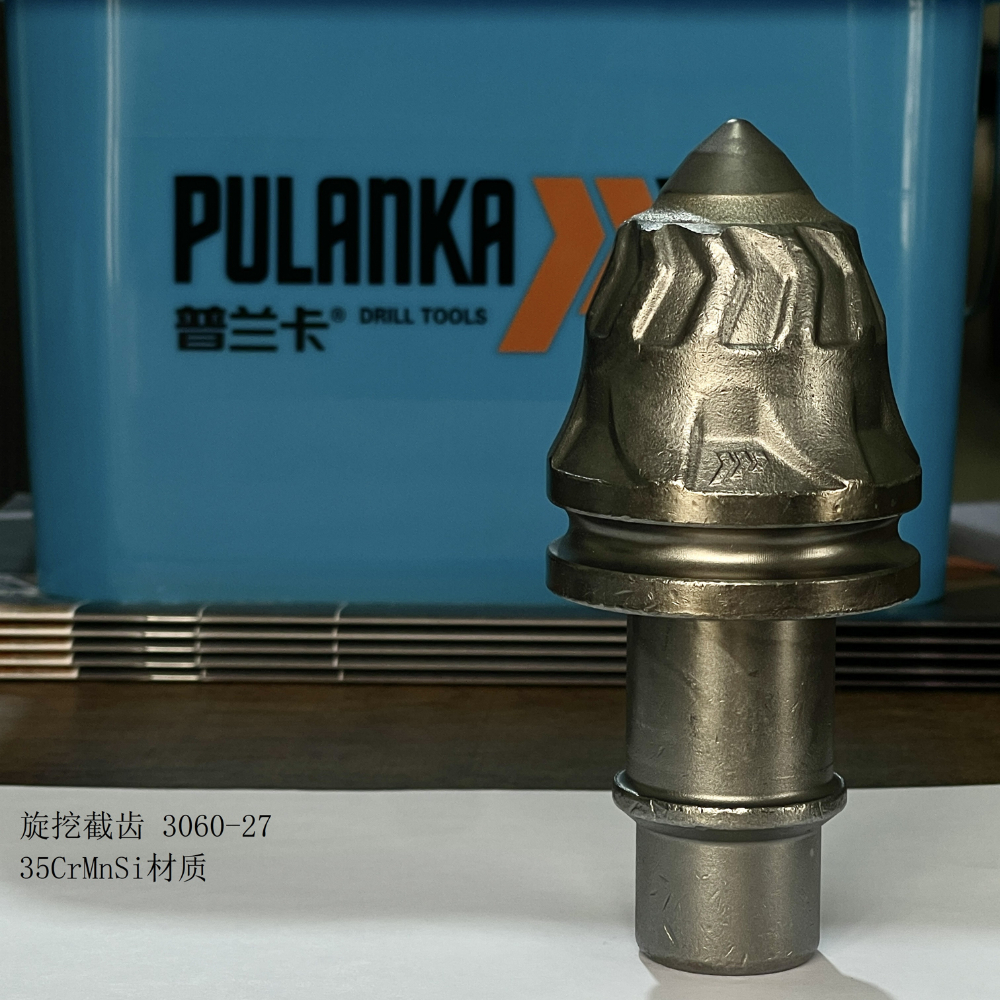
Wear resistance rarely comes from a single material choice. It emerges from how the supporting alloy interacts with the carbide particles embedded within it. A softer, tougher matrix allows each carbide grain to absorb impact without cracking, while the hard particles themselves take the brunt of abrasive contact. This balance prevents the kind of early failure that happens when one component dominates the other.
The real difference shows up in real-world cycles. Instead of replacing a wear part after a few hundred hours, operators often see triple or quadruple the service life simply because the matrix holds the carbides in place long enough to do their job. Once the surrounding alloy starts to erode, though, those hard particles get pulled out like loose teeth, and the degradation accelerates fast.
Choosing the right pair means looking beyond hardness ratings. Compatibility under thermal cycling, resistance to microfracturing at the boundary layer, and the ability to redistribute stress without spalling all matter more than a single number on a spec sheet. The best pairings survive because they were designed as a system, not assembled from two impressive-looking materials.
Shape Matters: Conical vs. Radial Picks for Your Machine
Conical picks taper to a sharp point, which lets them bite into hard, abrasive surfaces with less resistance. That focused tip concentrates force into a small area, so they tend to work well in tough cutting conditions where you need penetration without excessive drag. The trade-off is that the narrow profile can wear down faster if the material has a lot of random impact or uneven fracture.
Radial picks have a broader, more rounded cutting edge that spreads the load over a wider face. This design handles high-impact jobs and mixed materials better because the tip isn't as fragile under sudden blows. They often hold their shape longer in broken ground or when tramming through layered rock, though the wider contact area means you might trade a bit of cutting speed for that extra durability.
Choosing between them comes down to what your machine actually faces day to day. If you're mostly dealing with hard, consolidated material and want faster penetration, conical picks usually come out ahead. If the job involves unpredictable impacts, softer strata with hard inclusions, or long shifts between tool changes, radial picks can save you downtime and keep the cutting drum working steadily.
Performance Notes from Coal Mine and Tunnel Boring Crews
Longwall crews often log more downtime waiting on the stage loader than on the shearer itself. Belt slippage from wet, sticky fines near the tailgate is a recurring culprit, and one fix that shows up in shift notes is running the belt empty for ten minutes each hour to let the scrapers clear the return side.
On tunnel boring jobs, penetration rate drops sharply when muck handling can't keep pace with the cutterhead. Several operators report that reducing thrust in blocky or fractured rock keeps the muck rings from jamming, even if it means losing a few millimetres per revolution. Cutter changes are faster when the spare cart is parked near the tail shove, not back at the portal.
Crews also flag dust and ventilation as hidden performance killers. If the ducting gets pinched behind the trailing gear, air velocity drops at the face and the whole cycle slows while the air clears. Pre-staging segment gaskets and keeping the erector arm free of grout lines saves one full ring per shift on several recent drives.
In-Factory Testing Before the Picks Are Boxed
Every run of picks passes through a quick but unforgiving gauntlet on the factory floor before a single one reaches its box. Technicians pull samples at random from each batch and check thickness, edge bevel, and tip stiffness against the master reference. Laser measurement catches drift as small as a few microns, while a simple bend-and-release test spots material fatigue that would never show up on paper.
The real verdict comes from a playing station set up right beside the production line. A rotating crew of guitarists runs each sampled pick through strumming, fast alternate picking, and pinch harmonics. If the tip dulls too fast or the grip feels inconsistent, the entire lot gets pulled and reworked. No pick moves to packaging until it survives both the gauges and the hands.
Reducing Downtime by Selecting the Right Wear Pattern
Most maintenance teams overlook the quiet cost of a mismatched wear pattern. It isn't just about replacing a worn part—it's about the unplanned stops that ripple through the rest of the shift. When you choose a wear pattern that doesn't align with the actual friction points, you're not just accepting faster wear; you're inviting a cascade of small failures that add up to hours of lost production. The right pattern, by contrast, spreads the load across the surface so no single spot bears the brunt. That means fewer surprise shutdowns and a schedule that actually holds.
Think of wear patterns as a language the machine uses to tell you where stress concentrates. A diagonal or uneven pattern often signals misalignment, while a centered, uniform pattern suggests the load is distributed as intended. By reading these cues before a failure occurs, you can swap in a component with a wear pattern engineered for your specific operating conditions—not just any off-the-shelf replacement. The payoff isn't theoretical: a well-matched wear pattern can stretch the interval between planned maintenance by a noticeable margin, and it turns reactive firefighting into a predictable rhythm.
The biggest mistake is treating all wear as equal. Some patterns accelerate degradation in adjacent parts, causing a chain reaction that takes down a whole line. Others create hot spots that weaken material integrity over time. Selecting the right wear pattern means looking at how the part interacts with its neighbors—lubrication flow, housing clearance, and even ambient temperature all play a role. When you get that right, downtime doesn't just drop; it becomes something you can plan around, not something that plans around you.
FAQ
They combine a hardened alloy tip with a precisely machined steel body, so they hold up under abrasive rock and high-impact conditions common to both applications.
No, the factory offers custom dimensions and shank profiles to fit different shearers, roadheaders, and continuous miners.
Each batch goes through heat treatment verification, hardness testing, and dimensional inspection before shipping.
They are built for medium to hard formations, including sandstone, limestone, and some igneous rock, depending on the pick configuration.
In many cases yes, the steel body can be reused with a new tip, which lowers operating cost for long tunneling projects.
They deliver similar performance in terms of wear life and impact resistance, but with shorter lead times and more flexible order volumes due to local production.
Yes, they can recommend tip geometry and carbide grade based on your machine type and cutting conditions.
Standard export packing includes individual boxes and wooden crates, and shipping can be arranged by sea, rail, or air depending on urgency.
Conclusion
When a pick slams into hard rock at full speed, the impact can shatter lesser steel or tear carbide tips clean off their seats. A cutting pick factory in China has focused on that exact failure point, pairing carefully graded alloy bodies with tungsten carbide inserts chosen for how they deform under repeated shock. The result is a tool that holds its edge through abrasive sandstone, quartz veining, and the mixed conditions common in coal measure rock. Crews in coal mines and tunnel boring operations report fewer mid-shift change-outs, not because the picks never wear, but because the wear stays predictable. The carbide doesn’t snap; it slowly rounds, and the steel body absorbs vibration before cracks can start.
Shape selection matters as much as material. Conical picks suit continuous miners and roadheaders where cutting is more about tensile cracking, while radial picks handle harder, more brittle ground in trenching or longwall shearers. Before any batch is boxed, the factory runs in-house impact tests and hardness checks on both the carbide tip and the heat-affected zone of the alloy body. This catches batches where the brazing hasn’t fully bonded or where the tip profile is off by a fraction of a millimeter. By matching the wear pattern to the machine’s rotation speed and drum design, operators cut downtime instead of guessing between early flat spots and deep carbide breaks.
Contact Us
Contact Person: Elma
Email: [email protected]
Tel/WhatsApp: +86 13738628777
Website: https://www.pulankagroup.com/