

Cement Grinding Aids in the Industry Boost Efficiency and Cut Costs
2026-09-22
Rising energy costs and thinner margins are pushing cement producers to optimize every step—especially grinding, which quietly eats up a huge share of electricity. That's where grinding aids come in: they reduce particle agglomeration, improve mill throughput, and cut power consumption. HAISEN has been helping plants turn this overlooked lever into real savings. But not all grinding aids are equal. In this article, we'll explore how they work and what to look for when choosing the right one.
The Hidden Lever for Lower Clinker Factor
Most discussions about cutting clinker factor revolve around familiar substitutions—limestone, fly ash, slag. Yet the real leverage often sits in the fine fraction nobody bothers to measure. A shift in particle size distribution, even by a few microns in the 3–30 µm band, changes late-age strength more than adding another two percent of filler. Once you tune the mill around that specific band, the same blend suddenly carries the load that used to demand extra clinker.
The trick is not grinding everything finer. It is narrowing the spread—cutting the coarse tail that never hydrates fully and trimming the ultra-fines that only consume water and admixture. Plants that chase this lever find they can drop clinker content by three to five points without touching the recipe on paper, simply because the clinker they do use works harder per gram.
Field experience points to a quieter win: when the clinker factor falls through better particle packing, early-age heat drops and the risk of cracking dims. No new cement type, no supply chain gamble—just a sharper look at the curve coming out of the separator.
How Grinding Aids Reshape Particle Size Distribution
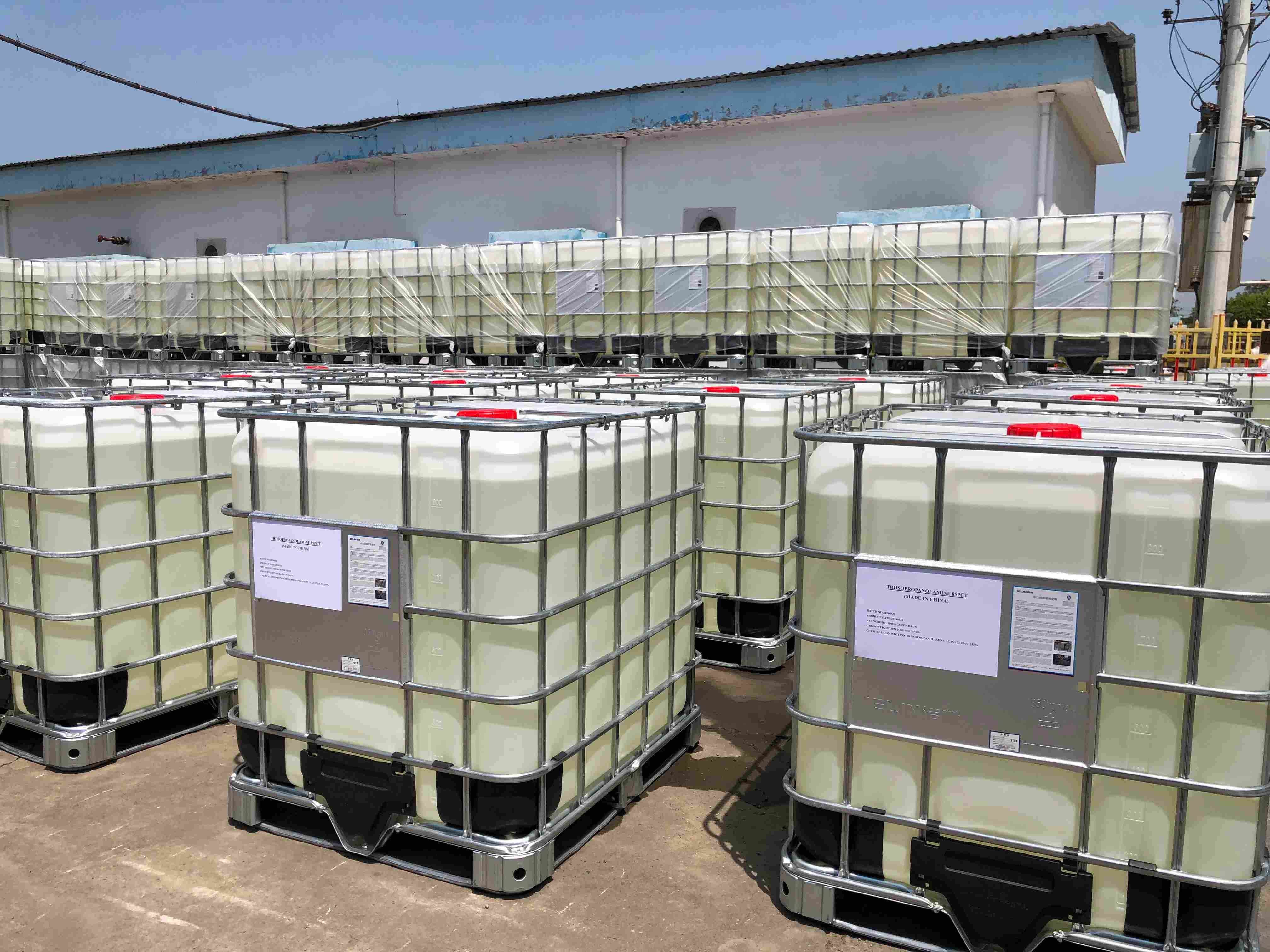
In dry grinding circuits, freshly fractured surfaces carry high surface energy, which drives fine particles to stick to media and liners or form loose agglomerates. A grinding aid adsorbs onto these active sites within milliseconds, lowering the interfacial tension and preventing the coating that would otherwise cushion impacts. With less energy wasted on re-breaking agglomerates, the mill directs more force toward coarse particles, and the residence time needed to reach a target fineness drops noticeably.
The shift in particle size distribution is rarely just a move to finer sizes. Effective grinding aids tend to narrow the spread, trimming excessive ultrafines while keeping the top size under control. This reshaped curve improves powder flow, reduces void variation in packed beds, and can boost reactivity in cementitious systems without requiring extra grinding time. Adjusting dosage and injection point then becomes a practical lever for tailoring the distribution to a specific downstream process rather than simply chasing a Blaine number.
Energy Savings That Go Beyond the Mill
A paper mill in northern Sweden stopped flaring its excess low-pressure steam and instead piped it half a kilometer to a neighboring greenhouse. The greenhouse now grows tomatoes and cucumbers year-round, using heat that would otherwise be wasted. The mill also lowered its own cooling water demand by 18%, because the steam no longer needs to be condensed on-site. Local farmers signed ten-year supply contracts, which gave them a stable energy price below the regional grid rate. This kind of direct heat reuse turns a mill's thermal load into a community asset rather than a disposal problem.
Beyond the factory fence, energy savings show up in the trucks and railcars that carry finished goods. By redesigning the mill's packaging line to use 12% less board weight per carton, each full truck now carries roughly 2,300 more units. That single change eliminated about 1,400 truck trips per year from the distribution network. Working with a logistics partner, the mill also consolidated shipments to reduce empty backhauls from 41% to 19%, cutting diesel consumption by an estimated 260,000 liters annually. These downstream gains rarely appear on a mill's own energy bill, but they represent real reductions in the product's total carbon footprint.
From Clinker to Cement: Unlocking Throughput Gains
Watching a cement mill run at full load, it is easy to miss how much of the energy goes into particles that are already fine enough. Shifting part of the size reduction upstream—through a roller press or high-pressure grinding rolls—relieves the ball mill and usually lifts overall circuit throughput by 15 to 30 percent without touching clinker chemistry. The key is matching the pre-grinding step to the mill's chamber lengths and media charge; a mismatch here just moves the bottleneck to the separator.
The separator itself is often the real constraint. An older first-generation unit can send too much coarse material back to the mill, which raises the circulating load and wastes motor power on already acceptable product. Upgrading to a high-efficiency separator, or even just rebalancing the rotor speed and air flow, can cut the circulating load sharply. I have seen plants gain 8 to 12 percent throughput simply by adjusting the separator's reject rate and letting the mill chamber operate with a slightly finer feed.
Grinding aids are another quiet contributor. Adding a small dose of a glycol- or amine-based agent changes the surface energy of the clinker particles, reducing agglomeration and improving powder flow through the mill and separator. Combined with close monitoring of mill ventilation and outlet temperature, this can keep the system stable at higher feed rates. Fine-tuning the 45-micron residue against the Blaine surface area gives a practical operating window—too fine on one side wastes energy, too coarse on the other hurts early strength.
Cost Per Ton: The Real Metric Behind Grinding Aids
Most cement plants track grinding aid dosage in grams per ton, but that number alone rarely tells the full story. The real question is what happens to the total cost per ton of finished cement once the aid is in the circuit — and that metric shifts with mill temperature, clinker hardness, and separator efficiency. A cheaper product that forces you to dose twice as much can quietly erase the savings you thought you were getting.
A more useful approach is to measure cost per ton of surface area gained, not just per ton of feed. If one grinding aid costs $4 per ton of cement and improves Blaine by 20 m²/kg, while another costs $3 per ton but only adds 10 m²/kg, the pricier option may actually be the cheaper route to your target fineness. Add in the downstream effects — better powder flow, lower pack-set, reduced energy draw on the mill — and the true per-ton economics can swing by several dollars before you even notice.
Field trials often reveal that the “real metric” is not purchase price but total cost per ton of cement that meets spec with the least rework. Plants that switch from a low-cost generic amine to a tailored formulation frequently find the mill runs cooler, the separator rejects less material, and the overall kWh per ton drops enough to offset a 30% higher aid price. That is the difference between buying a chemical and buying a result.
Grinding Aids and the Push for Sustainable Cement
Cement production has long carried a heavy environmental toll, but grinding aids are quietly reshaping that narrative. By reducing the energy needed to pulverize clinker into fine powder, these chemical additives lower both electricity consumption and carbon emissions per ton of cement. The shift isn't just about meeting regulations—it's a practical response to rising energy costs and a genuine effort to shrink the industry's footprint without sacrificing performance.
Beyond energy savings, grinding aids improve particle distribution, which allows producers to blend in more supplementary cementitious materials like fly ash or slag. This substitution reduces the clinker factor—the primary source of CO₂ in cement—while maintaining strength and workability. In many plants, a small dose of a tailored grinding aid can unlock a 5–10% drop in clinker content, a change that adds up quickly across millions of tons of output.
The push for sustainable cement isn't about a single breakthrough; it's a series of incremental improvements, and grinding aids are one of the most cost-effective levers available. As producers face tighter carbon budgets and customers demand greener materials, these additives move from a niche optimization tool to a standard part of responsible manufacturing. The result is concrete that still performs—but with a lighter touch on the planet.
FAQ
They're chemical formulations, often based on amines or glycols, that get dosed into the mill in small amounts. They adsorb onto cement particle surfaces, reducing surface energy and preventing re-agglomeration. This keeps particles separate and lets the mill work more efficiently.
Depending on feed material and mill configuration, most plants see a 10–30% drop in specific energy consumption per ton. Some older circuits report even higher gains because they have more room for improvement in particle dispersion and separator efficiency.
They can do both. By minimizing over-grinding and improving particle size distribution, you often get better early strength development and more consistent Blaine values without adding extra clinker. It's not just an energy play.
Typical families include alkanolamines like triethanolamine (TEA) and diethanolamine (DEA), along with various glycols and proprietary polymer-based blends. Some newer formulations combine these with performance enhancers like chloride-free accelerators or water reducers.
Track three things: mill output rate, energy meter readings per ton, and particle size distribution. A good aid should raise throughput at the same fineness or allow higher fineness at the same throughput. Also listen for changes in mill sound and vibration—less ball coating often means quieter, smoother operation.
If overdosed, they can lead to excessive fluidization inside the mill, reduced retention time, and sometimes lower early strength. Some amines may also cause odor issues or interact with concrete admixtures. That's why dosing must be optimized through plant trials.
Look beyond the price per liter. Evaluate how the product performs with your specific clinker chemistry, mill type, and target cement specifications. Request on-site trials with clear KPIs, check the supplier's technical support, and consider logistics and handling safety.
Conclusion
Grinding aids quietly shift the economics of cement production by changing how particles interact inside the mill. They reduce surface energy and prevent fine particles from clumping, which means the mill spends less time re-grinding the same material. The resulting particle size distribution becomes narrower and more favorable for both early strength and long-term durability. This allows producers to cut back on clinker—often the most carbon-intensive and costly ingredient—while maintaining the same concrete performance. A lower clinker factor, achieved through better dispersion of supplementary cementitious materials, is one of the clearest ways these additives pay for themselves. Energy use drops not only at the mill motor but also in the auxiliary systems that move and classify material. The hidden benefit is that every percentage point of grinding efficiency translates into fewer kilowatt-hours per tonne, directly lowering operating expenses.
Throughput gains show up quickly once the mill runs without the usual ball coating and agglomeration. More cement can pass through the same circuit without adding capital equipment, and wear on grinding media and liners slows down. That stretches maintenance cycles and keeps the plant running closer to nameplate capacity. Cost per tonne, rather than raw production volume, is the metric that matters. When energy, maintenance, and raw material savings are combined, the reduction in total cost per tonne often exceeds what a simple energy bill would suggest. From a sustainability angle, using less clinker and less electricity cuts the carbon footprint per tonne of cement produced. For plants under pressure to meet emissions targets without sacrificing output, grinding aids offer a practical route to more efficient, lower-cost, and lower-carbon cement.
Contact Us
Contact Person: Sam Lee
Email: [email protected]
Tel/WhatsApp: 86-311-6617 8338
Website: https://www.horizonadmixtures.com/