

Bulk Rotary Engraving Material Solutions for Streamlined Production and Superior Results
2026-06-20
Are production bottlenecks and inconsistent engraving results slowing you down? In the world of rotary engraving, material quality can make or break your output. That’s where LYSHIRE steps in, offering bulk material solutions engineered for efficiency and stunning finishes. In this post, we’ll explore how the right materials can streamline your workflow and deliver superior results—every time.
Precision Materials for High-Volume Rotary Engraving
When running rotary engraving systems at high volume, the choice of material directly affects tool life, edge quality, and throughput. Hardened tool steels and micro-grain carbides remain the backbone for cutting tools, but it's the substrate material that often dictates how consistently you can hold fine detail across thousands of cycles. For instance, engraving brass tends to build up on the cutter edge faster than you'd expect, so pairing it with a polished carbide bit and a light mist lubricant can double the interval between tip changes. Operators who track wear patterns on acrylic and POM notice that even small shifts in material composition—like filler content or molecular weight—change how chips break away, impacting burr formation and surface finish.
Beyond the blank itself, coatings and platings play an understated role. A diamond-like carbon coating on a micro-grain tool can keep edges sharp three to five times longer when cutting filled plastics, but it's not a universal fix; on softer metals like aluminium, the same coating may micro-weld without proper cooling. For high-mix production floors where materials change by the shift, experienced machinists keep a small test grid—engraving a quick pattern on a fresh blank each morning to dial in speed and depth before the main run. This practical approach catches subtle variations in material stiffness or hardness that data sheets miss, preventing the slow drift in quality that often goes unnoticed until rejects pile up.
Streamlining Workflows with Ready-to-Use Engraving Blanks
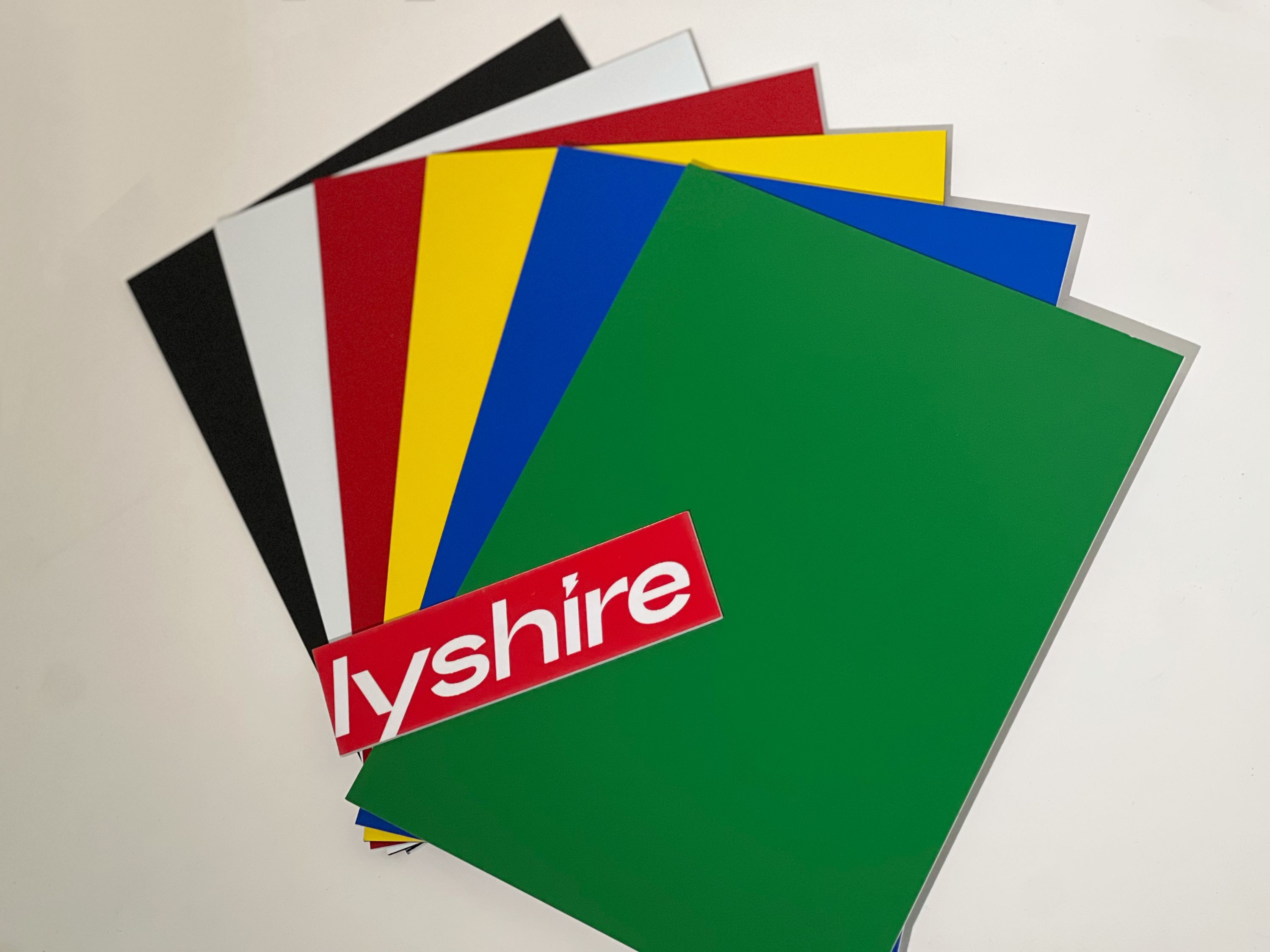
There's a quiet efficiency that comes from having exactly what you need, right when you need it. Ready-to-use engraving blanks eliminate the prep work that often slows down production. Instead of measuring, cutting, and finishing raw stock, you can grab a blank and get straight to the engraving. This shift doesn't just save minutes—it preserves the rhythm of work, keeping the focus on the craft rather than the setup.
Standardization might sound dull, but in practice it frees you up. With blanks pre-sized and surface-finished, consistency becomes a given. Whether you're personalizing awards, marking industrial tags, or creating jewelry, the repeatability means fewer errors and less rework. It also simplifies quoting and inventory, since you know precisely what material and dimensions you're working with every time.
Beyond the obvious time gains, there's a creative advantage. When the mundane tasks are handled, you can turn your attention to the details that make a piece stand out—experimenting with engraving depths, trying out new fonts, or mixing finishes. The blanks become a canvas, not a chore. That subtle shift can turn a production job into something that feels more like genuine craftsmanship.
Consistent Quality Across Every Batch and Material
From the moment raw materials arrive, our quality assurance team puts them through a series of rigorous inspections. Every shipment—whether steel, polymers, or electronic components—is tested against clearly defined specifications, so nothing slips through the cracks. We don’t rely on supplier certificates alone; we verify tensile strength, chemical composition, dimensional accuracy, and surface finish in our own labs. Only materials that meet our internal benchmarks make it to the production floor, laying a solid foundation for consistent output.
On the production line, real-time monitoring systems track key parameters like temperature, pressure, and cycle times. Operators follow standardized work instructions that detail every step, while automated sensors flag any deviation from the norm. When a trend begins to drift, the process is adjusted before any out-of-spec product is made. This closed-loop approach means that variation stays remarkably low—whether we’re running the thousandth unit or switching to a different material grade for a custom order.
Beyond the machines, our people are trained to spot subtle shifts that technology might miss. Regular audits and round-table discussions help us share insights across shifts and departments, turning experience into collective knowledge. Every finished batch undergoes a final sampling plan that reflects the criticality of the application—measuring not just conformance but also functional performance. The result is a reliability that customers can count on, order after order, no matter the complexity of the material mix.
Custom Sizing and Finishes to Fit Your Production Needs
Every production environment has its own spatial quirks and equipment requirements. Off-the-shelf dimensions rarely line up perfectly, which is why we build to your exact specifications. Whether you need a unit that fits into a tight corner or a run of machines scaled for a specific conveyor height, the measurements are dialled in before the first cut. No shims, no awkward gaps—just hardware that slots into your floor plan as if it were drawn that way from the start.
Finishes do more than protect the metal. A powder coat in the right thickness can shrug off the chemicals used in your washdowns, while a brushed or bead-blasted surface might eliminate glare for inspection stations. We match the coating to your actual operating conditions, not just a colour swatch. The goal is to keep the equipment looking clean and functioning reliably without repainting cycles eating into your uptime.
Because these choices are worked into the build from the engineering stage, there's no retrofit scramble later. Drawings get signed off with your team, prototypes get tested in situ, and the final units arrive ready to run, not ready to modify. It's a process that strips out the usual back-and-forth and lets you focus on throughput, not on making standard parts behave.
Durable Substrates for Long-Lasting, High-Impact Results
When you invest in visual communications, you expect them to withstand the test of time without fading, peeling, or warping. The secret often lies beneath the surface. Choosing substrates engineered for toughness—whether rigid panels, heavy-duty vinyl, or coated synthetics—ensures that your graphics maintain their vibrancy and structural integrity even under harsh conditions. These materials resist moisture, UV exposure, and physical stress, making them ideal for outdoor signage, trade show displays, or any application where durability is non-negotiable.
Beyond mere survival, the right substrate elevates the perceived quality of your message. A premium, long-lasting base creates a flawless canvas for high-resolution prints and rich colors, turning a simple sign into a compelling brand statement. This kind of resilience not only reduces the need for frequent replacements but also projects an image of reliability and attention to detail. Customers and passersby notice the difference between a graphic that looks freshly installed after months and one that has clearly seen better days.
Finally, pairing advanced printing techniques with robust substrates unlocks creative possibilities without compromise. From textured finishes that add depth to ultra-smooth surfaces for precision detail, the substrate choice allows designs to push boundaries while staying practical. Whether it’s a massive building wrap battling wind and sun, or interior décor that must endure daily handling, the foundation you choose determines how long your impact lasts. Invest wisely in the base, and your results will continue to speak loudly for years.
From Prototype to Production: Scalable Solutions for Every Stage
Scaling a concept from an early prototype into a robust production system often feels like navigating uncharted territory. The approach that worked for a proof-of-concept rarely holds up under the weight of real-world demands. That’s why it’s essential to adopt solutions that grow alongside your project, adapting to shifting requirements without forcing you to start from scratch each time.
Whether you’re validating an initial idea or refining a mature product, the right framework provides flexibility without sacrificing reliability. Early on, you might need rapid iteration and quick feedback loops. Later, the focus shifts to stability, security, and handling increased loads. A truly scalable solution lets you move between these stages seamlessly, offering just enough structure when you need it and the freedom to experiment when you don’t.
By choosing tools and practices that evolve with your goals, you sidestep the costly process of rebuilding for each new phase. Teams can carry forward the same core logic, data structures, and workflows, refining them over time rather than replacing them. This continuity not only saves resources but also preserves the insights gained during the messy, creative early days, turning them into a solid foundation for what comes next.
FAQ
They are materials like acrylic, plastic, or metal sheets specifically designed for rotary engraving machines, purchased in large quantities to support high-volume production. Buying in bulk makes it easier to keep your workflow consistent and reduces per-unit costs.
When you always have the exact same material on hand, machine settings remain consistent from job to job. This cuts down on recalibration time and minimizes material waste, letting you run longer, uninterrupted production cycles.
Signage companies, trophy and award shops, industrial label makers, and custom branding firms all find bulk engraving materials indispensable. Any business that needs to produce a large number of identical or similar engraved items will see major efficiency gains.
Popular choices include two-ply acrylics for color contrast, durable engraving plastics, and soft metals like aluminum. Each type offers specific advantages in terms of finish, durability, and engraving depth, so selection depends on the intended application.
Not if you choose properly graded materials. Premium bulk supplies are manufactured to tight thickness and color tolerances, ensuring every sheet performs exactly like the last. In fact, consistency often improves final product quality because there's less variation between batches.
Absolutely. Even modest-sized operations can reduce costs by ordering in slightly larger quantities, provided they have steady demand or can store the materials properly. Some suppliers offer flexible bulk options that aren't exclusively for massive factories.
Reliability in delivery timing, consistent material quality, technical support, and a range of thicknesses and colors are key. A good partner helps you anticipate your needs rather than just filling orders.
The cap layer thickness, core color, and overall sheet flatness all affect engraving clarity, contrast, and the perception of quality. Selecting materials specifically engineered for rotary use prevents chipping and gives a clean, professional finish that makes a lasting impression.
Conclusion
When your production depends on high-volume rotary engraving, the materials you use directly shape your efficiency and final quality. Bulk engraving blanks that arrive precision-cut and ready to load eliminate the need for in-house trimming or surface prep, letting your operators focus purely on engraving. Behind that convenience is a commitment to consistency: every sheet, regardless of the batch, delivers the same clean edge retention and uniform surface, ensuring that logos, text, and fine details transfer with absolute clarity. Durable substrates—tested to resist abrasion, chemicals, and harsh lighting—keep those results intact long after the product leaves your shop. Having this kind of reliable material on your shelves means fewer surprises on the production floor and a lot more confidence in the output.
Beyond that day-to-day consistency, the real value comes in adaptability. Custom sizing and a wide selection of finishes—from sleek matte to high-gloss—let you execute precise client specs without delaying jobs for secondary processing. As projects evolve from quick-turn prototypes to large-scale manufacturing, scalable material offerings ensure you never outgrow your supply; the same dependable quality scales right alongside your volume. This approach turns rotary engraving from a step fraught with variables into a streamlined, predictable process that supports both creativity and industrial-grade durability.
Contact Us
Contact Person: Tina Hou
Email: [email protected]
Tel/WhatsApp: +86 17816238685
Website: https://www.lyshire.com