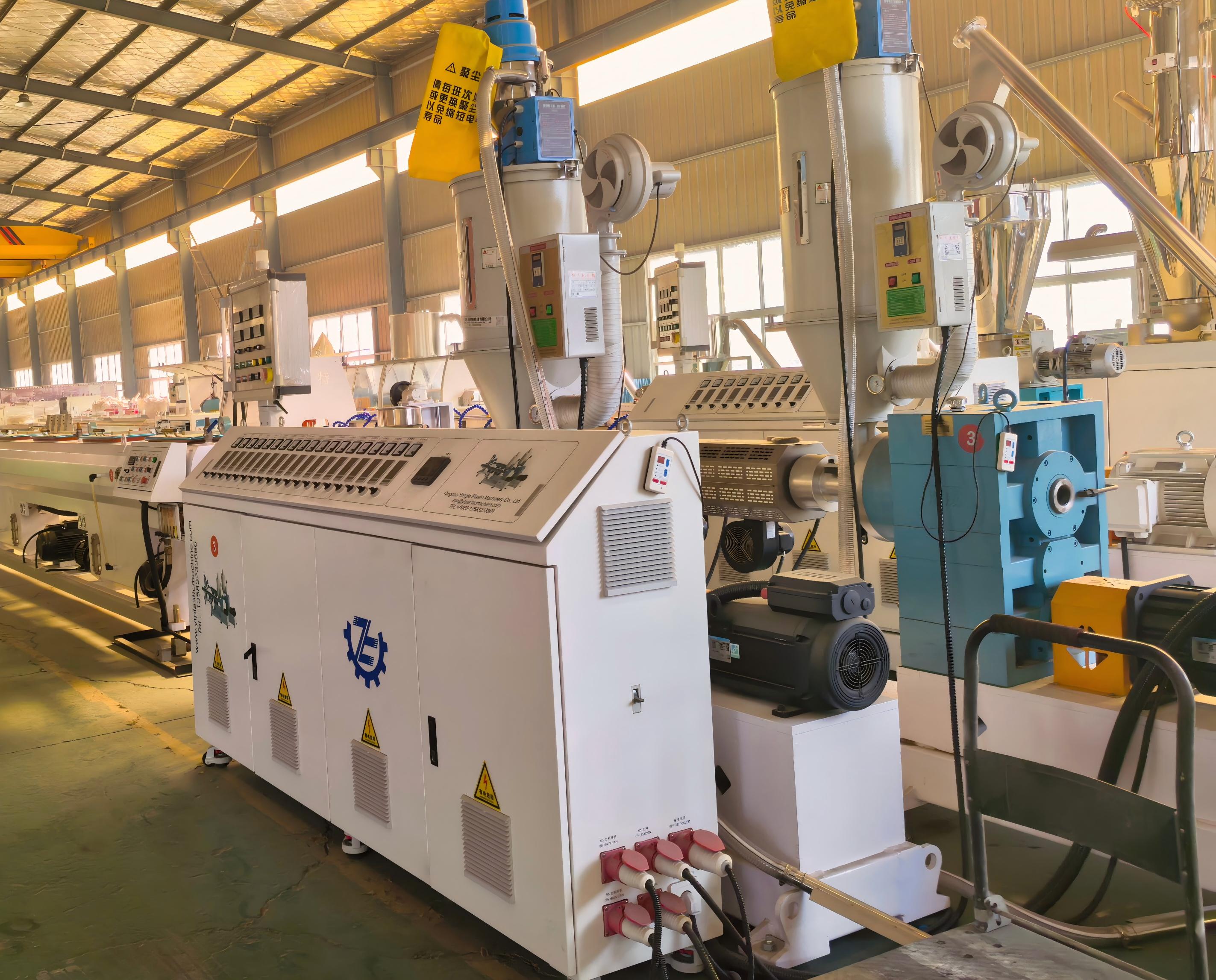

Best WPC Door Machine for Superior Production Quality
2026-09-01
A WPC door machine that can't hold tolerance is just an expensive mixer. The best WPC door machine for superior production quality does something most lines ignore: it stabilizes the melt before it ever reaches the die. Yongte has spent years refining that stabilization process, and the result is a line that runs faster, cools more predictably, and produces doors with flatter surfaces and tighter edges. In this post, we'll break down the three engineering decisions behind that performance—so you can compare any machine with your own quality benchmarks.
What Separates a Reliable WPC Door Extrusion Line from the Rest
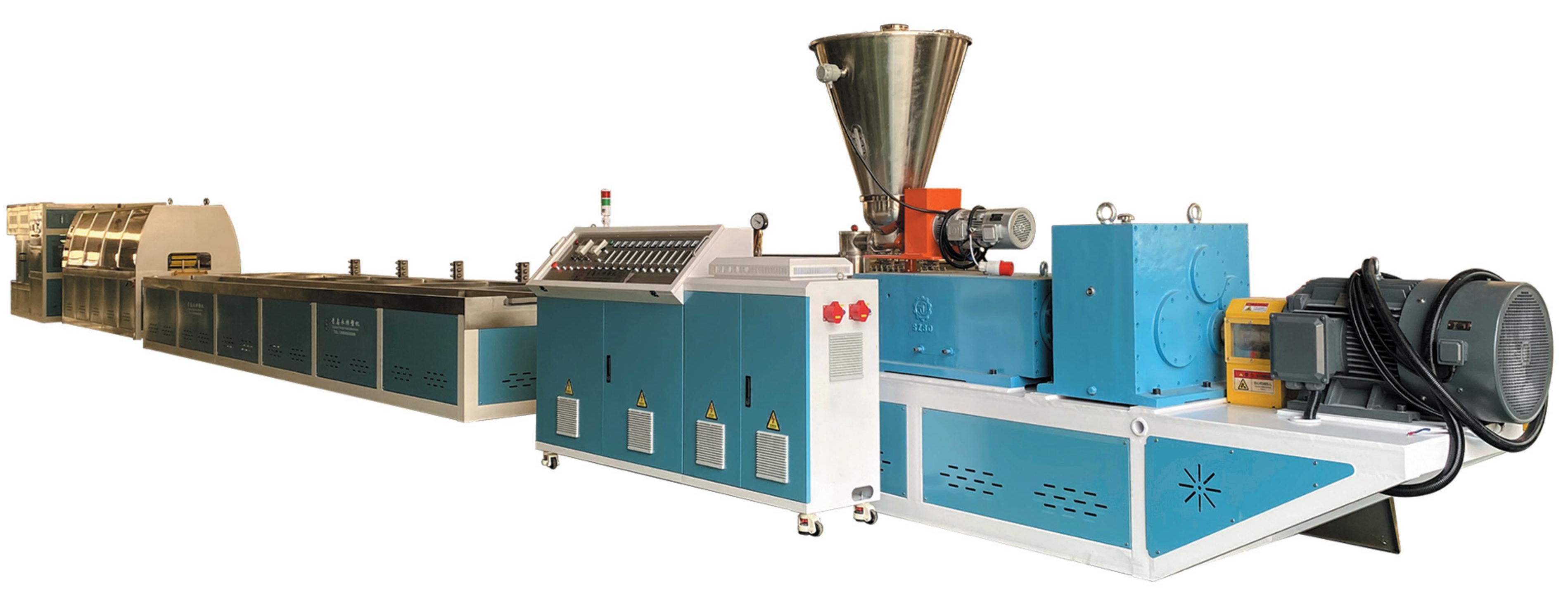
A dependable WPC door extrusion line isn't defined by a single flashy feature but by how consistently every stage works together under real production pressure. Many manufacturers claim tight tolerances, yet few can hold them across an eight-hour shift when material viscosity shifts or ambient temperature creeps up. The reliable ones build in closed-loop feedback on barrel temperatures, screw speed, and haul-off tension, adjusting automatically instead of relying on an operator to notice drift. You see it in the die design too—less trial-and-error at startup, smoother melt flow, and fewer edge tear-outs that quietly eat into yield.
Another separator is how the line handles the wood-plastic blend itself. WPC compounds are abrasive and prone to bridging in the feed throat, which wreaks havoc on output consistency. A trustworthy extrusion line uses wear-resistant screws and barrels, plus a crammer or force-feeder that meters material without pulsing. The calibration and cooling section matters just as much: too rapid a quench warps the door profile, too slow and you lose line speed. Reliable systems use multi-zone vacuum calibration tanks with adjustable water flow, letting you fine-tune the profile dimensions without fighting the machine.
Finally, look at the support structure behind the equipment. A line that runs beautifully on day one but leaves you stranded when a PLC faults at 2 a.m. is not reliable. The best suppliers provide remote diagnostics, readily available spare parts, and parameter recipes that have been validated on actual door profiles—not generic WPC decking. They also train your operators on troubleshooting common issues like surging or melt fracture, so downtime is measured in minutes, not shifts. That practical, no-excuses uptime is what truly separates a workhorse line from a showroom demo.
Precision Temperature Zones and Their Direct Link to Surface Finish
Precision temperature zones do more than maintain process stability—they actively shape the microscopic peaks and valleys that define surface finish. When a workpiece passes through a tightly controlled thermal gradient, the material's expansion and contraction become predictable, allowing cutting tools or polishing heads to engage with near-constant resistance. This consistency prevents the random tear-outs and chatter marks that plague less regulated setups, leaving behind a surface that reflects light evenly and measures within tighter roughness tolerances.
The link becomes especially clear in multi-step finishing, where each zone is tuned to a specific thermal window. A slightly elevated initial zone softens the outer layer just enough for aggressive stock removal without smearing, while a rapid-cooling final zone locks in the refined texture before residual heat can cause spring-back. Operators who map these zones to the alloy's thermal conductivity often see Ra values drop by half compared to single-temperature approaches—not because the abrasive changed, but because the material behaved more cooperatively at every pass.
Ignoring this connection usually shows up as an uneven gloss or a patchy feel under a profilometer. A drift of even five degrees in a critical zone can shift the ductile-to-brittle transition, leaving micro-cracks that later appear as haze after coating. Treating temperature as a series of deliberate, narrow bands rather than a single setpoint turns surface finish from a hopeful outcome into a repeatable dial-in parameter.
Screw Geometry Tweaks That Eliminate WPC Door Warping
Subtle shifts in screw placement and depth can make the difference between a door panel that stays flat and one that cups or twists within weeks. Instead of driving fasteners at equal intervals along the frame, offset the screws slightly toward the stile’s center line, alternating high and low by two to three millimeters. This breaks the continuous tension path that often pulls the WPC skin away from the core. Pair this with a reduced pilot-hole diameter—no more than eighty percent of the screw’s minor diameter—to increase radial grip without cracking the composite material.
Many warping failures trace back to over-torqued screws near the door’s mid-height, where thermal expansion stresses concentrate. Backing off the final quarter turn on every third screw allows the panel to breathe through humidity cycles, creating controlled micro-slip zones rather than rigid lock points. On hinge-side installations, use a barrel-head screw with a shallow countersink to avoid crushing the surface layer, while the latch side benefits from a slightly longer thread engagement to resist twisting forces.
Field adjustments often reveal that the outer screws should never sit flush with the face—leave a 0.5 mm standoff on the top and bottom pairs. This tiny axial play decouples the door skin from the frame’s movement, preventing the dreaded “potato chip” bow across the diagonal. If you’re retrofitting an existing panel, swapping standard zinc screws for nylon-coated variants with a modified buttress thread drops friction by roughly a third, letting the WPC settle into a natural, stress-free equilibrium.
Why Real-Time Thickness Monitoring Changes Your Reject Rate
Thickness drift rarely announces itself. A slight change in raw material temperature, a worn die lip, or a subtle shift in line speed can push sheet gauge out of spec within minutes. By the time your lab catches it on a sample check, you have already produced hundreds of feet of scrap. Real-time monitoring turns that lag into zero by measuring thickness continuously at the point of production, letting operators see a trend as it develops instead of discovering it after the fact.
The biggest change comes in how your team responds. Instead of chasing rejects after a full reel is wound, they can trim a parameter early and keep the entire run within tolerance. That means fewer downgraded rolls, fewer customer returns, and a reject rate that drops from a few percent to a fraction of a percent. One film plant we worked with cut their edge trim waste by forty percent in the first month simply by showing thickness variation on a live trend chart.
Real-time data also removes the guesswork from tool changes and startups. When operators can see exactly which zones are out and by how much, they stop overcorrecting. The result is less oscillation around the target, shorter stabilization periods, and a more predictable baseline for every product code. Reject rate stops being a surprise at the end of the shift and becomes a number you control while the line is running.
The Overlooked Cooling Step That Decides Final Door Flatness
Most warping in finished doors isn't born in the press—it's locked in during the minutes after the adhesive has set and the panel is still shedding heat. When one face cools faster than the other, the differential contraction pulls the edges into a gentle bow that no amount of sanding can hide.
The usual mistake is treating cooling as passive storage. Racks that hold doors tightly stacked trap heat in the core while the outer skins harden, creating exactly the imbalance that leads to a visible cup. Flipping the stack or spacing panels with airflow strips gives both surfaces a chance to release thermal stress at similar rates.
A slower, staged cool-down—dropping temperature in controlled steps rather than shuttling doors straight from a hot line into a cold warehouse—often does more for flatness than increasing press time. Shops that monitor surface temperature with a simple infrared gun during this window can catch a developing bow before the finish goes on, when it's still cheap to correct.
How Smart Automation Keeps Output Quality Steady Across Shifts
Smart automation acts as a silent stabilizing force on the factory floor, eliminating the natural peaks and valleys that come with human shift changes. Instead of relying on the fresh eyes of a morning crew versus the fatigue of a night shift, automated systems enforce identical parameters every hour of every day. This consistency doesn't just show up in final measurements—it weaves through every micro-decision, from torque settings to material feed rates, creating a seamless thread of quality that never breaks between handoffs.
The real magic happens in how automation absorbs the invisible drifts that even skilled operators can't fully control. Temperature fluctuations at 3 a.m., the subtle slowdown of a line after lunch, the slight variations in raw material batches—these are the quiet killers of output consistency. Smart systems track and correct for them continuously, adjusting in real time without waiting for a quality report to flag a problem. The result is a product line where the tenth piece off the line at midnight matches the first piece at dawn, not through heroic effort but through embedded intelligence.
Over time, this steady rhythm compounds into trust. Customers never have to wonder if an order filled on a holiday weekend will meet the same spec as a Tuesday batch. And inside the plant, operators stop spending their nights chasing tiny deviations and start focusing on higher-level improvements. Quality stops being a battle fought shift by shift and becomes a baseline reality—quietly enforced, automatically sustained, and rarely needing a second thought.
FAQ
Look at the extrusion system and temperature control. Inconsistent heating often leads to surface defects or warping. A machine with multi-zone heating and real-time feedback keeps the material flow stable, which is the foundation for smooth finishes and tight dimensional tolerance.
Premium models include gravimetric feeding and automatic mixing calibration. Instead of relying on manual adjustments, the system continuously measures the blend and adjusts ratios, so slight changes in wood fiber moisture or plastic pellet size don't show up as color streaks or weak spots in the final door.
Warping usually traces back to uneven cooling and inadequate stress relief. Machines designed for superior output use multiple cooling stages and controlled post-extrusion support, allowing the profile to settle without internal tension. This prevents bowing or twisting once the door is exposed to room temperature changes.
The die determines flow distribution and surface finish. A purpose-built WPC door die with streamlined channels reduces friction and material stagnation. That means fewer burn marks, lower scrap rates, and a more uniform density across the door's width and thickness.
Yes, if it supports quick mold change and programmable recipes. The best systems let you switch from a solid panel profile to a hollow core or reinforced style by swapping the calibration block and loading the saved parameters. This flexibility avoids long downtime and maintains precise dimensions across different designs.
Daily checks on screw wear, vacuum calibration holes, and temperature sensors take about 15 minutes. Beyond that, a monthly inspection of the gearbox and lubrication points prevents slow degradation. Machines with self-diagnostic alerts make this easier, because they flag drifting parameters before they affect output.
For standard WPC door frame or panel profiles, a well-tuned line typically runs between 2 to 4 meters per minute, depending on profile mass and cooling length. Top-quality machines achieve this without pushing extruder speed to the limit, which preserves material integrity and reduces waste.
Conclusion
A dependable WPC door extrusion line does not rely on a single breakthrough feature. It is the quiet integration of precise temperature control, screw geometry, and real-time monitoring that keeps doors flat, smooth, and consistent. Temperature zones across the barrel and die directly shape surface finish—too much heat causes gloss unevenness or micro-tears, while too little leads to poor fusion and visible flow lines. On the mechanical side, subtle adjustments in screw compression ratio and mixing elements prevent the internal stresses that later show up as warping. These are not theoretical tweaks; they are the difference between a door that hangs true and one that bows within weeks.
Beyond the barrel, two steps often decide final quality: thickness feedback and cooling. Real-time thickness monitoring catches drift before it becomes a reject, allowing the operator to correct die gaps or haul-off speed within minutes instead of scrapping a full shift. The cooling stage is just as critical—uneven water flow or short calibration length can reintroduce bowing even after perfect extrusion. Smart automation ties these together, logging temperature, pressure, thickness, and cooling rate so that the second shift produces the same door as the first. That consistency, rather than any single spec sheet item, is what marks the best WPC door machines for superior production quality.
Contact Us
Contact Person: Ms Qin
Email: [email protected]
Tel/WhatsApp: 8613583233866
Website: https://www.yongteplast.com