

Best Solar Roof Hook Manufacturer for Durable Solar Panel Mounting Systems
2026-10-15
Most solar installers learn the hard way that a cheap roof hook can undo years of panel warranty. Durability isn't a label—it’s the result of materials, engineering, and real-world testing. That’s what makes Egret Solar stand out in a market crowded with look-alike mounting hardware. Keep reading to see which roof hook details actually matter for a mounting system that lasts as long as the panels themselves.
The Hidden Engineering Behind a Roof Hook That Actually Lasts
Most roof hooks fail long before the steel gives out—what breaks is the interface. A hook that actually lasts pairs a low-carbon core with a case-hardened surface, but the hidden trick is not the hardness itself. It is the transition zone. Cheap hooks go from glass-hard to butter-soft in a few microns, so micro-cracks nucleate right under the coating. Better designs specify a deeper diffusion layer and then shot-peen the bend radius, because that is exactly where cyclic wind uplift tries to open a fatigue crack. The geometry looks simple; the stress map is not. A slight thickening on the inside of the bend, a radius that never drops below two times the material thickness, and a mounting slot elongated to allow thermal expansion all add cost, not visual appeal.
Then there is the corrosion problem most people solve backwards. Galvanizing a hook after all the holes are punched sounds fine until a micro-crack lets water sit against raw steel at a thread root. The durable approach is to cut or roll threads before coating, then chase only the nut, never the hook. Some manufacturers now use a zinc-nickel electroplate with a silicate topcoat instead of hot-dip, because it stays put under the point load of a roof clamp. Finally, the fasteners matter more than the hook. A serrated flange nut torqued to the low end of its range, with a nylon patch to resist vibration, will keep preload where the roof membrane stays sealed. That is the hidden engineering: not a stronger hook, but a system where every weak link was deliberately removed.
Why Cheaper Hooks Often Fail Before the Panels Do
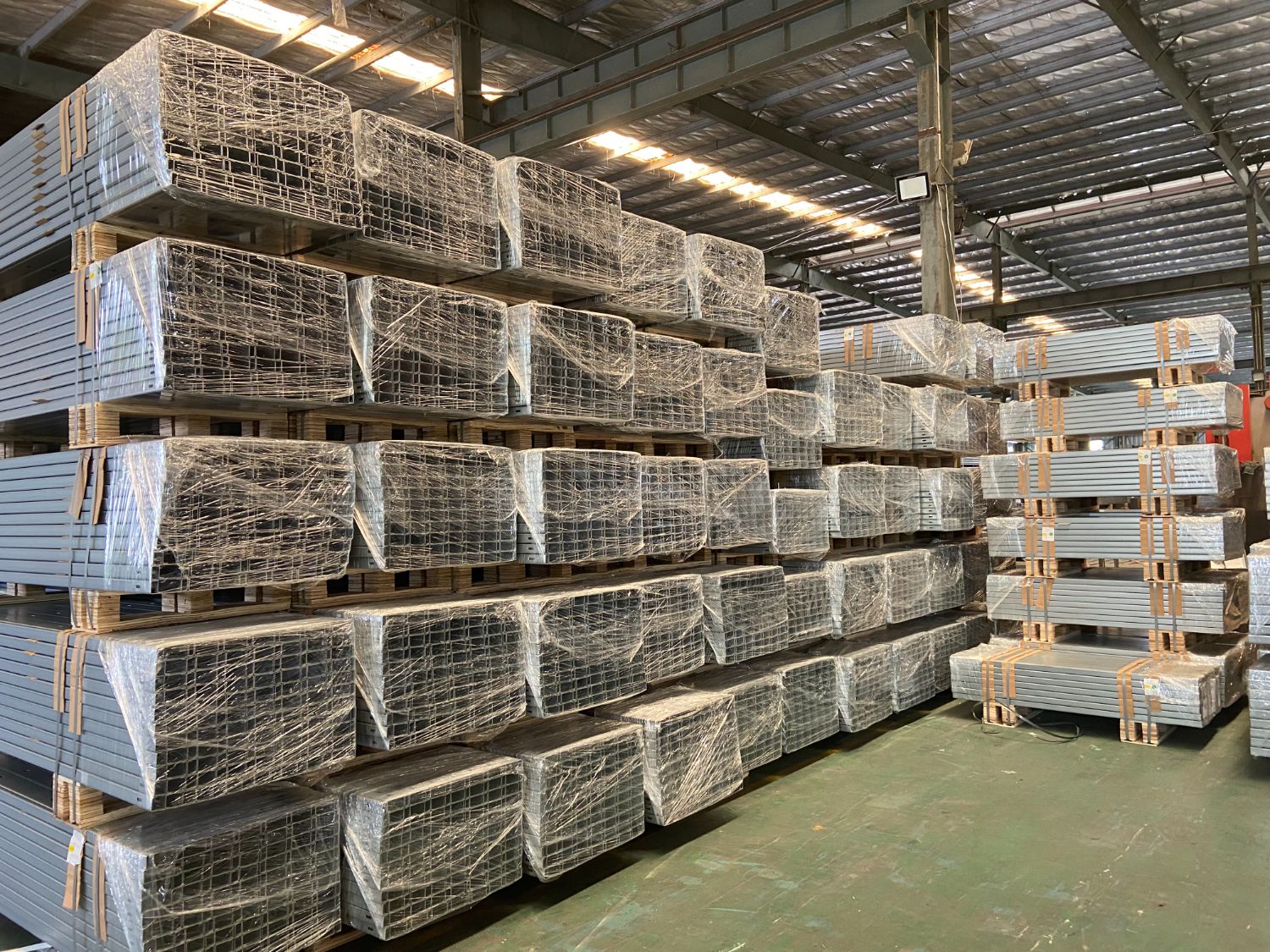
Most of the time, the panel itself isn't the weak link. It's the thin wire or stamped steel hidden behind it. Budget hooks are often cut from lower-grade alloys that bend under constant tension, especially when a room goes through normal humidity swings. Once the metal fatigues, the hook opens slightly and the panel tilts away from the wall long before the board shows any sign of damage.
Then there's the coating problem. Cheap hooks skip proper rust treatment, so even indoor moisture from cooking or a humid bathroom can start corrosion within months. A corroded hook loses its grip strength gradually, and by the time you notice the gap at the top of the panel, the hook has already failed. Paying a little more for a heat-treated or stainless option usually means the hook outlasts the panel, not the other way around.
Roof Profiles, Load Ratings, and the Art of a Proper Fit
Choosing a roof profile goes well beyond how it looks from the curb. The shape of the panel or shingle affects how water drains, how snow slides, and how the roof handles wind pressure at the eaves and ridges. A low-profile standing seam, for instance, often suits contemporary builds and performs well in heavy rain, while a deeper corrugated profile can add stiffness that helps in regions with strong gusts. Matching the profile to the local weather patterns is the first step in avoiding premature wear and costly callbacks.
Load ratings are another part of the equation that is easy to misread if you rely solely on generic charts. The number on a sheet is not a one-size-fits-all guarantee; it depends on the span between supports, the type of decking underneath, and whether the roof will carry snow, equipment, or foot traffic for maintenance. A panel rated for a warehouse roof may be overkill for a porch, while a lightweight tile system might fail under the same snow load that a simple metal profile handles with ease. Verifying the actual design load for the specific building is a quiet but critical step that separates a durable roof from one that flexes or leaks after the first hard season.
The real art of a proper fit happens at the intersections—valleys, hips, ridge caps, and penetrations like vents or skylights. Even the best profile and the strongest load-rated panel will underperform if the flashing is forced into a shape it was never meant to follow, or if the installers stretch a panel to cover a short fall. A proper fit means allowing for thermal movement, keeping fasteners aligned with the profile’s high points, and knowing when a detail needs a custom bend rather than a stock trim piece. The goal is not just a roof that covers the building, but one that moves, drains, and breathes as a single working system.
Corrosion Resistance Beyond the Spec Sheet
Spec sheets love to quote salt spray hours, but those numbers rarely tell the full story. A material can breeze through a 1,000-hour neutral salt spray test and still crumble in a coastal industrial zone where chloride and sulfur compounds tag-team the surface. The real test isn't whether a coating survives a controlled chamber—it's how the substrate behaves when a scratch breaches the passive film, when a stainless fastener meets a carbon steel plate, or when humidity cycles drive electrolyte into a microscopic crevice. That's where the data sheet goes silent.
Peer at a failed part under a microscope and you'll often find the attack began somewhere the spec sheet never looked: a weld heat-affected zone with a slightly altered grain structure, a stamped edge where the oxide layer got stretched thin, or a lap joint that wicked in moisture months before anyone spotted the rust. Corrosion resistance beyond the spec sheet means accounting for fabrication reality. It means choosing alloys not just by chromium content but by how they tolerate forming, joining, and residual stress. It also means questioning whether the accelerated test even resembles the service environment—because a tropical marine atmosphere and a deicing salt spray have very different ideas about how to eat metal.
There's also the time factor that accelerated tests compress out of existence. Real corrosion often involves wet-dry cycling, temperature swings, and microbiological activity—none of which a 35°C salt fog chamber reproduces with any fidelity. Companies that lean too hard on spec-sheet comparisons end up learning this through field failures that cost far more than a few extra hours of material evaluation. The materials that genuinely resist corrosion are the ones whose behavior has been studied under real-world conditions, with all the messiness that entails.
What a Decade of Installations Reveals About a Manufacturer
Ask any maintenance supervisor who has overseen the same line for ten years and they will tell you that a manufacturer's reputation is not built in a single quarter. It is carved out over hundreds of power cycles, seasonal temperature swings, and the occasional rushed repair at 2 a.m. When you track a fleet of machines across a decade, the weak points stop hiding. A bearing that fails at year three in a humid plant will fail at year three in a desert plant if the seal design is marginal. Those patterns are the real audit.
Long installation histories also expose how a company behaves after the sale. Some manufacturers ship an excellent unit but make replacement parts expensive, slow to arrive, or discontinued too soon. Others treat every service call as a chance to improve the next build. A decade of records shows whether the firm updated torque specs after early bolt loosening, whether they revised a wiring harness after corrosion complaints, and whether their regional technicians actually know the older models. That institutional memory is more valuable than any warranty card.
The result is that a ten-year installation record becomes a practical forecast. It tells you which components are likely to need replacement at year five, what labor hours look like as seals and belts wear, and whether the control software still gets security patches. Buyers who ignore this history pay for it in downtime. Those who study it can plan budgets, stock spare parts intelligently, and avoid manufacturers who treat every installation as a one-off experiment.
Vetting a Supplier Without Falling for Marketing Noise
A glossy website and a quick response time don't tell you much about whether a supplier can actually deliver. I've learned to ask for a video tour of the production floor, not just the showroom. If they hesitate or send the same polished clip they use for every buyer, that's a signal. Real vetting means seeing how they handle a rejected batch or a last-minute change order, not how they talk about their "commitment to quality."
Request a trial order with a holdback clause tied to measurable specs—dimensions, material composition, defect rate. Then watch how they react when you flag a problem. Suppliers that fix issues without drama are worth more than ones with perfect marketing copy. Also, call two of their existing customers and ask what happened after month three, when the honeymoon period ends.
Ignore awards and trade show banners. The only certifications that matter are ones you can verify directly with the issuing body, and even those only prove a baseline. The real test is whether they can repeat a good result when the order volume doubles and the deadline tightens. That's when the noise fades and the actual supplier shows up.
FAQ
Stainless steel and high-grade aluminum dominate for good reason. Stainless handles coastal salt spray without rusting, while anodized aluminum keeps weight down and resists corrosion. Stay away from plain steel unless it has a thick hot-dip galvanized layer, and even then check the edges for chipping.
You want proof of cyclic load testing, not just a static pull test. A durable hook survives thousands of load cycles that simulate decades of wind and snow. Ask for reports showing fatigue behavior and salt-spray hours—500 hours minimum for coastal areas, 1000+ for marine environments.
Look at their product range. A serious maker offers hooks shaped for tile, trapezoidal metal, corrugated metal, and standing seam—not just a single adjustable bracket. Ask for installation drawings on your exact roof type. If they hesitate or send a generic PDF, that's a red flag.
EPDM seals do work when paired with the right geometry and proper torque. The seal needs constant compression without being crushed. Cheap hooks use thin neoprene that degrades in UV. A good manufacturer specifies the compression range and uses UV-stable EPDM, plus recommends sealant as a secondary barrier.
The price gap usually reflects alloy grade, coating thickness, and design refinement. A $3 hook might be 304 stainless with sharp edges and minimal load testing. A $12 hook could be 316 stainless, electropolished, with finite element analysis to remove stress risers. For a 25-year installation, the hardware cost is tiny compared to a roof leak or panel loss.
Ask if the warranty covers the hook for the same period as your panels—typically 25 years—and whether it includes labor for replacement. Some manufacturers only replace the part, leaving you with scaffold costs. A credible one will state coverage against corrosion and fatigue failure in writing, with a clear claims process.
Many top-tier manufacturers offer custom bending and hole patterns if your order volume is reasonable—often starting around 500 units. They'll usually ask for roof cross-section drawings or a physical sample. Expect a 4-8 week lead time for custom tooling, but the result fits your roof without field modifications.
Over-torquing the fastener is the silent killer. It crushes the seal and creates a stress concentration at the bolt hole. Good manufacturers provide torque specs and use collared bolts or sleeves that bottom out at the correct compression. Some even include torque-indicating washers.
Conclusion
A truly dependable solar roof hook isn't defined by a single impressive number on a datasheet. The hidden engineering comes down to how the part manages stress concentrations around its bolt holes, how thick the base plate is, and whether the geometry was actually designed for the roof profile it claims to fit. Cheaper hooks often pass a basic static load test, then fail after a few seasons of thermal expansion, wind-induced micro-movement, and repeated snow loads. On trapezoidal, corrugated, or standing seam roofs, a poor fit creates uneven pressure points that can loosen fasteners or deform the roof skin. Load ratings need to cover not just uplift, but lateral shear, pull-out, and the combined effects of module weight plus wind and snow. A manufacturer that understands these forces will adjust hook designs per roof type rather than offering one universal bracket.
Corrosion resistance is another area where spec sheets mislead. A hook may boast 1,000 hours of salt spray testing, yet still rust at the cut edges or where the coating gets scratched during installation. Real-world longevity shows up only after a decade of installations: gaskets hardening, stainless steel losing passivation in crevices, galvanized layers thinning at sharp bends. That field record is the strongest signal of a manufacturer's quality. When vetting suppliers, look past polished marketing and ask for installation references in similar climates, warranty claim rates, and whether they can show returned parts from long-term sites. Ask about batch traceability and how they handle coating repairs. The best manufacturer will talk openly about failures and what changed in later versions—that honesty is more valuable than any glossy brochure.
Contact Us
Contact Person: Leite
Email: [email protected]
Tel/WhatsApp: (+86)13666072898
Website: https://www.egretsolars.com/