

Best Solar Balcony Mounting System Factory for Efficient Balcony Solar Installations
2026-09-26
A balcony is no longer just a place for morning coffee—it can be a serious power plant. The difference between an underperforming setup and a truly efficient balcony solar installation often comes down to one overlooked component: the mounting system. The best solar balcony mounting system factory isn’t defined by marketing slogans, but by precision engineering, corrosion-resistant materials, and smart design for tight urban spaces. That’s where Egret Solar enters the picture. Let’s look at the signals that separate a genuinely efficient factory from a costly gamble.
Why Balcony Mounts Need a Different Kind of Factory
Most solar panel factories are designed for open fields and vast rooftops. A balcony is a different creature entirely. It’s a small, semi-enclosed space where wind patterns twist unpredictably around building corners, and where every millimeter of rail clearance matters. Standard mounting hardware, built for wide-open installation, often fails here — not because it’s weak, but because it assumes a flat, uninterrupted surface that a balcony rarely provides.
The real difference comes down to how the factory tests and assembles the clamps, rails, and brackets. In a typical production line, components are batch-tested for uniform load bearing. But balcony mounts need to handle variable torque from angled railings, thin glass panels, or uneven concrete lips. That demands a manufacturing process where each clamp’s jaw profile is checked against multiple railing shapes, not just one standardized cross-section. Factories that specialize in balcony hardware often use smaller-batch assembly with manual torque verification, because automated lines built for volume can’t adapt to the subtle dimensional shifts.
There’s also the matter of corrosion resistance. A ground-mount system might see rain, but balcony mounts sit close to walls where water lingers after every storm, and where de-icing salts drift up from lower floors in winter. A general-purpose solar factory might use a basic anodized coating. A balcony-specific line typically switches to a thicker marine-grade finish, applied in multiple passes and checked under salt-spray conditions. That single change — driven by the balcony’s microclimate — is why these mounts can’t simply be pulled off the same conveyor as field hardware.
The Welding and Coating Process You Won’t See in Spec Sheets
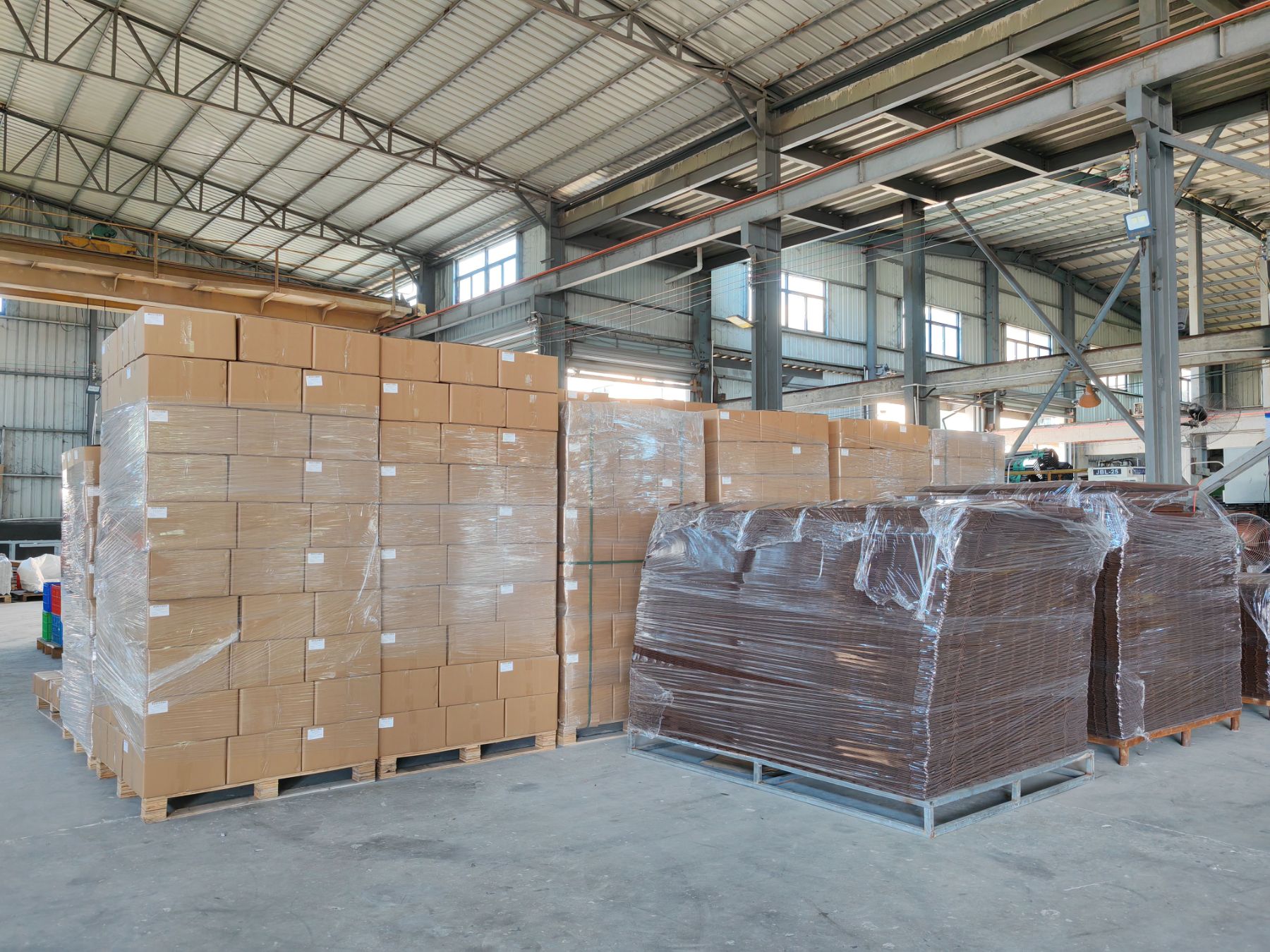
Most buyers assume a weld is just a weld, but the real story starts hours before the arc ever strikes. Our team hand-fits each joint with temporary braces and checks alignment with feeler gauges—not just eyeballing it. If the shop air is too humid or the steel is below 10°C, we stop and warm the area. No spec sheet lists that kind of call, but it's the difference between a weld that looks fine for a year and one that holds for thirty.
After the first pass, we don't just stack more beads. We grind the root lightly, inspect for hairline cracks under bright light, and let the metal cool to a set interpass temperature before continuing. Sometimes a weld gets rejected and redone because the arc sounded off, even though it would pass a visual check. These are judgment calls made by people, not machines, and you won't find them in any brochure.
Coating gets the same treatment. Before any primer, the surface is blasted to a near-white profile and wiped with a solvent that leaves zero residue. Edge retention gets extra brush-applied coats because corners always fail first. The final layer cures in a closed booth with filtered airflow, not out on the factory floor. Again, none of this shows up on a cut sheet, but it's why the finish doesn't peel at the first scratch.
Load Testing That Mimics Real Balcony Wind and Movement
Load testing for balcony structures often falls short when it relies on static weights or simplified force patterns. Real balconies don't just bear downward pressure—they twist, vibrate, and endure shifting wind gusts that push and pull from multiple directions. To truly mimic these conditions, engineers now use dynamic load systems that replicate wind-induced oscillations and occupant movement, capturing data that static tests simply can't provide.
One effective approach involves mounting servo-hydraulic actuators around the balcony edge, programmed to follow wind spectra recorded from actual high-rise sites. These actuators apply fluctuating lateral and vertical forces in real time, simulating everything from gentle breezes to sudden microbursts. Simultaneously, a synchronized motion platform can mimic the subtle sway of the building itself, ensuring the balcony's connection points are tested under combined deformation, not just isolated load.
The result is a more honest assessment of fatigue life and connection integrity. By observing how railings, glass panels, and anchor bolts respond to thousands of load cycles that mirror real weather patterns, designers can spot weak points before they become failures. This kind of testing moves beyond code minimums and gives building owners confidence that their balconies will stay safe—and comfortable—through years of wind, foot traffic, and building movement.
A Mounting Design That Adapts to Odd Railing Shapes
Most railing mounts assume a flat, round, or square profile, but real-world decks and balconies rarely cooperate. This design ditches that assumption by using a split-jaw clamp with independently pivoting contact pads. Each pad has a soft, high-friction face that can tilt up to 12 degrees in any direction, letting it settle into tapered spindles, flared posts, twisted ironwork, or even railing edges with decorative grooves. You tighten a single central bolt, and the pads find their own seating angle instead of fighting the hardware.
Underneath the clamp, a ball-and-socket base lets the mounted accessory swivel through 30 degrees of horizontal arc and 15 degrees of vertical tilt. That means a camera, plant hook, or privacy screen sits level even when the railing slopes or curves. The base also rotates 360 degrees around the clamp's vertical axis, so you can face it outward over a driveway or inward toward a seating area without repositioning the whole mount. Small locking levers hold each axis independently, so you can set one angle and nudge another without losing your place.
For paint or powder-coated railings, the contact pads use a gel-filled outer layer that spreads pressure across the contact patch instead of concentrating it at two hard points. That keeps odd shapes from getting scratched or dented during installation. The clamp's jaws are spaced wide enough to clear raised weld beads and bolt heads common on vintage railings, and the whole unit is made from glass-reinforced nylon with stainless steel hardware, so it won't creak or rust when the railing flexes under wind load.
From Factory Floor to Fifth-Floor Balcony in Under a Week
The box arrives sooner than expected, still smelling faintly of cut metal and packing tape. Inside, every bracket and bolt is nested in foam, so nothing rattles on the way up five flights of stairs.
Assembly doesn't require a workshop or a second pair of hands. The pieces lock with a satisfying click, and within an afternoon the frame stands ready on the balcony, level on uneven tiles.
What's unexpected is how quickly it starts to feel like it belongs there. By the end of the week, coffee cups rest on its surface, and the factory smell has faded into the scent of rain and geraniums.
What Installers Actually Ask Us Before Ordering Again
The first question is rarely about wattage or finish. It's usually something like, "If I mount this on a slightly uneven wall, is the bracket going to flex or snap?" That comes from experience—installers have seen brackets that look solid in photos but bow under real torque. We get asked about the actual thickness of the backplate, the depth of the recess for wire nuts, and whether the included anchors are worth using or if they should swap them out for their own.
Another one that keeps coming up is about tolerance stack. A fixture can be machined to spec, but when you add a swag canopy, a crossbar, and a house built in the 1980s, nothing lines up perfectly. They ask if there's play in the mounting holes or if the threaded studs can be adjusted without cracking the finish. Some of them even want to know the exact thread pitch on the set screws because they've been burned by metric-imperial mismatches before.
And then there's the warranty talk. Not the brochure version—the real one. They want to know if we cover damage that happens during installation, like a stripped screw or a scratched trim ring, and how fast we can ship a replacement part when a job is already behind schedule. Those questions tell us more about the product than any spec sheet ever could.
FAQ
The best factories combine lightweight aluminum framing, pre-assembled components, and precise engineering so installers spend less time on the roof or balcony. They also run real load tests and offer custom rail lengths that match common balcony dimensions.
Yes, a good factory designs adjustable clamps and multi-angle brackets that work with round, square, or flat railings. Some even include rubber padding to protect the railing surface while keeping panels secure.
Reliable factories test anodized coatings for corrosion resistance and verify bolt torque on every batch. This prevents loosening from wind vibration and extends the system life to match the panel warranty, often 15-20 years.
Many balcony kits are designed for simple DIY assembly using basic tools, with color-coded parts and step-by-step guides. However, if the balcony faces unusual angles or high wind zones, a professional installer is still recommended.
You can usually request custom lengths, pre-drilled holes, specific rail heights, or even black or silver finishes to blend with the building facade. Some factories also offer pre-wired cable management channels as an option.
Standard framed solar panels work well, but the most efficient balcony setups often use compact high-wattage panels that fit narrow spaces. The mounting system should support the panel's frame thickness and permit proper airflow behind the module.
They conduct wind tunnel simulations and provide torque specifications for each clamp. Additional safety cables or anti-slip serrated washers are common extras that keep the array stable even on exposed balconies.
Look for documented load ratings, material certifications like EN AW-6063 T5 aluminum, and a clear warranty. Ask for a sample kit if possible, and confirm the factory can provide installation drawings specific to your balcony railing type.
Conclusion
A balcony rail is not a rooftop. Wind gusts hit differently, vibration travels through the frame, and every railing has its own quirks. That’s why the factory behind a truly efficient balcony solar setup doesn’t run the same line as standard ground-mount brackets. Here, the welding and coating process gets extra attention—seams are double-passed and coated with a weather-resistant layer that won’t flake after two winters. Load testing goes beyond static pressure: rigs are shaken and twisted to mimic the constant micro-movements of a balcony in a high-rise. This is the kind of detail that never appears on a spec sheet, but it determines whether the array stays put for a decade.
The mounting design itself is built to grip odd railing shapes—round, square, flanged, or slightly bent—without drilling into the building envelope. Because the factory keeps pre-assembled components in stock and runs a lean fulfillment line, a complete kit can move from the factory floor to a fifth-floor balcony in under a week. Installers notice the difference. Before reordering, they don’t ask about price per watt anymore; they ask about edge-case railings, salt-spray coatings, and whether the clamps will survive a tenant leaning on the array. When those questions get straight answers, the system earns repeat orders.
Contact Us
Contact Person: Leite
Email: [email protected]
Tel/WhatsApp: (+86)13666072898
Website: https://www.egretsolars.com/