

Best Food Van Concepts Worth Chasing for Your Next Meal
2026-10-30
Forget tired food-truck staples—the next wave of street food is rolling in with bold ideas, and one name leading the charge is Oriental Shimao. From fusion twists to late-night cult favorites, we’ve rounded up the food van concepts actually worth chasing down for your next meal. Grab your appetite and keep an eye out.
When Your Best Meal Comes from a Converted Horse Trailer
The first time I saw the silver Airstream-style trailer parked beside a gravel lot, I assumed it was another food truck pretending to be rustic. But the faded lettering on the side read “Est. 1974” and the door creaked open to reveal a narrow galley with a griddle older than me. The menu was handwritten on a chalkboard sliver, and the woman flipping hash browns had flour on her elbows. I ordered the breakfast burrito without much expectation, mostly because the line of locals snaked past a stack of firewood. When she handed it over, the tortilla was blistered from the flat-top and the eggs still glistened. I ate it standing next to a horse trailer that had clearly once hauled hay, now sprouting a stainless steel vent and a hand-painted sign: “No substitutions, no regrets.”
That first bite did something strange. It tasted less like a meal and more like a place. The potatoes had been par-cooked in bacon fat, the green chile came from a jar with a masking-tape label, and the cheese melted into the folds like it had been waiting all morning. Nobody was trying to impress anyone. The cook wiped her hands on a towel that had seen better decades and asked if I wanted more salsa. I nodded, and she spooned a roasted tomato blend that was gritty with char and seeds. The trailer’s converted window ledge served as my table, and the breeze carried the smell of horses from a neighboring ranch. I understood then why nobody bothered with a website or a printed menu. This was the kind of food that didn’t need translation.
What keeps me coming back isn’t the novelty of eating from a horse trailer, though that helps. It’s the quiet confidence of a kitchen that knows exactly what it is. The lunch rush starts at 11:04, not because of a schedule but because the grill reaches the right temperature. The specials are whatever the farmer dropped off that morning — sometimes squash blossoms, sometimes a lengua taco that sells out before noon. There’s no Wi-Fi, no loyalty app, no buzzword about “elevated street food.” Just a woman in a rubber apron and a man who sharpens knives on the tailgate, and a line of people who learned that the best meal in town comes from a space originally built to carry livestock. You stand in the dust, you eat with your hands, and you leave with the faint, weird certainty that someone in that trailer cares more about your lunch than most restaurants care about their entire menu.
Tacos, Ramen, and the Art of Curb-Side Fusion
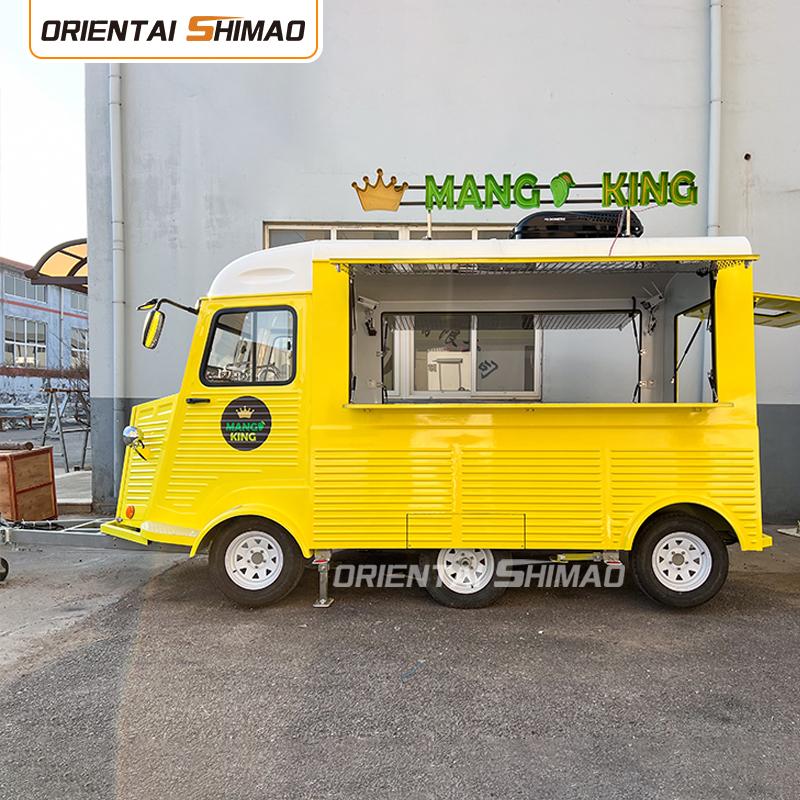
It starts with a borrowed idea. A taco truck in Austin parks next to a ramen cart in Portland, and a cook wonders what happens if the consomé from birria gets ladled over noodles instead of tortillas. The result is not a gimmick but a conversation between two comfort foods that both rely on slow-cooked meat and broth. Curb-side fusion lives in that in-between space, where the tortilla press and the noodle basket share the same folding table.
The real skill is restraint. Too much umami and the taco loses its brightness; too much lime and the ramen broth turns thin. Chefs working out of trailers and pop-up tents learn to balance chile heat against pork fat, cotija against nori, and the crunch of a tostada against the chew of alkaline noodles. It is not about covering one cuisine with another but finding the exact point where a birria taco and a bowl of shoyu ramen can share a paper boat.
At the curb, there is no dining room to hide mistakes. A customer takes one bite, then another, and if the fusion works, they do not think about labels. They just taste something familiar that has been rearranged into something they did not know they wanted. That is the art: making the strange feel inevitable.
Dessert First: These Vans Only Do Sweet
Most food trucks hedge their bets with a savory anchor and a couple of desserts tacked on at the end. Not these ones. The vans in this crew have ripped out the fryers and griddles, leaving room for soft-serve machines, crepe irons, and enough sugar to keep a small town buzzing past midnight. You won't find a single burger or taco on the menu board—just rotating flavors like brown butter caramel, matcha white chocolate, and lemon curd that tastes like someone actually zested the lemons that morning.
The owners don't treat dessert as an afterthought, and it shows in the details. One van churns its custard base from scratch in a cramped kitchen before dawn, then lets it age overnight for a denser scoop. Another parks near office towers at lunch and sells nothing but warm churros with a side of spiced drinking chocolate, and somehow the line still wraps around the block. It's not about volume or efficiency; it's about getting that first bite exactly right.
What ties them together is a stubborn belief that sweetness deserves its own stage. They skip the combo meals and combo pricing, instead putting everything into a few items they've perfected over years. Ask for a savory option and you'll get a shrug and a suggestion to try the salted honeycomb sundae. That confidence is the real secret—these vans know what they do well, and they're not about to dilute it with a side of fries.
The No-Waste Van That Turns Trimmings into Treasure
Most mobile woodworking setups leave a trail of sawdust and offcuts in their wake, but this little van runs on a different philosophy. Every shaving, splinter, and awkward leftover piece gets scooped into labeled bins instead of kicked to the curb. The builder wired a small cyclone separator into the dust collection line, so even the finest particles settle into a reusable brick press tucked behind the driver’s seat.
Those pressed sawdust bricks don’t just sit around looking tidy. They become the van’s own heating fuel on cold mornings, or they get traded to local gardeners who use them as slow-release mulch. As for the larger trimmings, a compact router sled turns misshapen offcuts into coaster blanks, drawer pulls, and tiny keepsake boxes. The van’s rear door opens to reveal a mini “treasure shelf” where these reclaimed pieces wait for a second life.
What makes the setup click is the refusal to treat waste as an afterthought. Storage slots are sized to the actual scrap dimensions most projects produce, not some idealized scrap bin that never fills evenly. A hand-drawn chart on the wall tracks weekly trim volume against finished reclaimed pieces, and the builder adjusts cutting layouts to shrink the gap. It’s a small van, but it proves that turning trimmings into treasure doesn’t need a big workshop—just a stubborn habit of asking what else a piece of wood could become.
Why the Longest Line at the Market Leads to a Van
There’s a quiet logic to the crowd that gathers near the back of the market, past the neat rows of stalls and the predictable fruit stands. The longest line almost always ends at a van—sometimes a battered white one with a hand-painted menu, sometimes a converted step van with a generator humming. It’s not the setting that draws people, though. It’s the promise of something that can’t be found anywhere else in the market: a dish made in small batches, a recipe that hasn’t been watered down for mass appeal, or simply the owner’s reputation for closing up the moment the last portion is gone.
Once a line reaches a certain length, it feeds itself. Shoppers who came for vegetables find themselves slowing down, squinting at the van’s window, then joining the queue without quite knowing why. The van’s mobility adds a layer of scarcity—it might only be here on Saturdays, or only until noon, and when it leaves, it takes its food with it. That uncertainty, combined with the silent endorsement of everyone already waiting, turns a simple meal into an event. So the longest line isn’t an accident. It’s a trail of small decisions, each one pointing to a van that has figured out how to be worth the wait.
Off-Menu and After-Hours: The Food Vans Locals Gatekeep
The best meal from a van rarely appears on the board. Long after the dinner rush fades, a handful of cooks flip handwritten signs and reach for ingredients they never list. One might slide a turmeric-stained paper bag across the counter and mutter, "Don't post this." That's the signal you've stumbled past the regular menu into a smaller, quieter operation built for regulars who know to ask without asking.
Some of these after-hours shifts are barely advertised. A van parked outside a shuttered laundromat might start serving smoked lamb neck with charred lime at eleven, but only for people who arrive with cash and patience. There are no loyalty cards, no geotags, no laminated specials. Instead, there's a nod from the cook, a plastic stool pulled from the back, and a bowl of something too fragrant to photograph well. The gatekeeping isn't rudeness; it's a way to protect an improvised space from becoming a queue.
What gets passed around in group chats and whispered over counters tends to change nightly. Tuesday could bring a broth made from yesterday's trimmings, Wednesday a folded flatbread stuffed with leftover charred onions and cold brisket. Once you learn the rhythm, the off-menu food stops feeling like a secret and starts feeling like a conversation you were invited into late.
FAQ
It usually boils down to a mix of surprise and consistency. The best ones nail a single sharp idea—like Vietnamese-Cajun po' boys or Basque burnt cheesecake in a cup—then execute it fast and with zero fuss. You're not just eating; you're getting a tiny, portable version of someone's obsession.
There's a wave of single-dish vans doing ridiculously well. Think charcoal-grilled skewers with a secret dry rub, hand-pulled noodles tossed in chili crisp, or a roving bakery that only sells brown butter chocolate chip cookies still warm from the pan. Simplicity plus a bit of theatre goes far.
They're only played out if they're doing plain soft serve with rainbow sprinkles. The ones worth your time are pushing textures—like frozen custard with toasted milk powder and olive oil, or shaved ice layered with salted coconut cream and charred pineapple. It's about giving you a reason to stop mid-walk.
Anything that can be eaten one-handed without a flimsy fork. Hand-held bao stuffed with crispy pork belly and pickled mustard greens, or a folded shawarma wrap with toum and fresh herbs. If the sauce doesn't drip down your wrist, did you even lunch properly?
Look for a short menu, a line that moves, and a cook who seems slightly obsessed with one ingredient. If they're making their own chile oil from scratch or fermenting their own hot sauce, that's usually a good sign. Also, check if locals are leaning against a wall eating silently—that's the real review.
Concepts that mash up two very specific traditions are having a moment—like Korean-Mexican kimchi quesadillas, or a van that does Filipino breakfast silog bowls with garlic rice and a runny egg. Also, anything doused in a house-made salsa macha or a zhoug yogurt tends to draw a crowd.
Absolutely, and often that's when it shines. A van that only does loaded fries with lamb ragù and feta, or a grilled cheese guy who toasts sourdough over charcoal and adds onion jam—by focusing, they can dial in the details. You remember that one thing, and you tell people about it.
Prices have crept up, but the sweet spot is usually $9 to $14 for a main. For that, you want generous portions, real plates or at least compostable ones, and a flavor that feels like it took more than ten minutes. If it's over $16, it better have a cult following for a reason.
Conclusion
Some of the most memorable street food starts with an unexpected shell. A converted horse trailer, for instance, might roll up with a wood-fired grill tucked inside, serving smoked lamb shoulder that rivals any brick-and-mortar kitchen. Meanwhile, the real draw at the curb often comes from mash-ups that shouldn't work but do: think birria tacos folded around ramen noodles, or a miso-butter quesadilla. These vans bank on contrast—soft tortillas against chewy noodles, rich broth against charred edges—and the result is rarely boring.
Then there are vans that narrow their focus until it becomes a signature. Some only do dessert, turning out burnt Basque cheesecake or fried milk buns with salted caramel. Others build entire menus around what would normally be thrown away, braising vegetable trimmings into ragù or turning fish collars into crispy croquettes. If you're at a market and spot the longest queue, it usually ends at a van that sells out daily—often because locals know something the guidebooks don't. That same insider knowledge also protects off-menu items: a cold noodle dish only available after 11 p.m., or a sandwich that never appears on the board. Chasing these vans isn't just about eating; it's about arriving at the right corner, at the right time, and earning a meal that feels like a small secret.
Contact Us
Contact Person: Jack Wang
Email: [email protected]
Tel/WhatsApp: 8618306483516
Website: https://www.orientalshimaofoodtruck.com