

Artificial Flowers Direct from the Original Manufacturer
2026-10-24
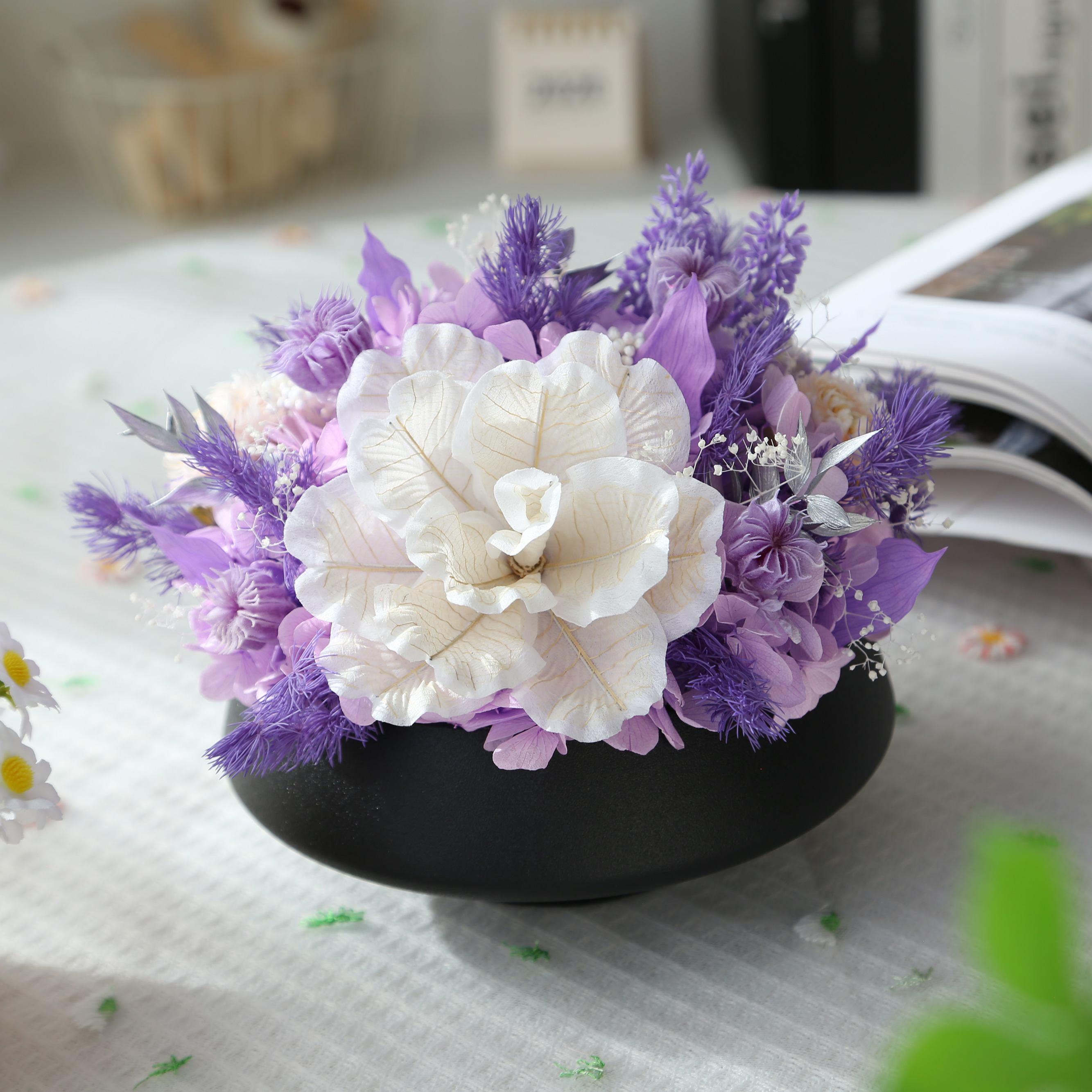
Picture a bouquet so lifelike that guests can’t help but lean in to check if it’s real—then imagine paying a fraction of the boutique price for it. That’s the magic of buying artificial flowers directly from the original manufacturer, and it’s the everyday reality at PHLEEYA.
Why Buying Straight From the Maker Changes Everything
When you buy directly from the maker, the transaction shifts from a simple exchange of money for goods to something far more personal. There’s no middleman taking a cut, no faceless distributor deciding what reaches the shelf. The money goes straight to the hands that shaped the object, and that changes how you value what you own. You’re not just acquiring a product; you’re investing in someone’s craft, their time, and their story.
This direct connection also strips away the anonymity of mass production. You learn where materials came from, how the piece was made, and often why the maker chose a particular method. That transparency builds trust and makes the object feel less disposable. Instead of replacing something when it breaks, you’re more likely to repair it or reach out to the maker for help. Quality tends to be higher too, because the person behind the work has a name and reputation at stake, not just a brand logo.
Beyond the object itself, buying from the maker creates a quiet kind of loyalty. You remember the conversation you had about a design tweak or the note tucked into the packaging. That human moment is impossible to replicate in a big-box store or an algorithm-driven checkout. It turns a one-time purchase into the start of a relationship, and that changes everything about how we consume.
The Hidden Costs of Going Through a Distributor
At first glance, letting a distributor handle logistics and customer relationships seems like a fair trade for a cut of revenue. But that cut is rarely the whole story. Many distributors layer on slotting fees, promotional allowances, and quarterly rebate adjustments that quietly erode margins long after the contract is signed. You may also be forced to accept payment terms that stretch 60 to 90 days, while your own suppliers still expect invoices settled within 30. The result is a working capital squeeze that doesn't show up on a standard profit-and-loss statement until it's already restricting your ability to restock or invest in new product development.
Beyond the money, there's an information gap. When a distributor sits between you and the end buyer, you lose direct access to why people choose your product, what they complain about, and which features they ignore. Sales reports can be sanitized, delayed, or shaped by the distributor's own inventory priorities. Over time, that distance slows product improvements and makes demand forecasting guesswork. A sudden drop in orders might reflect a real market shift, or simply that the distributor found a higher-margin competitor to push that quarter. Without direct feedback, you're left reacting to signals you can't fully verify.
Then there's the control you give up over your brand's presentation. Distributors care about turnover, not your story. Your product may end up on a dusty bottom shelf, bundled into discount promotions without your consent, or displayed next to items that cheapen its positioning. If a distributor's sales rep doesn't understand your value proposition, they'll default to competing on price, which teaches customers to wait for deals. Rebuilding that brand equity later costs far more than the margin you originally saved by not hiring your own sales team.
How We Recreate Nature's Imperfections by Hand
We begin by looking closely at the sources most people pass by—split bark, rain-worn stone, the uneven lip of a tide pool. After sketching rough contours, we work the material with our hands rather than relying on molds or digital scans. Pressure shifts, slight turns of the wrist, and occasional slips are kept, not corrected, because they mirror the irregular rhythms found outdoors.
Layering color becomes another way to let chance in. We apply glaze with frayed brushes, torn sponges, even bare fingers, then let the piece dry at an angle so it pools and drips like sap or rainwater. During firing, small cracks and blisters are treated as part of the finish—evidence of heat and time rather than flaws to hide.
The final object carries a record of those choices. No two pieces share the same edge, the same faint ridge, or the same worn spot. That quiet variation is what we're after: a handmade echo of the imperfect surfaces nature produces without effort.
A Palette That Goes Beyond the Garden
A palette rooted in nature often gets reduced to a handful of greens and a few flower brights. That misses the quieter, stranger notes—the gray-brown of wet bark, the blue shadow inside a unfolding leaf, the chalky mauve of late-summer seed heads. Going beyond the garden means paying attention to these underused tones and letting them anchor a space.
Think of the rust on a weathered gate, the haze over a field at dusk, the pale underside of a mushroom. These colors don't shout; they murmur. Layered together—perhaps a smoky olive wall, a faded terracotta floor, linen the color of dried hydrangea—they create rooms that feel gathered over time rather than decorated all at once.
The advantage of this wider palette is its staying power. Because the hues come from overlooked corners of the landscape, they resist dating themselves. A room painted in pond-silt brown or chalky blue doesn't need to chase trends. It simply sits there, calm and full of quiet contrast, like the world outside after a long rain.
Packed to Arrive Flawless, Not Flattened
The box starts with double-wall corrugated board and edge protectors that stop it from bowing under stacked weight. Instead of loose fill that shifts in transit, each item gets a die-cut foam or molded pulp insert shaped to its exact profile. That way a frame, a ceramic piece, or a fragile electronic sits snug with no room to flex or flatten.
A thin foam sheet goes against the surface before wrapping, so corners and raised details don’t rub through. Then all open seams are sealed with reinforced tape, which keeps the structure from sagging when carriers stack multiple parcels on top of each other.
For unusually sized or heavy pieces, the switch is made to wooden crates or honeycomb board braces. These add stiffness without much extra weight, so the package keeps its original dimensions intact instead of arriving crushed into a pancake.
Scaling Up Without Sacrificing the Details
很多人以为扩大规模就意味着精简流程、砍掉看似多余的步骤。结果往往是核心细节被忽略,产品质量下滑。真正有效的扩张不是做减法,而是找到一种方式让每个关键环节在更大体量下依然能被清晰跟踪。比如在团队翻倍时,与其减少检查点,不如把检查点变得更轻量、更自动化。
一个实用的做法是建立“细节地图”,把那些容易被忽略但影响结果的小事列出来,然后明确谁在什么节点负责确认。当新成员加入时,这张地图就成了他们的第一份指南。另外,不要急着用新工具替换旧流程,先观察哪些细节是真正不可牺牲的,再把它们固化到系统里。
说到底,规模扩大后的混乱很少是因为人不够,而是因为没人知道哪些细节必须保留。花时间把那些细节从个人经验里提炼出来,变成团队共识,这样即使团队再大几倍,那些让产品出色的东西也不会被稀释。
FAQ
You’re dealing with the people who actually produce the stems, so there’s no middleman markup and you can often request small changes to colors or arrangements without extra delays. It also means clearer communication if something isn’t right.
Yes, we regularly match specific Pantone shades, adjust petal finishes, or combine varieties into a single box. Custom work does add a few extra days to the lead time, but it’s handled in-house rather than outsourced.
Most of our line uses a mix of silk-like polyester blends, latex-coated stems for a realistic touch, and wire inside each stem so you can bend and shape them. Outdoor-safe options have UV-resistant coatings.
Each stem gets a corrugated divider or inflatable air cushion, and heavier arrangements are double-boxed with edge protectors. We’ve shipped to retail shops and event planners for years, so crush damage is rare.
For stock items it’s usually 12 stems per color or 6 boxes per style, mixed containers are possible. For private label work, the minimum is higher but we can discuss a trial run.
Yes, we send pre-production samples for approval. You pay the courier cost, and the sample fee is credited back when your main order is confirmed.
Standard production takes 10–18 days after deposit, depending on the season and whether any custom coloring is involved. During peak periods like spring wedding season, we recommend booking slots two to three weeks ahead.
Some collections are treated with UV inhibitors and can handle sun and light rain, but we don’t claim they’re fully weatherproof. For permanent outdoor installs, ask for our outdoor-rated range.
Conclusion
When you buy artificial flowers straight from the original manufacturer, the whole transaction shifts. There's no distributor's markup quietly inflating the price, and no phone-tag with a middleman who can't answer why a stem arrived bent. Direct sourcing means you speak with the people who actually shape petals and mix dyes. That connection changes everything: custom color requests suddenly become reasonable, order minimums flex to fit a boutique's shelf or an event planner's last-minute panic, and quality control happens at the source, not as an afterthought. The maker's reputation hinges on every box that leaves the workshop, so the details you'd normally lose in a distributor's warehouse—subtle leaf veining, asymmetrical bloom edges, a matte finish instead of plastic gloss—stay intact from workbench to your hands. These aren't generic silk flowers stamped out by the thousands; they're crafted to echo the irregular beauty of a real garden, where no two blossoms are exactly alike, and that imperfection is the point.
A direct-from-manufacturer palette also moves far beyond the standard rose-red and daisy-white. Because there's no distributor dictating what sells in bulk, the workshop can experiment with dusty mauves, near-black dahlias, or a stem dipped in two tones that would never survive mass retail. And the packaging is designed with the same obsession: each stem gets its own support, layers of tissue and molded trays keep petals from crushing, and the box arrives looking like it left the studio that morning, not like it was drop-kicked across two states. Scaling up to a hundred centerpieces or a hotel lobby's worth of arrangements doesn't mean downgrading to a lower-grade batch. The same hands that pinch silk into a lifelike fold for a sample order do it for the full production run, because the process is built around small-batch attention even when the quantity climbs. That consistency is what turns a one-time buyer into someone who reorders without bothering to ask for a quote elsewhere.
Contact Us
Contact Person: Mr. Luo
Email: [email protected]
Tel/WhatsApp: 86 18100895505
Website: https://www.feiliyaflowers.com/en/